Sleep & Wellness
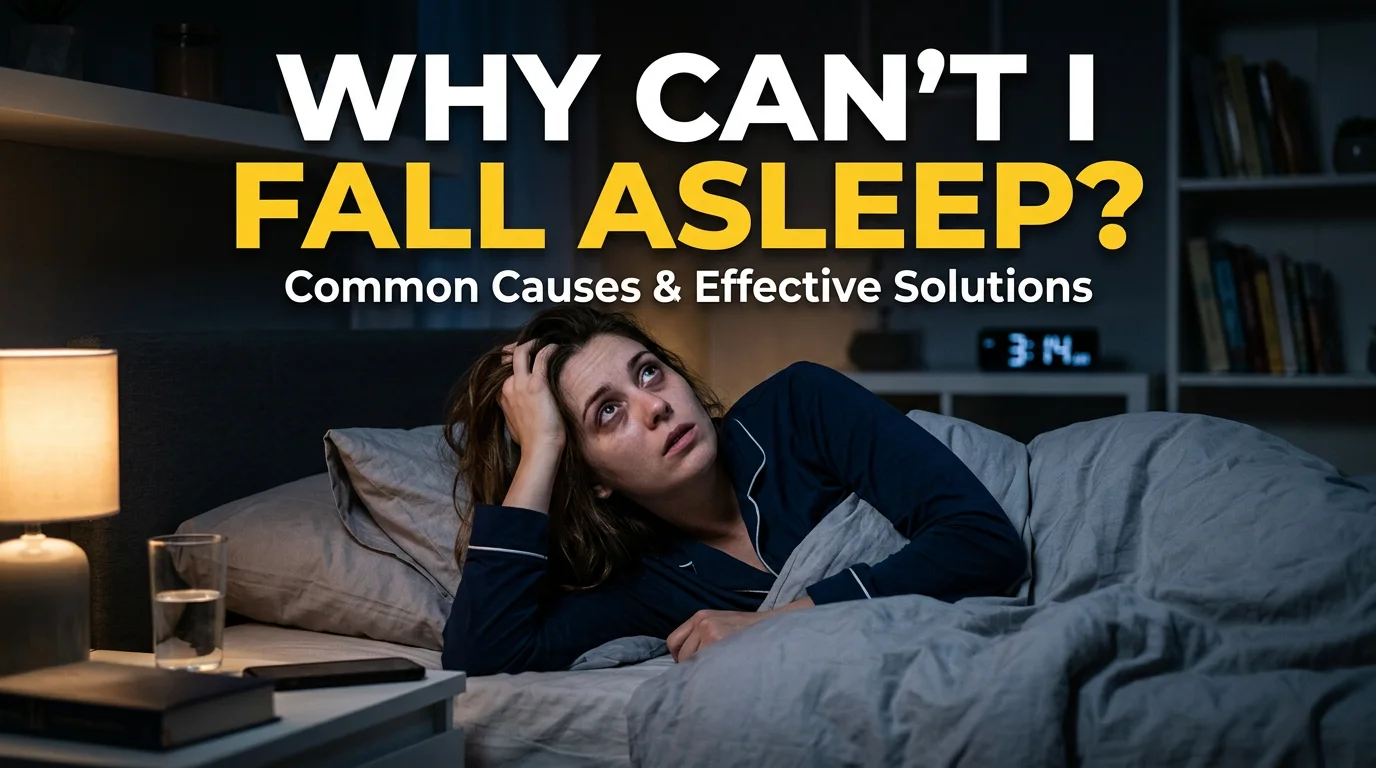
You’re exhausted. You did everything “right” today; you even went to bed at a reasonable hour. And yet you’re lying there, wide awake, watching the minutes tick past while your brain replays a work email from three days ago or spirals into tomorrow’s to-do list. If this sounds familiar, you’re dealing with what sleep specialists call sleep-onset insomnia: trouble falling asleep at the start of the night, as opposed to trouble staying asleep once you’re already there. It’s one of the most common sleep complaints people bring to doctors, and it’s also one of the most misunderstood, because the instinctive responses to it, trying harder to sleep, checking the clock, lying in bed longer, tend to make the problem worse, not better. This guide walks through why falling asleep gets hard in the first place, what’s actually going on in your brain and body when it happens, and which fixes are backed by real sleep science rather than wellness-influencer folklore.
Quick answer: why can’t I fall asleep?
Trouble falling asleep is usually driven by a combination of mental arousal (racing thoughts, stress, and anxiety keeping your nervous system activated) and habits that work against your body’s sleep signals, caffeine too late in the day, bright screens before bed, an irregular schedule, or spending too much time awake in bed, which trains your brain to associate the bedroom with wakefulness instead of sleep. The most effective, evidence-based fixes come from cognitive behavioral therapy for insomnia (CBT-I), particularly stimulus control and sleep restriction techniques, alongside consistent sleep hygiene: a fixed wake time, a caffeine cutoff, and a genuine wind-down period before bed. If the problem is persistent, chronic, or paired with other symptoms, a doctor or sleep specialist can help rule out an underlying disorder that a self-help routine won’t fix on its own.
What sleep-onset insomnia actually is
Sleep-onset insomnia is defined by how long it takes you to fall asleep once you get into bed with the intention of sleeping, sleep specialists often use 20 to 30 minutes as a rough marker for when a delay starts to count as a problem, especially if it happens most nights over an extended period. It’s distinct from sleep-maintenance insomnia (waking up during the night and struggling to get back to sleep) and early morning awakening (waking too early and being unable to fall back asleep), though many people experience some overlap between these patterns. Falling asleep isn’t something you can force through willpower; it’s a physiological process that depends on two systems working together: your homeostatic sleep drive (the pressure to sleep that builds the longer you’re awake) and your circadian rhythm (your internal clock signaling that it’s nighttime). When either system is out of sync, or when your nervous system is too activated to let go, sleep onset gets delayed no matter how tired you feel.
Common causes of trouble falling asleep
There’s rarely a single cause behind sleep-onset insomnia. Most people dealing with it have two or three of these factors compounding each other at once.
Racing thoughts and anxiety
A racing mind at bedtime is one of the most commonly reported triggers for sleep-onset insomnia, and it works both ways: anxiety makes it harder to fall asleep, and lying awake unable to sleep generates its own anxiety about the consequences of another bad night. This is sometimes called cognitive arousal: your brain staying mentally “switched on” even though your body is physically tired. Nighttime is particularly vulnerable to this because it’s often the first quiet, unstimulated stretch of the day, which means suppressed worries about work, relationships, health, or finances finally have room to surface. People with generalized anxiety disorder, and those going through a stressful life period, are especially likely to experience this pattern, but it can happen to anyone during a demanding week.
Caffeine and other stimulants
Caffeine blocks adenosine, the chemical that builds up throughout the day and creates the pressure to sleep, and it can stay active in your system for hours longer than most people assume, how quickly you clear it depends partly on genetics, so a mid-afternoon coffee that seems fine for one person can still be measurably delaying sleep onset for another. Nicotine is also a stimulant and has a similar disruptive effect when used close to bedtime. Even foods and drinks that seem harmless, certain teas, chocolate, some pre-workout supplements taken for an evening gym session, can carry enough caffeine to push sleep onset back without you realizing why.
Screens and blue light
Bright light in the evening, especially the blue-heavy light emitted by phones, tablets, and laptops, suppresses melatonin production and can delay the internal signal that tells your body it’s time to wind down. It isn’t only the light itself; scrolling social media, watching an intense show, or answering work messages right before bed also keeps your mind cognitively and emotionally activated, stacking mental arousal on top of the physiological effect of the light. The combination is one of the most well-documented modern contributors to sleep-onset insomnia, which is why “put the phone away” shows up in nearly every piece of sleep hygiene advice.
An irregular sleep schedule
Going to bed and waking up at wildly different times from one day to the next confuses your circadian rhythm, which relies on consistency to know when to release melatonin and when to raise your core body temperature and alertness. Sleeping in on weekends, working irregular or rotating shifts, or simply not having a fixed bedtime can all push your internal clock out of alignment with when you actually want to fall asleep, a pattern often described informally as social jet lag.
Conditioned arousal: when your bed stops meaning “sleep”
This is one of the most important and least understood causes of chronic sleep-onset insomnia. If you’ve spent many nights lying in bed awake, frustrated, checking the clock, or working and scrolling from bed during the day, your brain can start to associate the bed itself with wakefulness and stress rather than sleep, a learned response sleep researchers call conditioned or psychophysiological arousal. Once this association forms, you can feel drowsy on the couch but suddenly feel wide awake the moment you climb into bed, simply because your brain has learned to expect wakefulness there. This is precisely the mechanism that stimulus control therapy, described below, is designed to unlearn.
Underlying medical or sleep disorders
Sometimes trouble falling asleep isn’t primarily behavioral. Restless legs syndrome, chronic pain, hyperthyroidism, menopause-related hormonal shifts, certain medications (including some antidepressants, stimulant prescriptions, and steroids), and mental health conditions like anxiety disorders and depression can all interfere with sleep onset. Delayed sleep phase syndrome, a circadian rhythm disorder where your internal clock is shifted several hours later than a conventional schedule, can also look like insomnia when someone is forced to try sleeping at a socially typical bedtime that doesn’t match their biology.
Evidence-based fixes that actually work
The good news is that sleep-onset insomnia responds well to treatment, and the most effective approach isn’t a supplement or a gadget, it’s cognitive behavioral therapy for insomnia (CBT-I), which multiple sleep medicine bodies, including the American Academy of Sleep Medicine, recommend as a first-line treatment ahead of sleep medication for chronic insomnia. CBT-I is a structured, short-term program (often five to eight sessions with a trained provider, though self-guided and app-based versions also exist) built around a handful of core techniques.
Stimulus control therapy
Stimulus control is designed to reverse the conditioned arousal described above by rebuilding a strong mental association between your bed and sleep. The core rules are simple, even if they’re hard to follow the first few nights:
- Only go to bed when you feel genuinely sleepy, not just tired or bored.
- Use the bed only for sleep and intimacy; no scrolling, working, or watching TV in bed.
- If you haven’t fallen asleep after about 20 minutes, get up and go to another room. Do something calm and low-stimulation in dim light until you feel sleepy, then return to bed.
- Repeat this as many times as needed through the night.
- Get up at the same time every morning, no matter how much or how little you slept.
- Avoid naps during the day while you’re rebuilding this association.
This can feel counterintuitive when you’re exhausted; leaving a warm bed at 1 a.m. is the opposite of most people’s instinct. But the point is to stop reinforcing the link between “lying in bed” and “being awake and frustrated.” Over one to three weeks of consistent practice, most people find that sleep onset improves noticeably as the bed becomes a stronger cue for sleep again.
Sleep restriction: less time in bed, more consolidated sleep
Sleep restriction therapy (sometimes called sleep restriction and consolidation) is another core CBT-I component, and it’s arguably the most counterintuitive one: it temporarily limits the amount of time you’re allowed to spend in bed to roughly match the amount of sleep you’re actually getting, then gradually extends that window as your sleep becomes more efficient. The logic is that spending nine hours in bed while only sleeping six creates a low sleep efficiency (time asleep divided by time in bed), and that mismatch is part of what keeps sleep fragmented and onset delayed. By initially compressing the sleep window, you build up stronger sleep pressure, which tends to make sleep faster and more continuous; once your sleep efficiency reliably climbs into a healthy range, the time in bed is expanded again in small increments. Sleep restriction is one of the more clinically involved CBT-I techniques and is typically most effective when guided by a therapist or sleep specialist, since done incorrectly it can cause a rough stretch of increased daytime sleepiness before it improves things.
Cognitive techniques for a racing mind
Because mental arousal is such a common driver of sleep-onset insomnia, CBT-I also includes cognitive strategies aimed directly at quieting a racing mind rather than only changing behavior around the bed. A few of the most practical, low-effort ones to try:

- Scheduled “worry time.” Set aside 10–15 minutes earlier in the evening, well before bed, to write down worries and half-finished to-do items. Externalizing them onto paper gives your brain permission to stop rehearsing them once you’re in bed.
- Cognitive shuffle or mental imagery. Deliberately picturing a series of unrelated, neutral objects or scenes (rather than counting sheep, which is too repetitive to hold attention) can occupy the part of your brain that would otherwise default to anxious rumination.
- Diaphragmatic or paced breathing. Slow, deliberate breathing (for example, a longer exhale than inhale) activates the parasympathetic nervous system, which counteracts the physiological arousal that comes with anxiety and stress.
- Progressive muscle relaxation. Systematically tensing and releasing muscle groups from your feet to your face is a well-studied relaxation technique that reduces physical tension that often accompanies a racing mind.
- Cognitive restructuring. Challenging catastrophic thoughts about sleep itself, “I’ll be a wreck tomorrow if I don’t fall asleep right now”, is a core part of formal CBT-I, since that exact fear is often what keeps the nervous system activated in the first place.
Fix your caffeine and screen timing
Behavioral therapy techniques work far better when they’re not fighting against stimulants and bright light at the same time. A practical starting point: stop caffeine at least 8–10 hours before your target bedtime (earlier if you know you’re sensitive to it), and put screens away or switch to dim, warm lighting for the last hour or two before bed. If you use your phone as an alarm, consider a separate alarm clock so the phone can stay out of the bedroom entirely; removing the temptation is usually more reliable than trying to use willpower to stop scrolling once you’re already holding it.
Build a real wind-down routine and a consistent schedule
A wind-down routine works because it gives your brain a repeated, predictable sequence of cues that signal bedtime is approaching, similar to how a bedtime routine works for children, just adapted for adults. Thirty minutes of reading, light stretching, a warm shower, or a calming non-screen activity, done at roughly the same time each night, helps shift your body out of daytime alertness. Pair that with a fixed wake-up time (including weekends), this is one of the single most effective anchors for your circadian rhythm, and it matters more than most people expect, since a stable wake time helps set your body’s internal clock even when your bedtime shifts slightly night to night.
What not to do when you can’t fall asleep
A few common responses to sleepless nights tend to backfire:

- Checking the clock. Watching the minutes pass increases anxiety and reinforces the exact frustration-in-bed association that stimulus control is trying to undo. Turn the clock face away or out of view.
- Lying in bed “trying” to sleep. Sleep is not something you can force through effort; trying harder almost always increases arousal. If you’re awake and frustrated, get up.
- Using alcohol as a sleep aid. Alcohol can shorten the time it takes to fall asleep, but it fragments sleep later in the night and suppresses REM sleep, which usually makes overall sleep quality worse.
- Relying long-term on over-the-counter sleep aids. Many are intended for short-term, occasional use and don’t address the underlying causes of sleep-onset insomnia, and some cause next-day grogginess.
- Sleeping in heavily to “catch up.” Big swings in wake time, even to compensate for a bad night, destabilize the circadian rhythm you’re trying to protect.
When to see a doctor or sleep specialist
Occasional trouble falling asleep is normal and usually resolves on its own. It’s worth talking to a doctor or a sleep specialist if you’re regularly taking more than 30 minutes to fall asleep, if this has been happening at least three nights a week for three months or longer (a common clinical marker for chronic insomnia), or if it’s paired with daytime symptoms like persistent fatigue, difficulty concentrating, mood changes, or loud snoring and gasping that might point to a separate sleep disorder such as sleep apnea. A professional can help identify whether an underlying medical, psychiatric, or circadian rhythm condition is contributing, and can guide you through a structured CBT-I program, which tends to produce more durable results than self-directed effort alone. The information in this guide is educational and general in nature, it isn’t a substitute for personalized medical advice.
Frequently asked questions
Why do I feel tired all day but can’t fall asleep at night?
This common pattern, sometimes called “tired but wired,” usually happens when physical tiredness and mental or physiological arousal are out of sync. You can be genuinely sleep-deprived and still unable to fall asleep if your nervous system is activated by stress, anxiety, caffeine still in your system, or a bedroom environment your brain associates with wakefulness rather than rest. Daytime naps, an irregular schedule, or an evening routine full of screens and stimulating activity can also blunt the sleep pressure that should be helping you fall asleep faster at night.
How long is too long to lie awake trying to fall asleep?
Most sleep specialists use roughly 20 minutes as the point at which you should stop lying in bed and get up, per stimulus control guidelines, rather than continuing to try to force sleep. As a broader clinical marker, taking more than 30 minutes to fall asleep on most nights is generally considered a sign of sleep-onset insomnia, especially if it’s a persistent pattern rather than an occasional bad night.
Does melatonin help with trouble falling asleep?
Melatonin supplements can help in specific situations, particularly circadian rhythm issues like jet lag or delayed sleep phase, where the goal is to shift the timing of your internal clock rather than treat general insomnia. For classic sleep-onset insomnia driven by stress, habits, or conditioned arousal, evidence for melatonin is more modest, and behavioral approaches like CBT-I tend to show stronger and more durable results. If you’re considering melatonin or any sleep supplement regularly, it’s worth discussing dosage and appropriateness with a doctor rather than self-prescribing indefinitely.
Can anxiety alone cause chronic insomnia?
Yes. Anxiety disorders are among the most common contributors to chronic sleep-onset insomnia, and the relationship tends to run in both directions, anxiety delays sleep, and poor sleep in turn worsens anxiety and emotional regulation the next day, creating a self-reinforcing cycle. This is one of the main reasons CBT-I includes cognitive techniques aimed at anxious, racing thoughts specifically, rather than only addressing sleep habits and environment. If anxiety feels like the dominant driver of your sleep trouble, treating the anxiety directly, alongside sleep-focused strategies, often produces the best results.
Is it bad to get out of bed if I can’t sleep?
No, it’s actually one of the core recommendations in stimulus control therapy. Getting up after about 20 minutes of being unable to sleep and doing something calm in dim light, then returning to bed only once you feel sleepy again, helps prevent your brain from associating the bed with frustration and wakefulness. Staying in bed while wide awake and anxious tends to strengthen that unhelpful association over time, which is the opposite of what you want if you’re trying to fix sleep-onset insomnia long term.
How quickly can I expect to see improvement?
Many people following stimulus control and consistent sleep hygiene notice some improvement within one to two weeks, though full CBT-I programs are typically structured over five to eight weeks to allow sleep restriction and cognitive techniques time to take effect. It’s normal for the first several nights of stimulus control or sleep restriction to feel harder, not easier, as your sleep drive rebuilds, most people are advised to commit to at least two to three weeks before judging whether an approach is working.




Leave a Reply