
Sleep & Wellness
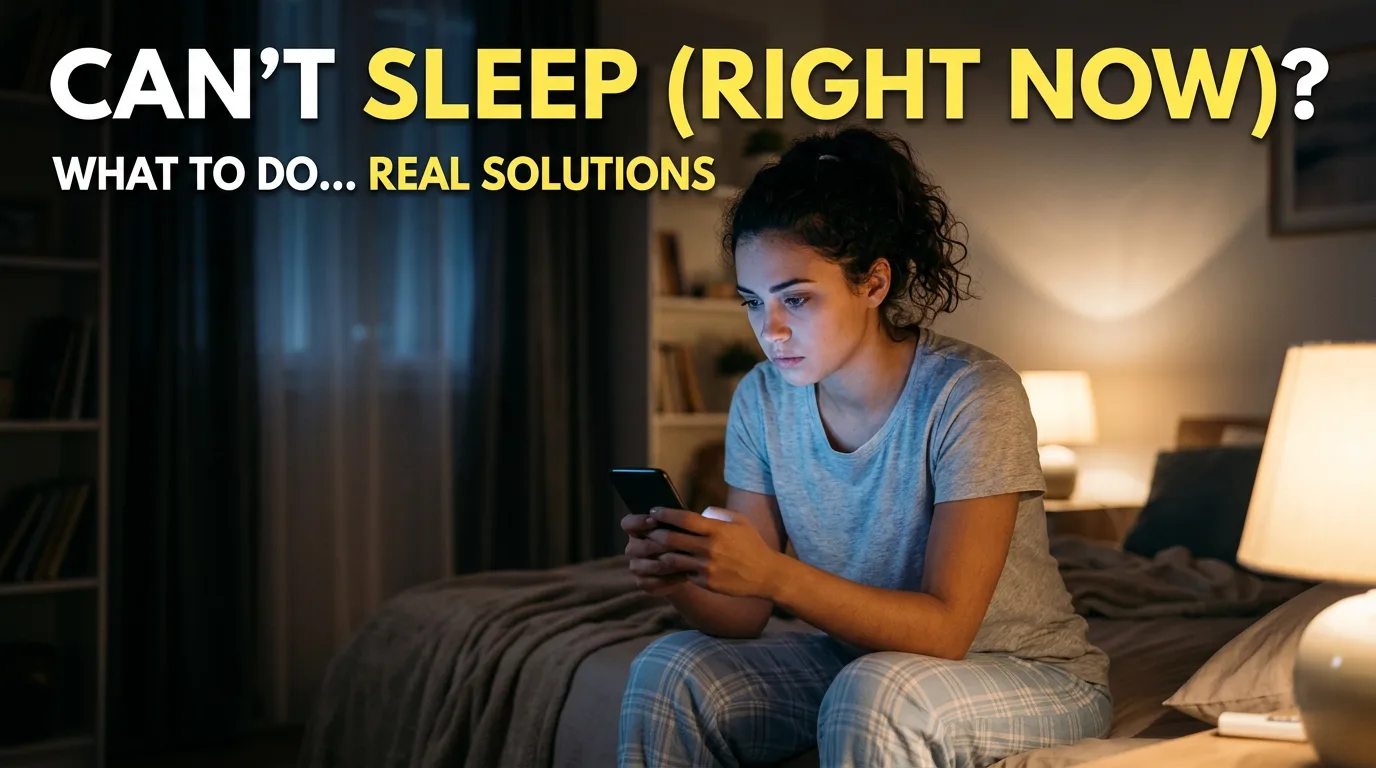
Somewhere in the last decade, “blue light” became sleep culture’s favorite villain. It’s the reason phones ship with orange-tinted night modes, the reason a whole industry of amber-lensed glasses exists, and the reason so many people feel a flicker of guilt every time they scroll in bed. The story is tidy: blue light tricks your brain into thinking it’s daytime, melatonin gets crushed, and your sleep suffers. Part of that is genuinely true and well documented in the lab. But the popular version has outrun the science in an important way, and newer research suggests that for a lot of ordinary phone-in-bed use, the wavelength may matter less than what you’re doing with it, and when you finally put it down. This guide covers the real mechanism, what the strongest studies show, why the “screens ruin sleep” narrative oversimplifies things, what the evidence says about glasses and night mode, and which fixes are genuinely well supported.
Quick answer: does blue light before bed really ruin your sleep?
Blue light does measurably suppress melatonin and shift circadian timing under controlled lab conditions, that part of the science is solid. But whether your ordinary evening phone or laptop use is doing the same thing, at the same scale, in real life, is more contested than most headlines suggest. Newer research points to content and engagement, the emotionally stimulating, hard-to-put-down nature of scrolling, along with the delayed bedtime that comes from staying up to keep scrolling, as factors that may matter as much as, or more than, the blue wavelength itself. Meanwhile, the evidence for blue-light-blocking glasses is thin and largely non-significant in rigorous trials, and night mode reduces color temperature rather than eliminating blue light outright. The one intervention that shows up consistently and reliably across sleep organizations is behavioral, not optical: stopping screens 30 to 60 minutes before bed, which sidesteps the light-versus-content debate entirely by removing both factors at once.
The real mechanism: how blue light talks to your circadian clock
To understand why blue light gets singled out specifically, it helps to know how your eyes detect it for the purpose of timing sleep. Vision runs through rods and cones, but a separate population of retinal cells, intrinsically photosensitive retinal ganglion cells (ipRGCs), does a different job. These cells contain a light-sensitive pigment called melanopsin, and rather than helping you see detail or color, they exist to detect ambient brightness and report it to the suprachiasmatic nucleus (SCN), the brain’s master circadian clock in the hypothalamus. Melanopsin is most sensitive to short wavelengths in the blue part of the visible spectrum, roughly 460 to 490 nanometers, which is why blue-heavy light has an outsized effect on circadian signaling compared to red or amber light at the same brightness. When the SCN reads a strong blue-light signal, it interprets that as daytime and suppresses the pineal gland’s release of melatonin, the hormone that normally rises in the evening to help initiate sleepiness.
The clearest demonstration comes from a frequently cited Harvard study comparing 6.5 hours of blue light exposure against green light of comparable brightness: blue light suppressed melatonin for roughly twice as long, and shifted circadian rhythms by about twice as much, roughly 3 hours versus 1.5 hours. Harvard Health has also noted that even modest brightness matters: as little as about 8 lux, a level exceeded by most table lamps, can measurably interfere with melatonin secretion. That sensitivity is exactly why blue light became the focus of so much sleep hygiene advice, the underlying photobiology is real, well replicated, and not seriously in dispute.
Where the science gets more nuanced: what phone and screen research actually shows
Here’s the part popular coverage often skips. The Harvard-style findings come from controlled lab conditions: fixed exposure, fixed brightness, fixed distance. Real-world phone use looks nothing like that, shorter bursts, a small screen at arm’s length, varying brightness, and actual content that engages your attention rather than a blank light source. That gap is where newer research has pushed back on the simplified “blue light ruins sleep” narrative.

A large real-world study found similar sleep quality regardless of nightly phone use
A study out of Toronto Metropolitan University, surveying more than 1,000 Canadian adults, found that overall sleep quality was broadly similar between people who used their phones in bed nightly and those who didn’t use them at all, a genuinely surprising result if blue light exposure alone were the dominant factor. Notably, the worst sleep showed up in people who used their phones only a few nights a week, not the nightly users, a pattern that doesn’t fit a simple dose-response story. Sleep researcher Colleen Carney, who worked on the study, has argued that many earlier studies blaming blue light didn’t adequately account for age, timing, and real-world exposure intensity, and that the field has “not paid attention to studies that don’t find it,” a reminder that a popular narrative can outrun the evidence behind it.
Content and engagement may matter as much as wavelength
Carney’s own framing is worth sitting with: the real risk from phone use before bed, in her view, comes less from the light itself and more from what you’re doing on the screen, whether “you’re engaging in things that make it really difficult to put it down,” or “things that are upsetting or alerting.” A stressful work email, a heated group chat, an infinite-scroll feed engineered to keep you engaged, or upsetting news content can activate your sympathetic nervous system in ways that have nothing to do with photons and everything to do with psychological arousal. This dovetails with a broader pattern covered in our guide on why you’re exhausted but can’t fall asleep at night, since stimulating pre-bed content is a common trigger for the nervous-system activation that keeps an otherwise tired brain wide awake.
Delayed bedtime may be a bigger driver than the light itself
A large 2025 American Cancer Society study, drawing on more than 122,000 participants, found daily screen use in bed was associated with a meaningfully later bedtime and roughly 50 fewer minutes of sleep per week, pointing toward behavior and time displacement rather than light physiology as the operative mechanism. Often the problem isn’t that melatonin is being chemically suppressed, it’s that “one more video” quietly eats into the clock, and bedtime slides later regardless of the screen’s color. A systematic review in Frontiers in Psychology examining 24 studies on blue light and sleep reached a similarly cautious conclusion, finding only around 20% of the reviewed studies reported worse sleep quality tied specifically to blue light exposure, describing the overall field as still “a murky one.”
So is blue light real, or is it a myth? The honest, both/and answer
The most accurate summary sits between the two extremes. Blue light’s ability to suppress melatonin is real, well-established photobiology, not a myth. But the popular leap from “blue light suppresses melatonin in a lab” to “your phone scrolling is definitely ruining your sleep” skips over variables that matter in practice: dose, duration, the distance and brightness of a handheld screen versus a lab panel, individual sensitivity, and the emotional content of what you’re looking at. A short, calm check of a dim screen is unlikely to move the needle for most people. An hour of bright doomscrolling through anxiety-inducing news, held close to your face right up until you try to sleep, plausibly stacks light-driven suppression, psychological arousal, and a later bedtime, three mechanisms at once, so treating “blue light” as the single explanation obscures how much of that damage comes from the content and the clock.
Do blue-light-blocking glasses actually work? Grading the evidence honestly
Given how central blue light became to the popular narrative, it’s no surprise a product category, amber or yellow-tinted glasses marketed for evening screen use, grew up around it. The evidence for these glasses is genuinely mixed, and thinner than the marketing suggests. A 2025 systematic review and meta-analysis in Frontiers in Neurology pooled three randomized controlled crossover trials, 49 participants total, measuring objective sleep outcomes with wrist-worn actigraphy. The results trended favorably but weren’t statistically significant on any measure: sleep onset latency improved by about 4.9 minutes on average (not significant), total sleep time increased by about 8.75 minutes (not significant), sleep efficiency barely moved, and wake time after sleep onset dropped by under 1.5 minutes. The review’s own conclusion is appropriately cautious: blue-light-blocking glasses “may provide small improvements in sleep, but current evidence from RCTs does not support significant effects,” and the authors call for larger, better-powered trials before recommending them with confidence.
That doesn’t mean the glasses are useless. Some smaller, more narrowly scoped studies have found effects like faster sleep onset in specific populations, such as students or shift workers with heavy evening screen exposure, and there’s essentially no downside to wearing them. Based on the best available evidence, treat them as a low-cost, low-risk option worth trying if you’re curious, not a proven fix. If they make you feel like you’re taking a concrete action, that placebo-adjacent benefit is a legitimate reason to keep using them, just don’t expect them to cancel out a late, stimulating, hour-long scrolling session.
Night mode and warm color filters: what they change and what they don’t
Nearly every modern phone, tablet, and laptop ships with a night mode or warm color filter that shifts the display toward amber tones in the evening. According to the American Academy of Ophthalmology, night mode doesn’t eliminate blue light emissions, it shifts the overall color temperature warmer, reducing the proportion of blue wavelengths and avoiding a bright, cool-toned signal that can be misread as daylight. Blue light itself doesn’t damage the eye, but reducing exposure alongside lowering screen brightness and limiting overall screen time can genuinely help some people sleep better. The Academy’s practical recommendation pairs night mode with the more important habit: putting devices away 1 to 2 hours before bed, treating the color filter as a supplement, not a substitute for that behavioral step.
In practice, night mode is a reasonable, free, zero-effort setting worth leaving on in the evening, and it plausibly helps at the margins for light-sensitive people. But don’t expect switching to warm colors to fully offset an hour of stimulating scrolling. It changes one variable, the wavelength, while leaving the content and the delayed bedtime untouched.
What actually works: mitigation strategies ranked by how well-supported they are
Given the honest state of the evidence, some commonly recommended fixes are better supported than others. Here’s a practical rundown, roughly ordered from most to least reliably backed by research.

1. A screen curfew 30 to 60 minutes before bed (the most reliable intervention)
The American Academy of Sleep Medicine’s guidance, drawn from a national survey on bedtime screen habits, recommends eliminating screens 30 to 60 minutes before bed, removing phones from the bedroom, and using a traditional alarm clock. This is more reliably supported than glasses or night mode because it sidesteps the light-versus-content debate entirely: if the screen isn’t in front of you, neither the wavelength nor the content can interfere with your wind-down. The same survey found 38% of adults say doomscrolling makes their sleep noticeably worse, rising to 46% among adults 18 to 24, and a quarter admit to prioritizing screen time over a full seven hours of sleep. AASM specialist Dr. James Rowley has noted that blue light combined with emotionally charged content can “trick our body clocks into a state of daytime-level alertness,” exactly the combination a curfew removes in one move. This overlaps with the wider framework in our 3:2:1 sleep rule guide, where cutting screens in the final hour sits alongside tapering fluids, food, and alcohol.
2. Dim the room, lower screen brightness, and add distance
Melatonin suppression is sensitive to overall brightness, not just wavelength, so turning down screen brightness and dimming ambient room lighting compounds with any color shift from night mode. Since as little as 8 lux, dimmer than most table lamps, can measurably affect melatonin, total light exposure in the room matters, not just the device in your hand. Distance helps too: light intensity falls off sharply, so a phone held six inches from your face delivers far more light energy than the same phone propped a few feet away, or a TV across the room. This connects to the broader picture in our guide to best sleep environment setup: temperature, light, sound, where darkness is one of the highest-leverage changes for protecting melatonin overnight.
3. Choose calmer content, not just a dimmer device
Given how much newer research points to content and engagement as independent contributors, swapping stimulating, hard-to-put-down content (news, arguments, competitive games, autoplaying video) for something calmer, a familiar show, a physical book, quiet music, addresses a mechanism a color filter or glasses simply can’t touch. It’s less about the device and more about whether the activity winds your nervous system down or revs it up.
4. Anchor the curfew to a real wind-down routine
A screen curfew works best when it’s replaced with something, not just removed. Reading, stretching, a warm shower, or slow breathing gives your nervous system an active off-ramp instead of leaving you reaching back for your phone out of habit. Because caffeine, alcohol, and screens all interact with the same wind-down window, treat your last hour before bed holistically. If evening caffeine is also part of your routine, our guide on how caffeine affects sleep at different times of day covers the same evidence-graded approach applied to timing.
5. Get bright light exposure earlier in the day
A circadian rhythm anchored by strong, consistent daytime light exposure is generally more resilient to a modest amount of evening screen light than one running on a weak or irregular daily signal. Addressing the daytime half of the equation reduces how much any given evening’s screen use actually matters.
Why some people seem far more sensitive to screens than others
If a friend can scroll for an hour with no apparent effect while you’re wide awake after five minutes, that’s a genuine, documented pattern. Individual sensitivity to light-driven melatonin suppression varies considerably, and age is one clear factor: younger people, particularly during puberty, appear more vulnerable than older adults, whose pupils naturally transmit less light. Night owls and many teenagers, already running on a delayed circadian rhythm, may be more susceptible to a stimulus that pushes their internal clock even later, and anyone with a diagnosed sleep-onset difficulty is likely to notice the combined effect more acutely. If evening screen use is one of several factors complicating a broader sleep-onset pattern, our companion piece on whether white noise really helps you sleep walks through a similarly mixed, honestly-graded evidence picture, a reminder that “genuinely helpful for some, not a universal fix” recurs across sleep hygiene advice.
A practical evening screen checklist
- Set a screen curfew 30 to 60 minutes before bed, the highest-leverage change on this list.
- Leave night mode on in the evening; it’s free and plausibly helps at the margins, even if it isn’t a fix on its own.
- Lower screen brightness manually rather than relying on color temperature alone.
- If you use a screen in the last hour, favor a larger display at a distance over a phone held close to your face.
- Swap stimulating content, news, arguments, autoplay feeds, for calmer alternatives if you can’t put the screen away entirely.
- Fill the curfew window with a real replacement activity, reading, stretching, a shower, rather than idle time that invites you back to the phone.
- Keep phones off the nightstand so a 3 a.m. wake-up doesn’t turn into 20 minutes of scrolling.
- Prioritize strong daytime light exposure to make your circadian rhythm more resilient overall.
- If you try blue-light glasses, treat them as a low-risk extra, not a substitute for the curfew and content changes above.
When screen-related sleep trouble points to something more
For most people, adjusting screen timing, brightness, and content is a genuinely useful, low-effort improvement. But if you’ve tightened up your evening habits and you’re still lying awake, waking frequently, or feeling unrefreshed most nights for weeks, that’s worth taking to a doctor rather than continuing to troubleshoot phone settings. Screens can worsen an already fragile sleep pattern, but they’re rarely the sole cause of a persistent disorder, and chronic insomnia tends to need a more structured approach than any single habit change can provide.
Frequently asked questions
Is the “blue light ruins sleep” claim a myth, or is it real?
Neither a flat myth nor the full picture. The photobiology is real: blue wavelengths detected by specialized retinal cells suppress melatonin and shift circadian timing more than other colors at the same brightness, as shown in controlled studies like Harvard’s blue-versus-green comparison. What’s overstated is the leap from that lab finding to “ordinary phone use is definitely wrecking your sleep.” Newer real-world research suggests content, engagement, and delayed bedtime often matter as much as, or more than, the wavelength, which is why some people scroll before bed with little apparent effect while others are clearly disrupted.
Do blue-light-blocking glasses actually improve sleep?
The current evidence is underwhelming. A 2025 systematic review and meta-analysis of randomized controlled trials found only small, statistically non-significant improvements in sleep onset latency, total sleep time, and sleep efficiency among wearers. That doesn’t mean they’re harmful, some smaller studies in specific populations found modest effects, and there’s no real downside to trying them, but they shouldn’t replace more well-supported changes like reducing screen time before bed.
Does night mode on my phone actually reduce blue light exposure?
Yes, but only partially. It shifts your screen’s color temperature warmer, reducing the proportion of blue wavelengths and avoiding the bright, cool-toned signal your circadian system can misread as daylight. It doesn’t eliminate blue light output entirely, and the American Academy of Ophthalmology frames it as a supplement to lowering brightness and limiting screen time, not a replacement for putting the device away before bed.
How long before bed should I really stop using screens?
The American Academy of Sleep Medicine’s general guidance points to 30 to 60 minutes before bed, while some sources suggest 2 to 3 hours for people who are especially light-sensitive or prone to engaging content. Even a shorter curfew combined with dimmer, calmer content beats scrolling at full brightness right up until you close your eyes.
Is watching TV before bed better or worse than scrolling on a phone?
TV generally involves a larger screen at a greater distance, reducing the light dose compared to a phone held close to your face, and passive viewing may involve less of the psychological stimulation newer research flags as an independent driver of pre-bed alertness. That said, TV content can be just as stimulating, a tense show or breaking news can trigger the same arousal response, so content still matters more than the device.
What matters more for sleep: the blue light or what I’m actually doing on the screen?
Both play a role, but for a lot of ordinary evening use, content and delayed bedtime may matter as much as, or more than, the wavelength. A short, calm check of a dim screen is unlikely to meaningfully disrupt melatonin for most people; an hour of bright, engaging scrolling that pushes bedtime later stacks light exposure, psychological arousal, and lost sleep into one habit. That’s why a screen curfew, which removes all three at once, is the most consistently recommended fix, ahead of glasses or night mode alone.
References
- Harvard Health Publishing – Blue Light Has a Dark Side
- Toronto Metropolitan University – Biggest-Ever Canadian Research Study Shows Bedtime Screen Use Isn’t a Clear-Cut Sleep Health Concern
- JAMA Network Open – Electronic Screen Use and Sleep Duration and Timing in Adults
- Frontiers in Physiology – The Influence of Blue Light on Sleep, Performance and Wellbeing in Young Adults: A Systematic Review
- Frontiers in Neurology – Efficacy of Blue-Light Blocking Glasses on Actigraphic Sleep Outcomes: A Systematic Review and Meta-Analysis of Randomized Controlled Crossover Trials
- American Academy of Ophthalmology – Should You Use Night Mode to Reduce Blue Light?
- American Academy of Sleep Medicine – Americans Are “Doomscrolling” at Bedtime, Prioritizing Screen Time Over Sleep



Leave a Reply