
Fish & Aquariums
The first shrimp I ever bought were a dozen “assorted Neocaridina” from a big-box store, dumped straight into a two-week-old planted tank that still had a sliver of copper-based root fertilizer sitting in the substrate. Three days later I had zero shrimp and a hard lesson about how differently crustaceans react to things fish barely notice. That mistake sent me down a rabbit hole of shrimp-keeping forums and care sheets, and it’s the reason I now tell every beginner the same thing: shrimp are easy once you know which species to start with, and brutal if you guess wrong.
Quick answer
For a first shrimp tank, stick to Neocaridina davidi color morphs: cherry, sakura, blue velvet, yellow, and orange shrimp are all the same forgiving species wearing different colors, and Practical Fishkeeping’s Neocaridina FAQ notes they thrive across a pH range of roughly 6.5–8.0 and adapt to normal tap-water hardness, which is exactly why they dominate the beginner market. Amano shrimp are a good companion choice purely for algae control, since they tolerate an even wider range of conditions, but they rarely breed in a home aquarium. Skip Caridina (crystal and bee shrimp) and Sulawesi species until you’ve kept a Neocaridina colony alive and multiplying for at least a few months, because both groups demand tightly controlled, soft, acidic water that punishes small mistakes quickly.
Shrimp Are Crustaceans, Not Fish, And That Changes Everything
It’s easy to lump shrimp in with fish because they live in the same tank, but dwarf shrimp are crustaceans, more closely related to crabs and crayfish than to any fish species. That distinction matters for three practical reasons. First, their exoskeleton means they molt periodically as they grow, and a molt is a genuinely vulnerable moment; a shrimp that has just shed its shell is soft, defenseless, and needs stable water chemistry and minerals like calcium and magnesium to harden back up properly. Second, crustaceans are far more sensitive to certain chemicals that fish shrug off entirely, especially copper, which is present in many plant fertilizers and some fish medications and is lethal to shrimp even in tiny doses. Third, shrimp need a genuinely established biological filter before they go in; ammonia and nitrite spikes that a hardy fish might survive can wipe out an entire shrimp colony overnight. If your tank hasn’t finished cycling yet, it’s worth working through the cycling process properly before adding any shrimp, our guide on how to cycle a new aquarium walks through it step by step.
The upside of all this sensitivity is that once conditions are right, dwarf shrimp are remarkably low-maintenance pets. They don’t need feeding every day (most of their diet comes from grazing biofilm and algae off surfaces), they don’t produce much bioload, and they’re fascinating to watch; constantly picking through gravel, plants, and decor. For a beginner willing to do a little homework on water chemistry first, they’re one of the most rewarding animals in the hobby.
The Easiest Beginner Species: Neocaridina (The Cherry Shrimp Family)
Nearly every shrimp recommended as “great for beginners” belongs to a single species, Neocaridina davidi, selectively bred into a rainbow of color strains. This is the group to start with, and understanding that they’re all the same underlying animal makes shopping much less confusing.

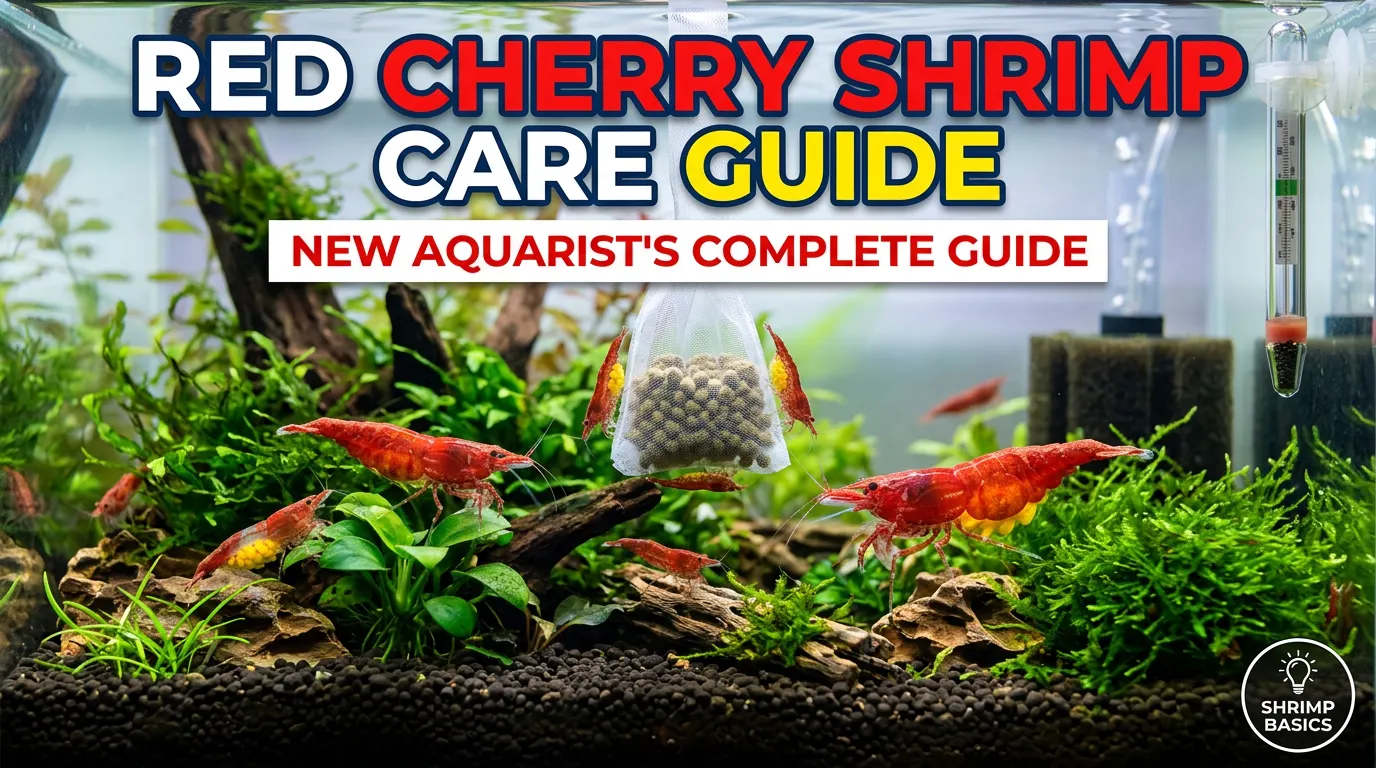
- Cherry shrimp. The classic red morph and the most widely available Neocaridina color, prized for being hardy even as a lower “grade” with less saturated color, a good, inexpensive entry point.
- Sakura shrimp. A deeper, more solidly colored red strain bred from cherry shrimp stock; slightly pricier but just as easygoing in the tank.
- Blue velvet shrimp. An opaque, saturated blue morph that tends to hold its color better under normal lighting than some other blue strains, making it a popular choice for a colorful beginner tank.
- Yellow shrimp. A bright, cheerful morph that shows up well against dark substrate and pairs nicely with reds and blues in a mixed-color colony.
- Orange shrimp (orange sakura/pumpkin). Another Neocaridina color line, similarly undemanding, that adds contrast to a planted shrimp tank.
According to Aquarium Co-Op’s cherry shrimp care guide, this group does best with a GH of at least 6 degrees (about 110 ppm) and a KH of at least 2 degrees (about 40 ppm), a pH between roughly 6.5 and 8.5, and a temperature most comfortable in the 72–76°F range, a window that overlaps comfortably with most community fish tanks and ordinary tap water in many areas. Breeding is straightforward too: females carry 20–30 eggs under their abdomen for about a month, the babies hatch as fully-formed miniature adults, and unlike many fish, adult shrimp don’t hunt down their own young, so a healthy colony multiplies on its own with no intervention. If you’re setting up a dedicated shrimp tank for the first time, our shrimp tank setup guide covers tank size, filtration, and planting choices that suit this species well.
Amano Shrimp: The Hardy Algae-Eating Workhorse
Amano shrimp (Caridina multidentata) aren’t Neocaridina, but they deserve a place on any beginner shortlist because of how tough and useful they are. Aquarium Co-Op’s Amano shrimp guide describes them tolerating a wide range of roughly 65–82°F and pH 6–8, and being notably effective against nuisance algae, including hair algae, thread algae, and even some black beard algae, problems that frustrate a lot of new planted-tank owners. They also grow larger than Neocaridina, typically 1.5–2 inches, so they can hold their own better against modestly sized community fish.
The one catch: Amano shrimp are essentially impossible to breed in a standard freshwater aquarium. Their larvae hatch needing brackish or full saltwater to survive the first weeks of development, so while adults are hardy and long-lived, you won’t wake up to a tank full of baby Amanos the way you might with cherry shrimp. Think of them as a purchased, semi-permanent algae crew rather than a breeding project, and buy them as adults from a reputable source rather than hoping for offspring.
Why Caridina (Crystal & Bee Shrimp) Aren’t Beginner-Friendly
Crystal red shrimp, crystal black shrimp, and the various “bee shrimp” grades are stunning, but they belong to the Caridina genus, which is a fundamentally different challenge than Neocaridina. A beginner-focused breakdown from Shrimp Up Aquatics lays out the numbers: ornamental Caridina typically need a pH of 6.0–6.9, GH of 4–6, KH of 0–1, and TDS in the 90–150 range a narrow, soft, acidic window that’s nothing like typical tap water. As that guide puts it, the exact numbers matter less than “creating an appropriate setup and keeping it consistently within a suitable range,” but hitting and holding that range usually means RO/DI water, remineralizers, and an active buffering substrate, see our substrate comparison guide for how those active soils differ from ordinary gravel.
The bigger issue for a beginner isn’t the setup cost, it’s the margin for error. Fancy soft-water Caridina can punish sudden parameter swings very quickly, a rushed water change, a bag of shrimp dumped straight from the pet store bag instead of drip-acclimated, or a KH that drifts up because of tap water buffering, and you can lose a chunk of the colony in a day. Neocaridina will usually shrug off the same mistake. Caridina are a fantastic “second tank” project once you’ve proven you can keep water parameters stable for months on end, but they’re a discouraging and expensive way to start the hobby.
Sulawesi Shrimp: Beautiful But Not For Beginners
If Caridina crystal shrimp are the intermediate step, Sulawesi species (cardinal shrimp, white orchid shrimp, and other Caridina from Indonesia’s ancient lakes) are the deep end. According to Sulawesi Keepers, these shrimp evolved in large, geologically stable lakes with very specific water chemistry, and aquarium water needs to mimic that closely — usually built from reverse osmosis water with mineral salts added back in, since ordinary tap water and pH-altering substrates work against them. They also need consistently warm water, close to 30°C (86°F), which means a reliable heater with an accurate thermostat is non-negotiable; our aquarium heater guide covers the kind of precision you’ll want if you ever move up to this group. Sulawesi shrimp are also unusually sensitive to ammonia and nitrite, so the tank must be fully cycled and mature before they go in, and their small size (about 2cm) makes them easy prey for anything but the most peaceful tankmates.
None of this makes Sulawesi shrimp a bad choice, they’re some of the most striking animals in the freshwater hobby, but they’re a specialist’s project. Losing a batch to an unstable parameter is expensive and disheartening in a way that can sour someone on shrimp-keeping entirely, so it’s worth building confidence with Neocaridina first.
Beginner Shrimp Species Compared
| Species | Difficulty | Water Needs | Typical Cost | Availability |
|---|---|---|---|---|
| Cherry / Sakura shrimp (Neocaridina) | Very easy | pH 6.5–8.0, moderate GH/KH, 70–79°F | $3–8 each | Very common; most fish and pet stores |
| Blue velvet / Yellow / Orange shrimp (Neocaridina) | Very easy | Same as cherry shrimp | $4–10 each | Common; LFS and online specialty sellers |
| Amano shrimp | Easy (won’t breed in freshwater) | pH 6–8, 65–82°F, moderate-hard water | $3–6 each | Very common; sold as algae control |
| Crystal red/black shrimp (Caridina) | Intermediate to hard | pH 6.0–6.9, GH 4–6, KH 0–1, TDS 90–150 | $5–30+ each, higher for top grades | Moderate; specialty and online shrimp breeders |
| Sulawesi cardinal/orchid shrimp | Advanced | pH ~7.5–8.5, ~30°C, remineralized RO water | $10–25+ each | Uncommon; specialty importers/breeders |
Practical Buying Advice for Your First Shrimp
A little care at the buying stage saves a lot of grief a week later. Keep these points in mind whether you’re shopping at a local fish store or ordering online.
- Wait for a fully cycled tank. Don’t add shrimp to a brand-new setup; give the beneficial bacteria colony weeks to establish first so ammonia and nitrite stay at zero.
- Buy a group, not a pair. Neocaridina are social and breed best in numbers, most keepers start with at least 10–15 to give a colony a real head start and a buffer against natural losses.
- Drip-acclimate every shrimp. Never dump a bag straight into the tank; slowly matching temperature and water chemistry over 30–60 minutes dramatically improves survival, especially for anything beyond basic Neocaridina.
- Ask about the source water. A reputable seller can tell you the pH, GH, and KH the shrimp were raised in, which helps you judge how much acclimation and remineralization you’ll need.
- Check for copper anywhere in the tank’s history. Avoid fertilizers, algaecides, and fish medications containing copper, it’s one of the most common accidental shrimp killers, and residue can linger in substrate or decor.
- Keep maintenance gentle. Shrimp tanks still need regular upkeep, but tools matter, a controllable gravel vacuum keeps you from accidentally siphoning up babies; see our guide to aquarium gravel cleaners for options that work well in shrimp tanks.
- Start cheap and common before splurging on grade. Standard-grade cherry or blue velvet shrimp let you practice husbandry for a fraction of the cost of high-grade crystal shrimp, so mistakes are cheap lessons instead of expensive ones.
Frequently asked questions
What is the easiest shrimp species for a total beginner?
Neocaridina davidi color morphs: cherry, sakura, blue velvet, yellow, and orange shrimp, are the easiest, since they tolerate a wide pH and hardness range and breed readily without special intervention.
Can I keep cherry shrimp and Amano shrimp together?
Yes, cherry shrimp and Amano shrimp share similar water parameter preferences and are commonly kept together, with Amano shrimp adding extra algae control while cherry shrimp handle the breeding side of the colony.
Why won’t my Amano shrimp breed?
Amano shrimp larvae need brackish or saltwater conditions to develop, which a standard freshwater aquarium doesn’t provide, so while adults thrive and live for years, breeding them at home isn’t realistic without a dedicated larval-rearing setup.
Are crystal red shrimp harder to keep than cherry shrimp?
Yes, crystal red and other Caridina shrimp need a narrower, softer, more acidic water range than Neocaridina and are much less forgiving of sudden parameter changes, which is why they’re usually recommended as a second species rather than a first.
What water parameters do beginner shrimp need?
Neocaridina shrimp generally do well in a pH of roughly 6.5 to 8.0, moderate general and carbonate hardness, and a temperature between about 70 and 79°F, which is close to what many community fish tanks already provide.
Is copper really dangerous to shrimp?
Yes, copper is highly toxic to shrimp and other invertebrates even in trace amounts, so it’s important to avoid fertilizers, algaecides, and fish medications that contain it anywhere near a shrimp tank.
Why shouldn’t beginners start with Sulawesi shrimp?
Sulawesi shrimp come from geologically stable lakes with very specific, warm water chemistry, so they need consistently controlled temperature and mineral content that’s difficult for a new keeper to replicate and maintain reliably.
Once your first Neocaridina colony is thriving, the natural next step is dialing in the rest of the tank around them, our shrimp tank setup guide is the best starting point, and pairing it with a simple aquarium maintenance schedule keeps water quality steady for the long haul. If you do decide to chase crystal shrimp or Sulawesi species down the road, revisit our aquarium heater guide first, since precise temperature control is where a lot of those advanced setups succeed or fail. And if you’re deciding between the two easiest beginner options, my Amano shrimp vs Neocaridina comparison breaks down which one actually fits your goals, while my red cherry shrimp care guide goes deeper on color grading and breeding for the most popular starter species.



Leave a Reply