Fish & Aquariums
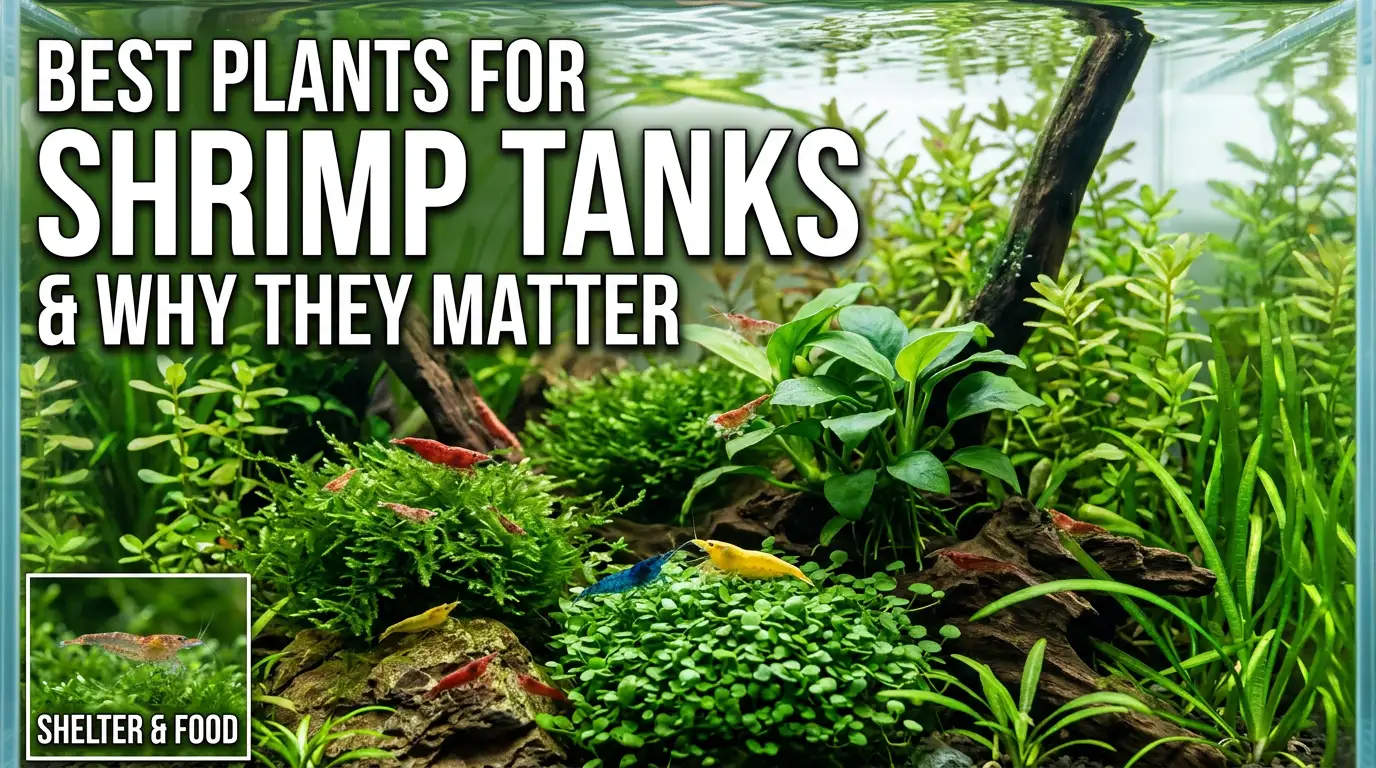
I set up my first shrimp tank with nothing but bare glass, a sponge filter, and a colony of cherry shrimp I was sure would breed on their own. They didn’t, not until I dropped in a fist-sized clump of java moss a few weeks later, and within a month I was finding shrimplets tucked into it every morning. That one change taught me something the fish side of the hobby never quite drills into you: for shrimp, plants aren’t decoration, they’re infrastructure.
Quick answer
Plants matter more for shrimp than for almost any fish because shrimp use them as food, shelter, and a nursery all at once: the biofilm growing on leaves and stems is a constant grazing source, dense cover hides soft, freshly molted shrimp from predators (including other shrimp), and a heavily planted tank buffers water quality far more effectively than a bare one. Java moss is the closest thing shrimp keeping has to a universal answer: cheap, undemanding, and shrimp graze and hide in it constantly, while java fern, anubias, floating plants like frogbit and duckweed, and slower-growing stem plants round out a solid beginner list. The plants worth being cautious with are fast growers that expect CO2 injection and heavy liquid fertilizing, since that routine raises the odds of a copper-containing product ending up in the water; and any new plant should be rinsed and, ideally, quarantined before it goes anywhere near a shrimp tank, since pesticide and fertilizer residue from the nursery it was grown in is a real, if under-discussed, risk.
Why plants matter more for shrimp than for most fish
Most freshwater fish treat plants as scenery: nice to have, rarely essential. Shrimp treat them as a job site. A dwarf shrimp spends most of its waking hours picking through the thin layer of biofilm, algae, and microorganisms that coats every leaf, stem, and piece of moss in an established tank, that grazing surface is a genuine, constant food source, not a supplement to feeding, which is a large part of why a heavily planted shrimp tank needs far less deliberate feeding than a bare one. The more surface area a tank offers, and moss in particular offers an enormous amount of surface area per square inch of substrate, the more grazing ground there is to go around, especially in a colony that’s breeding and constantly adding new mouths.
Plants also solve a problem that’s specific to having an exoskeleton instead of an internal one. Every shrimp molts repeatedly throughout its life, and for several hours after each molt it’s soft, pale, and effectively defenseless. In a bare tank, a freshly molted shrimp has nowhere to go; in a densely planted one, it can disappear into moss or leaf cover until the new shell hardens. The same cover matters even more for shrimplets, which hide in plants almost constantly for their first couple of weeks of life and are far more vulnerable to being eaten, by fish, by larger shrimp, even by filter intakes, than adults are. Keepers who track breeding success consistently report that shrimplet survival is noticeably higher in a heavily planted tank than a sparse one, simply because there’s somewhere for a two-millimeter shrimp to hide.
The third role plants play is quieter but still real: water quality buffering. A well-planted tank takes up some of the nitrogen and other waste products that would otherwise accumulate between water changes, and the microbial life living on and around plant surfaces adds another layer of biological processing beyond whatever is happening in the filter. None of this replaces a proper cycle or regular maintenance, but it does mean a planted shrimp tank tends to forgive small lapses, a slightly late water change, a slightly overfed week, more gracefully than a bare one does, which matters for an animal as sensitive to sudden swings as a dwarf shrimp.

The best plants for a shrimp tank, at a glance
Before getting into specific picks, it helps to see how the common options compare on the things that actually decide whether a plant belongs in a beginner shrimp tank: how much light it needs, whether it expects CO2 injection, and how well it suits shrimp specifically rather than just looking good.
| Plant | Light needs | CO2 needs | Shrimp-tank suitability |
|---|---|---|---|
| Java moss | Low to moderate | None required | Excellent – the standard grazing and hiding plant for shrimp |
| Christmas moss / other mosses | Low to moderate | None required | Excellent – similar role to java moss, slightly different texture and growth habit |
| Java fern | Low to medium-high, very flexible | None required | Very good – slow-growing, undemanding, leaves develop biofilm over time |
| Anubias | Low to moderate | None required | Very good – extremely hardy, broad leaves are a favorite grazing and resting spot |
| Amazon frogbit | Moderate to high (floats near the light) | None required | Very good – shades the tank, trailing roots give shrimp cover near the surface |
| Duckweed | Moderate to high | None required | Good – excellent nutrient uptake, but spreads fast and is genuinely hard to remove once established |
| Dense stem plants (e.g. rotala, hygrophila) | Moderate to high | Often benefits from CO2 for compact growth | Good with caution – great cover when grown well, but the fertilizing routine needed for fast growth is where copper risk creeps in |
Java moss: the gold standard
If a shrimp tank has room for exactly one plant, it’s java moss. It asks for almost nothing – low light, no CO2, no substrate, it’ll grow tied to a rock, glued to driftwood, or simply left loose in a corner – and in exchange it gives shrimp a dense, three-dimensional surface to graze and hide in around the clock. Practical Fishkeeping’s advice on keeping java moss tidy is a useful reality check for anyone picturing a perfectly manicured carpet: the outlet notes that brighter light, more flow, and CO2 injection produce denser, neater growth, but plenty of shrimp keepers run it successfully in a low-tech tank where it grows looser and shaggier instead. Their guidance also lines up with why shrimp and moss pair so well in the first place – cherry and Amano shrimp graze the biofilm that builds up in moss and help keep it from turning into a detritus trap, which is as much a maintenance benefit as a feeding one.
The one thing java moss does need is occasional trimming and thinning, not because it’s demanding, but because a pad that’s allowed to grow too thick traps mulm and debris in its interior. Trimming it back every few weeks with small scissors, then gently lifting loose debris out with a turkey baster or soft brush rather than a gravel vacuum, keeps it functioning as a grazing surface instead of turning into a dirt sponge. That’s a small amount of upkeep for a plant that otherwise does most of the heavy lifting in a beginner shrimp tank.
Other reliable picks beyond java moss
Java moss doesn’t have to carry the whole tank on its own, and a mix of textures generally makes for a healthier, more interesting shrimp tank than a single species repeated everywhere. Christmas moss and a handful of other aquarium mosses fill essentially the same role as java moss – low demands, constant biofilm, dense hiding structure, with slightly different growth habits, so mixing two or three moss types is a low-risk way to add variety.
Java fern is close behind moss as a beginner staple, and it earns that reputation for good reason. Aquarium Co-Op’s care guide for java fern describes it as flexible enough to handle almost any light level from low to medium-high, and notes that it needs no substrate at all, the plant’s rhizome, the horizontal stem the roots and leaves grow from, has to stay above the substrate rather than buried, since burying it invites rot. That makes java fern easy to attach to driftwood or rock with a dab of aquarium-safe super glue or a length of thread, which keeps it out of the substrate entirely and gives shrimp broad, sturdy leaves to graze and perch on as they develop a coat of biofilm over time.
Anubias is essentially java fern’s cousin in terms of shrimp-tank suitability, low light tolerant, no CO2 required, rhizome kept exposed rather than buried, with thicker, more rigid leaves that seem to be a particular favorite resting spot for shrimp. Floating plants deserve a place on the list too: Amazon frogbit and duckweed both pull nutrients directly from the water column, which competes with algae for the same resources, and their trailing roots give shrimp and shrimplets a shaded, cover-rich zone near the surface that’s different from anything happening lower in the tank. Duckweed is worth a specific caution of its own, it multiplies fast and is notoriously difficult to fully remove once it’s established, so it’s worth starting with a small amount and seeing how much control you actually want to maintain over it.
Plants to be cautious with
The plants that cause problems in a shrimp tank usually aren’t problems on their own – they’re problems because of what keeping them well tends to require. Fast-growing stem plants, dense carpeting plants, and anything marketed for a high-tech aquascape generally look their best under strong light with CO2 injection and a regular liquid fertilizing routine, and that combination is exactly where copper exposure risk creeps in. Copper is a common trace element in aquarium fertilizer formulas because plants use tiny amounts of it, but it’s toxic to shrimp and other invertebrates at concentrations so low that fish never notice them. My fertilizer guide covers this in more detail, but the short version is that commercial, chelated fertilizer formulas dosed correctly are generally fine, while DIY trace mixes, copper-based algae treatments, and anything not explicitly labeled shrimp-safe carry meaningfully more risk.
The 2Hr Aquarist, a well-known planted-tank fertilizer brand and resource, has published testing on exactly this question, and the numbers are worth knowing rather than just taking on faith. According to their published figures, a daily dose of their chelated all-in-one fertilizers adds under half a microgram per liter of copper to the water, roughly 300 times lower than the copper concentration used in fish parasite treatments, while DIY trace element mixes can add several times more copper per dose. Their broader point, backed by cited toxicology research, is that chelated (chemically bound) copper is dramatically less toxic to invertebrates than free copper ions, which is why the real danger tends to come from copper-based medications, tap water run through old copper pipes, homemade fertilizer mixes, and pesticide or fungicide treatments already on a newly purchased plant, not from a reputable, correctly dosed commercial fertilizer. My guide to what kills shrimp in tanks goes through copper poisoning and other sudden-death causes in more depth if you want the fuller picture.
None of this means fast-growing plants are off-limits in a shrimp tank, plenty of keepers run dense stem plants successfully alongside a thriving colony. It means the fertilizing routine those plants need deserves a closer look at labels than a low-tech tank with java fern and anubias ever will, and that a shrimp-safe, copper-free product is worth seeking out specifically rather than assuming any planted-tank fertilizer will do.
How to introduce new plants without bringing in pests or residue
A surprising number of aquatic plants sold in stores were actually grown emersed, above the waterline, in a nursery greenhouse, rather than fully submerged, which is a detail Practical Fishkeeping’s guide to problem aquarium plants points out about species that seem perfectly at home underwater, including plants as common as Amazon swords, crypts, and even java fern. Those emersed-grown plants are typically raised the way any greenhouse crop is raised, with pest control and fertilizer inputs suited to terrestrial cultivation, not to a tank that will shortly contain invertebrates with almost no tolerance for chemical residue. That’s the real argument for treating every new plant as a potential contamination risk rather than just a potential pest carrier, and it’s worth building a short routine around before anything goes into an established shrimp tank.

- Rinse thoroughly under running water first. A firm rinse, gently working through moss and leaf clusters with your fingers, removes loose debris, snail eggs, and a meaningful amount of surface residue before the plant goes anywhere near tank water.
- Inspect closely for hitchhikers. Look along stems, the undersides of leaves, and root masses for snail eggs (small clear or amber gel clusters), planaria, hydra, or visible insect larvae; a magnifying glass or a bright flashlight makes this much easier than eyeballing it under normal room light.
- Quarantine in a separate container for one to two weeks. A simple bucket or spare tank with a sponge filter and no shrimp lets you watch for pests, melting, or die-off without risking the main colony, and it gives any lingering pesticide residue time to leach out into water you’re not keeping shrimp in.
- Consider a short dip for high-risk plants. A brief bleach or hydrogen peroxide dip at a heavily diluted ratio, followed by a thorough rinse and a period in dechlorinated water, is a common way to kill snail eggs and pests on hardier plants like anubias and java fern; softer plants like moss and stem plants tolerate this less well, so a plain quarantine period alone is usually the safer choice for them.
- Buy from sources that grow plants submerged when possible. Plants raised fully underwater in low-tech, invertebrate-friendly conditions, tissue-cultured plants sold in sealed cups are a good example, carry meaningfully lower pesticide and pest risk than bare-root plants pulled from an emersed greenhouse setup.
- When in doubt, add new plants to a non-shrimp tank first. If you keep any other fish-only tank, running a new plant there for a few weeks before moving a cutting into the shrimp tank adds another layer of safety without any extra equipment.
A simple beginner planted shrimp tank plant list
For a first planted shrimp tank, the goal isn’t variety for its own sake, it’s covering the roles plants actually play, grazing surface, hiding cover, a shrimplet nursery zone, and some water-quality buffering, without taking on a CO2 setup or a fertilizing routine you don’t need yet. A short, low-tech list handles all of that on its own.

- Java moss, one or two clumps. Tie or glue it to driftwood or a rock as the primary grazing and molting-cover plant; this is the one to prioritize if you’re only adding a single plant.
- Java fern, two or three plants. Attach to hardscape rather than burying the rhizome; it fills the mid-tank with broad, biofilm-friendly leaves and needs almost no attention.
- Anubias, one or two plants. A different leaf texture and a favorite shrimp perch, equally undemanding and equally rhizome-above-substrate.
- Amazon frogbit, a small starting patch. Shades the surface, competes with algae for nutrients, and gives shrimplets a cover zone near the top of the tank.
- A stem plant or two, if you want more color and density. Something modest like water wisteria grows reasonably well without CO2 and adds cover without the fertilizing intensity of a true high-tech carpet.
That list alone, quarantined and rinsed before it goes in, covers essentially everything a new shrimp colony needs from its plants, and it leaves plenty of room to add moss varieties, floating species, or a CO2-fed carpet later once the basics are established and you have a feel for how your specific tank behaves.
Frequently asked questions
Do shrimp really need live plants, or is decor enough?
Shrimp can survive with just decor, but they do noticeably better with live plants, especially moss. Plants supply a constant grazing surface through biofilm, give freshly molted and newborn shrimp somewhere to hide, and help buffer water quality between changes in a way that plastic or resin decor simply can’t.
What is the single best beginner plant for a shrimp tank?
Java moss. It needs no CO2, tolerates low light, requires no substrate, and gives shrimp an enormous grazing and hiding surface for very little effort. If a beginner tank has room for only one plant, this is it.
Can I use CO2 or liquid fertilizer in a shrimp tank?
Yes, plenty of keepers run fertilized, CO2-injected shrimp tanks successfully, but it raises the stakes on label-reading. Choose a chelated, shrimp-safe, copper-free fertilizer, dose conservatively, and avoid DIY trace mixes and copper-based algaecides, which carry meaningfully more risk than a reputable commercial product used correctly.
How do I know if a new plant has pesticide or fertilizer residue on it?
You usually can’t tell just by looking, which is exactly why rinsing and quarantining every new plant matters, especially anything that was clearly grown emersed in a greenhouse rather than fully submerged. A one-to-two-week quarantine period gives residue time to leach out before the plant reaches shrimp that have almost no tolerance for it.
Do floating plants like frogbit or duckweed actually help shrimp?
Yes. Floating plants pull nutrients directly from the water column, which helps starve out algae, and their trailing roots give shrimp and shrimplets a shaded cover zone near the surface. Duckweed is effective at this too, but it spreads quickly and is hard to fully remove once established, so start small.
How many plants does a shrimp tank actually need?
There’s no strict minimum, but a heavily planted tank consistently outperforms a sparse one for shrimp health and breeding success. A reasonable starting point is one or two clumps of moss plus two or three each of java fern and anubias, which covers grazing, hiding, and molting cover without overcomplicating a first setup.
Is it safe to add plants from my fish tank into my shrimp tank?
Only after the same quarantine precautions you’d use for a store-bought plant. Even a plant that’s lived safely in a fish tank for years can carry snail eggs, parasites, or residue from something dosed in that tank, like a copper-based medication, that never bothered the fish but would be dangerous to shrimp.
If you’re building out a full setup rather than just picking plants, my shrimp tank setup guide covers the rest of the process end to end, and my substrate guide and guide to what shrimp eat are worth reading alongside this one, since substrate choice and feeding both interact directly with how well your plants, and your shrimp, actually do. Dense cover matters most in the hours right after a molt, when a shrimp is soft-shelled and vulnerable, as our guide to shrimp molting explains, and healthy grazing on that same plant growth is one of the clearest signs covered in our guide to telling if your shrimp are happy and healthy.



Leave a Reply