Fish & Aquariums
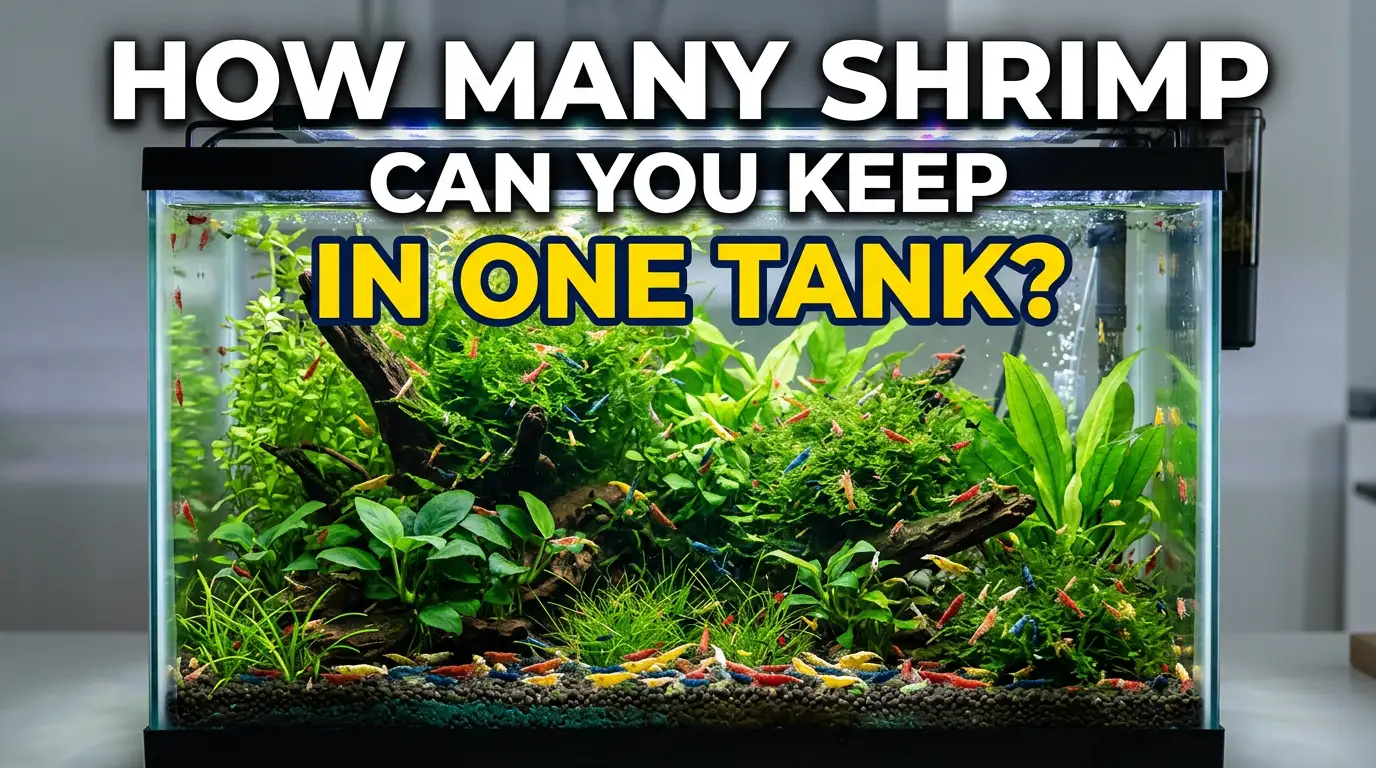
When I moved 15 cherry shrimp from a bare quarantine tub into their real 10-gallon home a couple of years ago, I thought I’d solved stocking with one number: shrimp per gallon. Eight months and I-don’t-know-how-many silent 2 a.m. hatchings later, I was staring at a tank so dense with shrimp that I could barely see the substrate, and the number I’d started with wasn’t wrong, it was just incomplete. Shrimp don’t sit still at whatever count you stock them at, because they breed inside the very water you budgeted for them. Working out how many shrimp per gallon actually makes sense means answering two questions at once: how many can the tank hold today, and how many will it be holding in six months.
Quick answer
As a starting rule of thumb, most experienced keepers stock Neocaridina shrimp (cherry, sakura, blue velvet) at roughly 5 to 10 shrimp per gallon for a comfortable, low-stress population, with some pushing toward 10 to 15 per gallon in a mature, heavily planted, well-filtered tank. That’s dramatically more generous than the familiar “one inch of fish per gallon” guideline circulated for fish, because a shrimp’s bioload is a small fraction of a similarly sized fish’s. But that number is a starting point, not a ceiling: it assumes fully cycled, stable water, strong biological filtration, and dense plant cover, and it ignores the fact that a healthy colony keeps breeding past whatever number you started with. The real planning question isn’t “how many can I add,” it’s “how many can this tank support once they’ve been breeding for a year.”
Why shrimp bioload is nothing like fish bioload
The one-inch-per-gallon rule that’s floated around fishkeeping forums for decades was always a rough proxy for waste output relative to water volume, and it’s a poor fit for shrimp for a simple reason: a fully grown cherry shrimp weighs a tiny fraction of even a small community fish of similar length. Less mass in, less waste out. Practical Fishkeeping’s FAQ on Neocaridina shrimp puts it plainly, noting that they “have very small bodies and usually add little to the bioload of an aquarium, especially when kept with other tank mates and not target fed.” That’s the core reason a species-only shrimp tank setup can carry a much denser population than a fish tank of the same size without the ammonia and nitrate problems you’d expect from an equivalent headcount of fish.
That said, “low bioload” isn’t “no bioload.” A colony that’s grown into the hundreds is still producing waste, still consuming oxygen, and still depositing mulm in the substrate, and target-feeding a dense colony (rather than letting them graze biofilm) meaningfully increases their contribution to the tank’s bioload, which is exactly the caveat Practical Fishkeeping flags. The forgiveness shrimp offer over fish is real, but it’s a matter of degree, not a blank check.
The rule of thumb: how many shrimp per gallon, really
For Neocaridina species specifically, the commonly cited hobbyist range sits around 5 to 10 shrimp per gallon of actual water volume for a relaxed, low-density population, with keepers running strong filtration and heavy planting sometimes pushing closer to 10 to 15 per gallon before density itself becomes the limiting factor. That range is for net water volume, not the number printed on the tank’s box, so a heavily aquascaped tank with a tall hardscape and a thick substrate bed effectively holds less water than its rated capacity, and the shrimp math should shrink accordingly.
The care guide for cherry shrimp recommends a 10-gallon tank or larger to establish a proper breeding colony, with at least 10 shrimp to start so both sexes are reliably represented, though it notes shrimp “can fit in tiny tanks” as small as a couple of gallons if that’s genuinely all the space available. Practical Fishkeeping gives an even smaller floor for Neocaridina in general, down to 15 liters (about 3.3 gallons), but only “if well planted and with adequate filtration,” and it recommends a group of at least six so the shrimp don’t turn shy and so the colony keeps a healthy gene pool. Both points matter more than the raw per-gallon number: the ratio only holds up when the tank underneath it is mature, planted, and properly filtered.
Larger shrimp change the math considerably. Amano shrimp, which are excellent algae eaters but don’t breed in home aquariums, are typically stocked far more sparingly, closer to one per 1 to 2 gallons, since they’re several times the mass of a Neocaridina and are usually added as a fixed, non-reproducing group rather than a colony you’re planning years ahead for.
How colony growth changes the math over time
The single biggest difference between stocking shrimp and stocking fish is that shrimp populations aren’t fixed. A batch of six Neocaridina in stable water breeds continuously, and Practical Fishkeeping’s FAQ makes the scale of that growth explicit: “six neocaridina can quickly become 100 in a short time.” A starting count that looks comfortably understocked in month one can look crowded by month six, which is why planning shrimp stocking around today’s headcount alone is the single most common mistake new keepers make.
| Tank size | Sensible starting colony | Mature colony (6-12 months, species-only) |
|---|---|---|
| 3-5 gallons | 10-20 shrimp | 40-75 shrimp |
| 10 gallons | 20-30 shrimp | 100-150+ shrimp |
| 20 gallons (long) | 40-60 shrimp | 200-300+ shrimp |
| 40 gallons (breeder) | 80-120 shrimp | 400-600+ shrimp |
Those mature-colony figures aren’t a target to aim for; they’re a realistic outcome of unrestricted breeding in a well-fed, well-planted, species-only tank, and they’re exactly why the guidance notes that population growth in a cherry shrimp colony is ultimately self-limiting: once a colony reaches the capacity your feeding and filtration can support, growth slows on its own rather than continuing indefinitely. If you’d rather keep the population from getting there in the first place, feeding lightly, culling or rehoming excess shrimp periodically, and starting in a size that gives you real headroom (my 10-gallon shrimp tank guide walks through stocking a specific size in more detail) all keep the math manageable. If you’re planning to actually breed toward those numbers on purpose, my guide to breeding shrimp covers how to support a colony through that growth safely.
Filtration, surface area, and plant cover: the real capacity factors
A per-gallon number is a useful starting heuristic, but the actual ceiling on how many shrimp a tank can support has less to do with water volume and more to do with three things: dissolved oxygen, biological filter capacity, and surface area for grazing and hiding. A tall, narrow tank with a small water surface exchanges oxygen with the air more slowly than a shallow, wide one of the same volume, and a dense shrimp colony, especially in warm water where oxygen holds less readily, can genuinely run short of it well before ammonia becomes the limiting factor. Adding surface agitation from a filter outlet or air stone raises the realistic ceiling more than almost any other single change.
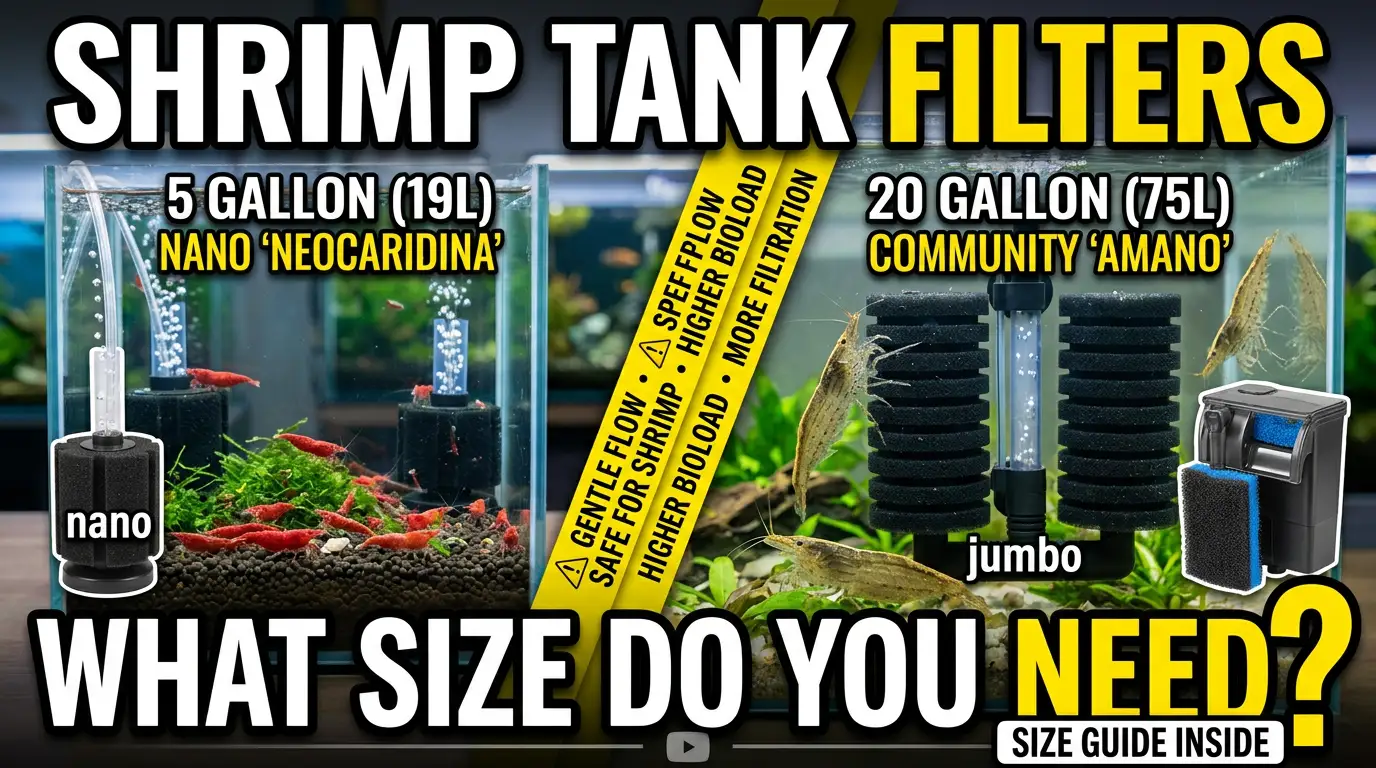
Filtration matters just as much, but the sizing logic is different from a fish tank: shrimp need gentle flow more than raw turnover, which is why sponge filters are close to the standard choice in a dedicated colony tank. The cherry shrimp guide specifically recommends a sponge filter, or at minimum a pre-filter sponge over a power filter’s intake, both to protect shrimplets from being pulled in and to add the extra biological media surface a growing colony needs. My aquarium filters guide covers sizing and media choices in more depth if you’re setting up filtration from scratch.
Plant mass, especially dense stem plants and moss, pulls double duty that a bare tank can’t replicate: it’s a constant source of biofilm and grazing surface that reduces how much you need to actively feed, and it’s cover for shrimp during and immediately after a molt, when they’re soft-shelled and effectively defenseless. Two tanks of identical size and filtration can have meaningfully different real-world capacities purely based on how much plant cover one has over the other, which is a large part of why the same per-gallon number produces very different results in different people’s tanks.
Signs your shrimp tank is overstocked
Because shrimp are so much lighter on bioload than fish, overstocking tends to show up as a cluster of small behavioral and water-quality signals rather than one dramatic crash. Watching for these early is far easier than reacting to a die-off after the fact, and several of them overlap with the toxin exposures covered in my guide to what kills shrimp in tanks, since a stressed, overcrowded colony has far less tolerance for anything else going wrong at the same time.

- Detectable ammonia or nitrite despite normal feeding. If test readings creep above zero without a change in how much you’re feeding, the colony itself has likely outgrown the biofilter’s current capacity.
- Shrimp gathering near the filter outlet or surface. This usually points to a dissolved-oxygen shortage from too many shrimp sharing too little surface agitation, especially in warmer water.
- Food disappearing within minutes of feeding. A wafer or pellet that used to last an hour and now vanishes almost immediately is a sign the colony has grown past what a light feeding schedule can support.
- Rising rates of failed or incomplete molts. Overcrowding stresses a colony’s mineral demand and competition for calcium-rich biofilm, and failed molts often climb well before a visible water-quality problem shows up on a test kit.
- Noticeably smaller adult size or fading color over successive generations. Chronic crowding stunts growth and dulls color in Neocaridina strains over a few generations, even when no single shrimp looks acutely sick.
- Water changes needed more often just to hold parameters steady. If maintaining zero ammonia now takes noticeably more frequent water changes than it did a few months ago, and nothing else about the tank has changed, population growth is almost always the reason.
Species-only tanks vs. mixed community stocking
Every number in this guide assumes a species-only shrimp tank, where the entire stocking budget belongs to the colony and nothing is competing with it for oxygen, filtration capacity, or food. That’s also the setup where you can reasonably aim for the higher end of the per-gallon range, since there’s no other bioload sharing the same water and no predation pulling the population back down.
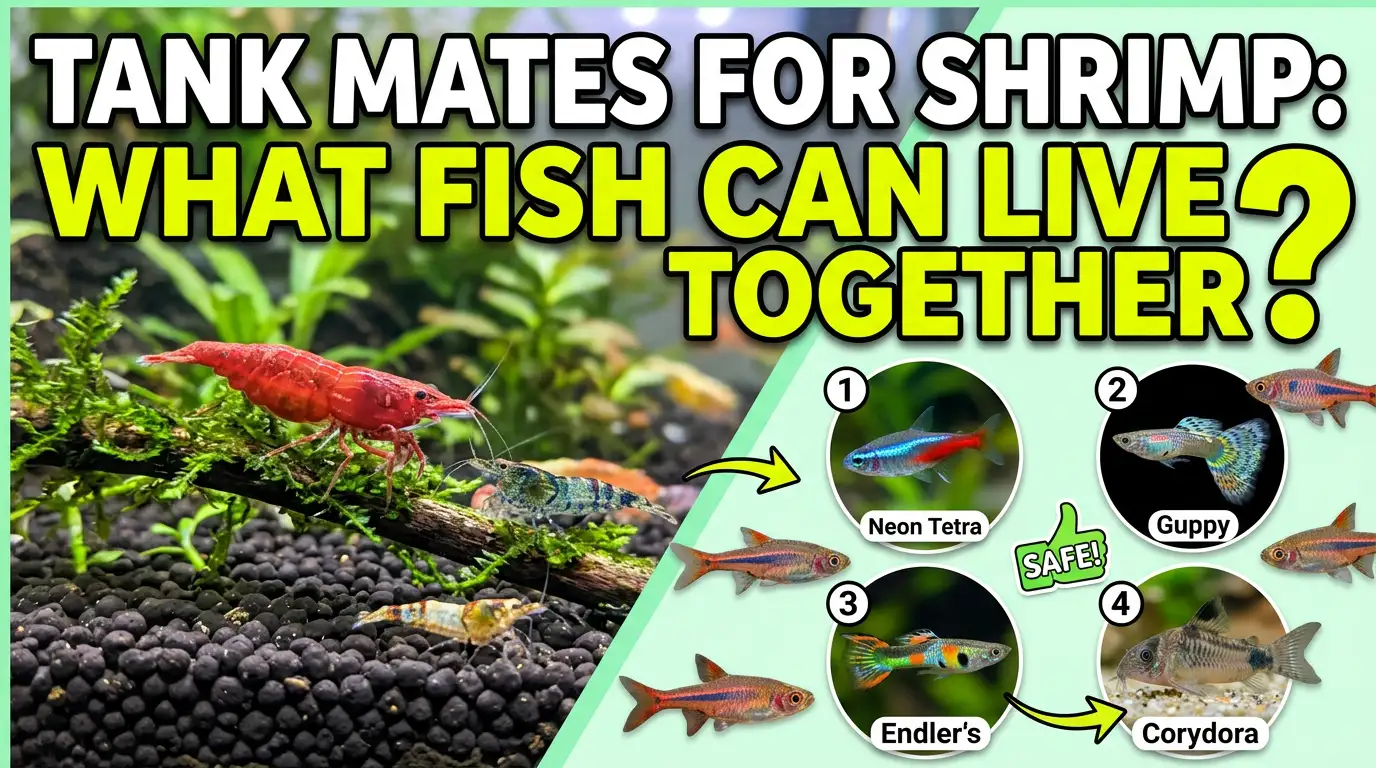
A mixed community tank works differently on both sides of the equation. On the bioload side, whatever fish share the tank need their own share of filtration and oxygen, so the shrimp allowance has to shrink to make room, not stack on top of a fish-only stocking plan. On the population side, predation usually matters more than the math: most fish will eat shrimplets regardless of how peacefully they treat adult shrimp, so a mixed tank’s shrimp population tends to plateau well below what the per-gallon number alone would suggest, no matter how generously it’s fed or filtered. If the goal is watching a colony actually grow toward those mature-tank numbers, a dedicated, fish-free tank gets there reliably in a way a community tank usually doesn’t, even one stocked with fish widely marketed as “shrimp safe.”
Frequently asked questions
How many shrimp per gallon is a good starting point?
For Neocaridina shrimp like cherry shrimp, 5 to 10 shrimp per gallon of actual water volume is a comfortable starting range in a cycled, planted tank. Treat it as a beginning number rather than a hard limit, since a breeding colony will grow well past it over time.
Can shrimp really overstock a tank if their bioload is so low?
Yes. A low individual bioload just means it takes a larger number of shrimp to reach the same waste load a smaller group of fish would produce; it doesn’t mean there’s no ceiling. A colony that’s grown into the hundreds in a small tank can absolutely outpace its filtration and oxygen supply.
Do baby shrimp (shrimplets) count toward the per-gallon number?
Not in any strict sense while they’re tiny, since a shrimplet’s bioload is a fraction of an adult’s, but they grow into full-sized shrimp within weeks. Plan around where the colony is heading, not just how many visibly adult shrimp you can count today.
Does a heavily planted tank really hold more shrimp than a bare one?
Yes, meaningfully so. Dense planting adds biofilm and grazing surface that reduces how much you need to feed directly, adds oxygen during the day, and gives freshly molted shrimp cover from tankmates and other shrimp, all of which raise the realistic ceiling above what the bare per-gallon number implies.
How many shrimp should I start with in a 10-gallon tank?
Around 20 to 30 Neocaridina shrimp is a sensible starting colony for a 10-gallon, cycled, planted tank, with room to grow toward 100 or more once breeding takes hold over the following months.
Should I stock a mixed fish-and-shrimp tank the same way as a species-only shrimp tank?
No. In a mixed tank, shrimp share filtration and oxygen with the fish, so the shrimp allowance should be smaller than a species-only tank of the same size, and predation on shrimplets usually caps population growth well below what the per-gallon math alone would suggest.
If you’re still working out the basics of a dedicated colony, my shrimp tank setup guide covers cycling, filtration, and species selection from the ground up, and my shrimp water parameters guide is worth pairing with the stocking numbers here since stable water is what makes any of these ranges realistic in the first place. For anyone stocking specifically toward a 10-gallon tank, my 10-gallon shrimp tank guide and breeding guide go into more depth on getting there safely, and my guide to what kills shrimp in tanks is worth a read if a crowded colony starts showing any of the warning signs above. Before adding a new batch of shrimp to reach your target numbers, our guide to acclimating shrimp covers how to introduce them safely, and our guide to shrimp tank water change frequency explains how to adjust your schedule as the colony grows.



Leave a Reply