Fish & Aquariums
A while back I added a small school of harlequin rasboras to my main planted tank because every forum thread I read called them “shrimp-safe,” and for a couple of weeks it looked like I’d been right to trust that label. The adult cherry shrimp were still everywhere, grazing and molting like nothing had changed. What I didn’t notice for almost a month was that the colony had quietly stopped growing, because every shrimplet that ventured out of the moss got picked off within a day or two of hatching. That’s when it clicked that “safe with my shrimp” and “safe for my shrimp colony” are two completely different claims, and almost nothing sold with the first label actually earns the second.
Quick answer
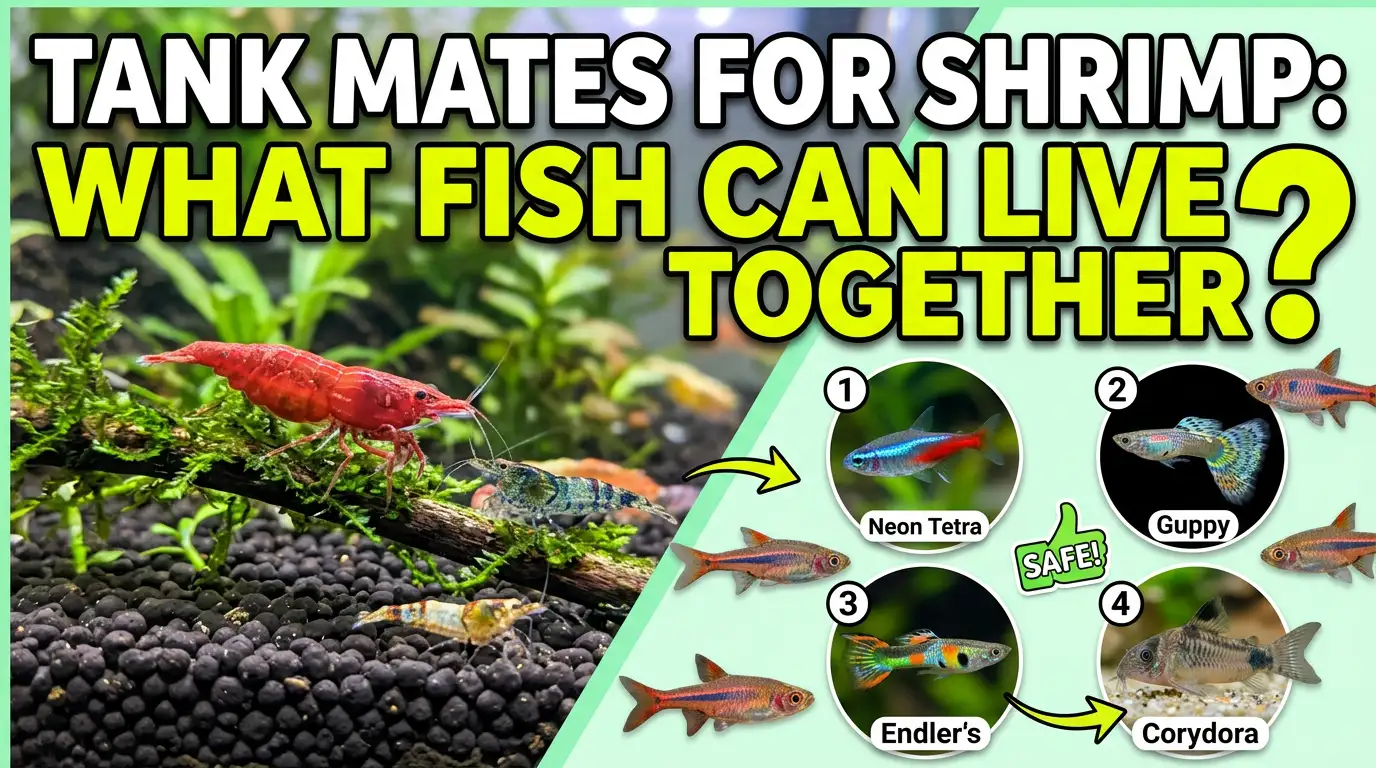
Most fish will eat a shrimp small enough to fit in their mouth, and almost every fish will eat a newly hatched shrimplet regardless of how they treat full-grown adults, so the honest starting point is that very few species are safe for a breeding colony even though plenty are marketed that way. The genuinely low-risk tank mates are small, weak-mouthed algae grazers and micro-fish, otocinclus catfish, dwarf Boraras rasboras like the chili rasbora, pygmy corydoras, and nerite or mystery snails, kept in a heavily planted tank of at least 10-15 gallons with dense moss, floating plants, and other cover for shrimplets to disappear into. Bettas, larger tetras, barbs, most cichlids, and gouramis should be avoided outright, since they’re active hunters that will pick off adult shrimp as readily as shrimplets. Practical Fishkeeping frames most fish-and-shrimp predation as a matter of “when,” not “if,” and while a bigger, more densely planted tank tips the odds in the shrimps’ favor, the single safest setup for anyone who actually wants a colony to grow rather than just survive remains a species-only tank with no fish in it at all, a point I only touch on briefly in my shrimp tank setup guide and want to expand on properly here.
Why “shrimp-safe” almost never means “shrimplet-safe”
An adult cherry or crystal shrimp isn’t defenseless. It’s fast for its size, has decent eyesight for spotting movement, and instinctively stays near cover, which is enough to make most fish decide the chase isn’t worth the effort. A newly hatched shrimplet has none of that going for it: it’s a few millimeters long, slow, has almost no ability to flee with any real speed, and spends its first couple of weeks out in the open before it learns to hide effectively. That gap is the entire reason a fish can be genuinely harmless to your adult shrimp for months and still be quietly erasing every batch of shrimplets before you ever see them.
Practical Fishkeeping’s breakdown of shrimp tank mates sorts fish into rough tiers rather than a simple safe/unsafe binary, and the middle tier is the one people misread most often. Species like guppies, small danios, kuhli loaches, corydoras, and White Cloud Mountain minnows generally leave adult shrimp alone, but the same piece is blunt that this only really works “if you are not interested in breeding,” because shrimplets sit well within what those fish will happily eat given the chance. Aquarium Co-Op’s tank mate guide makes a similar point about its own “safe” list, noting that any of these fish may opportunistically snack on a baby shrimp even though they generally leave the adults alone. Freshly molted shrimp of any age add a second layer to the same problem: right after shedding their exoskeleton, they’re soft-bodied and immobile for a few hours, which briefly turns even an adult into an easy target for a fish that would normally ignore it.
So it helps to think in two separate categories instead of one. “Adult-safe” means a fish won’t actively hunt full-grown, healthy shrimp, a list that’s genuinely fairly long. “Shrimplet-safe” means a fish won’t eat the smallest, most defenseless shrimp in the tank either, and that list is short, made up almost entirely of fish whose mouths and feeding style simply aren’t built for hunting anything at all.
Tank mates that are genuinely low-risk
These are the species that come closest to actually clearing the shrimplet-safe bar, mostly because they graze rather than hunt, and their mouths are shaped for scraping biofilm off surfaces rather than snapping up moving prey.
- Otocinclus catfish. Practical Fishkeeping names otocinclus and related genera as close to the only truly safe option, since their small, downturned sucker-mouths are built for rasping algae off leaves and glass rather than grabbing anything. They also do best in a group of five or more in an established, algae-producing tank, so they’re a better fit for a mature setup than a brand-new one.
- Chili rasboras and other dwarf Boraras species. The same source describes chilli rasboras as “visually punchy, peaceful, relatively cheap,” with mouths small enough that only the very youngest shrimplets are at any real risk. They still need a decently sized, heavily planted tank kept in a proper school, six or more, rather than the one or two you sometimes see sold in a nano cube.
- Pygmy and dwarf corydoras. Standard-sized corydoras land in the riskier “leave adults alone, eat shrimplets” tier, but the genuinely tiny species, Corydoras habrosus and Corydoras pygmaeus in particular, have mouths small enough and a feeding style gentle enough that they’re commonly kept alongside breeding colonies with reasonable success, though never a guarantee.
- Nerite and mystery snails. Not fish, but worth naming since they’re the tank mates most consistently recommended alongside shrimp. They graze algae and biofilm, occupy a different ecological niche entirely, and have no interest in shrimp of any size.
- Small, peaceful bottom-dwelling catfish in general. Beyond corydoras, other slow, algae- and detritus-feeding catfish that stay small and lack a large, forward-facing mouth tend to coexist reasonably well, but it’s worth checking an individual species’ adult size and feeding style before assuming a whole family is automatically safe.
Even within this list, “low-risk” isn’t “zero-risk.” A hungry otocinclus or a chili rasbora in a sparse tank will still investigate anything that moves, and the real safety margin comes as much from tank size and plant cover as it does from the species you pick, which is worth keeping in mind before treating any of these as a guarantee.
Fish to avoid entirely
Some fish are worth ruling out from the start rather than testing cautiously, because the risk isn’t occasional snacking on shrimplets, it’s active predation on shrimp of any size.
Bettas are the most commonly asked-about exception, and the honest answer is that it’s genuinely unpredictable: some bettas ignore shrimp entirely, others hunt them down within hours, and there’s no reliable way to know which personality you’ve got until it’s too late for the shrimp. Betting a colony on an individual fish’s temperament isn’t a real strategy. Larger tetras and barbs, anything much bigger than a neon or ember tetra, have both the mouth size and the fin-nipping, opportunistic temperament to treat shrimp as a snack rather than a tank mate, and species like tiger barbs are established shrimp-eaters in the hobby. Most cichlids, dwarf species included, are built to hunt; Practical Fishkeeping puts it plainly that “even dwarf cichlids are hunting machines and they will quickly clear up any shrimp they can find,” which rules out rams, apistogramma, and their relatives despite how often they’re marketed as suitable for a peaceful planted community. Gouramis, especially as they mature past juvenile size, develop exactly the kind of patient, probing feeding behavior that finds shrimp hiding in moss, and a gourami that ignored shrimp as a young fish often stops ignoring them once it’s grown.
Goldfish, most loaches, larger rainbowfish, and dwarf puffers belong on the same list for similar reasons, either straightforward size and appetite, or in the puffer’s case, a hunting instinct specifically tuned toward crustaceans and snails.
It’s also worth being skeptical of “shrimp-safe” as a marketing phrase rather than a verified fact, since it shows up on livestock labels and in pet store recommendations far more often than the actual feeding behavior of the species supports. A fish labeled that way at a young, small juvenile size in the store can still grow into an adult with a completely different appetite and mouth size a year later, which is part of why checking a species’ mature size and natural diet matters more than trusting a label written to move stock.
Shrimp tank mate compatibility, species by species
The table below goes a level more specific than a general safe/unsafe split, since so much of the real risk comes down to the individual species rather than the broader family it belongs to.
| Generally compatible | Usually a bad idea |
|---|---|
| Otocinclus and Parotocinclus catfish, kept in a group of 5+ in an established tank | Bettas, unpredictable individual temperament makes them a genuine gamble with any shrimp |
| Chili rasboras and other Boraras species (B. brigittae, B. maculata), schooled at 6+ | Tiger barbs and other larger, nippy barbs, established shrimp-eaters in the hobby |
| Pygmy corydoras (C. pygmaeus) and dwarf corydoras (C. habrosus) | Larger tetras (anything much bigger than an ember or neon tetra) |
| Nerite and mystery snails, different ecological niche, no predatory interest | Dwarf cichlids (rams, apistogramma) and larger cichlid species alike |
| Standard corydoras, guppies, kuhli loaches, White Cloud minnows, small danios, but adults-only; expect shrimplet losses | Gouramis of any size, patient hunters that get more effective as they mature |
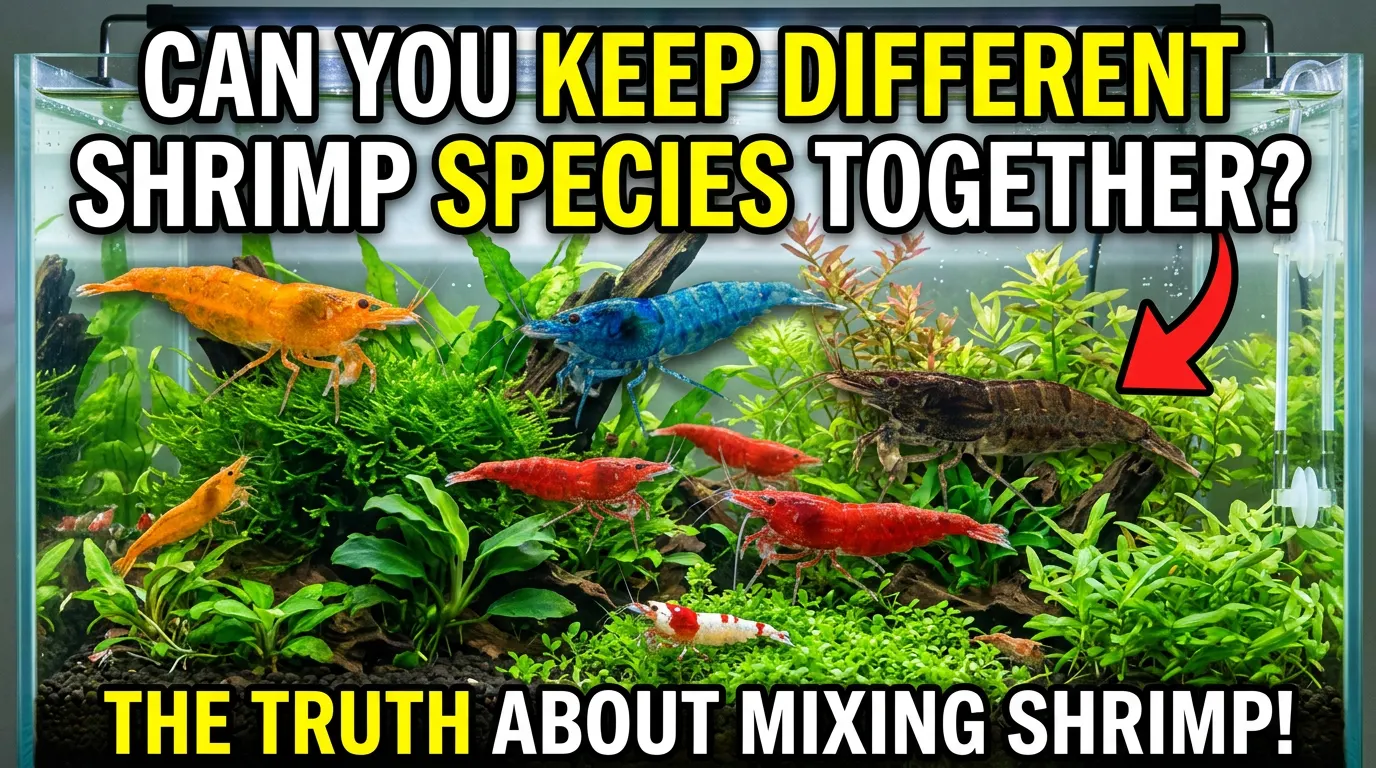
| Amano and ghost shrimp alongside dwarf shrimp species (different niche, largely non-predatory on adults) | Goldfish, most loaches, dwarf puffers, and larger rainbowfish |
| A dedicated, fish-free species-only tank (lowest risk, best for breeding) | Assassin snails, unless population control is the actual goal |
How tank size and plant density change the math
The same fish species behaves very differently depending on the tank it’s in, which is why compatibility lists that ignore tank size and plant cover are only telling half the story. In a small, sparsely planted tank, there’s nowhere for a shrimplet to actually disappear to, and even a mild-mannered nano fish has an easy time picking off anything that strays into open water. In a larger, densely planted tank, the equation shifts: more total volume means more places for shrimp to spread out and avoid concentrated fish activity, and dense java moss, floating plants like frogbit or salvinia, and thick stem plant growth all give shrimplets somewhere to hide within hours of hatching rather than days.
As a rough guide, a fish that’s borderline in a bare 5-gallon cube is a genuinely reasonable candidate in a heavily planted 20-gallon long, not because the fish changed, but because the odds of it ever encountering a shrimplet dropped substantially. Anyone working with a smaller footprint should lean harder on plant density to compensate, since a smaller volume gives shrimp less room to simply avoid trouble; my guide to the best shrimp for a 10-gallon tank covers stocking a smaller setup around this exact trade-off. Floating plants deserve a specific mention here, since their root systems hanging into the water column give shrimplets cover in the upper part of the tank too, not just down in the substrate and moss where most of the attention usually goes.
Feeding also plays a quieter role in the same calculus. A fish that’s well fed on its own diet has less incentive to go hunting for a shrimplet as an opportunistic snack, so keeping tank mates properly and consistently fed, rather than lean and constantly foraging, is a small but genuinely useful lever alongside plant cover and tank size. None of this makes a risky species safe, but it does mean the same fish in two differently managed tanks can produce noticeably different shrimplet survival rates.
The safest option: a species-only tank
If the goal is genuinely watching a shrimp population grow rather than keeping a handful of adults that slowly disappear over time, a species-only tank with no fish at all is the option that removes the entire predation question instead of just managing it. This isn’t a purist stance, it’s a practical one: every fish discussed above, even the low-risk ones, represents some non-zero rate of shrimplet loss, and in a small, closed system that loss rate compounds every generation. A colony that would otherwise double every few months in a fish-free tank can stall out entirely at a fixed population size once something is eating even a modest fraction of each new batch.
A species-only setup also simplifies feeding, water chemistry, and maintenance, since everything in the tank has the same needs rather than competing priorities between a fish’s diet and a shrimp’s. My guide to breeding shrimp goes into the specifics of getting a colony from a handful of adults to a self-sustaining population, and tank mates, or the deliberate lack of them, are one of the biggest levers in that process. For anyone who’s on the fence, a reasonable middle ground is starting fish-free for the first several months to let a colony establish itself, then adding a carefully chosen low-risk species later once the population has some buffer to absorb occasional losses.
Frequently asked questions
Can I keep bettas with shrimp?
Sometimes, but it’s a genuine gamble rather than a reliable pairing. Individual betta temperament varies enormously, some ignore shrimp completely while others hunt them down within a day, and there’s no way to predict which you have until shrimp start disappearing.
Will otocinclus or nerite snails eat my shrimp?
No. Otocinclus have small sucker-mouths built for grazing algae, not hunting, and nerite and mystery snails have no predatory interest in shrimp at all. Both are among the closest things to a truly safe tank mate.
Is it true that any fish will eat baby shrimp?
Close to true. Almost every fish, including species widely marketed as shrimp-safe, will eat a shrimplet small enough to fit in its mouth even if it completely ignores adult shrimp. The exceptions are mostly algae-grazing fish with weak, non-predatory mouths.
Why did my shrimp colony stop growing even though I never saw fish eating them?
Shrimplet predation happens fast and mostly out of sight, since newly hatched shrimp are only a few millimeters long and spend their first couple of weeks in the open before they’re big enough to hide effectively. A colony can look stable while every new batch quietly gets eaten before you ever notice them.
Do larger tetras and barbs really eat shrimp?
Yes, species noticeably bigger than an ember or neon tetra, and nippy barbs like tiger barbs in particular, are established shrimp-eaters in the hobby and will go after adults as well as shrimplets. Small, peaceful nano tetras are a different story and carry much lower risk.
Does a bigger tank actually make fish safer for shrimp?
It helps meaningfully, but it doesn’t eliminate the risk. More space and, more importantly, denser plant cover give shrimplets more places to hide and reduce how often a fish crosses paths with one, which lowers the loss rate without bringing it to zero.
What’s the single safest way to keep fish and shrimp together?
Choose only from the genuinely low-risk species, otocinclus, chili or other dwarf Boraras rasboras, pygmy corydoras, and nerite or mystery snails, and put them in a heavily planted tank of at least 10-15 gallons. If maximizing breeding is the actual priority, a species-only tank with no fish at all remains the safest option by a wide margin.
This piece is really an expansion of the tank mate section in my shrimp tank setup guide, which covers the full setup, and if losses keep happening even with a careful stocking list, my guide to why shrimp keep dying walks through the other common causes worth ruling out alongside predation. Freshly molted shrimp are especially vulnerable to any tank mate, soft-shelled and slow for hours afterward, which our guide to shrimp molting covers in detail, and our guide to the best plants for a shrimp tank explains how dense cover helps them hide from curious fish during that window.

Leave a Reply