Fish & Aquariums
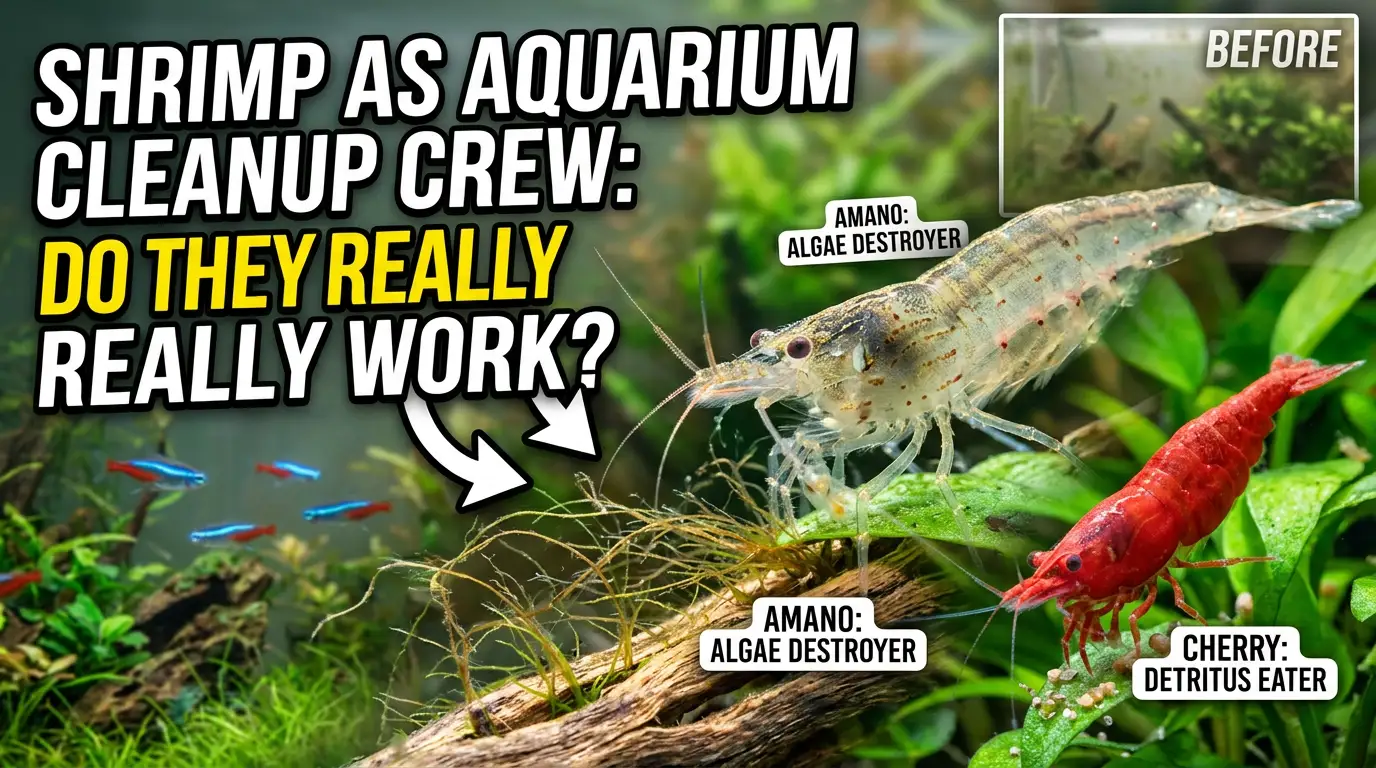
When I dropped my first dozen Amano shrimp into a green-tinged 20-gallon years ago, I genuinely expected the front glass to be spotless within a week. It wasn’t. The shrimp beelined for leftover flake pooling behind the filter outflow and mostly ignored the diatom film creeping up the front pane, and it took me longer than I’d like to admit to realize “cleanup crew” is a marketing phrase, not a job description. Shrimp do real, useful work in a tank, just rarely the work most of us picture when we drop a handful in and expect the algae to vanish.
Quick answer
Shrimp genuinely help keep a tank clean, but as grazers and scavengers, not as a substitute for filtration or maintenance: cherry shrimp and Amano shrimp pick at biofilm, soft algae, leftover food, and decaying plant matter around the clock, but they don’t meaningfully process fish waste or ammonia, and they can’t replace a filter, a water-change schedule, or a gravel vacuum. Amano shrimp (Caridina multidentata) are the strongest algae eaters commonly sold for a shrimp cleanup crew, working through hair algae, thread algae, and even some black beard algae, while cherry shrimp (Neocaridina davidi) do comparatively little algae grazing and earn their keep more on biofilm and detritus patrol. Making a visible dent usually takes a real population, not the handful of “starter shrimp” most tanks get, and a shrimp cleanup crew works best stacked alongside snails and otocinclus catfish, each of which mops up something shrimp mostly leave alone.
What shrimp actually eat in a cleanup role
The core of what any shrimp cleanup crew actually does is grazing on biofilm: the thin, slightly slimy layer of bacteria, diatoms, fungi, and microorganisms that coats every submerged surface in an established tank, from glass and decor to the underside of leaves. It’s not visible the way algae is, but it’s constant, it regenerates quickly, and it’s the single food source shrimp graze on most consistently between meals. The care guide for Amano shrimp describes them as opportunistic feeders that consume “all types of fish foods, blanched vegetables, biofilm, rotting leaves, and algae,” which is a fair summary of what any dwarf shrimp does across a normal day: pick at whatever organic film and debris it can find, rather than hunting down one specific food source.
Leftover food is the second big piece. Shrimp are scavengers with small, agile legs that let them work into gravel gaps, plant crevices, and decor crannies that fish and most snails never reach, cleaning up sinking pellets, flake crumbs, and bits of blanched vegetable before they rot and foul the water. Decaying plant matter follows the same pattern: a dying or melting leaf is soft and easy for a shrimp’s mouthparts to work on, so shrimp will often be the first thing you see clustered on a yellowing plant leaf, breaking it down well before it would otherwise decompose on its own.
Algae is where species matters most, and it’s worth covering separately since it’s the part most people actually buy shrimp for; see the species breakdown below. Practical Fishkeeping’s Nathan Hill sums up the general grazing behavior well, writing that Amano shrimp go “tirelessly padding away with their tiny maxillipeds, they will graze on almost all forms of algae,” though as with everything else on this list, “almost all” comes with real caveats. For a deeper look at exactly what shrimp will and won’t touch on a plate, my guide to what shrimp eat goes through feeding in more detail.
What a shrimp cleanup crew doesn’t do
This is where the marketing gap actually lives, and it’s worth being blunt about each piece separately.

They don’t meaningfully eat fish waste or ammonia. This is probably the single biggest misconception baked into the phrase “cleanup crew.” Solid fish waste isn’t a preferred food source for shrimp, and even when they do pick at organic matter in waste, that’s a minor part of their diet rather than a filtration function. Ammonia is a dissolved compound, not a solid, and no shrimp eats it in any sense; that job belongs entirely to the beneficial bacteria colonizing your filter media and substrate. ShrimpKeeper.co.uk, reviewing exactly this claim for cherry shrimp, is careful to note that while shrimp will consume organic material in fish waste, “this isn’t their preferred food source,” and frames their real contribution as picking off uneaten food before it decays into ammonia in the first place, not processing waste directly.
They don’t replace a filter or your water-change schedule. Nitrate, the end product of your nitrogen cycle, keeps accumulating in the water column regardless of how many shrimp you have; shrimp don’t touch it. ShrimpKeeper.co.uk states this plainly: cherry shrimp “do not eliminate the need for water changes,” and are explicitly “not a replacement for proper aquarium maintenance.” Practical Fishkeeping makes the same point even more forcefully about Amano shrimp specifically, noting that they “do not impact on nitrate levels at all. It does not matter if you have ten or two hundred of them, you’ll still need to water-change just as frequently!” That’s a useful gut-check any time a product listing implies shrimp will cut down your maintenance workload.
They aren’t reliable for a heavy, established algae outbreak. Shrimp are grazers suited to keeping a healthy tank healthy, not rescuing one that’s already gone green. The 2Hr Aquarist’s algae-eater comparison is direct about this limitation across every invertebrate and fish option, stating plainly that “algae eaters are not the true solution to more serious algae issues.” A tank fighting a genuine algae bloom needs the underlying cause addressed first, usually light duration, nutrient excess, or a stalled cycle, before any grazer, shrimp included, can keep pace with new growth. ShrimpKeeper.co.uk echoes the same conclusion for cherry shrimp specifically: they “are not effective at eradicating large amounts of established algae,” and lack the mouthparts to scrape algae off glass at all.
Which species actually pull their weight
Not all shrimp sold as cleanup crew members do the same job, and the gap between species is bigger than most beginner advice suggests.
| Species | Best at | Weak at | Typical cleanup role |
|---|---|---|---|
| Amano shrimp (Caridina multidentata) | Hair algae, thread/fuzz algae, some black beard algae; heavy general grazing | Flat, hard diatom film on glass; won’t touch cyanobacteria reliably; can nibble tender new plant growth | The closest thing to a dedicated algae worker in the freshwater trade |
| Cherry shrimp (Neocaridina davidi) | Biofilm, soft green algae film, leftover food, decaying plant matter | Established or fibrous algae growth; too small and gentle to make a dent alone | Constant low-level detritus and biofilm patrol, plus a self-sustaining colony |
| Crystal/bee shrimp (Caridina species) | Similar grazing to cherry shrimp on biofilm and soft algae | Same algae limits as cherry shrimp, plus far less tolerant of unstable water | Mostly kept for appearance and breeding; cleanup is a side effect, not the point |
| Ghost shrimp (Palaemonetes spp.) | Leftover food, some general scavenging | Minimal, inconsistent algae grazing compared to Amano or cherry shrimp | Cheap scavenger, not a serious algae-control option |
Amano shrimp earn their reputation honestly: Aquarium Co-Op’s own clean-up crew roundup notes they’ll go after “hair algae, thread algae, and even black beard algae if you have an army of hungry amano shrimp,” language that hints at both their strength (few other invertebrates touch black beard algae at all) and the catch, quantity matters. That same guide also flags that Amano shrimp “prefer not to eat algae if other tastier options are available,” meaning a tank with generous fish feeding gives them little reason to bother with algae at all. Cherry shrimp are the gentler, less specialized option: The 2Hr Aquarist recommends them as a companion to Amano shrimp precisely because they’re “smaller, gentler and do not bother plants,” grazing biofilm and soft algae film without the occasional plant-nibbling risk Amano shrimp carry. If you’re deciding between the two as a starting point, my Amano vs. Neocaridina comparison covers the tradeoffs beyond just cleanup work, and my red cherry shrimp care guide covers what they need to thrive and breed once they’re in.
How many shrimp it actually takes to make a dent
This is the part most product listings skip entirely, and it’s the reason so many people feel let down by their first shrimp purchase: five or six shrimp dropped into a 20-gallon tank is a decoration, not a workforce. For Amano shrimp working on an active algae problem, hobbyists generally see a real difference starting around one shrimp per two to three gallons of water, meaning a 10-gallon tank wants somewhere around four to six Amano shrimp actively grazing before you’d expect to notice a visible change, and a stubborn algae patch may call for more than that, temporarily, until it’s under control. Cherry shrimp work at a smaller individual scale but usually live in far larger numbers, since they breed readily in stable water; a mature colony of several dozen in a 10-gallon tank is common, and even then their impact on algae specifically stays modest, their real value is the constant biofilm and detritus grazing that a colony that size can sustain around the clock.
It’s also worth remembering that shrimp numbers alone don’t fix an algae problem if the underlying cause, excess light, excess nutrients, an incomplete cycle, isn’t addressed. Adding more shrimp to a tank that’s still overfed or overlit is treating a symptom instead of the cause, and you’ll often find the algae regrows faster than even a large shrimp population can keep up with.
Shrimp, snails, and otocinclus: better together
The most effective cleanup crews aren’t single-species; they combine grazers with genuinely different tools and target different parts of the tank. Shrimp are small, mobile, and dexterous, letting them work into crevices, plant structures, and gravel gaps that other cleaners can’t physically access, but their mouthparts are built for soft grazing, not scraping. Otocinclus catfish carry a suckermouth built specifically for rasping diatoms and soft algae film directly off flat, hard surfaces, glass, broad leaves, decor, ground shrimp mostly leave untouched, which makes them a strong complement rather than a competitor. Snails split the difference: species like nerite and mystery snails scrape algae off glass and hard surfaces effectively while also working through decaying plant matter and leftover food, covering some of the same ground as shrimp but reaching surfaces shrimp can’t scrape clean.
None of the three replaces good maintenance, and none of them replaces each other. A tank running shrimp, a couple of otocinclus, and a handful of nerite snails together covers meaningfully more ground than any single species alone, biofilm and detritus from shrimp, diatom film from otocinclus, hard-surface algae from snails, without any one group being asked to do a job it isn’t built for.
Building a cleanup crew that actually works

- Combine species instead of relying on one. Shrimp, snails, and otocinclus each cover different surfaces and food types; stacking them closes more gaps than doubling down on shrimp alone.
- Size the population to the tank, not the marketing pack. A handful of shrimp sold as a “starter cleanup crew” is a decorative addition, not a working population; plan numbers based on tank size and the actual problem you’re trying to solve.
- Feed deliberately, not generously. Amano shrimp in particular will skip algae for easy fish food if it’s abundant; keeping feeding modest gives grazers a real reason to work the biofilm and algae instead.
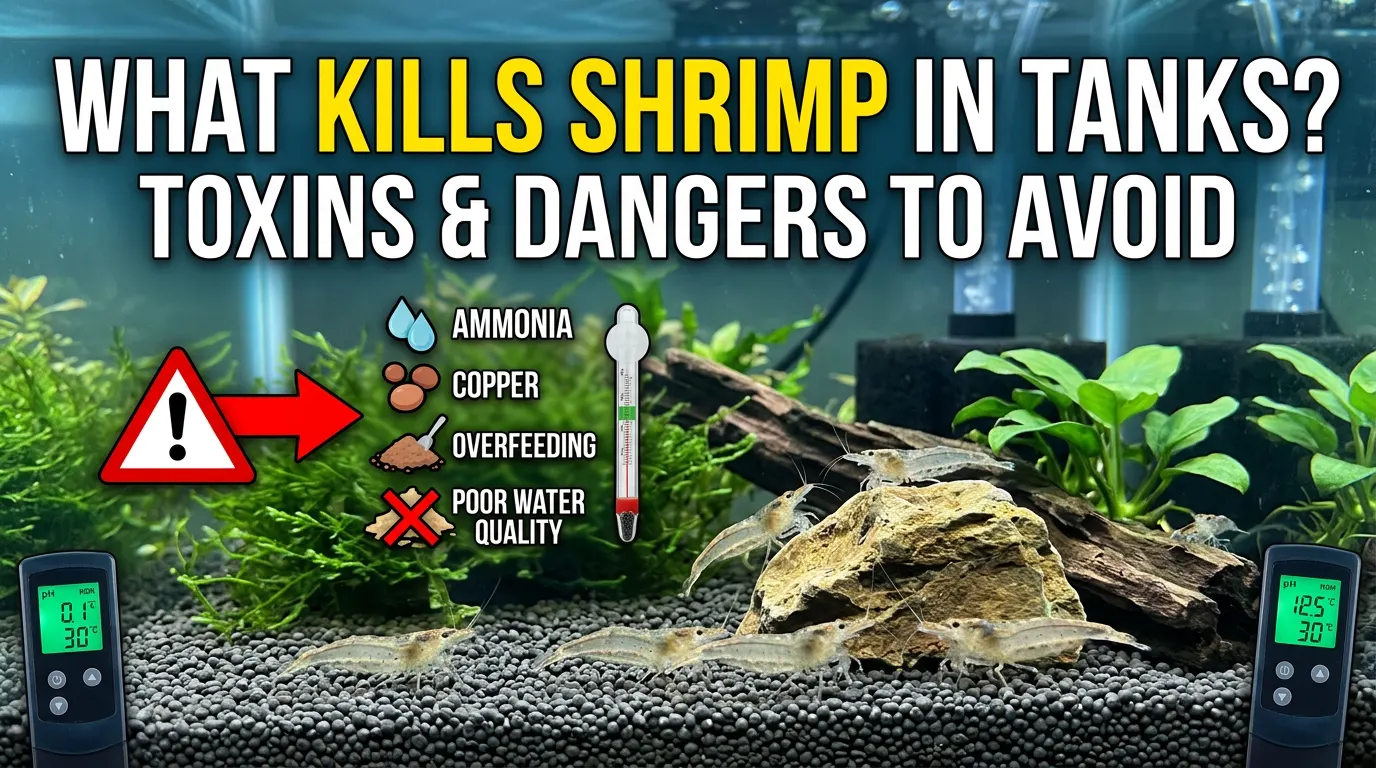
- Screen every product for copper before it goes in. Copper in fertilizers, algaecides, and some medications is lethal to shrimp at concentrations that don’t bother fish at all, and it can wipe out a cleanup crew faster than any algae problem would.
- Give it weeks, not days. Biofilm regrows constantly and shrimp graze steadily rather than in bursts, so a visible cleanup effect builds gradually over a stable, established tank rather than showing up right after the shrimp go in.
Frequently asked questions
Do shrimp eat fish poop?
Only in a very limited sense. Shrimp will occasionally pick at organic material in fish waste, but it isn’t a preferred food source, and they don’t process it the way a filter’s beneficial bacteria break down ammonia. Their bigger contribution is eating leftover food before it decays, which indirectly reduces how much waste builds up in the first place.
Will Amano shrimp get rid of my algae problem?
They’ll help with an existing, manageable amount of hair, thread, and some black beard algae, especially in numbers, but they won’t rescue a tank in the middle of a heavy algae bloom. Address the underlying cause, usually excess light or nutrients, and use Amano shrimp to help maintain the tank afterward rather than expecting them to fix it on their own.
How many cherry shrimp do I need to control algae?
Cherry shrimp were never the strongest algae eaters to begin with; even a large colony of several dozen mostly handles biofilm, soft algae film, and leftover food rather than a real algae problem. If algae control is the priority, Amano shrimp or otocinclus will do more of that specific work.
Do shrimp replace a filter or water changes?
No. Shrimp don’t process dissolved ammonia or nitrate at all, that’s entirely the job of your filter’s bacteria colony and your regular water changes. A tank can have a large, healthy shrimp population and still need the exact same maintenance schedule as one without any shrimp.
What’s the real difference between Amano and cherry shrimp for cleanup?
Amano shrimp are the stronger, more dedicated algae eaters and will tackle hair, thread, and some black beard algae in meaningful quantities. Cherry shrimp graze more lightly and focus more on biofilm, soft algae film, and detritus, but they breed readily and build a self-sustaining colony, which Amano shrimp typically don’t do in a home aquarium.
Can shrimp live safely with otocinclus and snails?
Yes, and they’re a genuinely good combination. Otocinclus and nerite or mystery snails aren’t a predation risk to adult shrimp, and each covers different surfaces and food types, so combining them builds a more complete cleanup crew than any one species alone.
Why isn’t my “cleanup crew” actually cleaning my tank?
Usually a mismatch between expectations and population size: a handful of shrimp from a starter pack is a light grazing presence, not a workforce sized to your tank’s bioload. It’s also worth checking whether fish are being fed heavily enough that shrimp are skipping algae for easier food, and whether the real issue is an algae cause that needs fixing directly rather than more grazers.
If you’re setting up a tank with cleanup in mind from the start, my shrimp tank setup guide covers the water, filtration, and planting choices that make grazing shrimp actually thrive, and once the tank’s running, keeping the substrate itself clear of trapped waste matters just as much as any grazer; my gravel cleaner guide walks through the maintenance side shrimp can’t cover on their own. For more on building out that team, my guide to shrimp-safe tank mates covers pairing shrimp with otocinclus and snails in more detail, and my guide to the best plants for a shrimp tank explains why the biofilm shrimp graze on depends so much on what’s actually planted.
References
- Care Guide for Amano Shrimp – Aquarium Co-Op
- 10 Best Clean-Up Crew Fish & Invertebrates for Freshwater Aquariums – Aquarium Co-Op
- Do Red Cherry Shrimp Eat Fish Poop? – ShrimpKeeper.co.uk
- Do Red Cherry Shrimp Really Keep Your Aquarium Clean? – ShrimpKeeper.co.uk
- Best Algae Eaters for a Planted Tank – The 2Hr Aquarist



Leave a Reply