Fish & Aquariums
I lost an entire colony of cherry shrimp in less than a day, and it took me a week of denial to accept why. I’d borrowed a net from a friend’s fish-only tank where he’d been dosing an algae treatment, rinsed it under the tap, and dropped it straight into my shrimp tank to scoop out a snail. My ammonia and nitrite read zero, my temperature hadn’t moved, and I still watched thirty shrimp turn pale and curl up within hours. That was the day I learned shrimp don’t die like fish do, the things that barely register on a fish’s radar can wipe out an entire colony of invertebrates overnight.
Quick answer
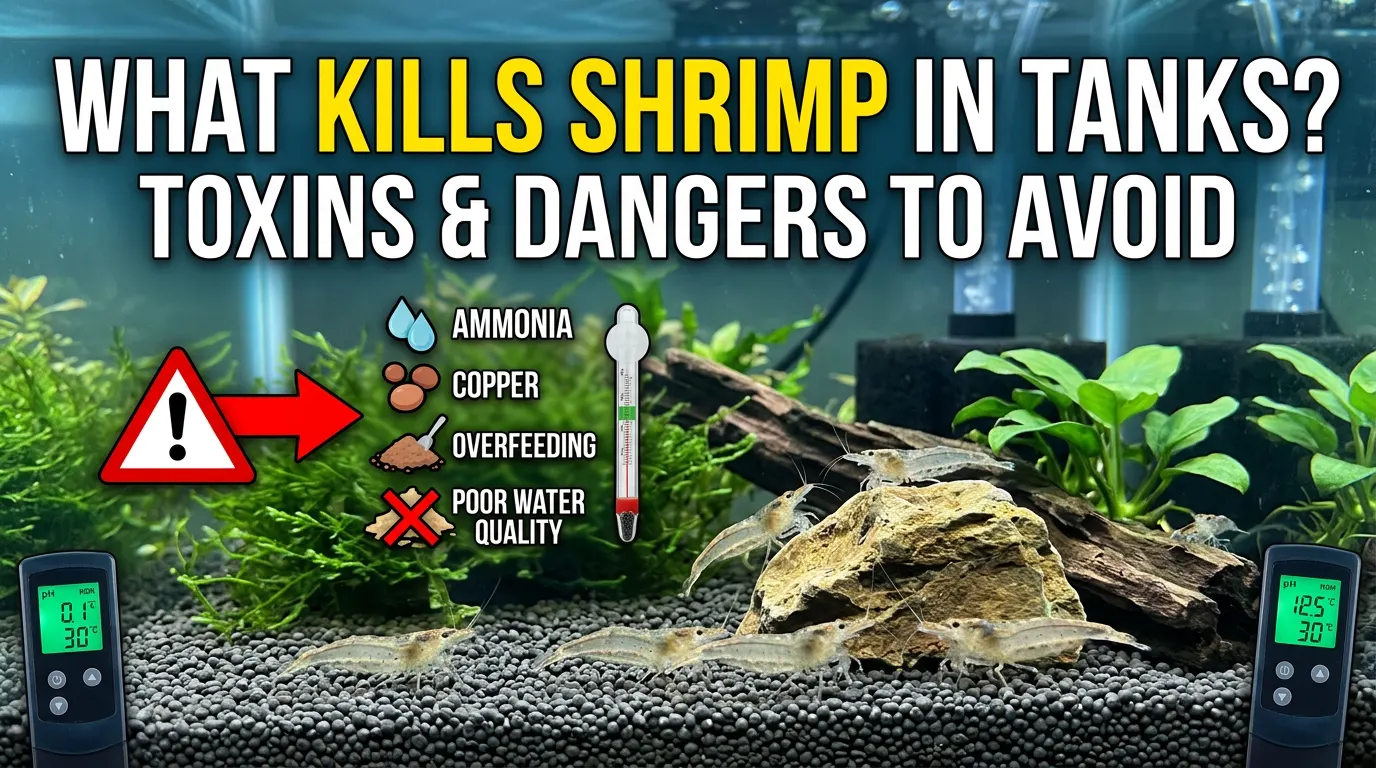
The toxins that kill aquarium shrimp fastest, in rough order of how often they blindside keepers, are copper (from plant fertilizers, algaecides, some fish medications, and tap water run through old copper pipes), chlorine and chloramine in untreated tap water, ammonia and nitrite spikes in an uncycled or overstocked tank, pesticide and insecticide residue left on unwashed new plants, soap or detergent residue on “cleaned” decor and hands, medications that are safe for fish but not labeled invertebrate-safe, sudden swings in temperature or pH, and low dissolved oxygen. Shrimp are dramatically more sensitive to nearly all of these than the fish sharing their water, which is why a tank that looks perfectly healthy on a fish-focused test kit can still be lethal to shrimp.
Copper: the No. 1 silent killer in shrimp tanks

If I had to name a single toxin responsible for more mystery shrimp die-offs than anything else, it’s copper. The University of Florida’s IFAS Extension, in its publication on copper use in aquaculture and aquarium systems, spells out just how lopsided the sensitivity gap is: therapeutic copper treatments for fish parasites run 0.15–0.20 mg/L of free copper ion, but invertebrates have to be removed from the system entirely and can’t be safely returned until copper drops to 0.01 mg/L or, ideally, zero. That’s roughly a twenty-fold difference in tolerance between fish and the shrimp, snails, and crabs sharing their water. The same publication explains the mechanism: copper damages gill tissue until it becomes “blunt and thickened” and loses its ability to regulate the animal’s internal ion balance, while also suppressing immune function and, at concentrations around 0.3 mg/L, killing off the nitrifying bacteria that keep ammonia in check in the first place, so a copper problem can trigger an ammonia problem on top of the direct poisoning. The EPA’s aquatic life criteria for copper back this up at a broader level, noting that copper is “toxic to aquatic organisms at higher concentrations” and that chronic exposure causes lasting harm to survival, growth, reproduction, and even brain function and behavior.
Copper hides in more places than most keepers expect. Some liquid plant fertilizers include trace copper as a micronutrient for plant growth, worth checking before you dose, since not every “planted tank” fertilizer is formulated with shrimp in mind (our aquarium fertilizer guide covers how to read a fertilizer label for exactly this). Algaecides marketed for green water or algae control are often copper-based by design, since copper is a broad-spectrum algicide. Certain fish medications, especially older ich and parasite treatments, use copper sulfate as the active ingredient. And if your home has older plumbing, tap water itself can pick up dissolved copper simply by sitting in copper pipes or fittings overnight, which is why letting the tap run for a minute before filling a bucket, or testing your tap water directly, is worth the thirty seconds it takes.
Chlorine, chloramine, and other tap water hazards
Municipal water suppliers add chlorine, or increasingly chloramine (a more stable chlorine-ammonia compound), to keep tap water safe to drink, and both are effective precisely because they’re toxic to the gill-breathing organisms living in water, shrimp very much included. The complication with chloramine is that plenty of basic dechlorinators were formulated only to neutralize free chlorine, not the more stable chloramine bond, which is why invertebrate-specific products such as Brightwell Aquatics’ Shrimp Prep exist specifically to strip chlorine, chloramine, and heavy metals like copper in a single dose rather than leaving any of the three behind. If you’ve ever done a water change, treated the water, and lost shrimp anyway, it’s worth double-checking that your dechlorinator’s label actually lists chloramine; some budget products don’t.

This is also where copper sneaks back in: many full-spectrum invertebrate water conditioners are formulated to bind heavy metals precisely because copper contamination from municipal water treatment and household plumbing is common enough to plan for by default.
Ammonia and nitrite: the uncycled-tank killer
Ammonia and nitrite are the toxins every fishkeeper has heard of, but shrimp tolerate them worse than most fish do. Shrimp Science’s breakdown of ammonia in shrimp tanks is blunt about the target: 0 ppm, full stop, with any measurable reading treated as a stress event and readings as low as 0.25 ppm already capable of causing harm. Nitrite gets the same zero-tolerance target once the tank is cycled. Part of what makes ammonia dangerous is chemistry, not just concentration, water carries two forms, toxic NH3 and comparatively harmless NH4 (ammonium), and standard test kits report both combined as “total ammonia.” The ratio between the two shifts with pH: the same total ammonia reading is more dangerous in water at pH 8 than at pH 6, because higher pH pushes more of it into the toxic NH3 form. Shrimp showing ammonia or nitrite stress tend to swim erratically, sit motionless for long stretches, cling to the surface, or try to climb out of the tank entirely.
The single biggest cause of ammonia and nitrite spikes is adding shrimp before the tank’s beneficial bacteria colony is established, or overloading an already-cycled tank with more bioload than the filter can process. If you’re setting up a new tank, cycling it properly before adding any livestock, shrimp included, removes this entire category of risk; our guide on how to cycle a new aquarium walks through fishless cycling step by step, which is the safest route for shrimp since it never risks the fish that fishless cycling is designed to avoid stressing in the first place.
Pesticide and soap residue: what’s hiding on plants, decor, and hands

This is the toxin category most keepers never think to suspect, and it’s exactly the one Practical Fishkeeping investigated after a wave of reader reports about shrimp dying within minutes of receiving mail-order plants. Their reporting traced the deaths to pesticide residue applied by exporters to satisfy phytosanitary import certification, specifically trichlorfon (an organophosphate now banned in the EU, especially persistent in acidic water), imidacloprid (a systemic insecticide the investigation described as “moderately toxic to crustaceans and highly toxic to invertebrates”), and buprofezin, an acaricide that inhibits chitin synthesis, a serious problem given that a shrimp’s shell is made of chitin. Affected shrimp reportedly turned bright pink, lost orientation, tried to escape the tank, convulsed, and died within minutes of exposure. The recommendation to come out of that investigation was to quarantine any new plants, regardless of supplier, in alkaline water for two to 48 hours and then rinse thoroughly in tap water before they ever touch a tank with shrimp in it, since trichlorfon in particular breaks down fast at higher pH but lingers for a long time in acidic conditions.
Soap and detergent are a quieter version of the same problem. Practical Fishkeeping’s separate feature on everyday chemicals that poison fish tanks flags hand soap and sanitizer as a genuine contact hazard, noting that they should be used after tank work rather than before, since residue left on hands transfers straight into the water on contact. The same logic applies to decor: driftwood, rocks, or filter parts that were “cleaned” with dish soap, and buckets that do double duty for household cleaning and water changes, can carry enough surfactant residue to poison an entire colony of shrimp even though the amount involved would never bother the fish. Air fresheners, aerosol furniture polish, and fabric spray drifting into the tank room are worth keeping in mind too; none of these are things most keepers would connect to a shrimp die-off, but they’re common enough that dedicated aquarium-only tools and cleaning buckets are cheap insurance.
Medications that aren’t invertebrate-safe
A medication can be entirely safe for the fish it’s labeled for and still be lethal to shrimp in the same tank, because “fish-safe” and “invertebrate-safe” are not the same claim. Copper-based ich and parasite treatments are the most common offender; for the same reasons covered above, a dose that’s therapeutic for fish sits well above what any shrimp, snail, or crayfish can survive. Formalin- and malachite-green-based treatments are also widely reported by shrimp keepers as unsafe for invertebrates, even in tanks where the fish tolerate them without issue. The practical fix is simple but easy to skip in a moment of panic: before treating a community tank that contains shrimp, check the product label specifically for an invertebrate-safe claim, and if it doesn’t say so explicitly, move the shrimp to a separate holding container or treat sick fish in a dedicated hospital tank instead of medicating the display tank directly.
Temperature swings, pH swings, and low oxygen
Shrimp molt their entire exoskeleton repeatedly throughout their lives, and molting is the single most physically vulnerable moment in a shrimp’s existence; a newly molted shrimp is soft-shelled, immobile, and defenseless for hours. Sudden shifts in temperature or pH around a molt are widely reported in shrimp-keeping communities as a trigger for failed or incomplete molts, sometimes called the “white ring of death,” where the old shell won’t fully separate and the shrimp dies trapped in it. This is exactly why drip acclimation, slowly dripping tank water into a new shrimp’s transport container over an hour or more rather than just floating the bag and dumping it in, is standard practice among experienced shrimp keepers rather than an optional extra: it prevents osmotic shock from a sudden parameter change on arrival. Keeping temperature stable day to day matters just as much as getting acclimation right the first time, which is where a reliable, properly sized heater earns its keep; our aquarium heater guide covers picking one that won’t overshoot and swing the tank several degrees in either direction.
Low dissolved oxygen is the toxin on this list that’s easiest to miss because it doesn’t show up on any standard test kit. Shrimp breathe continuously through gills and are quick to show distress, clinging to the surface, sitting at the outflow of the filter, or appearing lethargic; when oxygen runs low, which happens more often than keepers expect in warm, densely planted, or overstocked tanks, especially overnight when live plants stop producing oxygen and start consuming it instead. Adding surface agitation from a filter outlet, air stone, or spray bar, and avoiding overstocking relative to your filtration, keeps dissolved oxygen from becoming the invisible stressor that finally tips an already-strained tank over the edge.
Danger levels at a glance, and your shrimp-proofing checklist
Some of these toxins are more forgiving than others, and knowing which ones leave zero margin for error changes how carefully you need to treat each one.
| Toxin / source | Danger level | Prevention |
|---|---|---|
| Copper (fertilizer, algaecide, meds, old pipes) | Very high, lethal at fractions of the fish-safe level | Use copper-free fertilizer, test tap water, avoid copper-based medications near shrimp |
| Pesticide/insecticide residue on new plants | Very high, can kill within minutes | Quarantine and rinse all new plants before they touch a shrimp tank |
| Chlorine and chloramine (tap water) | High | Use a dechlorinator rated for both chlorine and chloramine |
| Ammonia and nitrite (uncycled/overloaded tank) | High, zero tolerance once cycled | Fully cycle before stocking; test regularly, especially after adding livestock |
| Soap, detergent, hand/household chemical residue | High | Dedicate tools and buckets to the tank; wash hands after tank work, not before |
| Non-invertebrate-safe medications | High | Check the label; treat in a separate hospital tank if unsure |
| Sudden temperature or pH swings | Moderate to high, worst during molting | Drip acclimate new arrivals; keep temperature stable with a reliable heater |
| Low dissolved oxygen | Moderate, compounds other stressors | Add surface agitation; avoid overstocking relative to filtration |
Use this checklist as a working baseline for any tank that houses, or will soon house, shrimp:
- Test your tap water for copper once. A cheap copper test kit tells you whether your home’s plumbing is a risk factor before it ever becomes a mystery die-off.
- Choose a dechlorinator that lists chloramine, not just chlorine. Check the label every time you buy a new bottle, since formulations change between brands and even between product lines from the same brand.
- Never reuse fish-only tools in a shrimp tank. Nets, buckets, siphons, and scrubbers used in a tank that’s been dosed with algaecide, fertilizer, or medication can carry enough residue to poison shrimp even after a rinse.
- Quarantine and rinse every new plant. Even plants from a trusted local seller can carry residue from earlier in the supply chain; a soak and thorough rinse costs you a couple of days, not a colony.
- Fully cycle the tank before adding shrimp. Shrimp have essentially no tolerance for ammonia or nitrite, so skipping or rushing the nitrogen cycle removes your margin for error entirely.
- Wash your hands after tank work, not before it. Soap, lotion, and sanitizer residue on hands is a contact poison the moment they go back in the water.
- Read medication labels for an invertebrate-safe claim. If it isn’t stated explicitly, treat sick fish in a separate hospital tank instead of medicating the shrimp tank directly.
- Drip acclimate new shrimp instead of floating the bag. Slow, gradual exposure to your tank’s parameters prevents the osmotic shock that triggers failed molts.
- Add surface agitation and don’t overstock. Keeping dissolved oxygen healthy, especially overnight, removes a stressor that makes every other toxin on this list more dangerous.
Frequently asked questions
What is the number one killer of aquarium shrimp?
Copper is generally considered the most common silent killer of aquarium shrimp, since it hides in ordinary products like plant fertilizers, algaecides, and older fish medications, and shrimp are toxicologically far more sensitive to it than the fish that may share the same tank without any visible problem.
How much copper is safe for shrimp?
According to University of Florida IFAS Extension guidance on copper in aquaculture and aquarium systems, invertebrates should not be exposed to more than 0.01 mg/L of free copper ion, and ideally zero, far below the 0.15–0.20 mg/L levels used as therapeutic copper treatments for fish.
Can I use tap water for a shrimp tank without a dechlorinator?
No. Untreated tap water almost always contains chlorine or chloramine added by the municipal water supply specifically because it’s toxic to aquatic organisms, and shrimp are highly sensitive to both. Always treat tap water with a dechlorinator rated to neutralize chloramine as well as chlorine before it goes into a shrimp tank.
Do I need to quarantine new aquarium plants before adding shrimp?
Yes. Practical Fishkeeping’s investigation into shrimp deaths linked to mail-order plants traced the cause to pesticide residue, including trichlorfon and imidacloprid, applied during export. Quarantining new plants in alkaline water for two to 48 hours and rinsing thoroughly before adding them to a shrimp tank significantly reduces this risk.
Is it safe to use fish medication in a shrimp tank?
Not automatically. Many medications, particularly copper-based, formalin-based, or malachite-green-based treatments, are safe for fish at doses that are lethal to shrimp and other invertebrates. Only use a medication in a shrimp tank if the label explicitly states it’s invertebrate-safe, and treat sick fish in a separate hospital tank otherwise.
How do I know if my tank has copper in it?
Test your tap water and tank water with a dedicated copper test kit, especially if you have older copper plumbing, use liquid plant fertilizers, or have ever dosed an algaecide or copper-based medication in the same tank or with shared equipment.
Can low oxygen kill shrimp even if water parameters look fine?
Yes. Dissolved oxygen doesn’t show up on standard ammonia, nitrite, or pH test kits, but shrimp are quick to show distress from low oxygen, particularly in warm, densely planted, or overstocked tanks overnight when plants stop producing oxygen. Surface agitation and reasonable stocking levels help keep it in a safe range.
If you’re still setting up your tank from scratch, our shrimp tank setup guide is the best place to start before any of these toxins become a risk in the first place, and pairing it with a consistent aquarium maintenance schedule and the right gravel cleaner for gentle, shrimp-safe water changes will keep most of these dangers from ever reaching your shrimp at all. If shrimp are already dying and you’re trying to diagnose why, my guide to why shrimp keep dying walks through a step-by-step diagnostic process, and my shrimp tank water parameters guide covers the stable GH, KH, and pH ranges that prevent many of these problems before they start.
References
- Use of Copper in Marine Aquaculture and Aquarium Systems – UF/IFAS EDIS (FA165)
- Aquatic Life Criteria – Copper – U.S. EPA
- PFK Investigates: Shrimps Killed by Mail Order Plants! – Practical Fishkeeping
- Toxic Shock: The Everyday Chemicals That Can Kill Your Fish – Practical Fishkeeping
- Ammonia & Nitrite in Shrimp Tanks – Shrimp Science



Leave a Reply