Fish & Aquariums
The first time I tried keeping crystal red shrimp, I ran them over the same inert sand that had worked perfectly for a year of cherry shrimp, and the colony went from thriving to slowly shrinking within two months even though every reading I tested came back looking fine on paper. It took an embarrassingly long time before another keeper pointed out that my tap water’s hardness kept dragging the pH straight back up over that sand every time I did a water change, and no amount of testing alone was ever going to fix a mismatch between the shrimp and the substrate underneath them. Since then, substrate is the very first thing I plan before buying a single shrimp, not a cosmetic choice made after everything else is already decided.
Quick answer
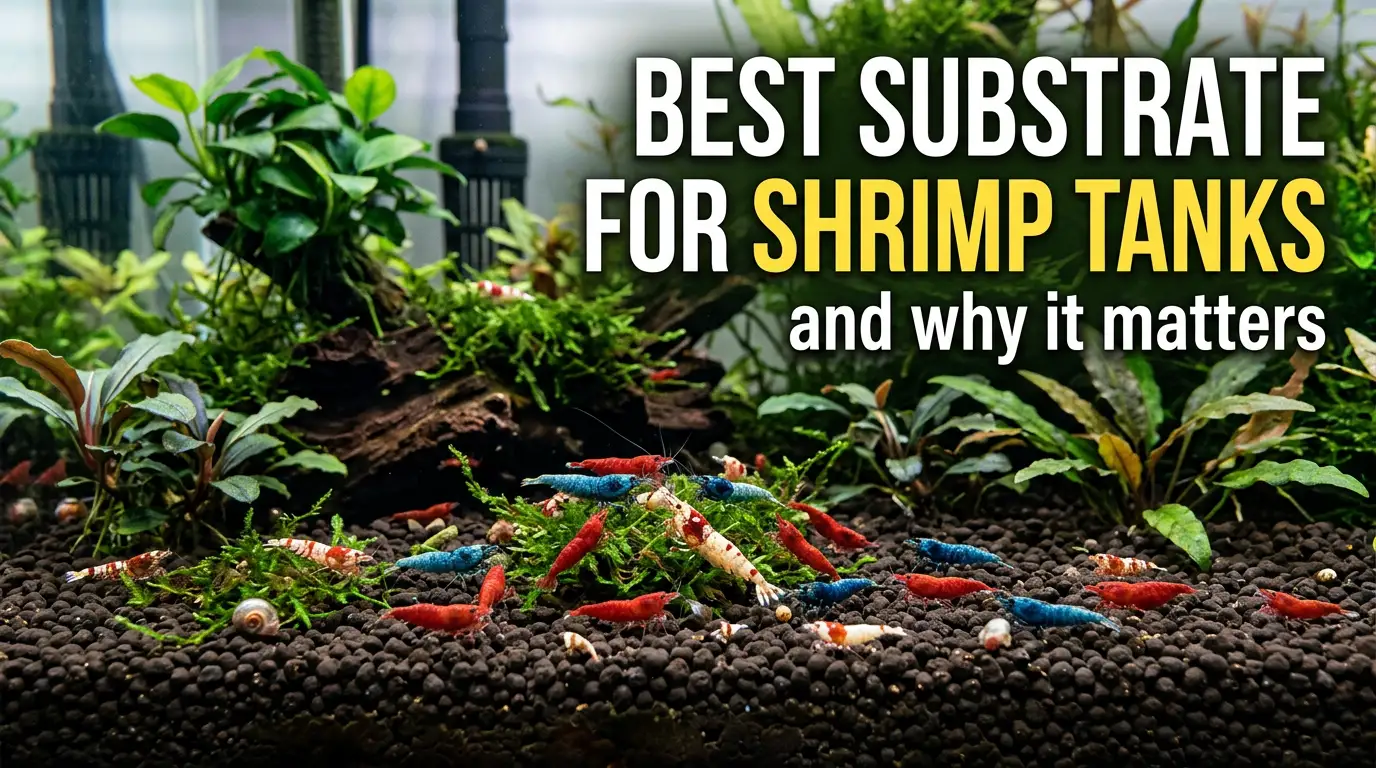
For Neocaridina (cherry, yellow, blue dream and similar color strains), plain inert gravel or sand works fine and keeps setup simple, since these shrimp tolerate the medium-to-hard, closer-to-neutral water that inert substrate leaves untouched. Caridina species (crystal red/black, bee, tiger, taiwan bee) generally need, and often only thrive long-term over, an active buffering aquasoil that continuously softens water and pulls pH down toward the 6.0-6.8 range they’re adapted to, because inert substrate alone can’t counteract a hard, alkaline tap supply the way an active soil can. Either way, darker substrate colors make shrimp display their existing color more vividly through their own background-matching response, a substrate depth of roughly 1.5-3 inches gives grazing room without trapping excess waste underneath, and the right pick ultimately comes down to matching substrate chemistry and color to the species and goals of that specific tank rather than choosing whatever looks best in a photo.
Why substrate is a bigger decision in a shrimp tank than a fish tank

In most fish-only tanks, substrate is close to a purely aesthetic and functional-bed decision: gravel or sand anchors decor, hosts a modest population of beneficial bacteria, and gets vacuumed on a schedule, while the water chemistry itself is driven mostly by the tap supply and whatever hardscape sits on top of it. Our general substrate comparison guide covers that baseline case in detail. Shrimp change the calculation because they’re crustaceans that rebuild their entire exoskeleton from dissolved minerals every time they molt, and because several of the most popular species in the hobby are far less tolerant of drifting pH and hardness than almost any community fish.
That sensitivity means the substrate sitting under a shrimp colony isn’t just a passive surface, it’s an active or inactive participant in the water chemistry those shrimp depend on for every successful molt. An inert substrate does nothing chemically, which is a feature for a species with wide tolerance and a real limitation for one that needs consistently soft, acidic water. An active substrate does real ongoing chemical work, softening and acidifying the water above it, which is exactly what some species need and exactly what can push a Neocaridina tank running fine on tap water into unnecessary instability. Picking between them isn’t about which substrate is objectively “better,” it’s about which one matches the shrimp you’re actually keeping.
Inert substrates: plain gravel and sand for Neocaridina
Inert substrates, ordinary aquarium gravel and most aquarium-safe sand, have no meaningful effect on pH, GH, or KH; they’re chemically neutral, which is precisely why they suit Neocaridina davidi (cherry, sakura, yellow, blue dream, and the rest of that same species’ color strains) so well. Neocaridina tolerates medium-to-hard, slightly alkaline water and a fairly wide pH band, the same tolerance covered in more depth in our water parameters guide, so there’s rarely a chemical reason to reach for anything more specialized. Practical Fishkeeping’s own substrate coverage generally frames inert gravel and sand as the sensible default for a community-style setup without demanding chemistry requirements, and a beginner shrimp tank fits that description closely.
The practical appeal is real: inert substrate is inexpensive, widely available in whatever grain size and color you want, doesn’t spike ammonia while breaking in the way some aquasoils do, and never runs out of buffering capacity because it was never buffering anything in the first place. The one thing inert substrate can’t do is fix bad starting water; if your tap supply already runs hard and alkaline enough that even Neocaridina would prefer softer conditions, gravel or sand simply won’t move the needle, and the fix has to come from the water itself rather than the substrate underneath it. For most first-time shrimp keepers running ordinary tap water, though, that’s a non-issue, and inert substrate remains the lowest-risk, lowest-maintenance starting point our shrimp tank setup guide recommends for a first colony.
Active, buffering substrates: aquasoil for Caridina

Active substrates, generally sold as aquasoil, are a fired or baked clay-based product manufactured for planted tanks that happens to solve a second problem for shrimp keepers almost as a side effect. Their porous structure holds humic and organic acids that leach slowly into the water column, gently and continuously pulling pH down and softening GH and KH above it, which is exactly the direction Caridina cantonensis (crystal red/black, tiger, and the various taiwan bee lines) need their water to move. Where Neocaridina shrugs off harder water, Caridina wants soft, acidic conditions with very little carbonate buffering, and few tap supplies naturally sit there on their own, which is why active substrate has become close to standard practice for anyone running a serious Caridina project. It’s telling that Aquarium Co-Op’s own community forum has a running thread specifically titled “Active substrate pH buffering for caridina shrimp,” a sign of how central this one substrate decision has become on that side of the hobby.
Aquasoil isn’t a free upgrade, though. A brand-new bag commonly triggers an ammonia spike in the first days as it breaks in, so an aquasoil tank still needs a full nitrogen cycle rather than being treated as instantly shrimp-safe, and it physically breaks down over roughly one to three years, gradually losing the structure and the buffering capacity that made it useful in the first place. Because that buffering fades rather than holding a fixed line forever, it’s genuinely possible to overshoot the other direction too, letting pH and KH drift lower than even Caridina want if the soil is very fresh and the tank isn’t monitored; Shrimp Science’s guide to GH in shrimp tanks makes the same point about hardness needing active tracking rather than a one-time setup decision. None of that makes aquasoil the wrong choice for Caridina, it’s closer to a necessary one, but it does mean testing water regularly rather than assuming the substrate will keep doing its job unattended indefinitely.
How substrate quietly reshapes your GH, KH, and pH over time
The reason substrate choice belongs in the same conversation as water testing is that its effect isn’t a one-time event at setup, it’s an ongoing chemical process that keeps running for as long as the substrate is active. Fresh aquasoil typically pulls hardest on GH and KH in its first few months, softening and acidifying water noticeably during that window, then gradually tapers as its exchange capacity depletes over its one-to-three-year working life. A tank running active substrate against consistently hard tap water settles into a kind of tug-of-war between the two, which is exactly why our water parameters guide treats GH and KH as numbers worth checking before every water change rather than something to set once and forget.
The table below lays out the main substrate categories side by side, since “gravel versus aquasoil” oversimplifies a decision that really has a few more practical variants worth knowing about, especially capped setups and the mineral-boosting substrates some keepers add for the opposite reason.
| Substrate type | Effect on pH / GH / KH | Best suited species |
|---|---|---|
| Plain gravel | None; chemically inert, water chemistry set entirely by your source water | Neocaridina (cherry, yellow, blue dream and other color strains) |
| Inert sand | None; same neutral profile as gravel, finer grain for biofilm grazing | Neocaridina, and community shrimp tanks mixed with sand-sifting fish |
| Active aquasoil (fresh) | Strongly softens and acidifies; pulls GH/KH down noticeably in the first months | Caridina (crystal red/black, bee, tiger, taiwan bee) |
| Active aquasoil (aged, 1+ year) | Milder, tapering buffering as exchange capacity depletes over time | Established Caridina tanks; needs closer GH/KH monitoring as it ages |
| Sand-capped aquasoil | Softens/acidifies similarly to plain aquasoil, slightly slowed by the cap layer | Caridina or mixed planted-shrimp tanks wanting an aquasoil base with a cleaner look |
| Crushed coral or aragonite additions | Raises pH, GH, and KH; the opposite direction of aquasoil | Not for Caridina; occasionally used in soft-tap-water Neocaridina tanks to prevent GH crashing too low |
Dark substrate and shrimp coloration display
Substrate color is easy to dismiss as pure decoration, but there’s a real, documented mechanism behind the common advice to use dark substrate for more vivid shrimp. Crustaceans, ornamental shrimp included, carry background-matching pigment responses controlled through chromatophores, the same pigment-bearing cells that determine a strain’s base coloration in the first place, and those cells let a shrimp adjust how concentrated its visible pigment appears in response to its surroundings. Research on background color and crustacean pigmentation published through the Global Seafood Alliance’s Responsible Seafood Advocate, along with a ScienceDirect study on background color effects in cultured Cherax quadricarinatus juveniles, both support the same general direction hobbyists have long reported anecdotally: darker surroundings correlate with deeper, more concentrated visible coloration in crustaceans, while pale surroundings correlate with a washed-out look in the same individual.
Our own piece on shrimp colors and patterns covers this same background-matching effect from the coloration side, and this section is really the substrate-shopping extension of that point: darker substrate makes a shrimp’s existing color pop through contrast and physiological display, it doesn’t add any pigment or improve a strain’s genetics. Move the same shrimp back onto pale gravel and the effect reverses within days to weeks, which is exactly why substrate color is worth planning up front for anyone building a colony specifically to show off color, rather than treating it as an afterthought once the plants and hardscape are already arranged. For color-focused tanks, this is one case where the display benefit alone can be reason enough to choose a dark aquasoil or dyed dark gravel even for Neocaridina, independent of any pH or GH argument.
Substrate depth for burrowing, grazing, and biofilm
Dwarf shrimp don’t burrow the way true crayfish or some larger freshwater prawns do, but they graze near-constantly across the substrate surface, picking at biofilm and algae, and depth still matters for how well that surface supports them and how safely it holds up over time. Our general substrate comparison guide puts a reasonable baseline at 2-3 inches for a tank with no rooted plants and 3-4 inches for one with real root systems to support, and shrimp tanks generally sit at the lower, shallower end of that range unless they’re also serving as a planted display.

- Keep it shallow if you’re not planting. A 1.5-2 inch layer of inert gravel or sand gives shrimp plenty of grazing surface without building up a deep, oxygen-poor layer underneath that can develop anaerobic pockets if it’s never disturbed.
- Give aquasoil a bit more depth for root-feeding plants. A Caridina tank that’s also growing carpeting or root-feeding plants generally wants closer to 2.5-3 inches of active soil so roots can actually reach the nutrient layer, not just the surface.
- Avoid sharp, oversized gravel entirely. Large, sharp-edged gravel can injure the delicate legs and undersides shrimp use to grip and forage, the same concern that applies to bottom-feeding fish; smooth, small-grain gravel or sand is safer for constant grazing contact.
- Watch fine sand for compaction. A deep, undisturbed sand bed can compact and trap hydrogen sulfide in anaerobic pockets over time; an occasional light stir, or keeping a few sand-sifting tankmates, prevents this without needing to rebuild the layer.
- Slope it if the tank is doing double duty as a display. A shallower front, deeper back layout, standard in aquascaping, gives shrimp more total grazing surface area across the same footprint and looks more natural without changing the chemistry.
A practical substrate recommendation matrix by species and goal
Species is the biggest factor, but the actual goal of the tank, breeding, color display, or a simple low-maintenance colony, shifts the recommendation enough to be worth laying out separately rather than collapsing everything into “gravel for beginners, aquasoil for experts.”
| Species / goal | Recommended substrate | Notes |
|---|---|---|
| First Neocaridina colony, low-maintenance | Plain gravel or inert sand | No buffering needed; matches our shrimp tank setup guide‘s beginner recommendation |
| Neocaridina, color-display focus | Dark inert sand or dark-dyed gravel | Chemistry stays neutral; dark color alone noticeably improves visible contrast |
| Caridina (crystal, bee, tiger), general keeping | Active aquasoil | Provides the soft, acidic buffering these species need; monitor GH/KH as it ages |
| Caridina, serious breeding project | Fresh active aquasoil, replaced or refreshed on a set schedule | Pair with RO/remineralized water for the tightest, most stable parameter control |
| Mixed planted shrimp tank (either species) | Sand-capped aquasoil | Keeps a clean look while still feeding root-based plants underneath |
| Soft tap water, Neocaridina running low GH | Inert substrate plus a mineral supplement (crushed coral, remineralizer) | Avoids pushing water in the acidic direction it doesn’t need |
This piece is meant to expand on our broader substrate comparison guide specifically for shrimp keeping, since the general gravel-versus-sand-versus-aquasoil breakdown there doesn’t get into species-specific chemistry the way a shrimp colony demands. If you’re setting up a tank from scratch, our shrimp tank setup guide covers the full process substrate fits into, our water parameters guide goes deeper into testing and adjusting GH/KH once substrate is in place, and our piece on shrimp colors and patterns and red cherry shrimp care guide are worth reading next if color display is part of why you’re choosing a substrate in the first place.
Frequently asked questions
Do I really need aquasoil for cherry shrimp, or is gravel fine?
Plain gravel or inert sand is genuinely fine for Neocaridina (cherry, yellow, blue dream and similar). They tolerate medium-to-hard, closer-to-neutral water well, so there’s rarely a chemical need for a buffering substrate; aquasoil becomes worth it mainly if you’re also growing demanding plants or specifically want the color-display benefit of a dark substrate.
Why do Caridina shrimp need a different substrate than Neocaridina?
Caridina species like crystal red, black, and bee shrimp need soft, acidic water with very little carbonate hardness, conditions most tap water doesn’t naturally provide. Active aquasoil continuously softens and acidifies the water above it, which does that chemical work automatically in a way inert gravel or sand simply cannot.
Will aquasoil lower my pH too much and hurt my shrimp?
It can, especially when it’s very fresh, which is why testing pH, GH, and KH regularly during the first few months matters more with active substrate than with inert substrate. If pH drops further than your species needs, pairing the soil with slightly harder source water or a partial mineral supplement can moderate the effect.
Does dark substrate actually change a shrimp’s color, or just how it looks?
It’s a display effect, not a genetic one. Dark substrate triggers a background-matching pigment response that makes a shrimp’s existing color look more concentrated and vivid, but it doesn’t add pigment or change the strain underneath; moving the same shrimp back to pale substrate reverses the effect over time.
How deep should substrate be in a shrimp-only tank?
Roughly 1.5-2 inches is enough for a shrimp tank with no plants, since shrimp graze the surface rather than burrowing into it. Add another inch or so of active soil specifically if you’re also growing root-feeding plants that need to reach a deeper nutrient layer.
How long does aquasoil’s buffering effect actually last?
Most aquasoil products buffer noticeably for around one to three years before their exchange capacity depletes and their effect on pH, GH, and KH tapers off. Regular testing is the only reliable way to know where a specific tank’s soil currently sits in that window rather than assuming a fixed timeline.
Can I mix gravel and aquasoil in the same shrimp tank?
Yes, capping a base layer of aquasoil with a thin layer of sand or fine gravel is a common approach that keeps most of the buffering benefit while giving a cleaner look and slightly slowing how fast the soil’s fine particles cloud the water when disturbed.
Substrate is one piece of a larger setup decision, and it’s worth reading alongside our shrimp tank setup guide and general substrate comparison guide rather than on its own, then following up with our water parameters guide once the substrate is in and it’s time to dial in GH, KH, and pH for the species you’ve chosen. If you’re starting completely from scratch, our guide to starting a shrimp tank with no experience walks through exactly where substrate fits in the setup timeline, and our piece on why shrimp color fades covers the other side of the substrate-and-coloration relationship discussed above.
References
- Practical Fishkeeping: Frequently Asked Questions on Aquarium Substrates
- Aquarium Co-Op Forum: Active Substrate pH Buffering for Caridina Shrimp
- Shrimp Science: General Hardness (GH) for Shrimp Tanks
- Global Seafood Alliance: Genetics, Environment Define Crustacean Color
- ScienceDirect: Effect of Aquarium Color Background on Cherax quadricarinatus Juveniles



Leave a Reply