Fish & Aquariums
I moved my first cherry shrimp colony out of a cramped 5-gallon and into a 10-gallon almost by accident, I had a spare tank sitting empty and figured bigger couldn’t hurt. Within a month the difference was obvious: fewer parameter swings after water changes, berried females everywhere, and shrimplets surviving in numbers I’d never seen in the smaller tank. That one move is basically why I now tell anyone starting a dedicated shrimp setup to skip the tiny tanks and start at 10 gallons if they can.
Quick answer
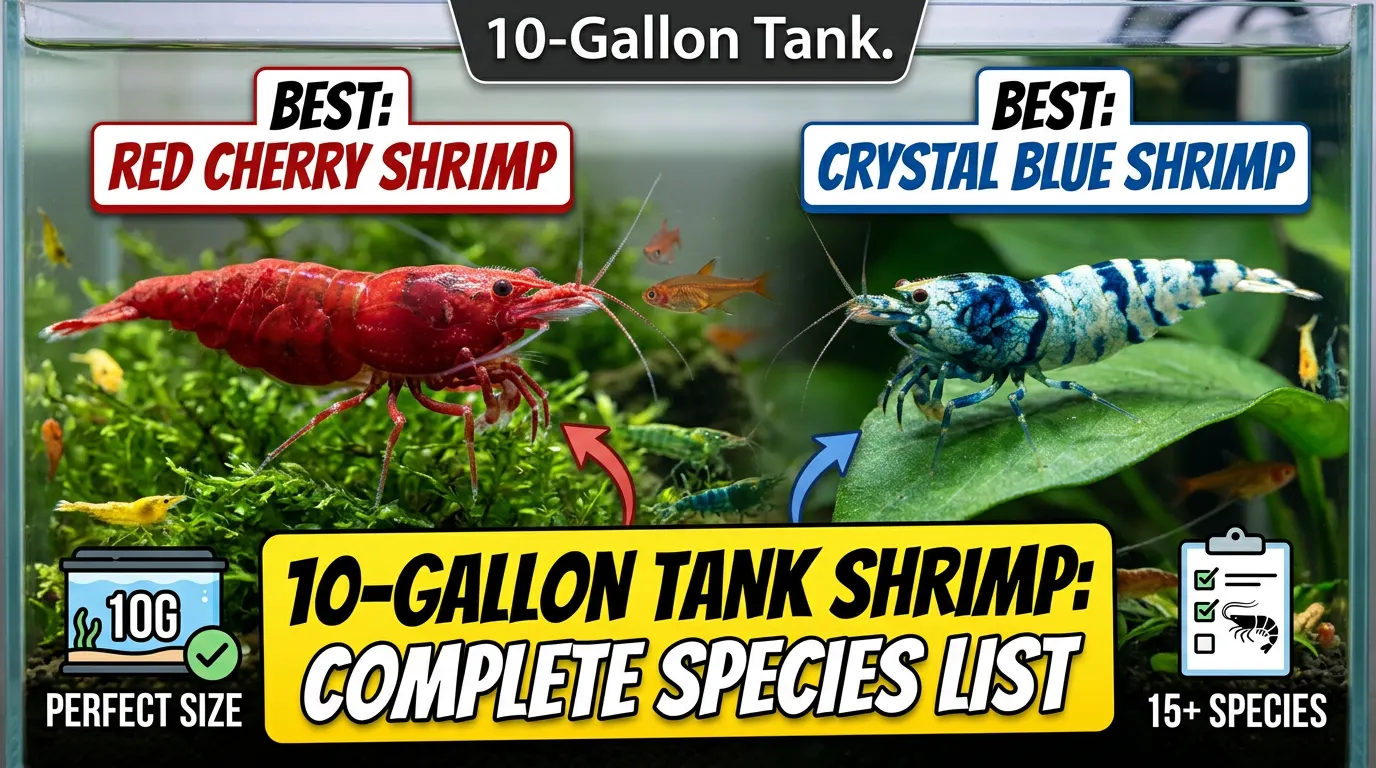
For a 10-gallon dedicated shrimp tank, Neocaridina species, cherry shrimp, yellow shrimp, blue dream, and the rest of that color-morph family, are the best all-around choice because they’re hardy, breed readily, and can be started with 10-15 shrimp and allowed to grow into a colony of roughly 60-150 over the following year. Amano shrimp (Caridina multidentata) work well too but need to be stocked much lighter, around 4-6 adults, since they grow to 2-3 inches and eat far more than a Neocaridina; the common one-per-two-gallons guideline used by sellers like Fish Laboratory reflects that size difference. Skip anything that hunts, most cichlids, goldfish, and larger community fish, keep the filtration gentle, and let the 10-gallon’s extra water volume do the stability work that a 5-gallon simply can’t.
Why 10 gallons is actually a great size for a dedicated shrimp colony
Shrimp keepers online tend to argue about minimum tank size endlessly, but the practical consensus lines up in one place. On some forum’s long-running thread about minimum shrimp tank size, one experienced member put it plainly: shrimp “tend to be sensitive to water parameter changes, so having something at least that large helps to keep things more stable,” referring to the jump from a 5-gallon minimum up to a 10-gallon recommendation for beginners. More water means slower, gentler swings in temperature, pH, and dissolved minerals whenever you top off, dose fertilizer, or forget a water change for a week. Dwarf shrimp are far more sensitive to sudden parameter shifts than most fish, an event that barely registers in a 10-gallon can crash a 2.5-gallon bowl.
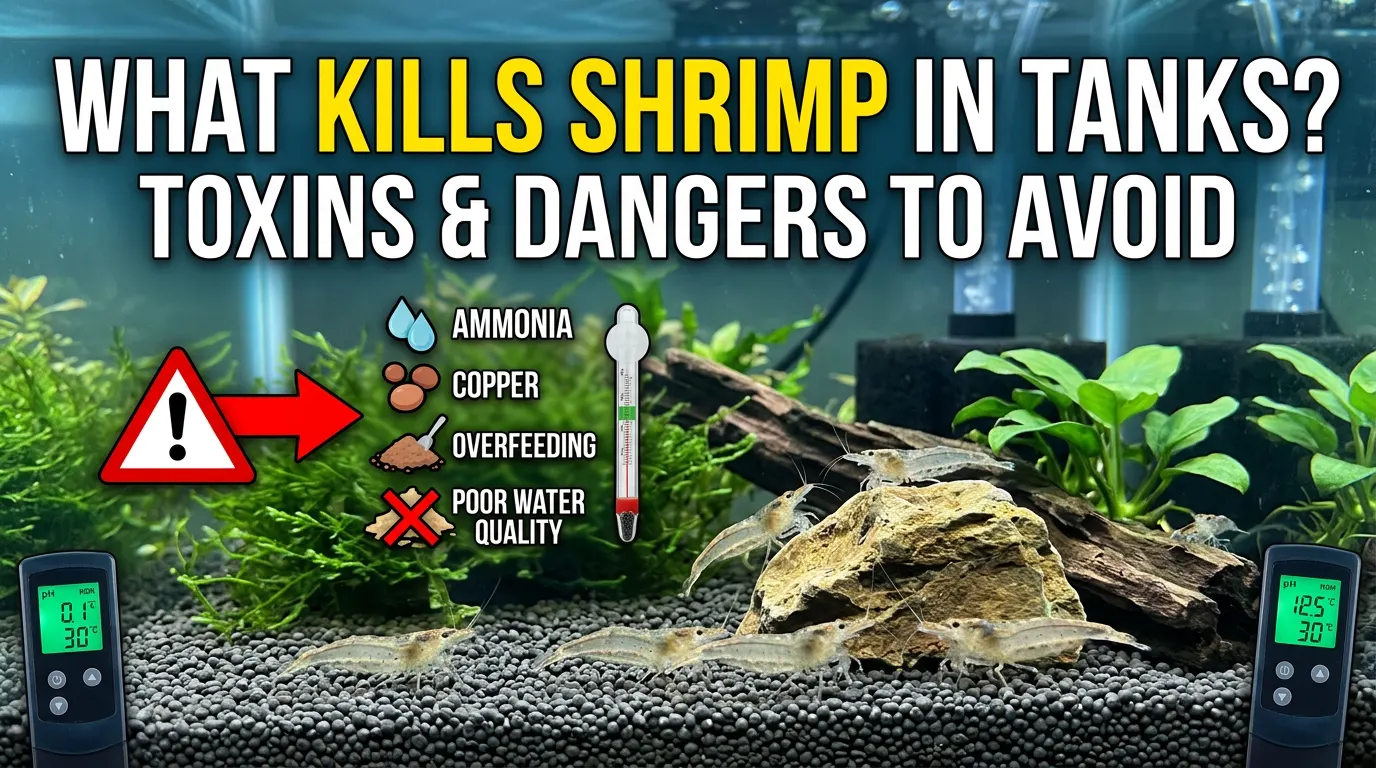
There’s also a nitrogen-cycle argument for going bigger. Ammonia is the real threat in any new aquarium, and a University of Florida IFAS Extension publication on ammonia in aquatic systems notes that un-ionized ammonia is roughly 100 times more toxic than the ionized form and that toxicity effects can begin at concentrations as low as 0.05 mg/L. A larger volume of water dilutes waste further before your biofilter catches up, which buys a young colony real breathing room. If you haven’t run a fishless cycle before stocking, it’s worth working through a proper cycling guide first, shrimp are notably less forgiving of ammonia and nitrite spikes than most fish, and there’s no “just do a water change and hope” safety net once a colony is established.
How many shrimp can a 10-gallon tank actually hold?
This is the question everyone actually wants answered, and the honest response is: it depends on whether you’re stocking for a starter colony or estimating where that colony will land after a year of breeding. A reasonable starting point for a 10-gallon Neocaridina tank is 10-15 shrimp. That’s enough for a genetically stable breeding group without overloading a tank that hasn’t matured yet, and it avoids the stress of a single or paired shrimp, dwarf shrimp are social and noticeably bolder in a group.
From there, growth can be fast. A frequently cited density benchmark, drawn from a 90-day study referenced by the shrimp-breeding site aquariumbreeder.com, put optimal Neocaridina density at around 10 shrimp per gallon for maximum growth and breeding output, which would work out to roughly 100 shrimp in a fully matured 10-gallon. That’s an upper ceiling for a heavily planted, well-filtered, mature tank, not a stocking target for month one. In practice, most keepers land somewhere between 60 and 150 shrimp in a healthy 10-gallon colony a year in, depending on how aggressively they cull, sell off extras, or let the population self-limit. The same research noted survival rates stayed consistent (87-93%) even at higher densities, but crowding reduced individual growth and breeding frequency, so “more shrimp” isn’t automatically “healthier shrimp.”
The practical takeaway: don’t panic if your colony explodes past your original headcount. A 10-gallon has enough surface area and biological capacity to handle that growth gracefully, as long as your filtration and feeding scale with it and you’re keeping up with a normal maintenance rhythm.
Best species for a 10-gallon shrimp colony
For almost every 10-gallon build, Neocaridina davidi and its many color morphs, cherry, yellow, blue dream, orange sakura, black rose are the right call. They’re all the same species with different selective-bred coloring, they tolerate a wider pH and hardness range than Caridina species, and they breed without any special triggers beyond stable water and decent food. If you want a colony that grows on its own with minimal intervention, this is the family to build around.

| Species | Suitability for 10 gal | Realistic starting count | Notes |
|---|---|---|---|
| Neocaridina davidi (cherry, yellow, blue dream, etc.) | Excellent, best default choice | 10-15, growing to 60-150+ | Hardy, breeds freely, tolerant of moderate parameter drift |
| Amano shrimp (Caridina multidentata) | Good, in smaller numbers | 4-6 adults | Grows to 2-3 in.; won’t breed in freshwater; excellent algae control |
| Caridina cantonensis (crystal/bee shrimp) | Workable but demanding | 15-25, kept modest | Needs soft, stable, low-pH water; less forgiving than Neocaridina |
| Ghost/glass shrimp (Palaemonetes) | Fair as a budget option | 8-12 | Hardy and cheap but plainer coloring; occasional cannibalism of molting shrimp |
| Vampire/viper shrimp (Atyopsis, Atya) | Not recommended for 10 gal | 1 (needs much more room) | Filter-feeder that grows large and needs strong current, outgrows this footprint |
If color and breeding activity are the goal, cherry shrimp specifically remain the easiest entry point, they’re the species most beginner guides (including our own shrimp tank setup guide) default to, and for good reason: they’re inexpensive, visually rewarding, and about as close to “set it up correctly once and let it run” as freshwater invertebrates get.
Amano shrimp in a 10-gallon: why size changes the math
Amano shrimp get lumped in with dwarf shrimp constantly, but they’re a genuinely different animal in terms of stocking math. Where a full-grown cherry shrimp tops out around an inch, an adult Amano reaches 2-3 inches according to a care guide from Fish Laboratory, and takes three to five months to reach that full size. That’s a meaningfully larger bioload per animal, and it’s why the same guide recommends roughly one Amano shrimp per two gallons rather than the much denser Neocaridina numbers, in a 10-gallon, that puts a sensible ceiling around 4-6 adult Amanos, maybe a few more in a heavily planted, well-filtered setup.
The upside is real: Amano shrimp are voracious, reliable algae eaters, arguably the best cleanup crew available for freshwater algae, and they’re social enough that Fish Laboratory’s guide recommends keeping “at least five to six” together so they display normal behavior instead of hiding constantly. The catch is that Amano shrimp essentially never breed in a home freshwater aquarium; their larvae need brackish or saltwater conditions to survive, so unlike Neocaridina, your Amano headcount in a 10-gallon will stay exactly where you stock it. If you want a colony that grows on its own, they’re a supporting cast member, not the main event; a small group of Amanos alongside a larger Neocaridina colony is a very common and effective 10-gallon combination, since the Amanos will happily hoover up algae and leftover food without competing much for breeding space.
What not to combine: overstocking and predatory tankmates
Most 10-gallon shrimp tank failures trace back to one of two mistakes: adding too many shrimp too fast before the tank has matured, or adding a tankmate that quietly eats shrimplets (or adult shrimp) until the colony stops growing and nobody can figure out why.
- Don’t rush the stocking curve. Adding 40+ shrimp to a tank that’s only been cycled for a few weeks outpaces your biofilter’s capacity, even if the ammonia and nitrite tests look fine on day one. Build up gradually from a 10-15 shrimp starting group and let the colony expand on its own.
- Avoid predatory and large community fish entirely. Practical Fishkeeping’s guide on shrimp tankmates is blunt about this, ruling out goldfish, cichlids, larger rainbowfish, spiny eels, bigger livebearers, most loaches, and larger tetras or barbs, any fish with a mouth big enough to eat a shrimp generally will, eventually.
- Be cautious even with “maybe” fish. The same guide flags guppies, rasboras, small danios, kuhli loaches, corydoras, and White Cloud Mountain minnows as fish that might coexist with adult shrimp but will happily pick off newly hatched shrimplets, which quietly caps your breeding success even if no adult ever visibly gets eaten.
- Treat bettas and dwarf puffers as a genuine gamble. Some individual bettas ignore shrimp entirely; others hunt them methodically. Practical Fishkeeping calls this exactly what it is, a gamble that may not pay off, and a 10-gallon colony you’ve spent a year building isn’t the place to test your luck.
- Skip large filter-feeding shrimp species. Vampire and viper shrimp are sometimes sold alongside dwarf shrimp but grow much larger, need strong current to filter-feed, and simply don’t fit a 10-gallon’s proportions the way Neocaridina or Amano do.
- Don’t mix incompatible Caridina and Neocaridina genetics if you’re breeding for color. They won’t crossbreed, but Caridina species generally want softer, more acidic water than Neocaridina tolerates well, so running both as breeding colonies in the same 10-gallon usually means compromising both.
Planting and hardscape considerations specific to a 10-gallon
A 10-gallon’s modest footprint (usually 20×10 inches) means every plant and piece of hardscape does double duty, it has to look intentional and actually function as shrimp habitat, because there’s no room for filler. Dense, low-growing plants like Java moss, Christmas moss, and pogostemon helferi give shrimplets somewhere to hide from adults and from each other during molting, which is when shrimp are most vulnerable. Floating plants such as frogbit or salvinia are worth adding too, their root systems are a favorite shrimplet nursery and they help absorb excess nutrients between water changes.
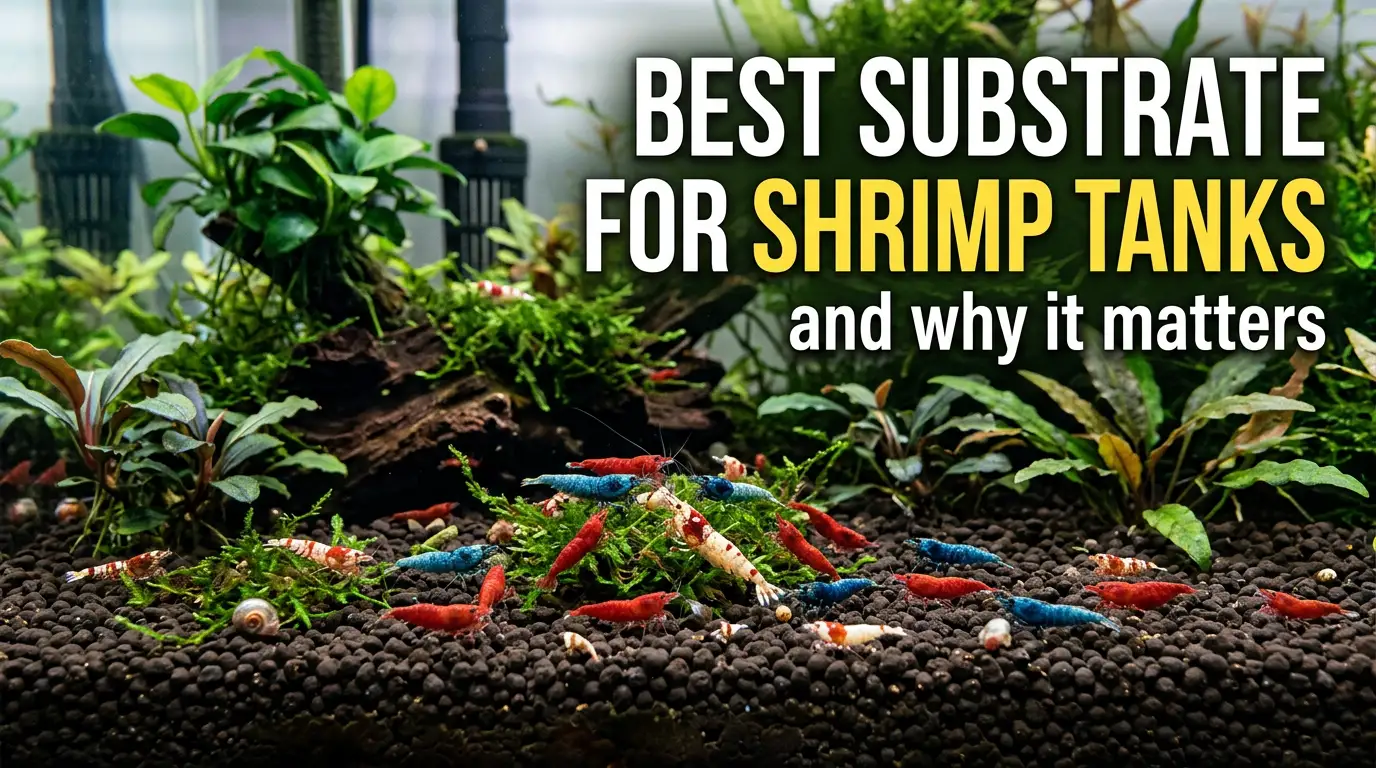
Substrate matters more here than in a typical fish tank. An active, buffering substrate can help stabilize pH for Caridina species, while an inert substrate paired with mineral supplementation works better for the wider tolerance range Neocaridina shrimp have. If you’re deciding between options, our substrate comparison guide breaks down the tradeoffs in more detail than makes sense to repeat here. Whatever you choose, avoid anything with sharp edges, shrimp graze along the substrate constantly and thin gravel with jagged points can damage their legs and antennae over time.
For hardscape, driftwood and leaf litter (Indian almond leaves, catappa bark) aren’t just decorative, they grow biofilm that shrimp graze on continuously, and they add tannins that many Neocaridina and Caridina keepers find helps with color and general shrimp health. In a 10-gallon specifically, resist the urge to over-scape with large rocks or big driftwood pieces; leave enough open swimming and grazing space that the colony doesn’t feel like it’s navigating a maze, and keep surfaces varied so shrimp of different sizes and molt stages all have somewhere appropriate to graze.
Filtration and equipment sizing for a shrimp-safe 10-gallon
The single most common equipment mistake in a 10-gallon shrimp tank is using a filter intake that isn’t shrimp-safe. Standard power filter intakes and uncovered canister intakes will pull shrimplets (and sometimes adults) straight in. A sponge filter run off an air pump is the default recommendation for a reason: it provides gentle flow, huge surface area for beneficial bacteria, and zero risk of shrimp getting pulled in, while also doubling as a grazing surface once biofilm builds up on it. If you’d rather run a hang-on-back or canister filter for stronger filtration, cover the intake with a pre-filter sponge, it’s a five-minute fix that eliminates the risk entirely.
Size the filter to the tank, not to the bioload you expect eventually — a filter rated for 10-20 gallons on a 10-gallon shrimp tank is plenty; oversizing flow just stresses shrimp with unnecessary current. Heating is optional for most Neocaridina, which tolerate room temperature in the low-to-mid 70s°F just fine, but if you’re keeping Amano shrimp or want more consistent breeding activity, a small adjustable heater sized correctly for a 10-gallon (our heater sizing guide covers wattage recommendations) keeps temperature swings from adding to the parameter stress a young colony is already managing. Lighting can be modest, most shrimp-safe plants like moss and frogbit don’t need high-output fixtures, and dimmer lighting reduces algae blooms that would otherwise mean more manual cleanup.
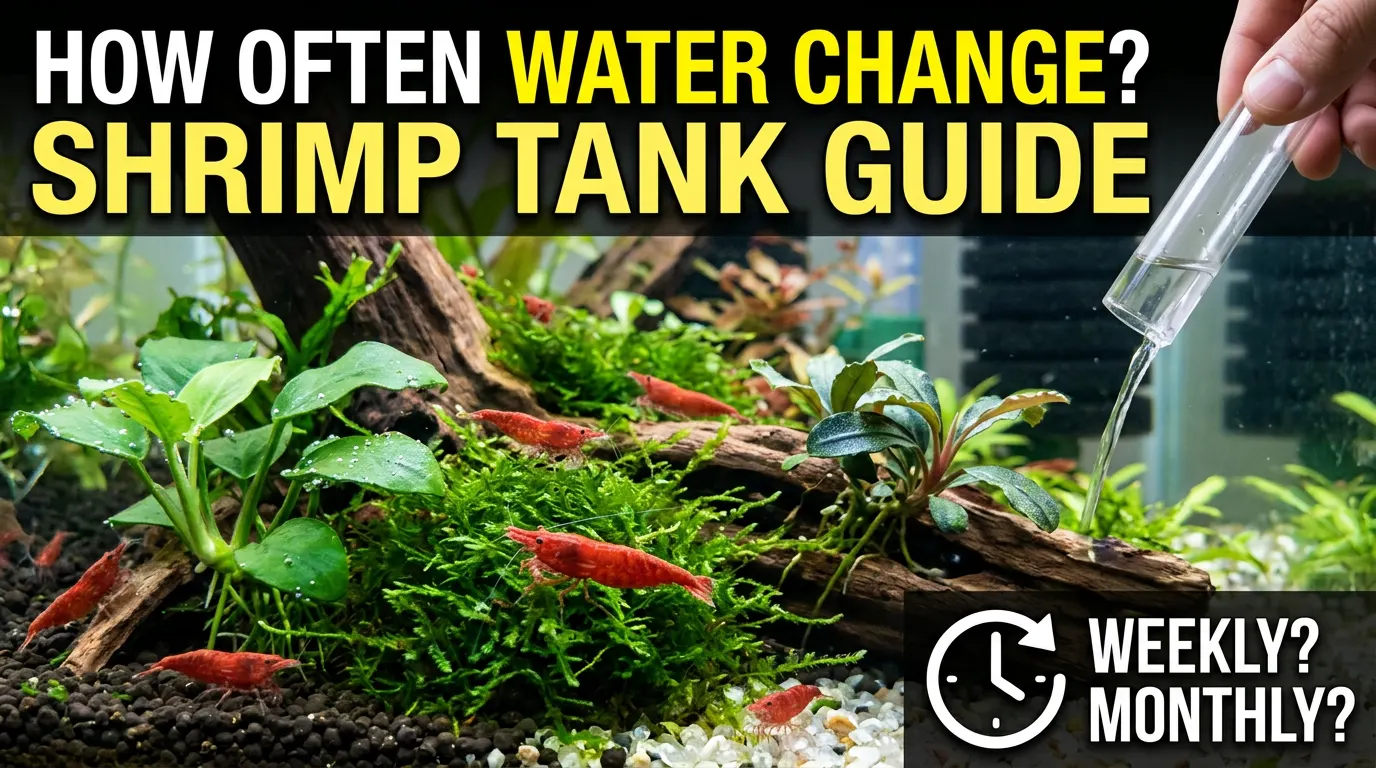
Whatever filter and substrate combination you land on, plan for regular but gentle maintenance rather than aggressive gravel vacuuming, which can suck up shrimplets along with debris, a fine-mesh, low-suction approach during water changes protects the smallest members of the colony.
Frequently asked questions
How many shrimp should I start with in a 10-gallon tank?
Start with 10-15 Neocaridina shrimp once the tank has fully cycled. That’s enough for a stable breeding group without overloading a young biofilter, and the colony will grow on its own from there.
Can I keep Amano shrimp and cherry shrimp together in a 10-gallon?
Yes, this is a common and effective combination. Keep Amano shrimp to around 4-6 adults given their larger adult size, and let the Neocaridina colony grow separately, the two won’t compete much since Amanos rarely breed in freshwater aquariums.
How many shrimp can a 10-gallon tank hold at maximum capacity?
A mature, well-planted, well-filtered 10-gallon can support up to roughly 100 Neocaridina shrimp based on commonly cited density research, though most healthy colonies settle naturally in the 60-150 range depending on culling and feeding.
What fish can safely live with shrimp in a 10-gallon?
Small, peaceful algae-eaters are the safest choice, otocinclus catfish and dwarf rasboras like chili rasboras are commonly recommended. Avoid goldfish, cichlids, larger barbs and tetras, and treat bettas as an unpredictable gamble.
Is a 10-gallon tank better than a 5-gallon for shrimp?
Yes, for most keepers. The extra water volume in a 10-gallon resists sudden swings in temperature and water chemistry far better than a 5-gallon, which makes it noticeably more forgiving for beginners and gives a growing colony more room before it feels crowded.
Do I need a heater for a shrimp-only 10-gallon tank?
Not necessarily. Neocaridina shrimp tolerate stable room temperatures in the low-to-mid 70s°F without issue. A small heater is more useful if your room temperature swings a lot, or if you’re keeping species like Amano shrimp that benefit from more consistent warmth.
What kind of filter is safest for a 10-gallon shrimp tank?
A sponge filter powered by an air pump is the standard recommendation because it provides gentle flow and beneficial bacteria surface area with no risk of pulling shrimp or shrimplets in. A hang-on-back or canister filter can work too as long as the intake is covered with a pre-filter sponge.
If you’re building this out from scratch, our full shrimp tank setup guide walks through the entire process from cycling to first stocking in more depth. It’s also worth reading through our guide on cycling a new aquarium before adding any shrimp, and once the colony is established, our aquarium maintenance schedule and notes on gravel cleaners will help you keep water quality steady for the long haul. If you’re still deciding which species to stock, my best shrimp for beginners guide covers the full lineup, and my red cherry shrimp care guide goes deeper on the species most keepers end up choosing for a tank this size.
References
- Ammonia in Aquatic Systems – UF/IFAS Extension
- Frequently Asked Questions on Neocaridina Shrimps – Practical Fishkeeping
- Care Guide for Cherry Shrimp – Aquarium Co-Op
- Amano Shrimp Care Guide – Fish Laboratory
- What Can I Keep With Shrimp? – Practical Fishkeeping
- How Density Affects Dwarf Shrimp – Shrimp and Snail Breeder



Leave a Reply