
Fish & Aquariums
The first weekend I set up a dedicated shrimp tank, I spent an embarrassing amount of time just staring at it, trying to decide whether my new cherry shrimp were doing fine or slowly dying. Every twitch looked ominous until I actually learned what to look for. Shrimp don’t get sick quietly, they show it, in their coloring, their antennae, their feeding response, and how often they molt, if you know which of those to watch. Once I stopped just counting bodies and started checking those specific signals, I caught real problems early instead of panicking over completely normal shrimp behavior.
Quick answer
Healthy aquarium shrimp are almost always doing something: grazing on biofilm and leftover food with their front legs, walking across surfaces, or sweeping their long antennae back and forth to sense their surroundings. Their color should stay steady and appropriate to their strain rather than fading toward pale or translucent, they should molt on a fairly predictable schedule (frequently as juveniles, tapering to roughly every few weeks as adults), and a stable colony regularly turns up berried females carrying eggs and shrimplets of different sizes foraging in the moss. The warning signs point the other way: constant hiding, ignoring food, sitting motionless on the glass or substrate, erratic darting or gasping at the surface, and a white, cloudy, or opaque discoloration that isn’t just a normal shed shell. Those usually trace back to a water quality problem, a failed molt, or disease, and they’re worth investigating the same day you notice them rather than waiting to see if it resolves on its own.
Grazing and foraging: the first behavior to check
A healthy shrimp is a busy shrimp. Aquarium Co-Op’s care notes on Amano shrimp describe them as “constantly grazing for food with their front legs, climbing up plant leaves, and swiping food from bigger fish,” and that same near-constant activity is the baseline for dwarf shrimp species too, just at a smaller scale. Watch a thriving colony for more than a minute or two and you’ll see shrimp walking across the glass, picking at driftwood and leaf litter, sifting through substrate, and crowding onto anything that even smells like food, whether that’s a sinking wafer, a piece of blanched zucchini, or just the biofilm growing on an old piece of moss. This grazing doesn’t stop and start on a fixed clock the way a scheduled fish feeding does; it’s continuous low-level activity throughout the day and into the evening.
That’s exactly why a sudden change in feeding response is one of the fastest tells something is off. A shrimp that used to swarm a food drop and now ignores it, or a colony that used to be visibly active during the day and has gone quiet, is showing you a behavioral change before you’d catch anything on a water test. It doesn’t automatically mean an emergency, shrimp do slow down and stop eating for a day or so right before a molt, but if the whole colony loses interest in food at once, or one shrimp stops grazing and stays that way for more than a day or two outside of a molt cycle, it’s worth checking water parameters before anything else.
Coloration: what vivid color tells you, and when it doesn’t
Color is the most obvious health signal to a new keeper, and for good reason, it’s genuinely informative, just not in a completely straightforward way. Aquarium Co-Op’s cherry shrimp care guide notes that females typically display “very bright and vivid colors” while males run “more translucent,” a natural difference in pigmentation rather than a health issue. Selective breeding has pushed that baseline further: strains sold as fire red, sakura, or bloody mary are bred specifically for saturated, opaque color, so a consistently deep, solid color in one of those lines is a decent proxy for good condition and good genetics working as intended.
Where it gets less intuitive is that color intensity moves for reasons that have nothing to do with health, and reasons that have everything to do with it, and the two can look similar at a glance. Diet genuinely affects pigmentation over time; foods rich in carotenoids gradually deepen red and orange coloring, which is why some feeding regimens specifically target color as an outcome. Shrimp can also look temporarily paler in the day or two before a molt as the pigment in the old shell separates from the new one underneath, and that fades right back once the molt is complete. Stress-driven color loss is a different pattern: according to ShrimpKeepers, shrimp under sustained stress fade noticeably, describing cherry shrimp transitioning “from vibrant red to pale pink” over an extended period, which the site distinguishes explicitly from the brief, temporary paling that comes with a normal molt. The practical distinction is duration and whether it resolves: a day or two of dullness around a molt, followed by color returning as good as before, is normal; color that stays washed out, patchy, or increasingly translucent for a week or more usually means something in the tank, water chemistry, lighting, diet, or ongoing stress, is holding it there.
Antennae activity: an easy signal most people overlook
Shrimp carry two pairs of antennae, a long pair used mainly to feel out their surroundings and a shorter, more delicate pair of antennules used more for detecting chemical cues in the water, and both are in near-constant motion on a healthy, alert shrimp. Watching those antennae sweep steadily as a shrimp walks, forages, or simply sits in the open is one of the quickest ways to gauge whether it’s actually alert rather than just present. It’s a small detail, but it’s worth building into your routine visual check precisely because it’s fast: you don’t need to wait to see if a shrimp eats or molts normally, you can glance at antennae movement in a few seconds.
Antennae that stay clamped down against the body, move only sluggishly, or don’t respond at all when a shrimp is disturbed are a more immediate concern than color or feeding, since they tend to show up earlier in the course of acute stress or illness. Combined with the erratic, uncontrolled swimming patterns described further down, sluggish or absent antennae movement is one of the clearer physical signs that a shrimp is in distress right now rather than simply between molts or naturally less colorful than its tankmates.
Molting: the single clearest long-term health indicator
If you only track one thing, track molting frequency, because it reflects nutrition, water chemistry, and growth rate all at once. According to ShrimpKeepers’ molting guide, juvenile shrimp molt roughly every 5-7 days during their rapid growth phase, while mature adults typically molt every 3-6 weeks, with the exact interval depending on species, temperature, and nutrition. Regular, successful molts on something close to that schedule are a strong sign that a shrimp has adequate minerals, adequate food, and stable enough water to support the process, since molting is metabolically demanding and one of the first things to falter when any of those are off.
A normal molt has a recognizable pattern: reduced feeding and increased hiding in the day or so beforehand, a brief clear or translucent shed shell left behind (Aquarium Co-Op’s cherry shrimp guide describes a healthy molt as appearing “clear translucent with a split in the middle of the back,” distinct from a deceased shrimp, which looks “fully opaque”), and then a day or two of hiding while the new shell hardens before normal activity and color resume. This is also why calcium and general hardness matter so much to shrimp specifically: research on molting biology summarized by the Global Seafood Alliance’s Responsible Seafood Advocate notes that calcium is “highly demanded by shrimp due to the frequent molting necessary for their growth,” which lines up with what aquarium keepers observe directly, that shrimp in very soft, mineral-poor water struggle to complete molts even when every other parameter looks fine. Our shrimp tank water parameters guide covers the specific GH and KH ranges that keep molting reliable.
Abnormal molting looks different and is worth treating as an early warning rather than a one-off: a shrimp stuck halfway out of its old shell, a colony where molts have effectively stopped despite otherwise active shrimp, or a newly molted shrimp that looks white and mushy instead of soft and pale are all signs pointing toward a mineral deficiency or a broader water stability problem rather than bad luck.
Signs of a thriving breeding colony
A colony that’s actually breeding, not just surviving, is one of the clearest long-term signs everything in the tank is working. The first thing to look for is a berried female, a shrimp visibly carrying a cluster of eggs tucked under the curled underside of her tail. Aquarium Co-Op notes that a female typically carries “about 20-30 eggs at a time” and stays berried for “about a month, depending on the water temperature,” while Practical Fishkeeping adds that females develop a visible yellow “saddle” on their backs shortly before mating and that males become noticeably more active swimmers when a female nearby is ready to breed. Neither source is describing anything the shrimp need help with; in stable, mature water, berried females showing up on a regular basis is simply what a healthy colony does on its own.
The second, arguably more telling sign is shrimplets: tiny, fully-formed miniature shrimp appearing in the moss and plant cover a few weeks after eggs hatch. Because dwarf shrimp go through direct development with no separate larval stage, shrimplets look like small copies of the adults from day one, and finding them scattered across different size classes, tiny newcomers alongside slightly older juveniles, tells you reproduction has been ongoing for a while rather than a single lucky clutch. A colony with adults but no berried females and no shrimplets over several months isn’t necessarily in crisis, but it is a sign something (often water stability, nutrition, or overcrowding relative to food) is holding reproduction back even if the adults themselves look fine day to day. Our guide to breeding shrimp goes further into encouraging a colony to reach this stage.
Warning signs and what they actually mean
Stress and illness in shrimp tend to show up as a cluster of behaviors rather than one isolated symptom, and matching the specific sign to its likely cause saves a lot of guesswork. ShrimpKeepers’ breakdown of shrimp stress signals is a useful reference point here: erratic swimming, where shrimp “dart frantically around the tank, bump into glass walls, or shoot rapidly to the surface,” typically signals acute stress from a sudden parameter change or a toxin in the water; shrimp clustering near the surface or in corners suggests they’re actively trying to escape unfavorable conditions lower in the tank; and motionless shrimp sitting on the substrate for extended periods often points to low oxygen or poor circulation rather than simple resting.
| Sign | What it means | Action |
|---|---|---|
| Erratic swimming, darting, or bumping into glass | Acute stress, often from a sudden parameter swing or a toxin like copper entering the water | Test ammonia, nitrite, and pH immediately; stop dosing anything recently added until confirmed shrimp-safe |
| Constant hiding or clustering near the surface | Shrimp actively avoiding poor conditions lower in the tank, often low oxygen or accumulating waste | Check filtration and flow, increase surface agitation, and do a water change if parameters are off |
| Lethargy, sitting motionless on the glass or substrate | Low oxygen, poor circulation, or the tail end of prolonged stress | Improve surface movement/aeration and rule out an ammonia or nitrite spike |
| Fading color that doesn’t return within a couple of days | Extended stress rather than a temporary pre-molt fade | Review recent changes to water, diet, and lighting; test water parameters |
| Refusing food consistently for more than 1-2 days | Compromised health or a serious water quality issue (brief refusal right before a molt is normal) | Check for other molt-related behavior first, then test water if refusal continues |
| White, cloudy, or opaque body (not a shed shell) | Possible bacterial or fungal issue, or a failed molt in progress, rather than a discarded exoskeleton | Isolate if possible, improve water quality, and compare against a genuine molt shell for reference |
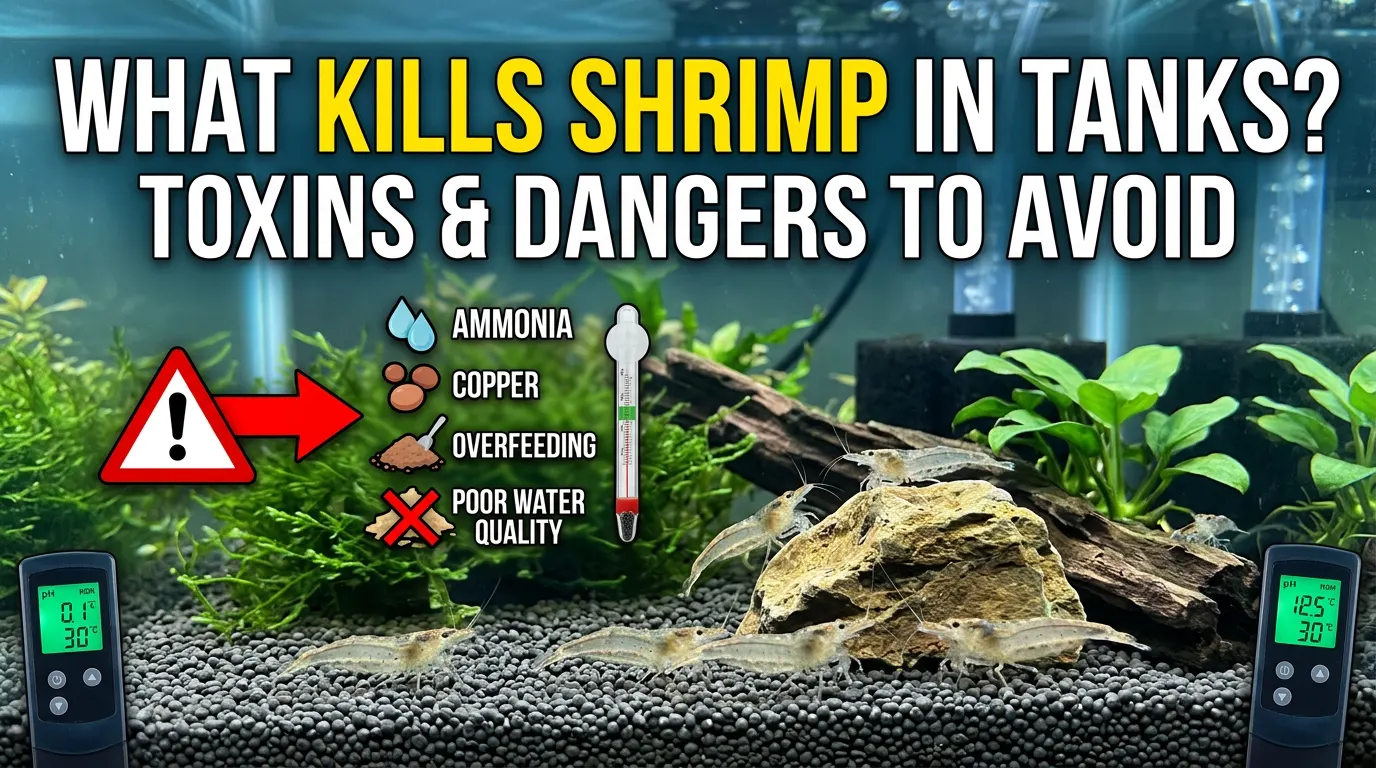
A few of these overlap in cause: erratic swimming, refusing food, and lasting color loss frequently show up together because they all stem from the same underlying stressor, most often unstable or degraded water. Our guide to what kills shrimp in tanks walks through the specific toxins and conditions, copper, chloramine, and sudden parameter shifts among them, that tend to produce exactly this cluster of symptoms.
Building a simple health-check habit
You don’t need a formal checklist to keep tabs on a shrimp colony, just a habit of glancing for the same handful of things whenever you’re near the tank. These are the checks worth making routine:
- Watch the feeding response. Drop in food and note whether shrimp converge on it within a few minutes; a colony-wide loss of interest that lasts more than a day or two is worth investigating.
- Scan for antennae movement. A quick look at whether antennae are sweeping steadily versus clamped down or motionless tells you more, faster, than almost any other single glance.
- Count berried females and shrimplets periodically. Seeing new ones show up every few weeks is a good sign the colony is stable enough to reproduce, not just survive.
- Note molt shells, and how often you find them. A steady trickle of clear, translucent shells is healthy; a colony that’s gone quiet on molting, or one where shrimp are turning up stuck in their shells, needs a water parameter check.
- Watch behavior right after any water change. Erratic swimming or sudden hiding in the hour after a change usually means the new water didn’t match the tank closely enough in temperature or hardness.
Frequently asked questions
How often should healthy shrimp molt?
Juveniles molt roughly every 5-7 days during their fastest growth phase, while mature adults typically molt every 3-6 weeks depending on species, temperature, and nutrition. A colony that’s molting on something close to that rhythm, with shrimp leaving behind clear, translucent shed shells, is generally in good shape.
Is it normal for my shrimp to lose color sometimes?
Yes, brief, mild paling in the day or two before a molt is normal and resolves once the new shell hardens. Color that stays faded, patchy, or increasingly translucent for a week or longer isn’t part of that cycle and usually points to sustained stress, poor diet, or a water quality issue.
Why are my shrimp hiding all the time?
Occasional hiding is normal, especially right before and after a molt, when a shrimp is briefly soft-shelled and vulnerable. Constant hiding across the whole colony, rather than one or two shrimp on a molt cycle, more often reflects poor water conditions, low oxygen, or a lack of adequate cover making shrimp feel exposed even when they’re not molting.
What does it mean when a shrimp is berried?
A berried female is carrying fertilized eggs tucked under the curled underside of her tail, typically for around a month depending on temperature, before releasing fully-formed shrimplets. Regularly seeing berried females is one of the best signs a colony is stable, well-fed, and breeding successfully rather than just holding steady in numbers.
Why do my shrimp look pale or washed out compared to when I bought them?
This is usually either diet or stress. Color intensity in strains like cherry shrimp is partly maintained by diet, so a lack of varied, high-quality food can gradually mute color over weeks, while a more sudden or sustained fade points toward stress from water chemistry, lighting changes, or ongoing poor conditions rather than nutrition alone.
Is gasping at the surface always a sign something’s wrong?
Essentially yes. Unlike some fish, shrimp don’t have a reason to hang at the surface gulping air under normal conditions, so repeated gasping or shrimp crowding the surface typically signals low dissolved oxygen or a serious water quality problem and is worth testing parameters over right away rather than waiting to see if it passes.
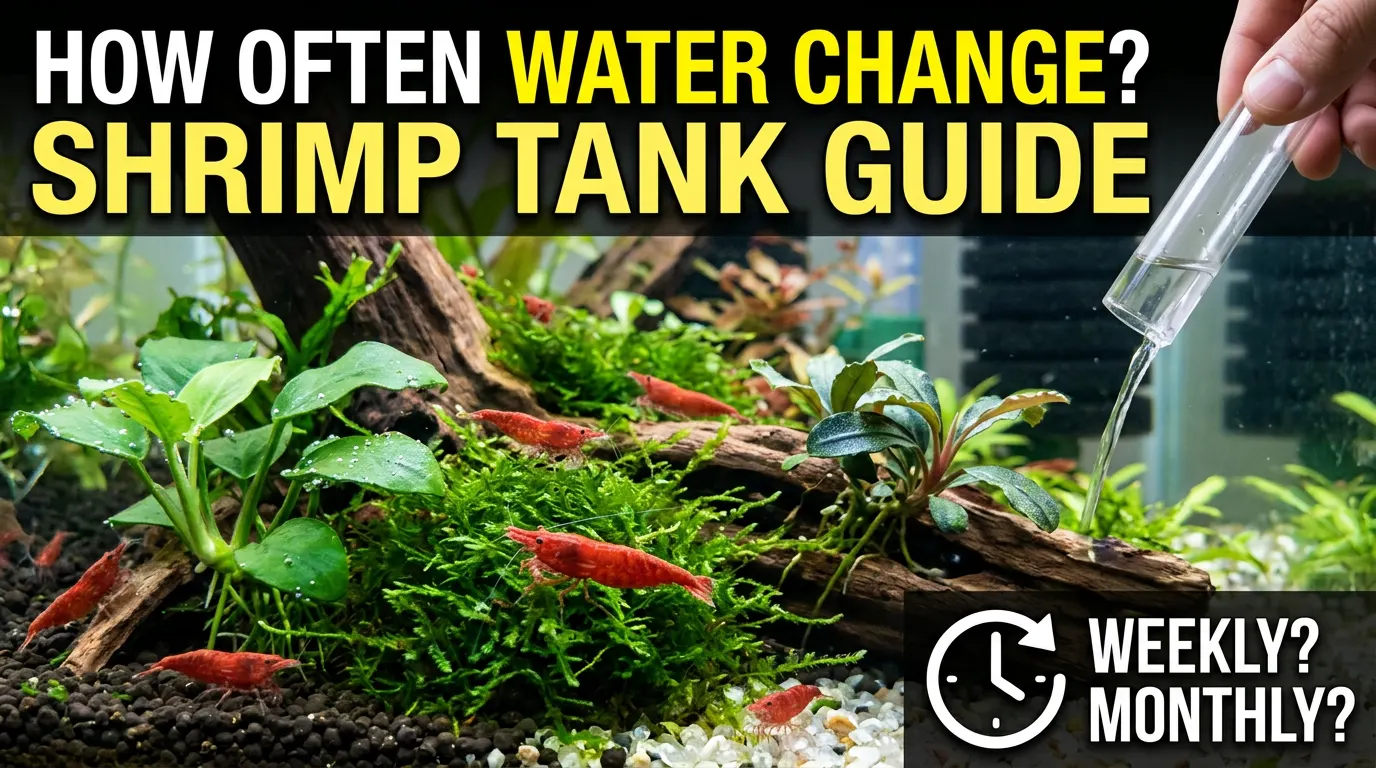
If you’re still working out the basics of the tank itself, our shrimp tank setup guide covers the water, filtration, and planting choices that make most of these health signs easy to read in the first place, and our guide to why shrimp keep dying is the next stop if any of the warning signs above are showing up in your tank right now. Since molting frequency and behavior right after a water change are two of the clearest health tells covered above, our guide to normal vs. concerning shrimp molting and guide to how often to change water in a shrimp tank are worth reading next.
References
- Care Guide for Amano Shrimp – Aquarium Co-Op
- Care Guide for Cherry Shrimp – Aquarium Co-Op
- Shrimp Molting Guide: Normal vs Abnormal Signs & Care Tips – ShrimpKeepers
- Shrimp Stress Signs: How to Identify and Fix Stressed Aquarium Shrimp – ShrimpKeepers
- Calcium and Magnesium Use in Aquaculture – Global Seafood Alliance
- An Introduction to Shrimp – Practical Fishkeeping



Leave a Reply