Fish & Aquariums
The first time I found an empty, perfectly shrimp-shaped shell wedged in the moss, I nearly tore the tank apart looking for a body. I’d had my cherry shrimp colony for barely a month, just long enough to know a few of the bigger ones on sight, and this pale, hollow husk with two empty eye stalks looked exactly like a death to someone who didn’t know better. A more experienced keeper in a forum thread set me straight in about two sentences. Molting turns out to be the single most misunderstood thing in the hobby, and also the thing most likely to make a beginner panic over nothing, or miss a real problem because it looked enough like a normal one.
Quick answer
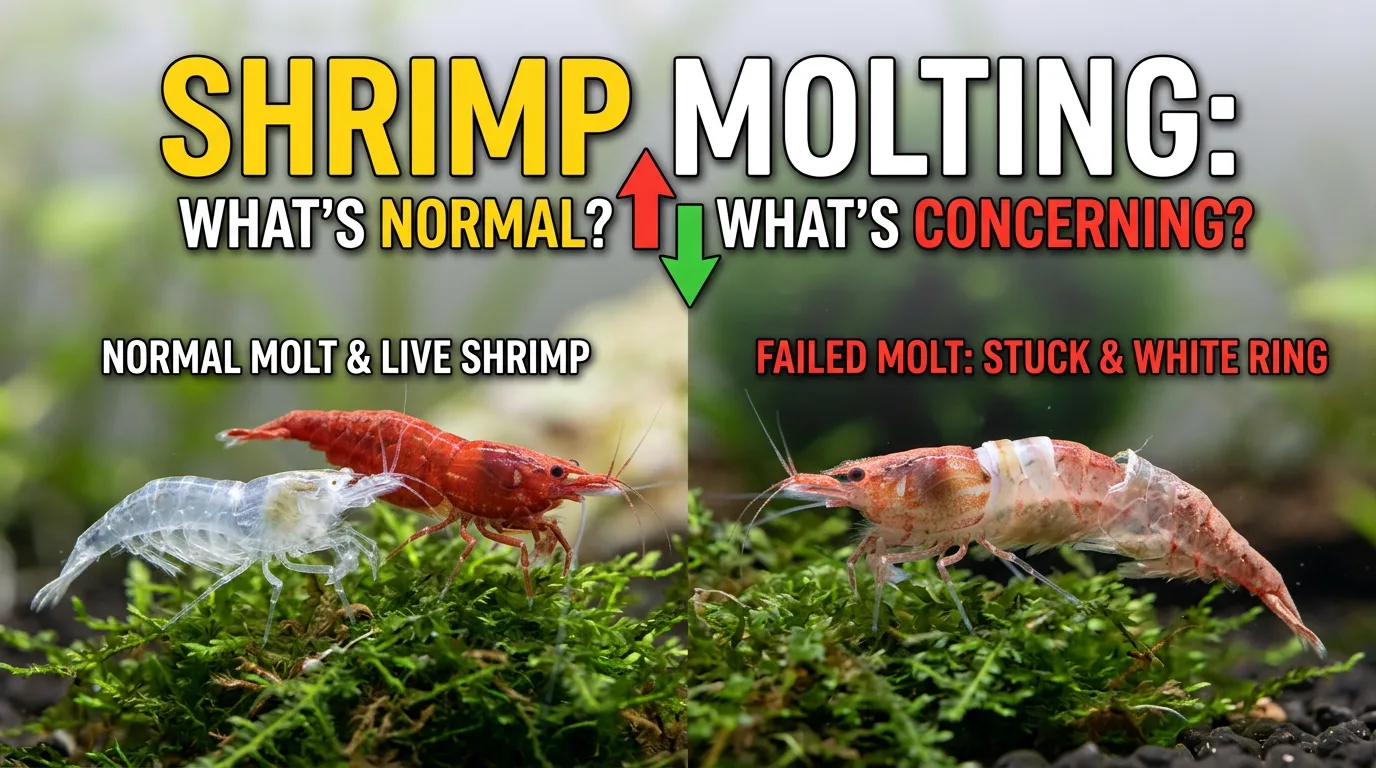
Molting is how a shrimp grows: it splits and sheds its entire exoskeleton, then grows a new, slightly larger one from the soft body underneath. Juveniles molt often, sometimes close to weekly, while adults settle into a slower rhythm of roughly once every three to four weeks. In the day or so before a molt, a shrimp typically goes still, hides, and stops eating; for the hours immediately after, its new shell is soft, pale, and essentially defenseless, so it hides again until the shell hardens. Finding an empty, shrimp-shaped shell in the tank is a normal sign of growth, not a dead shrimp, and plenty of keepers leave it in place because shrimp will often eat it to recover the minerals used to build it. What’s actually worth watching for: a shrimp stuck partway out of its old shell (a failed or “stuck” molt, usually from low GH or a calcium deficiency), molting noticeably more often than its life stage would suggest (often a water-quality stressor), or an actively growing shrimp that stops molting altogether (often stress or poor nutrition). Stable GH, a calcium source in the diet, and plenty of cover to hide in during the vulnerable window are the main levers for keeping molts routine rather than risky.
What’s actually happening when a shrimp molts
Shrimp are crustaceans, and like every crustacean their skeleton is on the outside: a rigid, mineral-hardened shell called the exoskeleton, rather than bone wrapped in soft tissue the way a fish is built. That shell doesn’t stretch, so growth can’t happen gradually, it happens in discrete jumps, each one triggered by molting (biologists call it ecdysis, the shedding of a cuticle). A shrimp reabsorbs some of the calcium locked inside its old shell in the days beforehand, splits the shell open, usually at a seam just behind the head, and backs out of it entirely, then immediately starts hardening the soft new shell underneath by pulling more calcium out of the surrounding water. A 2012 review of crustacean biomineralization published in the journal ZooKeys, by biologist Gilles Luquet, describes this as an “energetically demanding calcium turnover throughout their life,” with animals storing calcium from the old cuticle specifically so it’s available again within about 48 hours of shedding, before the new shell has had time to properly mineralize on its own.

How often that cycle repeats depends heavily on age. Shrimplets and juveniles are growing fast and molt correspondingly often, sometimes every one to two weeks according to the shrimp-keeping resource Shrimp Science, while a mature adult’s growth slows down enough that it typically molts only once every three to four weeks. Neocaridina davidi, the species sold as cherry, sakura, or blue velvet shrimp, reaches sexual maturity at around a month old and keeps molting on that slower adult schedule for the rest of its one-to-two-year lifespan, per its species profile on Wikipedia, so a molt at any age is a sign the shrimp is alive and growing, not a symptom of anything wrong.
Reading the signs before a molt
A shrimp doesn’t molt without warning. In the hours, sometimes closer to a full day, before shedding, it typically goes still, tucking itself into a corner or against a plant and barely moving. Shrimp Science describes the classic pre-molt shrimp as “spending a lot of their time standing still and not moving very far for maybe an hour or more,” often refusing food entirely during that window even if it was grazing normally the day before. One shrimp doing this is unremarkable, it’s simply due for a molt. Several shrimp doing it at once, especially if it stretches past a day or two without any of them actually molting, is a different story, and worth treating as a cue to check ammonia, nitrite, and temperature rather than assuming every still shrimp in the tank is mid-molt.
The soft-shell window: why a freshly molted shrimp disappears
The few hours right after a shrimp backs out of its old shell are the most dangerous of its entire life. The new exoskeleton underneath is thin, pale, and essentially unarmored until calcium from the surrounding water hardens it, which is exactly why a shrimp that’s just molted goes straight into hiding rather than continuing about its business. Shrimp Science notes that shrimp typically “hide for a few days until their outer shell’s had a chance to harden again,” and during that stretch they’re at real risk both from tankmates that would otherwise ignore them and from sudden shifts in water chemistry, since a soft-shelled shrimp handles osmotic stress far worse than a hardened one. This is the practical reason dense java moss or other fine-leaved cover matters so much in a shrimp tank, it’s not decoration, it’s the only real defense a molting shrimp has, and it’s also why a water change timed right after a visible molt is riskier than the same change on an ordinary day. Keeping parameters steady, the same logic behind the GH and hardness ranges in my shrimp water parameters guide, matters more in that window than at any other point in a shrimp’s life.
That empty shell in the tank isn’t a dead shrimp
A freshly discarded exoskeleton is startlingly convincing as a corpse: it’s shrimp-shaped, translucent, and still has the antennae and eye stalks attached, which is exactly what fooled me the first time I found one. The actual shrimp has simply backed out of it and is hiding nearby, soft-shelled and recovering. Neocaridina davidi’s species profile puts it plainly: shrimp “will consume their exoskeletons to recover the nutrients they contain, so molts should not be removed,” and that’s the main reason many keepers leave a shed shell in the tank rather than fishing it out on sight. It isn’t wasted material, it’s a calcium source the colony can reuse, the same calcium the shrimp spent effort reabsorbing from the shell before shedding it in the first place. If a shell disappears within a day or two, that’s usually the explanation: another shrimp, sometimes the one that shed it, ate it.
Normal molt vs. a problem molt
Most molts never need a second thought. The table below separates the signs that are simply part of a normal cycle from the ones actually worth investigating.
| Normal sign | Concerning sign | What it means |
|---|---|---|
| Shrimp goes still and stops eating for roughly a day, then molts | Multiple shrimp sit motionless for days with no molt ever following | A normal pre-molt pause versus a possible water-quality or illness issue unrelated to molting |
| An intact, hollow, shrimp-shaped shell turns up in the tank | A shrimp is found stuck half in and half out of its old shell | A completed molt versus a failed or “stuck” molt, usually caused by low GH or a calcium deficiency |
| The shrimp hides for one to three days after molting, pale but active once it re-emerges | A shell turns up but the shrimp never reappears, or is found dead nearby within a day | Normal soft-shell recovery versus a molt that failed outright |
| Juveniles molt roughly every one to two weeks; adults settle into about once a month | An adult shrimp is molting every week or two, well ahead of its life stage | Expected growth-stage pacing versus molting sped up by a water-quality stressor |
| Molts continue on a roughly predictable schedule as the shrimp grows | An actively feeding shrimp stops molting, and growing, for months | Healthy, ongoing growth versus stalled growth from chronic stress, poor nutrition, or a mineral deficiency |
When the molting pattern itself is the warning sign
Sometimes the molt itself looks fine, the shell comes off cleanly and the shrimp reappears, but the pattern around it is what’s off. ShrimpKeepers’ guide to shrimp molting flags “excessively frequent molting without proper hardening time” as a warning sign in its own right, separate from a stuck or failed molt; a shrimp that’s shedding again before its previous shell has had time to fully harden is typically responding to some form of chronic stress in the water rather than genuinely needing to grow that fast, and it’s worth treating like any other stress signal, checking ammonia and nitrite, looking for a recent unnoticed parameter swing, and ruling out overcrowding before assuming it’s harmless. The opposite pattern deserves just as much attention. The same guide lists “delayed or missing molts in active shrimp” as a chronic issue, and a shrimp that’s still eating and moving normally but simply isn’t growing or shedding on anything like a normal schedule is usually dealing with poor nutrition, inadequate calcium, or ongoing stress rather than just being a slow grower. Both patterns tend to share root causes with the colony die-offs covered in my guide to why shrimp keep dying, since the water conditions that stress a colony badly enough to disrupt molting are frequently the same ones that eventually kill shrimp outright if they go unaddressed.
How to support successful molting
Most molting problems trace back to the same handful of fixable causes, which makes prevention far more reliable than trying to rescue a shrimp mid-molt.

- Feed a calcium source regularly. A dedicated mineral or calcium supplement, or a food formulated for shrimp, gives the colony material to build new shell with instead of relying entirely on whatever’s dissolved in the water; my guide to what shrimp eat covers where calcium fits into a broader diet.
- Keep GH stable, not just “high enough.” Shrimp pull dissolved calcium and magnesium straight out of the water to harden a new shell, so a GH that’s too low, or one that swings around a lot, tends to show up first as molting problems; my shrimp water parameters guide covers target ranges by species.
- Avoid big, fast water changes right around a visible molt. A soft-shelled shrimp handles a sudden parameter shift far worse than a hardened one, so smaller, slower changes matter even more than usual in the day or two after you spot fresh shells in the tank.
- Give the colony real cover. Java moss, other fine plants, or floating cover isn’t optional decoration, it’s what a freshly molted shrimp hides in while its shell hardens, and colonies in bare tanks consistently lose more shrimp during this window.
- Leave shed shells in the tank. Removing them on sight takes away a free calcium source the colony would otherwise reuse; let shrimp eat their own molts unless leftover shells are genuinely piling up in an overstocked tank.
- Resist the urge to intervene physically. Pulling at a stuck shell can do more damage than the stuck molt itself in most cases; fixing the water conditions that caused the problem does more for the next molt than trying to rescue the current one.
Frequently asked questions
Why did I find an empty shrimp shell in my tank?
That’s a molt, not a dead shrimp. Shrimp periodically shed their entire exoskeleton to grow, leaving behind a translucent, hollow, shrimp-shaped shell complete with eye stalks and antennae. It’s a completely normal sign of a healthy, growing colony, and many keepers leave it in the tank since shrimp often eat it afterward to reclaim the minerals.
How often do shrimp molt?
It depends on age. Juvenile shrimp molt often as they grow quickly, sometimes close to every one to two weeks, while adults slow down to roughly once every three to four weeks. A molt at any age on about that schedule is normal; one that’s happening far more or far less often than that is worth a closer look.
Should I remove the molted shell from the tank?
Generally no. Shrimp often eat their own discarded shells to recover the calcium and other minerals they used to build them, so removing a shell on sight takes away a natural, free source of the same minerals you’d otherwise be adding through food or supplements.
What does a stuck or failed molt look like?
A shrimp caught partway out of its old shell, unable to fully back out and free itself, sometimes called a “white ring of death” when the shell splits in the wrong place. It’s usually a sign of low GH or a calcium deficiency rather than a random accident, and it’s often fatal once the shrimp is truly stuck.
Why do my shrimp keep dying during or after molting?
Repeated molting deaths almost always point back to water chemistry rather than bad luck: low or unstable GH, insufficient calcium in the diet, or a broader water-quality issue that’s stressing the whole colony. Since molting failures and general die-offs tend to share the same root causes, it’s worth checking parameters broadly rather than treating each death as a one-off.
Can I help a shrimp that’s stuck in its shell?
Rarely, and carefully. Some keepers try gently assisting with soft tweezers, but success isn’t reliable and the intervention can injure the shrimp further. It’s usually more productive to fix the GH, calcium, or water stability issue that caused the stuck molt so the next one goes smoothly, rather than trying to rescue the current one.
Is it normal for a shrimp to stop eating before molting?
Yes. Going still, hiding, and skipping food for around a day before shedding is one of the most reliable pre-molt signs. It only becomes a concern if several shrimp are doing it at once for days without anyone actually molting, which points toward a water-quality problem instead.
My shrimp tank setup guide touches on molting only briefly as part of the bigger picture of keeping a colony alive; this is the deeper dive on what’s actually happening in that shell and when it’s actually worth worrying. If you’re building a colony from here, my red cherry shrimp care guide covers the rest of what keeps molting problems from starting in the first place. Timing your maintenance around molting matters too: our guide to shrimp tank water change frequency covers why a big change right after a molt is riskier than usual, and our guide to how many shrimp you can keep in one tank looks at how overcrowding can push molting off its normal schedule.



Leave a Reply