Fish & Aquariums
Quick answer
My first cherry shrimp colony basically ran itself, so I assumed crystal shrimp would be the same story with a nicer paint job. I dropped a dozen mixed-grade Caridina cantonensis into water that had kept Neocaridina happy for a year, and within a week half of them were gone and the survivors looked stressed and dull. That crash is what sent me down the actual crystal shrimp literature instead of a five-minute pet store conversation, and it’s the reason this guide exists: crystal shrimp aren’t a harder color of cherry shrimp, they’re a genuinely different keeping discipline.
Crystal shrimp (Caridina cantonensis, sold as crystal red shrimp/CRS and crystal black shrimp/CBS) need soft, acidic, low-mineral water held far more tightly than Neocaridina, most keepers target a pH of roughly 6.0-6.8, GH 4-6, KH 0-2 (ideally 0-1), TDS around 100-200 ppm, and a stable temperature of 68-75°F, sitting on an active, buffering aquasoil rather than inert gravel or sand. Quality and price run on a real, widely used grading scale that moves from low C-grade (mostly red or black with only thin white bands) up through A, S, SS, and SSS grades as white coverage and opacity increase, then into named premium patterns like Hinomaru and Mosura at the very top. They’re noticeably harder to breed than cherry shrimp because that same narrow tolerance means a berried female can reabsorb or drop her eggs over a parameter swing a Neocaridina colony would shrug off, and most colony losses at this level trace back to chasing a number instead of protecting stability, or skipping the active substrate and remineralized water this species actually depends on.
Why Caridina cantonensis is a bigger challenge than Neocaridina
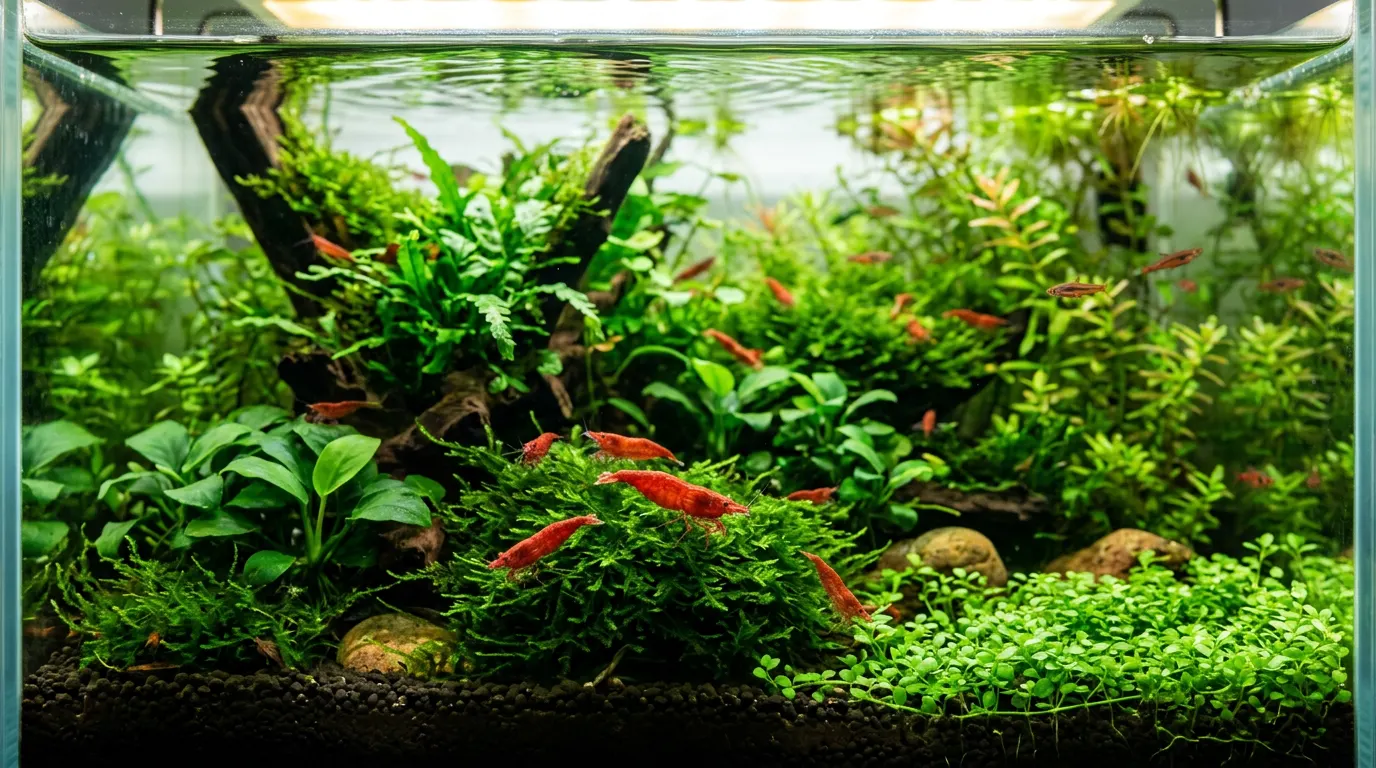
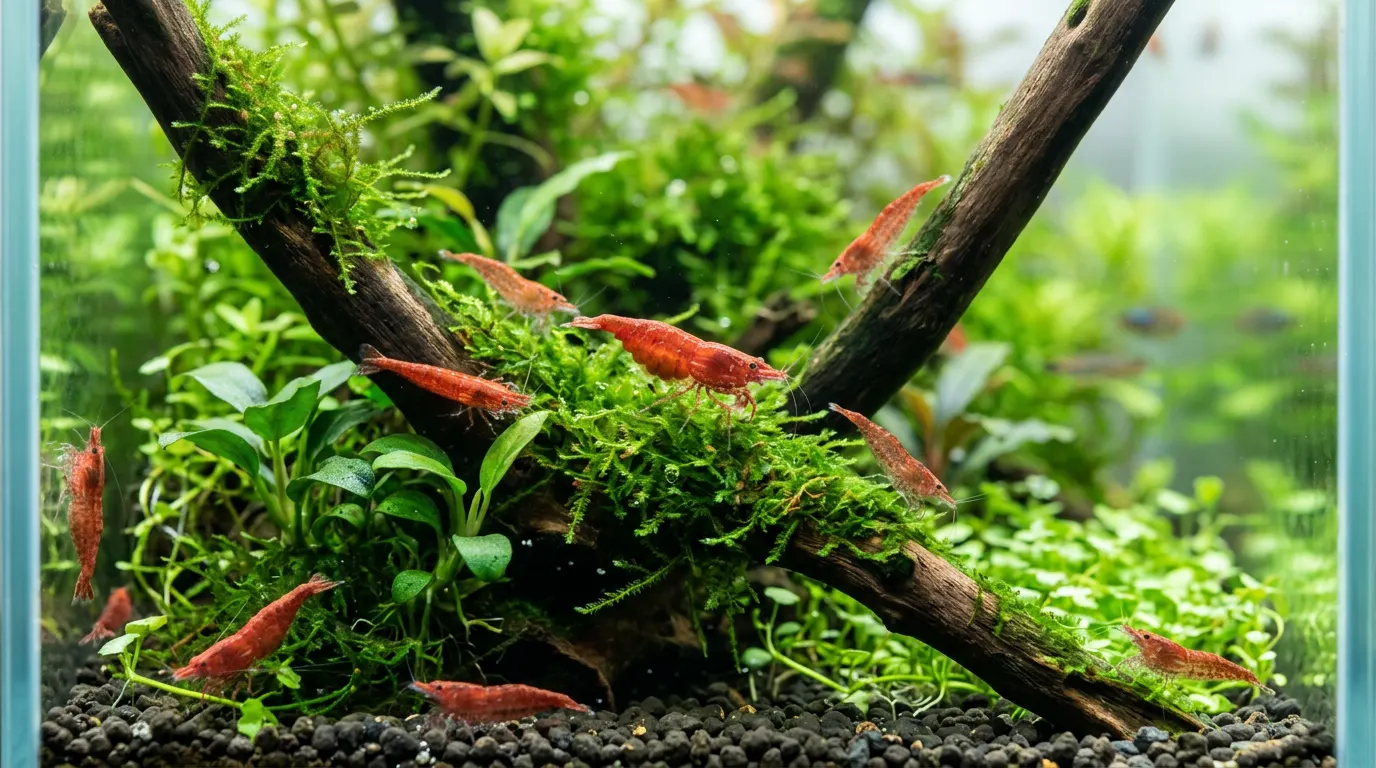
If you’ve already got a thriving Neocaridina colony going: cherry, sakura, blue velvet, or one of the other davidi color strains covered in my best shrimp for beginners guide and my red cherry shrimp care guide, you’ve already built the two habits that make crystal shrimp keeping possible: a mature, fully cycled tank, and the discipline to leave stable water alone rather than constantly adjusting it. Crystal shrimp ask you to apply those same habits to a much narrower target. Where Neocaridina tolerates a pH swing from 6.5 to 8.0 without much complaint, Caridina cantonensis is adapted to the soft, mineral-poor mountain streams of southern China and wants a tighter, more acidic band, and it has almost no carbonate buffering to absorb a mistake.

That lack of buffering (low KH) is really the whole story. A tank with plenty of KH can take a splash of harder tap water or a slightly-too-large water change and barely move its pH; a crystal shrimp tank running close to zero KH by design has nothing to resist that same event with, so the same mistake that a cherry shrimp colony absorbs can crash a crystal shrimp colony’s pH within hours. Layer in that Caridina cantonensis is molting and building a new exoskeleton from whatever minerals are actually dissolved in that thin water, and it’s easy to see why this species punishes shortcuts that Neocaridina simply doesn’t notice. None of this means crystal shrimp are fragile animals in the wild, they’re well-adapted to their native water, it means they’re adapted to a kind of stability that a general community tank, or even a solid beginner shrimp setup like the one in my shrimp tank setup guide, isn’t automatically built to provide.
Understanding crystal shrimp grading: from C to SSS+ and beyond
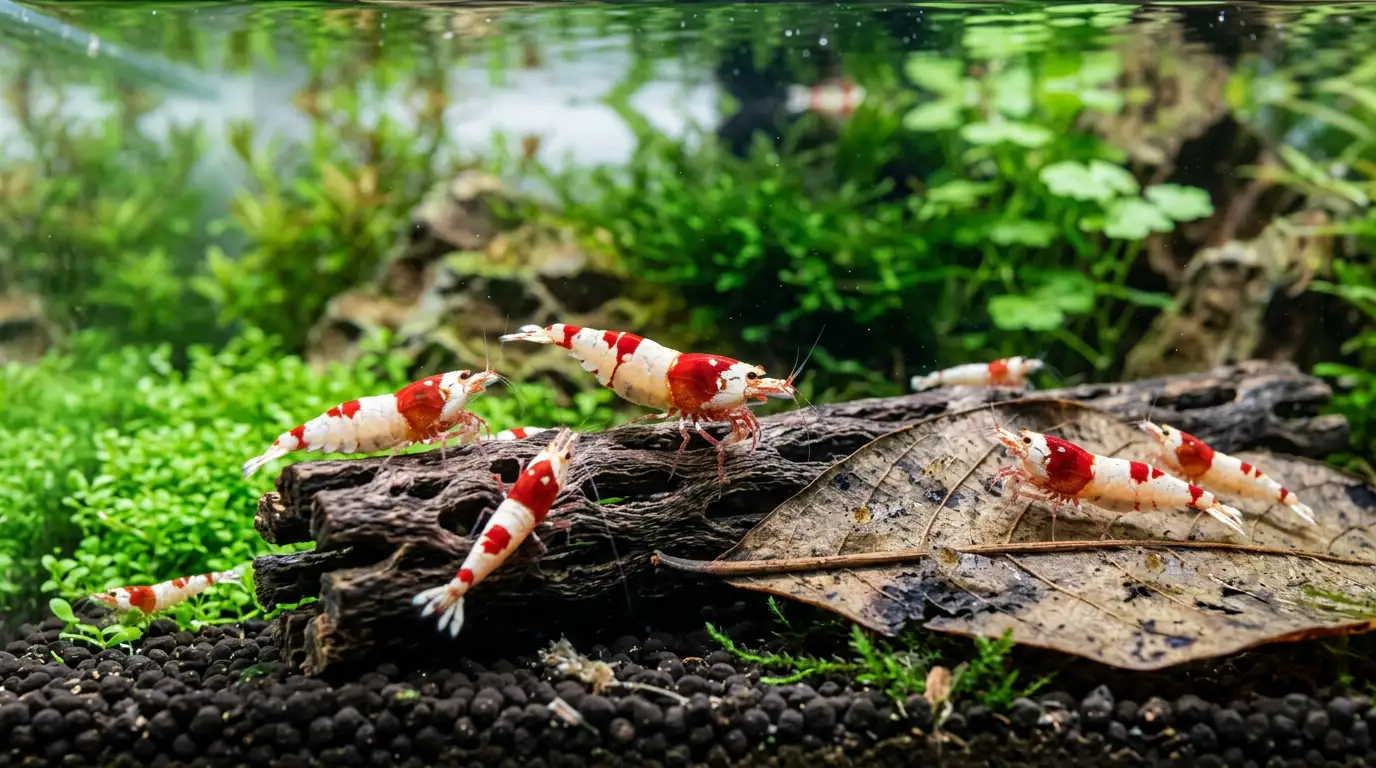
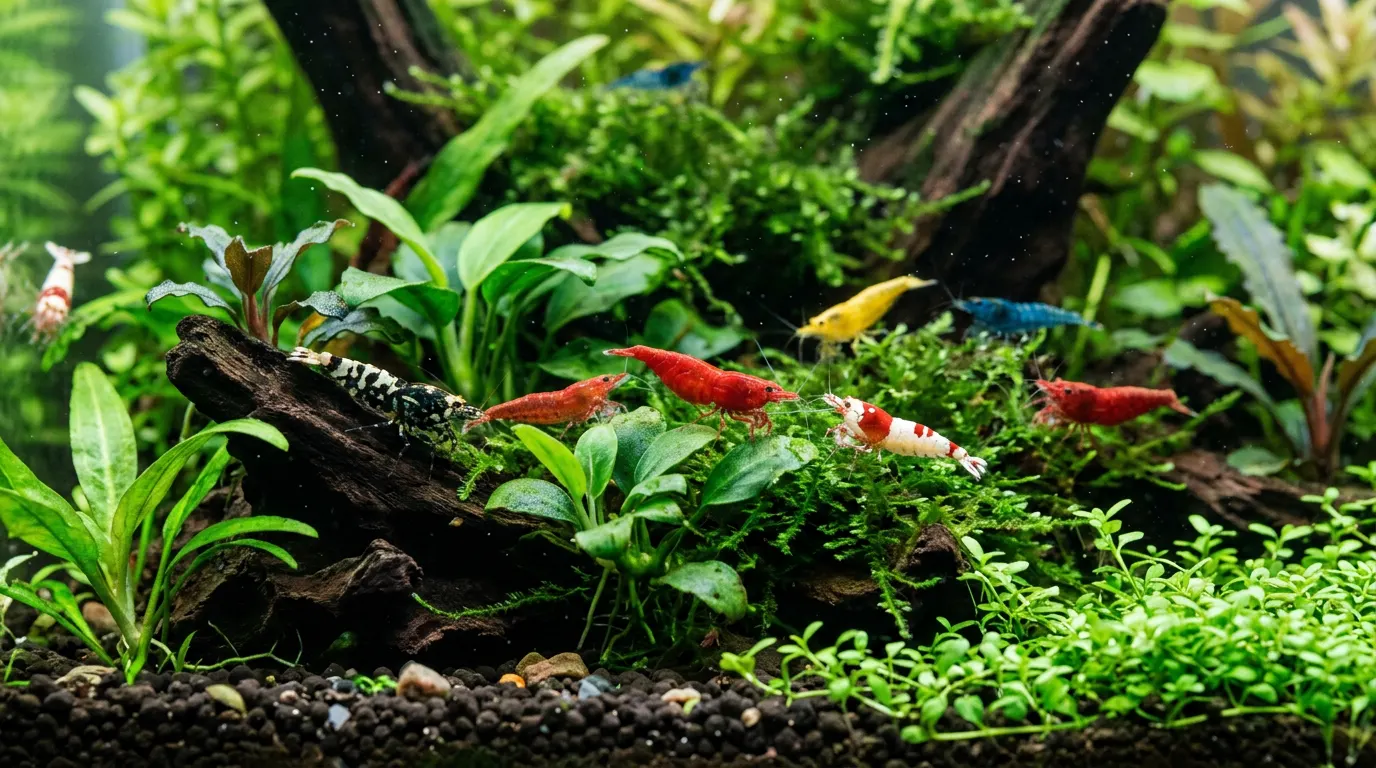
Crystal shrimp pricing and quality run on a real, well-documented hobby grading system, not marketing language, and it’s worth understanding before you buy anything more expensive than a handful of low-grade stock. According to The Shrimp Farm’s crystal red shrimp grading guide, the scale runs from C-grade, an almost fully red (or black, for CBS) body with only thin white stripes and poor opacity, up through B-grade and A-grade, where white coverage increases and the color bands become more defined and opaque. From there, S-grade brings noticeably better opacity and more white, SS-grade shows even less red with a red dot-shaped marking called a Hinomaru replacing the wider band, and SSS-grade is the most white with only minimal red remaining. As the guide puts it, the general rule across the whole scale is that more white generally means a higher grade, though full white without any accent pattern doesn’t take the absolute top spot on its own.
Above standard SSS, breeders use named premium patterns rather than another letter grade. RareShrimp’s crystal red and crystal black shrimp grading guide documents the SSS-tier pattern names in detail: a Hinomaru (“rising sun”) pattern shows a white body with a red or black band reduced to a single spot or circle on the carapace, while Mosura-line shrimp push further still, described as an almost fully white body with color concentrated only on the head and tail, in named variations like Mosura crown, flower, heart, and smiley patterns. The same guide also notes a parallel German K0-K14 numeric scale used by some European breeders, where K14 describes an ideal specimen with seamless, fully opaque white and no visible transparency at all, a different numbering system pointing at the same underlying quality: coverage, opacity, and pattern cleanliness.
| Grade | Typical appearance | Where it fits |
|---|---|---|
| C-grade | Mostly red/black body with only thin, poorly opaque white stripes | Budget stock; realistic starting point for practicing husbandry |
| B / A-grade | More white coverage, better opacity, more defined color bands | Good value for a first serious Caridina colony |
| S-grade | Increased opacity and white coverage; middle red/black band less dominant | Solid display quality; common target for hobby breeders |
| SS-grade | Less red/black overall; band often reduced to a Hinomaru (dot) marking | Higher-value breeding stock |
| SSS-grade | The most white of the standard scale, minimal red/black remaining | Premium display and line-breeding projects |
| Mosura / SSS+ patterns | Near-fully white body with color isolated to head and tail (crown, flower, heart, smiley variants) | Top-tier collector and show-quality lines |
Grading isn’t purely genetic destiny, either. RareShrimp’s guide points out that environmental stressors like poor water quality or inconsistent nutrition can visibly fade a shrimp’s white areas, which means an advanced keeper aiming to hold or improve a line’s grade over generations needs the water chemistry sections below dialed in just as much as the genetics of the parent stock.
Active substrate: the non-negotiable foundation
Almost every serious Caridina cantonensis setup runs on an active, buffering aquasoil rather than inert gravel or sand, and this is one area where crystal shrimp genuinely diverge from the setup in my general shrimp tank setup guide. Products like Fluval Stratum, ADA Amazonia, and SL-Aqua Black Earth are porous, clay-based substrates that continuously leach organic acids into the water column, gradually softening and acidifying the water sitting above them rather than leaving it exactly as it came out of the tap. For a species that wants a pH in the low-to-mid 6s and close to zero carbonate hardness, that ongoing chemical work isn’t a cosmetic upgrade, it’s usually the only realistic way to hold those numbers against typical tap water without babysitting the tank with chemical dosing every few days. My full substrate guide goes deeper on how these buffering soils compare to inert options for shrimp tanks generally.
Two practical points trip up a lot of intermediate keepers moving into Caridina for the first time. First, active substrate doesn’t buffer forever: its exchange capacity depletes over time, and most keepers plan to refresh or replace it roughly every 12-18 months as its softening effect fades and water chemistry starts drifting back toward the tap supply’s baseline. Second, fresh aquasoil is not an instantly finished product, it commonly triggers its own ammonia spike as it breaks in, so a new Caridina tank still needs a full nitrogen cycle before any shrimp go in, exactly the same as any other new setup, just with an extra variable to track while it stabilizes.
Dialing in TDS, GH, and KH for crystal shrimp
This is the section where crystal shrimp part ways most clearly from the Neocaridina targets in my broader water parameters guide. ShrimpKeepers’ Caridina-specific water parameters guide lays out numbers that are both narrower and lower across the board than what cherry shrimp tolerate: a pH of roughly 6.0-6.8 (with an optimal window closer to 6.0-6.5), GH of 4-6 degrees, KH ideally down at 0-1 degrees, and a total dissolved solids reading in the 100-200 ppm range, with many keepers aiming for a tighter 120-150 ppm sweet spot. Temperature matters more here too, that same guide recommends 68-75°F, cooler than the range most Neocaridina keepers run, since Caridina cantonensis both tolerates and prefers water on the cooler side of what’s typical for a community tank.
A cheap TDS meter earns its keep specifically in a Caridina tank, because GH and KH test kits alone don’t capture the full mineral picture the way a fast conductivity reading does. Most experienced keepers check TDS on remineralized RO water before it ever goes near the tank, confirm it sits inside their target band, and only then use it for a water change — catching a batch that drifted too hard or too soft before it becomes the colony’s problem rather than after. Because KH is deliberately held so close to zero in this setup, there’s very little buffering to protect against a mineral mismatch, so that pre-check is worth the thirty seconds it takes every single time, not just when something already looks wrong.
Breeding challenges compared to Neocaridina
The reproductive biology underneath crystal shrimp breeding is identical to cherry shrimp: a saddled female molts, gets mated, carries a cluster of eggs under her tail for several weeks, and releases fully formed miniature shrimp with no separate larval stage to manage. What changes entirely is the margin for error during that incubation window. A Neocaridina female carrying eggs can shrug off a fairly ordinary water change or a small temperature wobble; a Caridina cantonensis female doing the same thing is sitting in water with almost no carbonate buffering; the same disturbance that a cherry shrimp colony wouldn’t notice can be enough to stress a berried crystal shrimp female into dropping or reabsorbing her clutch before it hatches.
Grade adds a second breeding challenge that Neocaridina keepers rarely deal with in the same way. Because the white patterning that defines a shrimp’s grade can visibly fade under nutritional or water-quality stress, an advanced keeper isn’t just trying to keep a colony alive and multiplying, they’re trying to hold or improve a specific pattern across generations, which usually means culling out lower-grade offspring the way a serious red cherry breeder culls for color, but with a more complex visual target than a single color intensity. Add in that Caridina cantonensis grows and matures more slowly than Neocaridina, and building a stable SS- or SSS-grade breeding colony realistically takes months longer than the equivalent cherry shrimp project, with a narrower water window the entire time to hold steady.
Common advanced-keeper mistakes to avoid
Most crystal shrimp losses at this level aren’t caused by an obviously wrong setup, they’re caused by a handful of habits that are easy to fall into once you already feel confident from Neocaridina keeping.

- Chasing an exact number instead of protecting stability. A GH of 5 held rock-steady for months beats a GH of 5.0 achieved by constant dosing and correction; the corrections themselves are usually the bigger risk to a low-KH tank than being slightly off-target.
- Skipping RO water and remineralizing tap instead. Tap water almost never starts soft and acidic enough for Caridina cantonensis on its own, and trying to force it down with acid additives alone, without starting from genuinely soft RO water, tends to produce an unstable tank that swings instead of a stable soft one.
- Treating active substrate as a permanent, set-and-forget fix. Buffering capacity fades over 12-18 months; a keeper who never rechecks GH/KH after the first few months can end up with water quietly drifting back toward the tap supply’s harder baseline without realizing why breeding has slowed.
- Mixing grade lines in one colony. Housing a high SS or SSS line alongside lower-grade stock lets genetics mix freely, which dilutes pattern quality in the offspring over a few generations even if every individual shrimp looks fine day to day.
- Rushing acclimation on new stock. New crystal shrimp, especially higher-grade imports or breeder shipments, need slow drip acclimation over an hour or more; dropping a bag straight into even perfectly-dialed water is a common way to lose expensive stock in the first 24 hours.
- Overfeeding in a low-bioload tank. A tank built around a razor-thin, low-KH margin has very little room to absorb a spike from uneaten protein-rich food; the ammonia and pH stress from overfeeding hits this setup harder and faster than it would a hardier Neocaridina tank.
Frequently asked questions
What’s the difference between crystal red shrimp and crystal black shrimp?
They’re the same species, Caridina cantonensis, bred for different base pigment: crystal red shrimp (CRS) show red-and-white patterning while crystal black shrimp (CBS) show black-and-white patterning. Both are graded on the same C-through-SSS+ scale, and both need identical water chemistry, so the choice between them is really just a color preference.
What grade should a beginner Caridina keeper start with?
Starting with C, B, or A-grade stock is the sensible move for anyone new to crystal shrimp, since it lets you prove out your water chemistry and substrate setup before spending significantly more on SS or SSS-grade individuals. Mistakes with lower-grade stock are far cheaper lessons than the same mistakes made on premium shrimp.
Can I keep crystal shrimp in the same tank as cherry shrimp?
It’s generally not recommended, since Neocaridina and Caridina need different water chemistry (harder and more alkaline versus soft and acidic), and a tank tuned for one genus is rarely close to ideal for the other. They also can’t interbreed, so there’s no genetic risk, but the mismatched parameter needs make a shared tank a compromise for both species rather than a benefit for either.
Do crystal shrimp need RO water?
Most serious keepers use reverse-osmosis water remineralized specifically for Caridina, because ordinary tap water is usually too hard and alkaline to hit the soft, low-KH range this species needs. It’s possible to keep crystal shrimp on naturally soft tap water in some areas, but RO plus a shrimp-specific remineralizer gives far more consistent control over GH, KH, and TDS.
Why do my crystal shrimp lose their white coloration over time?
Fading white patterning is usually a sign of environmental stress, such as inconsistent water quality or poor nutrition, rather than a sudden illness. Stabilizing GH, KH, and TDS within the species’ target range and feeding a varied, mineral-supported diet typically improves coloration back toward a shrimp’s genetic potential over the following weeks.
How long does it take to build a breeding colony of crystal shrimp?
Because Caridina cantonensis matures more slowly than Neocaridina and tolerates far less parameter drift during incubation, a stable, growing crystal shrimp colony typically takes noticeably longer to establish than an equivalent cherry shrimp colony, often several additional months even under otherwise well-run conditions.
What’s the ideal TDS for crystal shrimp?
Most keepers target a TDS of roughly 100-200 ppm, with many aiming for a tighter 120-150 ppm range as a practical sweet spot. Checking TDS on remineralized water before it goes into the tank is one of the simplest ways to catch a batch that’s drifted too hard or too soft before it affects the colony.
References
- The Shrimp Farm – Grading Crystal Red Shrimp
- RareShrimp – Crystal Red & Crystal Black Shrimp Grading Guide
- ShrimpKeepers – Caridina Shrimp Water Parameters Guide
If you haven’t already built real confidence with the easier starting point, my best shrimp for beginners guide and red cherry shrimp care guide are worth mastering before moving up to Caridina cantonensis. Once you’re ready to make the jump, revisit my general shrimp tank setup guide for the baseline any shrimp tank needs, then use my water parameters guide and substrate guide to adapt that foundation specifically for the soft, acidic, buffered setup crystal shrimp depend on.



Leave a Reply