Fish & Aquariums
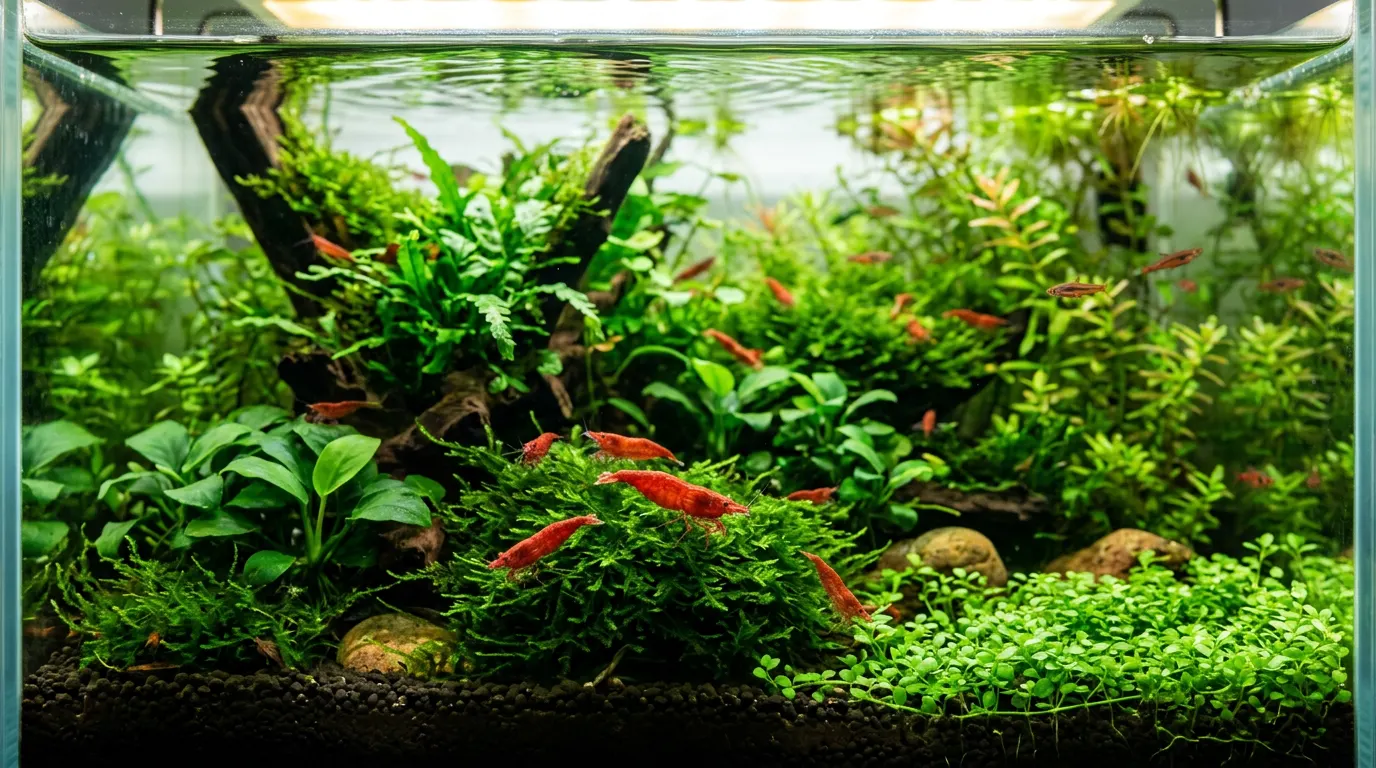
I travel more than the average fishkeeper, and for years that meant either boarding my fish with a neighbor or coming home to a tank full of problems. My cherry shrimp colony is the one part of my aquarium hobby that has never once punished me for a busy week. I’ve gone ten days without touching that tank and come back to more shrimp than I left with, not fewer. That’s not luck; it’s what happens when you pick the right species and set the tank up correctly before you ever add the first shrimp.
Quick answer
Neocaridina davidi, better known as cherry shrimp, are genuinely one of the lowest-maintenance animals you can keep in an aquarium once the tank is mature, because they graze constantly on biofilm and algae instead of depending on you for every meal, and they breed on their own in stable water without any intervention. “Low maintenance” still means a fully cycled tank that’s been running for weeks to months, small routine water changes, and basic parameter checks; it is not zero-maintenance, and a brand-new or neglected tank will kill a colony just as fast as it kills fish. If truly minimal effort is the goal, stick to Neocaridina and skip Caridina species like crystal or bee shrimp, which demand far more precise water chemistry. Automation, an auto top-off unit, a lighting timer, and a low-tech planted setup with no CO2 or dosing, can shrink the realistic weekly time commitment to roughly 10-15 minutes for an established colony.
Why cherry shrimp are about as low-maintenance as aquarium pets get
Most of what makes an aquarium demanding is the constant loop of feeding, cleaning, and watching for problems, and cherry shrimp quietly remove two of those three jobs once a tank is established. Aquarium Co-Op’s care guide describes them as natural scavengers that spend their time consuming algae, biofilm, and decaying plant matter, which is why the guide calls them “pretty beginner-friendly” and notes they “can handle a wide range of water parameters.” In practice, that means a shrimp-only tank with a healthy layer of biofilm on the glass, decor, and moss barely needs deliberate feeding at all; the shrimp are working the tank themselves around the clock.

The second job cherry shrimp take off your plate is breeding management. Aquarium Co-Op’s breeding guide for red cherry shrimp puts the process plainly: it’s “fairly simple,” and once a colony settles into stable conditions, “it takes the shrimp about 3-5 months to begin breeding” on their own, no hormones, no separate breeding tank, no manual pairing. A female carries her eggs for roughly a month before releasing fully formed miniature shrimp that immediately start grazing biofilm alongside the adults. There’s no fry tank, no live food culture, and no larval stage to manage, which is a large part of why a starting group of a dozen or so shrimp can turn into a self-sustaining colony without you doing anything beyond keeping the water stable.
Parameter tolerance is the third piece. Practical Fishkeeping’s introduction to the group notes that Neocaridina are “relatively undemanding,” thriving across a neutral-to-slightly-alkaline range with medium hardness, in contrast to Caridina species that need much narrower conditions. Aquarium Co-Op’s numbers back that up: cherry shrimp handle a temperature range of roughly 60-82°F, a pH of 6.5-8.5, and a GH of 6° or higher, a spread wide enough that ordinary week-to-week fluctuation in an established home aquarium almost never crosses into dangerous territory. That width matters in daily life: a normal swing in pH or hardness that would stress a more delicate fish, or a Caridina shrimp, barely registers with an established cherry shrimp colony. See my full shrimp tank setup guide for the specifics on getting a tank to that established, tolerant state in the first place.
What “low maintenance” still actually requires
None of this means cherry shrimp are a set-it-and-forget-it pet, and treating them that way is the single most common way new keepers lose an entire colony. Practical Fishkeeping is blunt about this even for the easier species, warning that “despite your best care, fatalities still occur” and pointing to chemicals, medications, and pesticide-treated plants as the kind of hidden hazard that can wipe out shrimp that fish would shrug off. Low effort applies to the ongoing weekly routine, not to the setup phase or to vigilance about what goes into the water.
The tank has to be fully cycled before shrimp go in, and ideally left running for a few extra weeks past that point so a real biofilm and microfauna layer has time to establish; Aquarium Co-Op specifically recommends “a mature tank that has been running for many months” for a serious breeding colony. That maturity requirement is the part people skip most often, usually because it’s the least exciting step, buying the tank, cycling it, and then waiting even longer once it’s technically done is far less fun than shopping for shrimp. But it’s also the single biggest predictor of whether a colony survives its first few months, since a young tank simply doesn’t have the standing biofilm supply that makes the “self-feeding” side of low maintenance work in the first place.
You still need small, regular water changes, both to export waste and to keep the mineral content shrimp rely on for molting reasonably stable; I cover exactly how often in my shrimp tank water change guide, and the short version is smaller and more frequent beats large and infrequent for this species. You also need basic monitoring: a glance for berried females, stuck molts, or a cloudy filter takes seconds but catches problems early enough to fix them cheaply. Testing GH and KH occasionally, rather than obsessively, is worth the few minutes it takes, since a slow mineral decline is one of the more common reasons an otherwise healthy-looking colony starts having failed molts months down the line. None of this is hard, but skipping it entirely is exactly how a “low maintenance” pet becomes a dead one.
Species vs. maintenance level
Not every dwarf shrimp sold at the fish store belongs in a low-effort setup. The table below compares the maintenance level of the shrimp most commonly available, so you can see at a glance why Neocaridina sits at one end of the spectrum and Caridina at the other.
| Species | Maintenance level | Why |
|---|---|---|
| Neocaridina davidi (cherry, sakura, blue velvet, yellow shrimp) | Low | Wide pH/GH/KH tolerance, breeds unassisted, thrives on grazing alone once the tank is mature |
| Amano shrimp (Caridina multidentata) | Low-moderate | Tough and tolerant like Neocaridina, but larval stage needs brackish water to breed, so colonies don’t self-sustain in freshwater |
| Crystal red/black shrimp (Caridina cantonensis) | High | Needs soft, acidic, precisely mineralized water; small chemistry swings can crash a colony |
| Bee/tiger shrimp (Caridina spp.) | High | Cooler, softer, more acidic water than Neocaridina; GH and KH must be tightly controlled |
| Sulawesi shrimp | Very high | Narrow temperature and mineral requirements, unforgiving of any instability |
Species to avoid if truly minimal effort is the goal
If your priority is genuinely low effort rather than the most visually striking shrimp on the shelf, the Caridina genus is where to be cautious. Practical Fishkeeping describes bee shrimp and tiger shrimp as “a bit more demanding,” preferring water that’s cooler, softer, and more acidic than what a cherry shrimp needs, and stresses that for this group “GH and KH must be spot on” rather than approximate. Crystal red and crystal black shrimp, the most popular Caridina in the hobby, follow the same pattern: gorgeous coloration, but a real commitment to remineralized water, frequent testing, and a much narrower comfort zone.
What that looks like in practice is a keeper who’s testing GH, KH, and often TDS every week rather than occasionally, dosing remineralizer to hit a specific target rather than accepting whatever the tap water gives them, and watching temperature more closely because Caridina do best on the cooler end of the range most home aquariums naturally run. None of that is unmanageable if it interests you, plenty of hobbyists find the precision genuinely rewarding, but it’s the opposite of low maintenance, and buying a striking crystal shrimp colony expecting cherry-shrimp-level effort is one of the more common ways new keepers get discouraged and quit the hobby entirely.
Amano shrimp deserve a specific mention because they’re often sold alongside cherry shrimp as an equally easy option, and day-to-day that’s true, they’re hardy, algae-hungry, and tolerant of a wide parameter range. Where they diverge from truly low-maintenance is breeding: Amano larvae require brackish or full saltwater to develop, which almost no home aquarium provides, so a freshwater tank of Amano shrimp will never grow itself into a bigger colony the way a Neocaridina tank does. If the appeal of a low-maintenance shrimp tank is partly that it maintains its own population without your involvement, Amano shrimp don’t deliver that even though they’re easy to keep alive. My guide to the best types of shrimp for beginners goes through the full lineup in more detail if you’re still deciding what to stock.
Automation options that cut your hands-on time even further
Once you’ve picked an easy species and let the tank mature, a small amount of automation removes most of what’s left of the routine. None of these require advanced equipment or a big budget, and most of them are one-time purchases rather than an ongoing cost. These are the options that make the biggest difference for a low-maintenance shrimp setup.

- Auto top-off (ATO). A small pump and float switch that tops off evaporated water automatically keeps mineral concentration and water level stable between water changes, which matters for shrimp since evaporation concentrates dissolved minerals over time. It also removes the single most common reason people manually check a tank every day or two.
- Timer-controlled lighting. A cheap outlet timer running your light on a fixed 8-10 hour schedule keeps algae and biofilm growth consistent, which directly benefits a grazing species like cherry shrimp, and means you’re never manually flipping a switch or forgetting to turn a light off overnight.
- Low-tech planted setup with no CO2 or dosing. Slow-growing, low-light plants and moss thrive without pressurized CO2 or a daily fertilizer dosing schedule, and they double as grazing surface and molting cover for shrimp. Skipping CO2 injection alone removes an entire category of equipment that needs daily attention and adjustment.
- Sponge filter left running continuously. Beyond a monthly gentle rinse in removed tank water, a sponge filter needs essentially no attention and, unlike an open power filter intake, poses no risk of pulling in shrimplets.
- Battery or app-based feeding, used sparingly. Because a mature colony gets most of its nutrition from grazing, an automatic feeder is optional rather than essential here, but a small, infrequent scheduled feeding is a reasonable way to cover longer absences without overfeeding.
Stack an ATO with a lighting timer and a low-tech planted layout and you’ve automated the three things that otherwise require the most frequent manual attention, which is exactly why a well-set-up cherry shrimp tank tolerates trips and busy weeks so much better than most aquariums. My guide to shrimp care during vacations covers how far you can safely push that gap between visits.
A realistic weekly time commitment
“Low maintenance” is more useful as a number than as a vibe, so here’s a realistic estimate for an established, automated cherry shrimp tank: roughly 10-15 minutes a week. That breaks down to a daily 30-second glance to confirm the filter is running and nothing looks obviously wrong, which costs almost nothing in practice, and one weekly water change of 10-15% that takes 10-12 minutes including refilling and dechlorinating. Add another few minutes every few weeks for a gentle sponge filter rinse and a quick GH/KH check if you’re tracking breeding closely.
Without automation, add another 5-10 minutes a week for manually topping off evaporated water and adjusting a light timer by hand, still a modest total compared to almost any other aquarium livestock, let alone a dog or a garden. Compare that to a planted community tank running pressurized CO2 with daily fertilizer dosing, or to a picky species that needs precise, frequent testing, and the gap becomes obvious: cherry shrimp cost you time mainly at setup, not on an ongoing basis. My broader aquarium maintenance schedule lays out how this compares to a fish-only tank if you want the full daily/weekly/monthly picture across a whole fishroom rather than one shrimp tank.
Frequently asked questions
Are cherry shrimp really lower maintenance than fish?
In most practical ways, yes. They graze constantly on biofilm and algae instead of relying entirely on scheduled feeding, and they breed on their own in stable water, so a colony maintains and grows itself without the intervention a lot of fish species need for either feeding or reproduction.
Can I really leave a shrimp tank alone for a week or more?
Once the tank is mature and lightly automated with an auto top-off unit and a lighting timer, most keepers can comfortably leave a cherry shrimp tank for a week to ten days without intervention. A brand-new or unstable tank should not be left unattended for that long.
Do cherry shrimp need daily feeding?
No. In an established tank with a healthy biofilm and algae layer, cherry shrimp get most of their nutrition from constant grazing, and supplemental feeding every one to two days in small amounts is plenty. Overfeeding is a far more common mistake than underfeeding.
Why are Caridina shrimp considered higher maintenance than Neocaridina?
Caridina species like crystal red, crystal black, bee, and tiger shrimp need cooler, softer, more acidic water than Neocaridina, and their water chemistry has to be kept precise rather than approximate. A parameter swing that a cherry shrimp colony would tolerate without issue can stress or kill a Caridina colony.
Do I need CO2 or fertilizer dosing for a low-maintenance shrimp tank?
No. A low-tech planted setup using slow-growing, low-light plants and moss supports a shrimp colony well without pressurized CO2 or a daily dosing routine, and it doubles as grazing and molting cover, which is exactly what a hands-off setup should aim for.
Is an auto top-off worth it for a small shrimp tank?
For most people, yes. Evaporation concentrates minerals over time, and a small auto top-off unit keeps water level and mineral concentration stable between water changes, removing one of the few tasks that otherwise needs frequent manual attention in an established colony.
Are Amano shrimp a good low-maintenance option too?
They’re hardy and easy to keep alive, but their larvae need brackish water to develop, so a freshwater Amano shrimp tank won’t grow its own population the way a cherry shrimp tank will. If self-sustaining low effort is the goal, Neocaridina is the better fit.
If you’re setting one of these tanks up for the first time, start with my full shrimp tank setup guide for the cycling and equipment basics, check my notes on the best types of shrimp for beginners before you buy, and keep my water change frequency guide and maintenance schedule handy once the colony is up and running. For the full build sequence behind a tank this easy to maintain, see my step-by-step shrimp habitat guide, and my seasonal shrimp care guide covers the handful of small adjustments even a low-maintenance tank still needs as the weather changes.





Leave a Reply