Fish & Aquariums
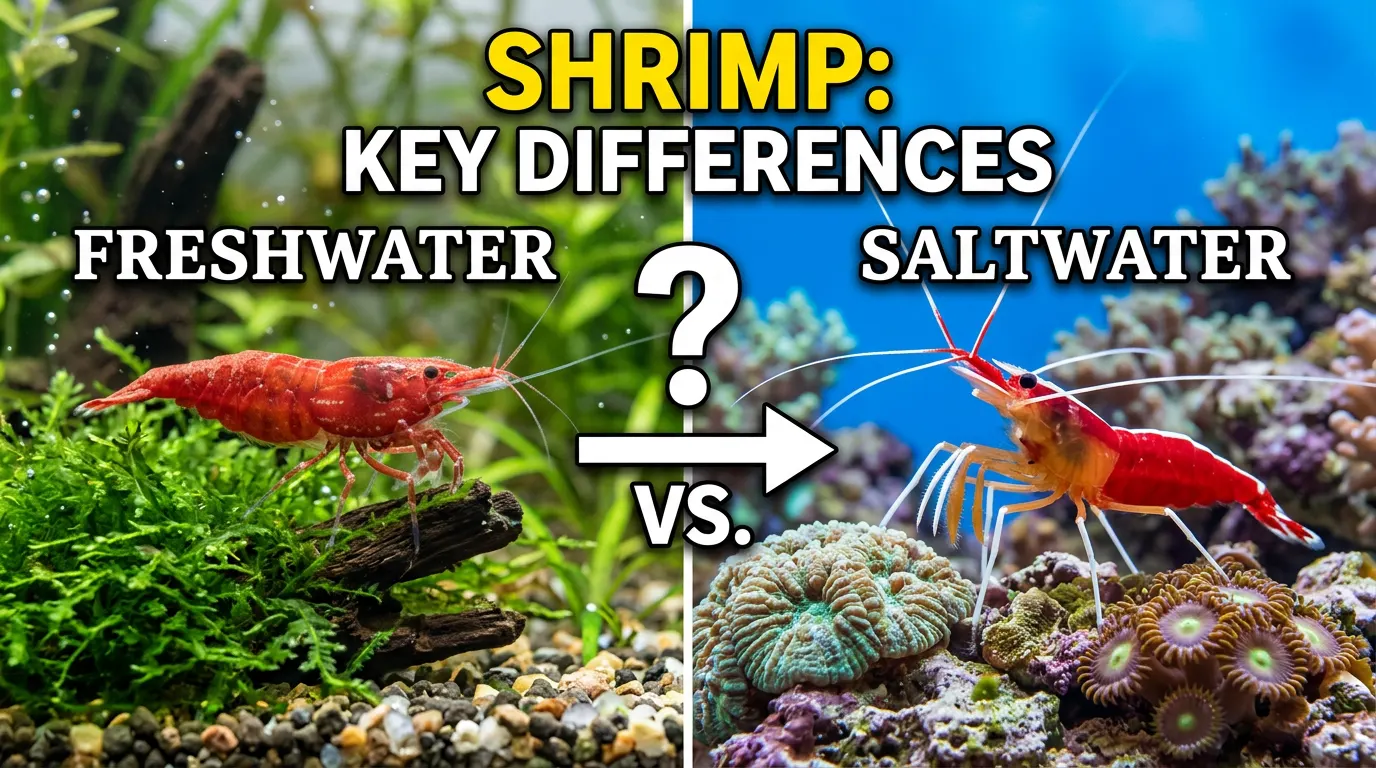
I run two shrimp tanks in the same room: a 20-gallon reef with a pair of skunk cleaner shrimp picking at my clownfish, and a planted 10-gallon crammed with red cherry shrimp grazing biofilm off the driftwood. A visitor once asked, only half-joking, if I could just “move a few shrimp between them since they’re both shrimp.” I get why people ask. It’s a reasonable-sounding question that happens to be one of the fastest ways to kill an entire tank of animals. Here’s what actually separates saltwater and freshwater shrimp, and why the two worlds never overlap.
Quick answer
Saltwater and freshwater shrimp are different animals adapted to opposite osmotic environments: marine species like peppermint, cleaner, and fire shrimp (all in the genus Lysmata) live in stable 32-35 ppt salinity and rely on reef-grade equipment such as protein skimmers, while freshwater dwarf shrimp like Neocaridina and Caridina live in soft-to-moderate GH/KH water with no salt at all; because their gill and osmoregulatory systems work in opposite directions, you cannot mix them, house them together, or “acclimate” one into the other’s water without killing it, and which one you should keep comes down almost entirely to whether you already have a marine or freshwater tank running.
What osmoregulation actually means (and why it decides everything)
Every shrimp is constantly fighting to keep the salt concentration inside its body stable, a process called osmoregulation. Freshwater shrimp live in water that’s far less salty than their own tissues, so water is always trying to flood into their bodies by osmosis; their gills and kidneys are built to pump excess water back out while actively holding onto scarce salts. Marine shrimp have the opposite problem. Reef water is saltier than their internal fluids, so their bodies are constantly losing water to the surrounding ocean, and their gills work hard to excrete excess salt while conserving fresh water internally. These are not two settings on the same machine, they’re opposite physiological jobs, which is the biological reason a shrimp built for one can’t simply “adjust” to the other.
This is also why sudden parameter swings are so dangerous even within one type of shrimp. A rapid change in specific gravity or hardness forces the gills to fight osmotic shock instead of doing their normal job, and freshwater dwarf shrimp in particular are notorious for dying from parameter swings that a fish would shrug off, since their bodies have almost no salt buffer to draw on.
Meet the marine side: peppermint, cleaner, and fire shrimp
The shrimp most reef keepers actually buy all sit in the genus Lysmata. Bulk Reef Supply’s peppermint shrimp guide covers Lysmata boggessi, the species most hobbyists use to eat down pest Aiptasia anemones without harming corals or fish. Skunk and scarlet cleaner shrimp (Lysmata amboinensis) are, according to Practical Fishkeeping’s marine shrimp feature, “fantastic beginner” invertebrates that “can cohabit with almost any fish or invertebrate,” typically selling for around £20 and reaching about 6cm. Fire shrimp (Lysmata debelius), by contrast, are more cryptic and nocturnal, tend to hide during the day, and usually cost more, starting around £25 per that same guide.
All three thrive under the same broad reef conditions: a stable specific gravity around 1.025 (roughly 32-35 ppt salinity), pH 8.1-8.4, 8-12 dKH of carbonate hardness, and temperatures of 75-81°F, exactly the numbers Practical Fishkeeping lists for these species. None of that overlaps with a freshwater shrimp tank in any meaningful way.
Meet the freshwater side: Neocaridina and Caridina dwarf shrimp
On the freshwater side, almost everything sold as “dwarf shrimp” (red cherry, blue dream, yellow, and their many color morphs) belongs to Neocaridina davidi, while the pickier, more colorful species like Crystal Reds, Bees, and Tigers belong to Caridina. Per the water-parameter breakdown from Shrimp Science’s GH guide, Neocaridina tolerate a fairly wide general hardness of 4-10 GH, while Caridina species need a narrower, softer 4-6 GH range, reflecting their origin in soft mineral-poor Southeast Asian streams rather than mineral-rich reef water. If you’d rather see the full walkthrough of setting one of these tanks up from scratch, our shrimp tank setup guide covers cycling, filtration, and stocking for exactly this kind of tank.

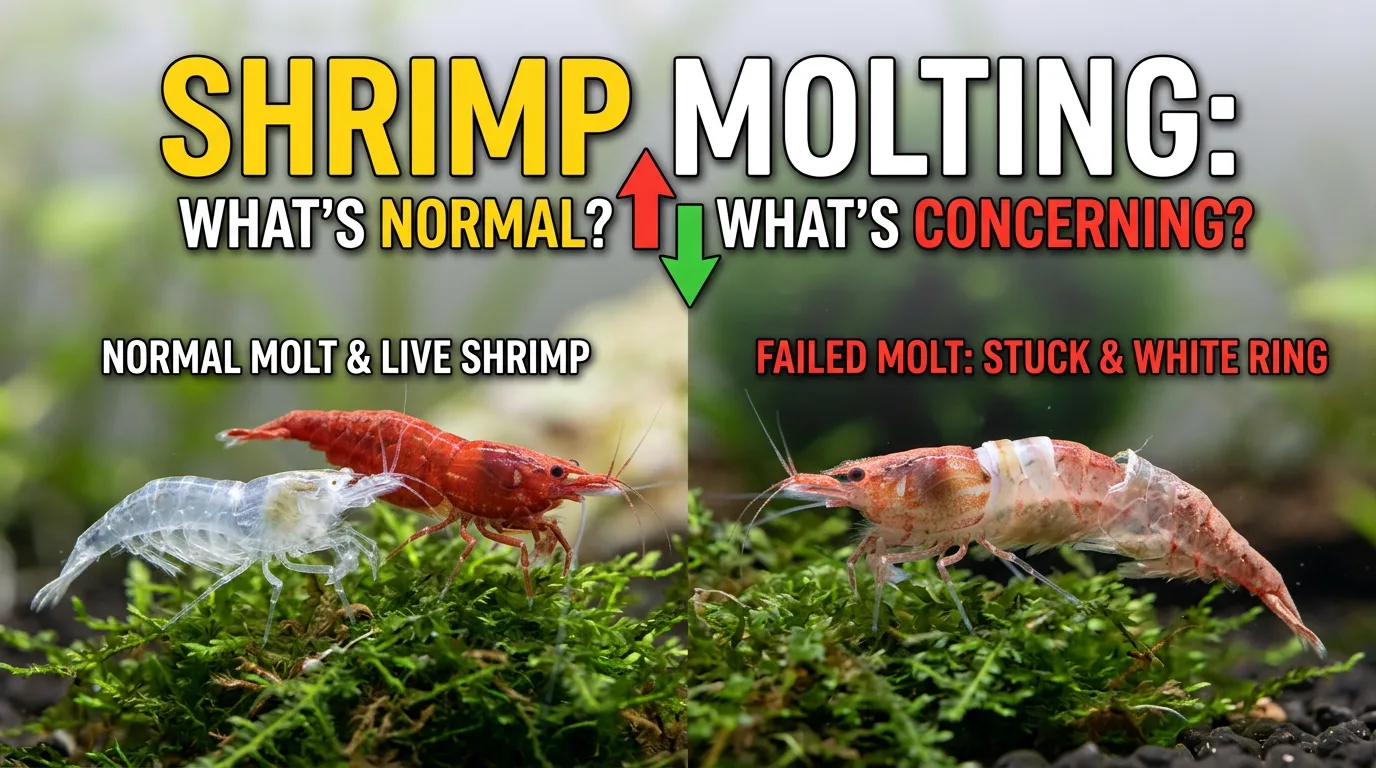
There is zero salt in a healthy Neocaridina or Caridina tank. Instead of specific gravity, freshwater shrimp keepers track GH (general hardness, the dissolved calcium and magnesium shrimp need for their shells) and KH (carbonate hardness, which buffers pH and prevents crashes). Shrimp Science’s GH article explains that “the hard elements dissolved in the water” supply the salts and minerals for muscle and shell development during the shrimp’s regular molting cycle, and that failed molts, caused by GH sitting either too low or too high, are a leading, often silent cause of death in dwarf shrimp colonies.
Why you can never mix or transition between the two
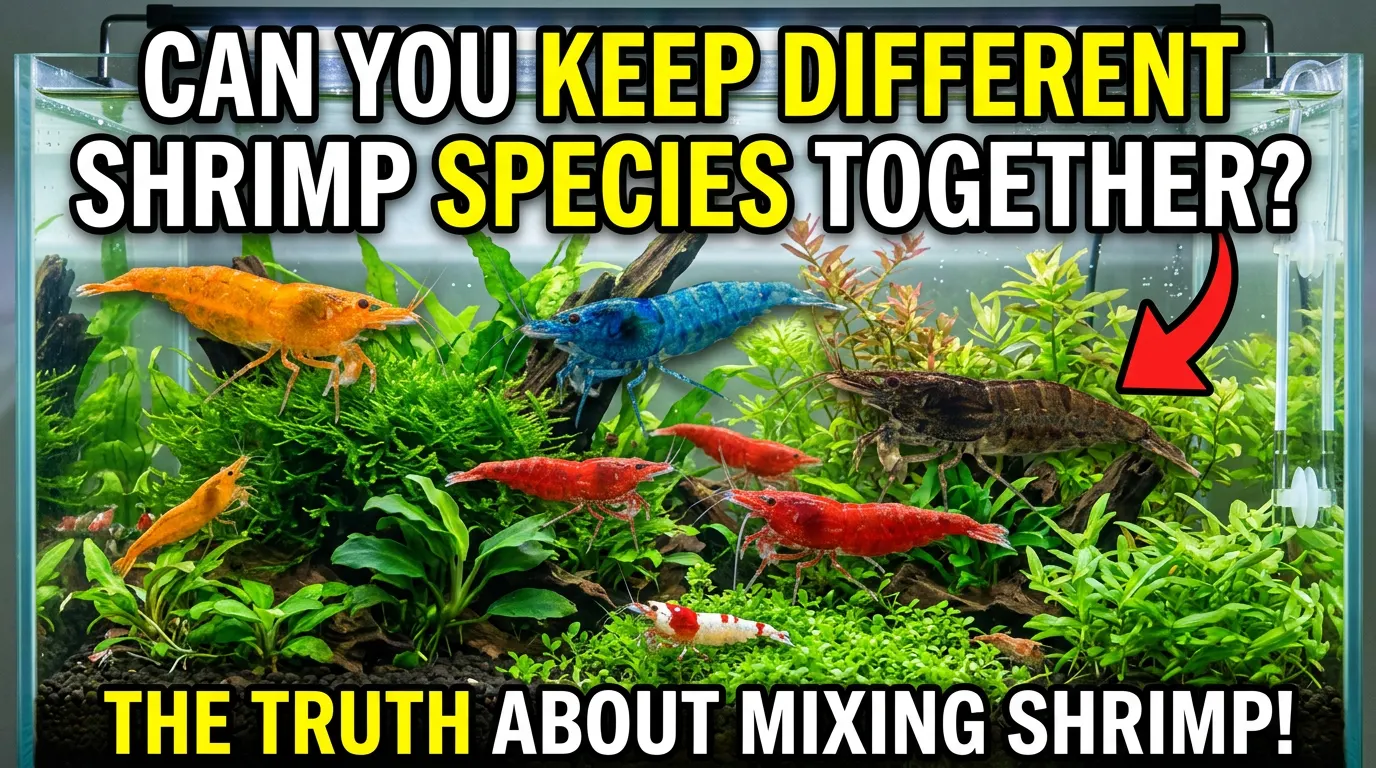
This is the single most important takeaway in this whole comparison: you cannot add salt to a freshwater shrimp’s water, or dilute a marine shrimp’s tank toward fresh, and expect either animal to adapt. A freshwater dwarf shrimp dropped into even lightly brackish water will lose the fight to hold onto its internal salts, its gills will fail within minutes to hours, and it will die of osmotic shock. A marine Lysmata shrimp moved toward fresh water experiences the reverse collapse, its body can’t stop water from flooding in, and it swells and dies just as fast. There is no slow-drip acclimation protocol that bridges this gap the way you can acclimate a fish between two similar freshwater tanks; the physiological systems involved are built for opposite jobs and neither can be retrained.
The same logic applies to housing them together. Even setting aside that a reef tank and a planted freshwater tank need entirely different lighting, filtration, and livestock, there is no shared salinity range where both a Neocaridina shrimp and a Lysmata cleaner shrimp can survive at the same time. “Brackish” setups exist for a handful of specialty species (like some Sulawesi shrimp or certain gobies), but common freshwater dwarf shrimp and common reef shrimp are not among them, and neither group should ever be tested against that boundary.
Care requirements side-by-side
Once you get past the basic biology, the day-to-day care routines diverge in almost every category, from what you test for to what you buy.
| Factor | Marine shrimp (peppermint, cleaner, fire) | Freshwater dwarf shrimp (Neocaridina, Caridina) |
|---|---|---|
| Primary parameter tracked | Specific gravity / salinity (~1.025, 32-35 ppt) | GH (4-10 Neocaridina, 4-6 Caridina) and KH |
| pH range | 8.1-8.4 | 6.5-7.5, species dependent |
| Temperature | 75-81°F (24-27°C) | 68-78°F (20-25.5°C) |
| Key equipment | Protein skimmer, refractometer, live rock/sand, powerheads | Sponge filter, GH/KH test kit, mineral-rich substrate (for Caridina) |
| Typical entry cost per shrimp | Roughly £15-£25+ (about $20-$35+) | A few dollars per shrimp for Neocaridina; more for graded Caridina |
| Tankmate compatibility | Most reef fish and inverts | Peaceful nano fish only; most fish will eat dwarf shrimp |
| Main role in the tank | Parasite/pest cleanup, symbiotic cleaning stations | Algae and biofilm grazing, detritus cleanup |
The equipment gap is the part beginners underestimate most. A reef tank built around marine shrimp needs a way to export the dissolved organics that build up in saltwater, which is what a protein skimmer is for, along with a calibrated refractometer or hydrometer to keep salinity from drifting. A freshwater dwarf shrimp tank skips all of that and instead needs gentle, sponge-covered filtration (dwarf shrimp are famously vulnerable to being pulled into intakes) and, for Caridina in particular, an active mineral substrate that buffers pH downward and slowly releases the right hardness.
Equipment, cost, and accessibility for a beginner
Cost and accessibility are where the two hobbies split hardest. Getting into freshwater dwarf shrimp is genuinely one of the cheapest entry points in the whole aquarium hobby: a small cycled tank, a sponge filter, and a starter colony of Neocaridina can be put together for well under what a single piece of reef equipment costs, and the shrimp themselves are widely available at local fish stores and online breeders for just a few dollars each. Graded, high-color Caridina (like Crystal Reds or Bees) cost more and demand tighter parameter control, but they’re still working within a freshwater setup you likely already own the basics for.
Marine shrimp are a different financial commitment because they’re never bought in isolation, they’re an addition to an already-running reef tank. That means the real cost of “starting” with cleaner or peppermint shrimp is the cost of the reef system itself: a marine-rated tank, live rock or sand, a protein skimmer, reef lighting, and a stable salt-mixing routine, all before you spend £15-£25 per shrimp. If you don’t already have a saltwater tank, buying a fire shrimp is not a beginner move in the way that buying a handful of cherry shrimp is.
- You already run a freshwater tank. Add Neocaridina or Caridina; your filtration, heater, and water source are already compatible, and our guide to the best types of shrimp for beginners is the natural next stop for picking a species.
- You already run a reef tank. Add a cleaner or peppermint shrimp for pest control and personality; skip fire shrimp until you’re comfortable with reef parameter stability, since they’re more sensitive and reclusive.
- You have no tank yet and want the cheapest, lowest-risk start. Go freshwater. A Neocaridina colony forgives more beginner mistakes and costs a fraction of a marine setup.
- You want a shrimp that visibly “works” for other animals. Choose marine cleaner shrimp; their cleaning-station behavior is genuinely interactive in a way dwarf shrimp, who mostly graze independently, are not.
- You’re deciding between shrimp sizes generally, not just salt vs. fresh. Our dwarf shrimp vs. large shrimp comparison is worth reading alongside this one before you commit to a species.
The jobs they do: cleaning stations vs. algae crews
The roles these two groups play in their tanks are as different as their biology. Marine cleaner shrimp form genuine symbiotic relationships with fish. According to the Wikipedia overview of cleaner shrimp behavior, species like Lysmata amboinensis, the banded coral shrimp (Stenopus hispidus), and Urocaridella species set up recognizable “cleaning stations” on the reef, performing a side-to-side “rocking dance” to advertise themselves, and fish will actually queue up and hold still while the shrimp pick parasites and dead tissue from their skin, gills, and even inside their mouths. A peer-reviewed study published in PLOS ONE, “Beyond Symbiosis: Cleaner Shrimp Clean Up in Culture,” found this parasite-removal behavior is effective enough that cleaner shrimp are now being trialed as a sustainable, chemical-free way to control sea lice and other parasites in commercial fish farming, not just as a reef-tank curiosity.
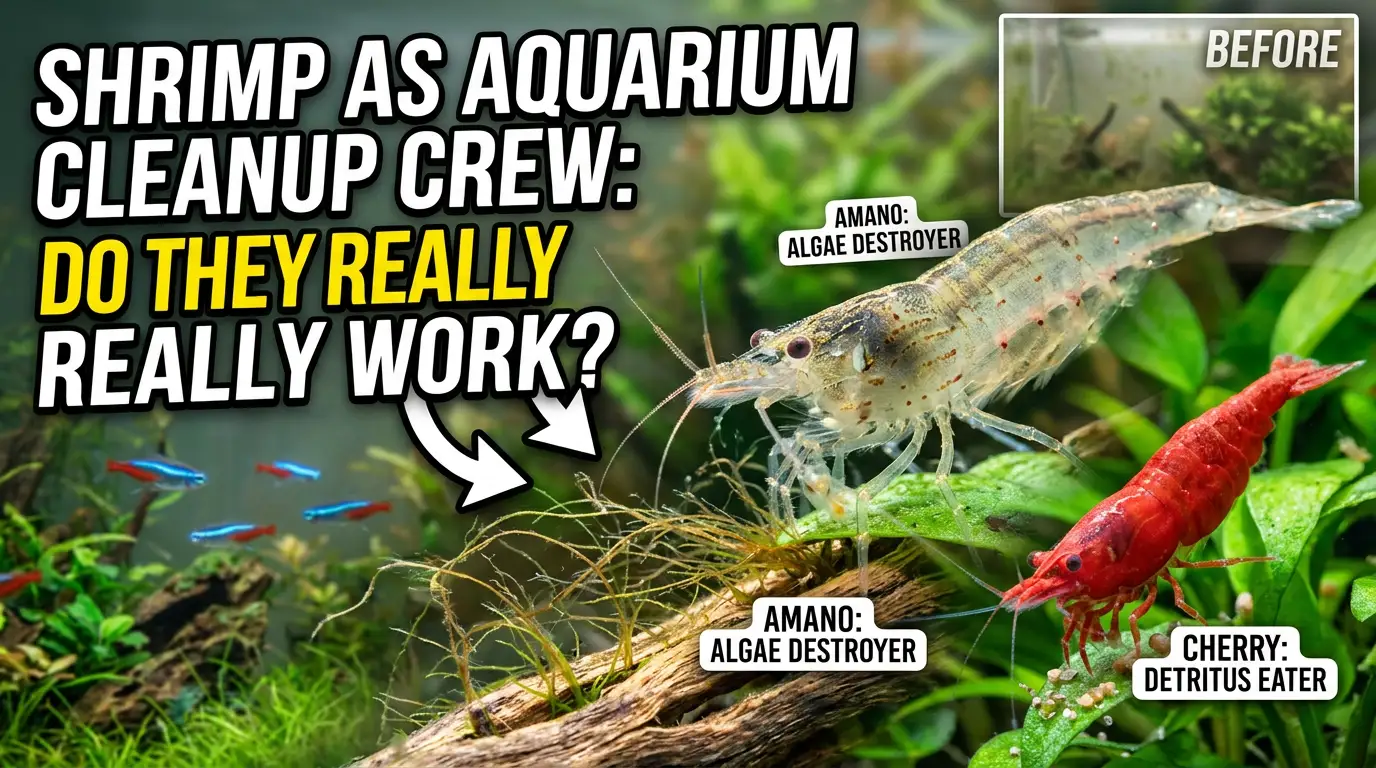
Freshwater dwarf shrimp don’t form that kind of one-on-one relationship with tankmates, since most fish that share water with them see them as food rather than a client. Instead, Neocaridina and Caridina earn their keep as a low-key cleanup crew: they graze biofilm and soft algae off glass, hardscape, and plant leaves, and pick through detritus and leftover food, work that’s more diffuse but genuinely useful for tank hygiene, similar in spirit to running a properly cycled nitrogen cycle so there’s a stable biofilm for them to graze in the first place.
Which one should you choose?
If you’re picking a first tank type from zero, the honest answer is that the decision usually isn’t really about the shrimp at all, it’s about which tank you want to run. Freshwater dwarf shrimp are cheap, forgiving of minor mistakes once cycled, and thrive in the kind of small planted tank a lot of beginners already gravitate toward. Marine shrimp are wonderful animals, but they only make sense as an addition to a reef tank you’ve already committed to running properly, with the equipment and salinity discipline that requires. Existing tank owners have an even easier call: match the shrimp to the water you already have, since neither type can be converted into the other no matter how patient the acclimation drip is.
Frequently asked questions
Can I keep saltwater and freshwater shrimp in the same tank?
No. There is no salinity level where both a marine shrimp like a cleaner or peppermint shrimp and a freshwater dwarf shrimp like Neocaridina can survive; one needs a stable 32-35 ppt of salt and the other needs none at all, and they also require completely different filtration, lighting, and tankmates.
What happens if you put a freshwater shrimp in saltwater?
It will go into osmotic shock almost immediately. Its gills, which are built to pump water out and hold onto salt, can’t handle a reef-level salt concentration, and the shrimp typically dies within minutes to a few hours depending on how much salt is added and how quickly.
Are marine shrimp harder to keep than freshwater dwarf shrimp?
Not necessarily harder shrimp to keep, but a harder system to run. Peppermint and cleaner shrimp are considered hardy, beginner-friendly reef animals on their own, but they live in a reef tank that demands more monitoring (salinity, alkalinity, protein skimming) than the average freshwater dwarf shrimp setup.
Do saltwater cleaner shrimp really eat parasites off fish?
Yes. This is documented, well-studied behavior, not aquarium folklore. Cleaner shrimp set up cleaning stations that fish actively visit, and research published in PLOS ONE has shown the behavior is effective enough to be tested as a parasite-control tool in commercial aquaculture.
Which is cheaper to start, a freshwater shrimp tank or a marine shrimp tank?
Freshwater, by a wide margin. A basic Neocaridina setup can be assembled for a small fraction of the cost of a reef tank capable of supporting peppermint, cleaner, or fire shrimp, since the marine route requires saltwater-specific equipment like a protein skimmer and a refractometer before you even buy the shrimp.
Can cherry shrimp or Amano shrimp survive in brackish water?
Common Neocaridina (cherry shrimp) and Caridina multidentata (Amano shrimp) are freshwater species and should not be kept in brackish or salt water. A very small number of specialty shrimp species tolerate brackish conditions, but they are not the same animals as standard aquarium dwarf shrimp.
What’s the main equipment difference between marine and freshwater shrimp tanks?
Marine shrimp tanks need a protein skimmer, a refractometer or hydrometer to monitor salinity, and live rock or sand; freshwater dwarf shrimp tanks need gentle sponge filtration and a GH/KH test kit, with an active mineral substrate recommended for sensitive Caridina species.
References
- Bulk Reef Supply – How to Care for Peppermint Shrimp
- Practical Fishkeeping – Let’s Talk About Marine Shrimp
- Shrimp Science – General Hardness (GH) for Shrimp Tanks
- Wikipedia – Cleaner Shrimp
- PLOS ONE (via PMC) – Beyond Symbiosis: Cleaner Shrimp Clean Up in Culture
For more on setting up the freshwater side of this hobby, see our full shrimp tank setup guide, our breakdown of the best types of shrimp for beginners, our dwarf shrimp vs. large shrimp comparison, and our guide to the nitrogen cycle every new tank needs before it can support them.



Leave a Reply