
Gardening & Plants
A single bromeliad as the sole plant in a terrarium looks fine, but it’s rarely the most interesting option, the trick to a good companion is matching light and humidity needs, since a bromeliad’s watering routine (fill the cup, keep substrate on the drier side) is a poor match for anything that wants consistently damp soil at its roots. Once I started pairing my bromeliads with the right supporting plants instead of leaving bare substrate around them, the whole terrarium started reading as a finished scene rather than a single specimen sitting in dirt, which is really the difference this guide is about.
Quick answer
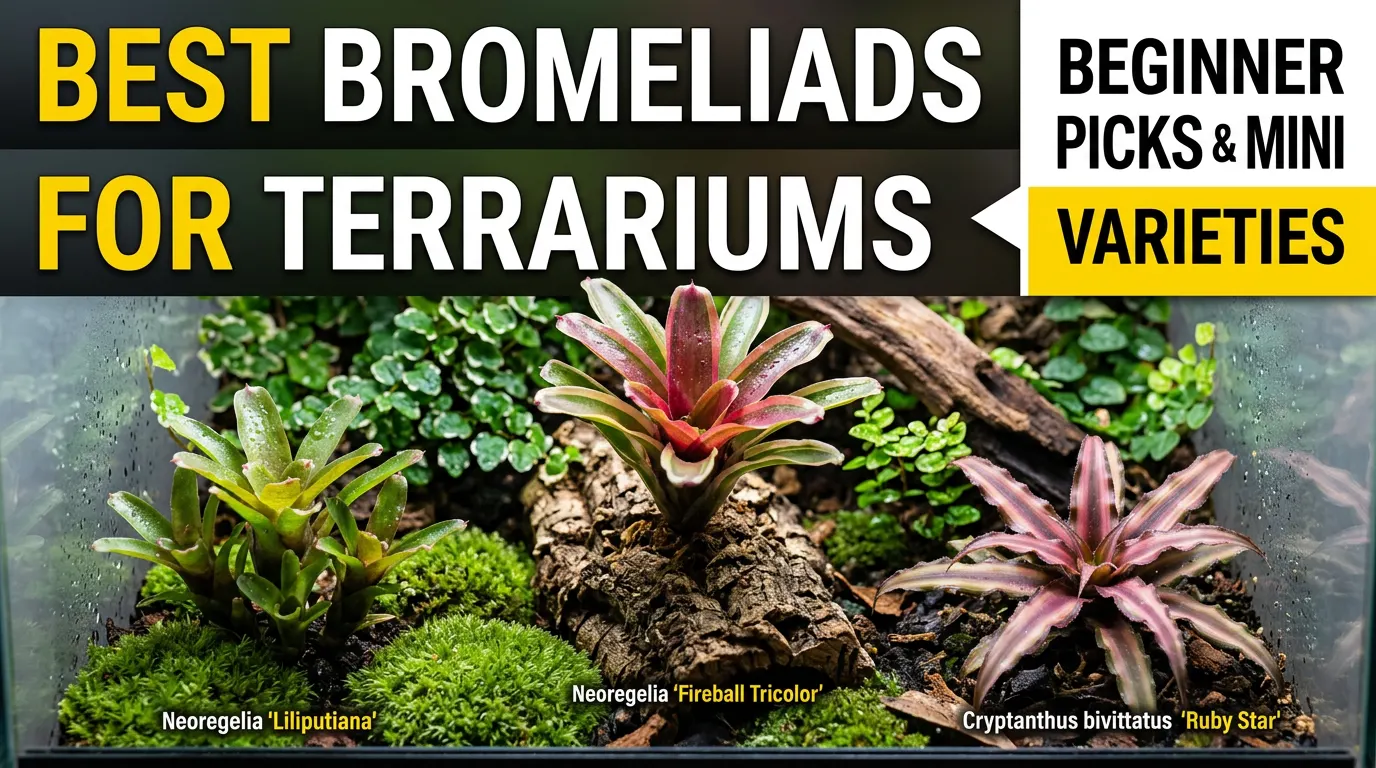
The best companion plants for a bromeliad terrarium are moss, small ferns, fittonia (nerve plant), and compact peperomia varieties, all four share the bromeliad’s preference for bright, indirect light and higher humidity without competing for the same root space or demanding constantly wet soil. Avoid succulents, cacti, and fast-growing vines like pothos, which either rot in the humidity or outgrow and shade out the bromeliad. Moss specifically is the single most reliable pairing, since it fills bare substrate, helps regulate humidity at the base, and never competes with the bromeliad for light.
Plants that actually pair well
| Plant | Why it works |
|---|---|
| Moss (various types) | Wants the same humidity a bromeliad’s cup thrives in, stays low, and doesn’t compete for light or root space, the single most reliable pairing |
| Small ferns (button fern, etc.) | Shares the same low-light, high-humidity preference; adds textural contrast against the bromeliad’s stiffer leaves |
| Fittonia (nerve plant) | Likes the same closed-terrarium humidity, stays compact, and its colorful veining contrasts nicely with plain green bromeliad foliage |
| Small peperomia varieties | Compact and slow-growing, tolerates similar light levels without shading out the bromeliad |
| Baby’s tears (Soleirolia soleirolii) | Forms a dense, low, moss-like mat quickly; useful for filling larger bare patches faster than moss alone |
| Creeping fig (small-leaf cultivars, kept trimmed) | Adds vertical interest climbing hardscape or the back wall without overwhelming the bromeliad, as long as it’s trimmed regularly |
Moss specifically deserves the top billing it gets in most bromeliad terrarium builds, beyond looking good as ground cover, it also helps regulate humidity right around the base of the plant and hides the transition between substrate and container wall, which is often the least attractive part of a new build. If you’re only adding one companion plant to keep the build simple, moss is the one I’d pick every time.

A closer look at each companion
Moss
“Moss” covers a lot of ground; sheet moss, cushion moss, and sphagnum all behave a little differently once planted. Cushion moss holds its rounded, textural shape well and is often the most visually appealing choice for filling gaps around a bromeliad’s base. Sheet moss lays flatter and is easier to fit into odd-shaped corners. Live sphagnum stays a bit shaggier and pale green rather than deep green, and does especially well in the humidity of a closed setup. Any of the three works; pick based on the look you want rather than worrying much about a functional difference between them.
Small ferns
Button fern is the classic terrarium choice; small, rounded leaflets, genuinely compact growth, and a tolerance for the lower light levels many terrariums run compared to an open room. Other small fern varieties sold for terrarium use work similarly well. The main thing to watch is that even a “small” fern can eventually outgrow a very small container, so check the label’s mature size against your terrarium’s footprint before committing, the same way you would with the bromeliad itself.
Fittonia
Fittonia’s dramatic veined leaves; usually white, pink, or red netting over green, are one of the most effective color contrasts against a plain green bromeliad, and it stays genuinely low and compact in the right conditions. It’s also one of the more humidity-dependent plants on this list; in a very open, dry terrarium it tends to wilt dramatically (though usually recovers just as dramatically once humidity is restored), so it’s a better match for a closed or well-vented build than a fully open bowl.
Small peperomia varieties
Compact peperomia varieties with small, rounded, often textured or variegated leaves, are slower-growing than fittonia or moss, which makes them a good choice if you’d rather not do much trimming or thinning over time. They tolerate a slightly wider humidity range than fittonia, too, which makes them a reasonable pick for a terrarium that runs a bit more open or inconsistent than a fully sealed build.

What to leave out
- Succulents and cacti. They want dry air and infrequent watering, the opposite of the humid, cup-watered environment a bromeliad terrarium runs, and they’ll rot long before the bromeliad shows any stress.
- Fast, large-growing vines like pothos or philodendron. They’ll outgrow and eventually shade out a slower-growing bromeliad, and constant trimming to keep them in check is more upkeep than most people want.
- Anything that needs consistently wet soil right at its roots (as opposed to just high ambient humidity). A bromeliad’s substrate should stay on the drier side between the cup topping itself up, so a genuinely bog-loving companion will end up either too wet or too dry depending on whose needs you prioritize.
- Non-plant materials that trap excess moisture against the base, packing decorative bark or dense moss right up against the plant’s crown, rather than around it, is a common way well-meaning decor causes rot.
- Anything that needs significantly more direct light than the bromeliad does. A sun-hungry companion planted in a lower-light terrarium will just decline slowly regardless of how well it pairs visually.
- Large-leaved tropicals that will eventually dwarf the container, like a full-size calathea or alocasia. They look proportionate as small nursery starts and quickly stop being proportionate at all.
Thinking in layers, not just plant picks
The companions that read best aren’t just individually well-chosen; they work together because they occupy different heights. Moss or baby’s tears stays flat against the substrate, a small fern or fittonia fills the low-to-mid zone, and the bromeliad itself rises above everything else as the tallest element. Building with that height layering in mind, rather than picking plants purely on species merit, is what makes a companion planting scheme look composed instead of just “a few plants near each other.” It also has a practical benefit: taller companions crowding a bromeliad’s own height tend to compete for the same light and eventually shade its lower leaves, while low companions never do.
A Jurassic Park-style build
Bromeliads and ferns together are a shortcut to that lush, prehistoric-jungle look people are usually going for with this kind of build; the bromeliad’s bold, architectural rosette against the fine, feathery texture of a small fern does a lot of visual work with very little plant material. Add some moss ground cover and a piece of textured bark or rock, and the combination reads as “tropical jungle” far more effectively than any single plant on its own. My guide to designing a bromeliad terrarium goes further into composition and tropical theming if this is the direction you’re leaning, and my broader best terrarium plants guide is worth a look too if you want options beyond the bromeliad-specific pairings covered here.

Introducing companions to an established terrarium
Adding companions after the bromeliad is already in place is more common than planning the whole thing at once, and it’s usually the easier route; you can see exactly where the bare spots are and how much room is actually left, rather than guessing at the layout in advance. Work around the established root ball rather than through it: tuck moss and small starts into the gaps at the substrate surface instead of digging deep planting holes, and avoid disturbing the bromeliad’s own roots any more than necessary. Newly added companions benefit from a light misting for the first week or two while their own roots settle in, even if the surrounding terrarium is otherwise on a normal watering routine.
Frequently asked questions
Can I plant fittonia and a bromeliad in the same small container?
Yes, they’re a genuinely good pairing; both like bright, indirect light and higher humidity, and fittonia stays low and compact enough that it won’t compete with a mini bromeliad for space. Give the fittonia its own patch of substrate rather than crowding it directly against the bromeliad’s base.
How do I fix bare spots around my bromeliad without disturbing it?
Moss is the easiest fix, it can be tucked into gaps around an established plant without disturbing its roots, fills in relatively quickly, and immediately looks more finished than bare substrate. A few small ferns or fittonia cuttings work too if you want more variety than moss alone.
Do companion plants compete with the bromeliad for water?
Not meaningfully, as long as they’re chosen well. A bromeliad draws most of its water through its central cup rather than its roots, so companions rooted in the substrate, moss, ferns, fittonia- aren’t pulling from the same water source the bromeliad relies on most. The main competition to watch for is light and physical space, not water.
How many companion plants is too many for a small terrarium?
There’s no fixed number, but a good rule of thumb is to stop adding once airflow around the bromeliad’s base starts to feel restricted, or once you can no longer see the substrate surface at all. A terrarium that’s completely packed with plant material dries and drains less predictably than one with some breathing room, and dense planting is one of the more common contributors to rot in an enclosed space.
Do companion plants need their own fertilizer?
Very little, if any, most of the companions on this list (moss, small ferns, fittonia, peperomia) are slow-growing in the lower light and enclosed conditions of a terrarium and don’t need regular feeding. A very light, infrequent diluted liquid fertilizer is plenty if growth looks noticeably slow or pale, but it’s easy to overdo fertilizer in an enclosed space with no drainage to flush excess salts away.
Can moss die from too much humidity in a closed terrarium?
Moss itself tolerates high humidity very well, it’s one of the more humidity-tolerant plants used in terrariums. What actually damages moss in a closed setup is usually standing water directly on top of it for extended periods, or mold developing underneath it in stagnant, unventilated conditions, rather than the humidity level itself.
If a companion plant does end up causing problems, crowding, excess moisture, mold, my terrarium bromeliad troubleshooting guide covers how to spot and fix it. And if you’re still planning the build itself, the step-by-step guide and the best bromeliads for terrariums picks are both worth reading before you commit to a container.


Leave a Reply