Sleep & Wellness
It happens on a schedule that feels almost mocking: your eyes snap open, the room is dark and silent, and the clock reads somewhere between 2:45 and 3:30 a.m. Your heart might be beating a little faster. Your mind, unhelpfully, decides this is the perfect time to replay an awkward conversation from 2019 or start listing everything you need to do tomorrow. Then you lie there, wide awake, wondering what exactly is going on inside your body that keeps waking you up at the same miserable hour night after night.
You are not imagining the pattern, and you are not alone in it. Waking in the middle of the night, often clustered around 3 a.m, is one of the most common sleep complaints people search for, and it has a real physiological explanation rooted in hormones, sleep architecture, and the body’s internal clock. This guide walks through what’s actually happening biologically, separates genuine sleep science from popular folklore about “organ clocks,” and lays out practical, evidence-based steps you can start using tonight to break the cycle.
Quick answer: what hormone wakes you up at 3 a.m.?
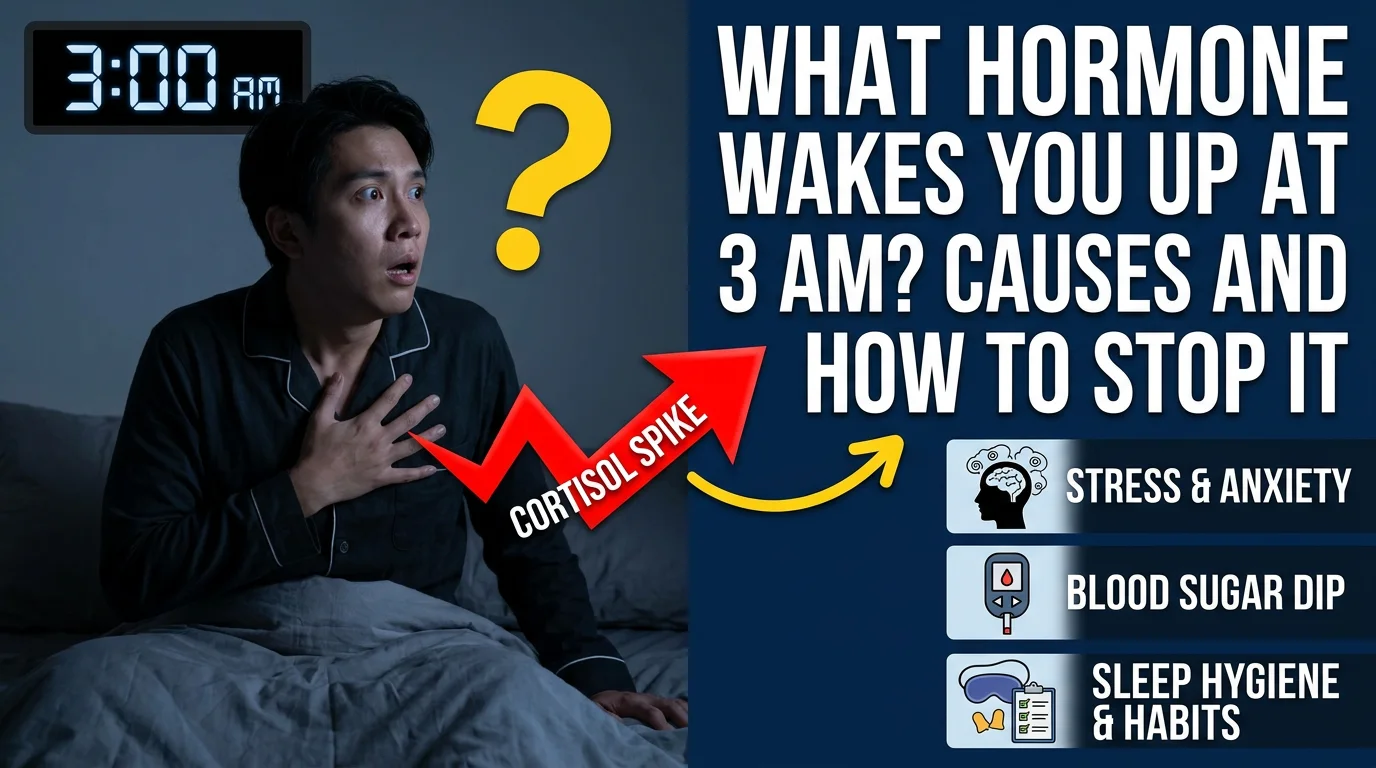
The hormone most often behind early-morning waking is cortisol, your body’s main stress and alertness hormone. Cortisol naturally follows a 24-hour circadian rhythm that dips to its lowest point in the first half of the night and then begins climbing in the early morning hours, well before you actually get up, as part of what sleep researchers call the cortisol awakening response. For most people, this rise is gentle and lands closer to 6 or 7 a.m., but chronic stress, poor sleep habits, blood sugar swings, or alcohol can push that curve earlier and sharper, so the surge, and the jolt of alertness that comes with it, lands squarely at 3 a.m. instead.
The cortisol awakening response, explained
Cortisol has a reputation as purely a “stress hormone,” but its main day-to-day job is more like an internal alarm clock. Levels are deliberately kept low in the early part of the night so your body can prioritize deep, restorative sleep, and then cortisol secretion rises across the second half of the night, typically peaking around, or shortly after, natural waking time. Researchers call the sharp spike that occurs in the 30 to 45 minutes after waking the cortisol awakening response (CAR), and it’s a well-documented and largely normal phenomenon that’s distinct from, but layered on top of, this broader circadian cortisol rhythm.
A 2022 review published in Frontiers in Neuroscience described the cortisol awakening response as modulated by the circadian system itself, meaning your internal clock partly determines both how high cortisol climbs and how quickly. Other cortisol and sleep research summarized in the journal SLEEP has shown that cortisol’s highest secretion tends to happen in the second half of the night, with production continuing to build into the early morning. In other words, by 3 a.m. your cortisol is already on its way up from its overnight low point; it just isn’t supposed to be high enough yet to wake you.
That’s the key distinction. A gentle, gradual cortisol rise toward morning is completely normal and even useful; it’s part of what helps you feel alert when your alarm goes off. The problem is when something pushes that rise earlier or makes it spike rather than climb gradually. Chronic psychological stress, irregular sleep schedules, alcohol, and blood sugar instability can all do exactly that, effectively moving your body’s “get ready to wake up” signal from 6 a.m. to 3 a.m.
What’s really happening in your body at 3 a.m. (it’s not one “organ”)
If you’ve spent any time searching this topic, you’ve probably come across the idea from traditional Chinese medicine (TCM) that each two-hour window of the night corresponds to a specific organ, and that waking between 1 and 3 a.m. specifically points to the liver. In TCM’s organ clock framework, this window is described as the time the liver is believed to be most active in processing and detoxifying, and waking then is traditionally linked to stagnant liver qi or unresolved emotional stress. It’s a genuinely old and culturally significant framework, and plenty of acupuncturists and wellness practitioners still use it to guide treatment.
It’s worth being clear, though: this is a folk and traditional-medicine belief, not a claim backed by modern clinical sleep research. There is no peer-reviewed evidence that a specific organ “switches on” at 3 a.m. and jolts you awake. What sleep medicine actually points to is something more mundane, and more fixable: 3 a.m. tends to fall in a structurally lighter, more fragile part of your sleep cycle.
Sleep isn’t one continuous state; it cycles through stages roughly every 90 minutes, moving from light sleep into deep slow-wave sleep and then into REM (rapid eye movement) sleep, before starting the cycle again. According to Dr. Nancy Foldvary-Schaefer, a sleep medicine specialist at Cleveland Clinic, 3 a.m. is “typically when you’re in REM sleep” for people who go to bed at a fairly standard hour, and REM is the lightest, most easily disrupted stage of the cycle. Any small trigger, a noise, a full bladder, a slightly too-warm room, a stress hormone blip, or a dip in blood sugar — has a much easier time waking you during this lighter stage than it would during deep sleep earlier in the night.
Put simply: it’s not that something dramatic switches on inside one organ at 3 a.m. It’s that your architecture of sleep naturally becomes thinner and more easily interrupted in the second half of the night, right around the time cortisol also starts its gradual climb, and several very ordinary daytime and nighttime habits can turn that natural vulnerability into a reliable wake-up call.
Common causes of waking up at 3 a.m.
Middle-of-the-night waking is rarely caused by just one thing. Below are the factors sleep clinicians and researchers point to most often, and if more than one applies to you, that overlap is usually exactly why the pattern feels so stubborn.
Stress and an overactive cortisol response
Ongoing psychological stress keeps your hypothalamic-pituitary-adrenal (HPA) axis, the system that produces cortisol, more reactive than it should be. Research on the cortisol awakening response has found that people facing demanding workdays or chronic stress show a noticeably higher cortisol response than they do on relaxed, low-stress days. If your nervous system is already primed for alertness, the natural overnight cortisol uptick can arrive early and hit harder, tipping you from light sleep into full wakefulness well before sunrise.
Alcohol’s rebound effect
A nightcap can feel like it helps you fall asleep faster, and it often does, but that benefit comes at a cost several hours later. As the Sleep Foundation explains, alcohol initially suppresses REM sleep and boosts deep sleep, but once your liver metabolizes it (roughly one standard drink per hour), your body swings into a rebound effect: sleep becomes lighter and more fragmented, with awakenings concentrated in the second half of the night as blood alcohol levels drop. That timing lines up almost exactly with a typical 3 a.m. wake-up if you had a drink or two with dinner. If evening drinks are a regular habit, it’s also worth rethinking what you’re reaching for before bed, some drinks genuinely support sleep, while others quietly sabotage it.
Blood sugar swings
Eating a heavy, high-sugar, or high-refined-carbohydrate meal close to bedtime can cause a blood sugar spike followed several hours later by a drop. Because cortisol and adrenaline are part of the body’s response to low blood glucose, a nighttime dip can trigger a stress-hormone release that’s more than enough to pull you out of light sleep. This mechanism, sometimes discussed clinically as nocturnal hypoglycemia, is especially relevant for people managing diabetes or reactive blood sugar, but even people without a diagnosed condition can experience a milder version of the same effect after a sugar- or alcohol-heavy evening.
Anxiety and racing thoughts
Cleveland Clinic notes that people with anxiety tend to experience more insomnia than those without a mood disorder, and middle-of-the-night waking is one of the most common ways that shows up. Anxiety doesn’t just make it harder to fall back asleep once you’re awake; it can also lower your overall arousal threshold, meaning it takes less to wake you up during that lighter REM window in the first place. The two-way relationship (anxiety disrupts sleep, and poor sleep worsens anxiety) is a big part of why 3 a.m. waking so often feels like a self-reinforcing loop.
Sleep apnea and breathing disruptions
If you wake up gasping, with a dry mouth, a headache, or a racing heart, and especially if a partner has mentioned loud snoring or pauses in your breathing, sleep apnea is worth ruling out. Dr. Foldvary-Schaefer points out that sleep apnea events are “most common during REM sleep,” which, again, tends to cluster in the second half of the night. Each breathing pause causes a brief stress-hormone surge and a partial or full awakening, often without you fully remembering it, which can make random 3 a.m. wake-ups feel unexplained even though there’s a clear underlying cause. The American Academy of Sleep Medicine recommends a formal sleep evaluation for anyone with these symptoms, since untreated sleep apnea carries real cardiovascular and metabolic risks beyond just poor sleep.
Other everyday triggers
Cleveland Clinic’s sleep specialists also flag a handful of simpler culprits worth ruling out before assuming something more complex is going on: needing the bathroom from evening fluid intake, physical pain (back pain, arthritis, cramps), an overly warm or noisy bedroom, screen light close to bedtime, long daytime naps that reduce nighttime sleep drive, and in older adults, medication side effects or age-related changes in sleep architecture. It’s also possible to become behaviorally “conditioned” to wake at a specific time simply because you’ve done it enough nights in a row that your body starts anticipating it.
| Cause | What’s happening | What often helps |
|---|---|---|
| Cortisol dysregulation / stress | Overnight cortisol rise starts too early or spikes too sharply | Stress reduction, consistent schedule, wind-down routine |
| Alcohol | Rebound effect as blood alcohol drops in the second half of the night | Limit or avoid alcohol within 3–4 hours of bed |
| Blood sugar dips | Late-night sugar/carb spike followed by an overnight drop | Balanced evening meals, avoid late heavy sugar |
| Anxiety | Lower arousal threshold and racing thoughts during light sleep | Relaxation techniques, journaling, CBT-I |
| Sleep apnea | Breathing pauses trigger stress-hormone surges and awakenings | Sleep study, CPAP or other treatment as prescribed |
| Environment/habits | Noise, heat, light, fluids, naps, or learned conditioning | Sleep hygiene adjustments |
How to break the 3 a.m. wake-up cycle
There’s no single fix that works for everyone, because the causes above often overlap. But there is a well-supported set of steps that sleep clinicians consistently recommend, and most of them target the same underlying goal: keeping your circadian rhythm, cortisol curve, and nervous system as steady and predictable as possible.

- Keep a consistent sleep and wake schedule, even on weekends. Your circadian rhythm and the cortisol curve riding on top of it stabilize around regularity. Going to bed and waking up at wildly different times confuses the system that’s supposed to keep cortisol low overnight and rising predictably toward morning.
- Limit alcohol, especially within three to four hours of bedtime. Given the well-documented rebound effect on second-half-of-night sleep, cutting back or moving your last drink earlier in the evening is one of the highest-leverage changes for reducing middle-of-the-night waking. This pairs well with rethinking your evening drink choices more broadly, including what you sip in the hour before bed.
- Watch late-night eating, especially heavy or sugary meals. Aim to finish larger meals two to three hours before bed, and if you tend to wake up hungry or shaky, consider a small, protein-and-fiber-containing snack rather than something sugar-heavy, to help avoid an overnight blood sugar dip.
- Build a wind-down routine that actively lowers stress before bed. Simple, repeatable practices, slow breathing, light stretching, journaling worries out of your head, or reading something calming, help lower the sympathetic nervous system activity that keeps cortisol reactive. Consistency matters more than any single technique.
- Get daytime light exposure and keep the bedroom dark and cool at night. Light is one of the strongest regulators of circadian timing and the cortisol rhythm. Morning sunlight helps anchor the cycle so cortisol rises when it should, later, not at 3 a.m, while a dark, cool bedroom overnight reduces the odds of a light- or temperature-triggered awakening during REM sleep.
- If you wake up and can’t fall back asleep within 20 minutes, get out of bed. This is a core principle of cognitive behavioral therapy for insomnia (CBT-I): lying in bed awake and frustrated trains your brain to associate the bed with wakefulness. Get up, do something quiet and low-stimulation in dim light, and return to bed only when you feel sleepy again.
- Consider formal CBT-I if the pattern is chronic. Mayo Clinic identifies CBT-I as the first-line, most effective treatment for ongoing insomnia, including sleep-maintenance problems like repeated middle-of-the-night waking. It works by addressing the specific thoughts and habits, like clock-watching, bedtime anxiety, or an irregular schedule, that keep the cycle going, and unlike medication, it has no meaningful side effects and produces durable, lasting improvement.
- Rule out sleep apnea if you have risk symptoms. Loud snoring, gasping awakenings, morning headaches, or daytime sleepiness warrant a conversation with a doctor about a sleep study, since treating an underlying breathing disorder often resolves night waking that other lifestyle changes can’t touch.
- Be patient and consistent. Cortisol rhythms and sleep-wake conditioning both take time to reset, usually a couple of weeks of consistent habits before you notice a real difference, not a single “perfect” night.
If you’re rebuilding these habits from the ground up, it also helps to have a broader framework for sleep hygiene rather than tackling problems one at a time, a simple structure can make the whole routine easier to stick to.
When to see a doctor
Occasional 3 a.m. wake-ups after a stressful day, a late glass of wine, or a poor night’s sleep are common and usually nothing to worry about. But if the pattern is happening several nights a week for more than a few weeks, if you can’t fall back asleep once awake, or if it’s paired with symptoms like loud snoring, gasping, morning headaches, unexplained weight changes, mood changes, or persistent daytime fatigue, it’s worth booking an appointment with a doctor or a board-certified sleep medicine specialist. Chronic sleep-maintenance insomnia and sleep apnea are both very treatable, but they’re also easy to live with unknowingly for years if no one ever formally evaluates them.
This article is intended for general educational purposes and is not a substitute for professional medical advice, diagnosis, or treatment. If your sleep disruption is chronic, worsening, or affecting your daily life, please consult a doctor or qualified sleep specialist.
Frequently asked questions
How do I stop my cortisol from spiking at 3 a.m.?
The most effective approach is to stabilize the systems that keep cortisol regulated: go to bed and wake up at consistent times every day, get bright light exposure in the morning, limit alcohol and heavy late meals, and build in a calming wind-down routine to lower pre-sleep stress. If a 3 a.m. cortisol spike persists for weeks despite these changes, cognitive behavioral therapy for insomnia (CBT-I) or a conversation with a doctor about underlying stress, anxiety, or hormonal factors is the next step.
What organ is active at 3 a.m.?
In traditional Chinese medicine’s organ clock framework, the liver is considered most active between 1 and 3 a.m., and waking in that window is traditionally linked to unresolved stress or liver qi stagnation. This is a folk and traditional-medicine belief rather than a claim supported by clinical sleep research; modern sleep science instead points to 3 a.m. commonly falling during lighter REM sleep, when the body’s natural cortisol rise is also beginning, making awakenings from ordinary triggers more likely.
How can I break the cycle of waking up at 3 a.m.?
Breaking the cycle usually takes a combination of steady habits rather than one fix: a consistent sleep schedule, reduced evening alcohol and late-night sugar, a genuine wind-down routine, and getting out of bed if you can’t fall back asleep within about 20 minutes rather than lying there frustrated. For a pattern that’s lasted more than a few weeks, cognitive behavioral therapy for insomnia (CBT-I) is the treatment sleep specialists most often recommend, since it directly targets the thoughts and habits keeping the cycle going.
What does it mean if your body wakes up at 3 a.m.?
On its own, waking at 3 a.m. usually just means your sleep cycle has moved into a lighter, more easily disrupted REM stage right as your body’s overnight cortisol rise is beginning, it’s not automatically a sign of a serious problem. It becomes worth paying attention to when it happens repeatedly and is tied to a pattern such as chronic stress, alcohol use, blood sugar swings, anxiety, or sleep apnea, in which case addressing that underlying trigger is what actually resolves it.
What organ is affected if you wake up at 3 a.m.?
Traditional Chinese medicine’s organ clock associates the 1 to 3 a.m. window with the liver, framing repeated waking in this period as a sign of stagnant liver energy or emotional stress. That said, this is a traditional and cultural belief rather than a diagnosis recognized in clinical sleep medicine; Western sleep science attributes 3 a.m. waking to sleep-cycle timing and hormonal factors like cortisol rather than to any single organ being “affected.”
What hormone causes 3 a.m. wake up?
Cortisol is the hormone most commonly linked to early-morning waking. It naturally begins rising in the early morning hours as part of the body’s circadian rhythm and the cortisol awakening response, and factors like chronic stress, alcohol, blood sugar dips, and anxiety can push that rise earlier and make it sharper, causing it to jolt you awake around 3 a.m. instead of closer to your normal wake-up time.





Leave a Reply