Sleep & Wellness
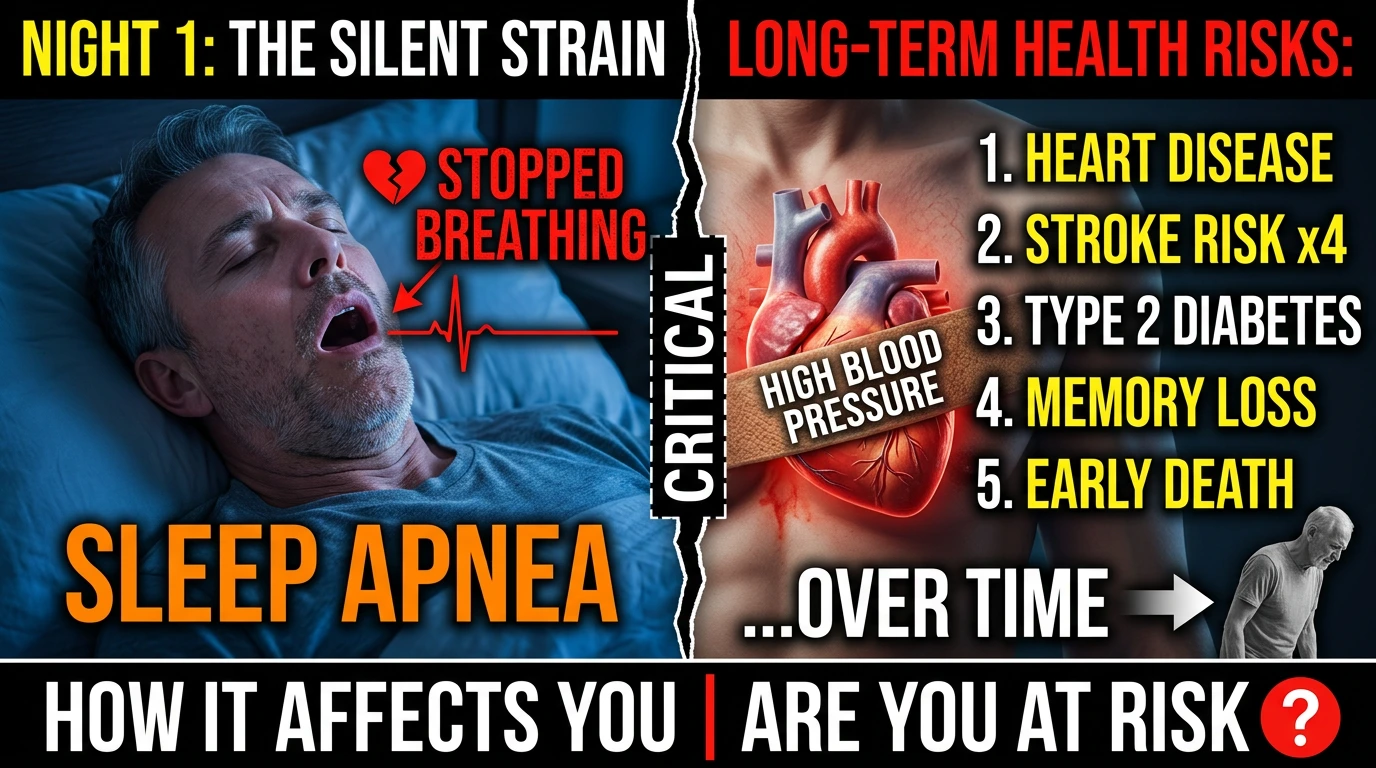
Sleep apnea has a reputation as a “snoring problem,” which undersells what’s actually happening in the body. In obstructive sleep apnea (OSA), the airway repeatedly narrows or collapses during sleep, cutting off or reducing airflow for ten seconds or longer at a time, sometimes dozens or even hundreds of times in a single night. Each of those events triggers a brief oxygen dip and a stress response that fragments sleep, even when the person never fully wakes up enough to notice. Do that night after night for years, and it stops being just a sleep quality issue. Research from bodies like the National Institutes of Health (NIH), the National Heart, Lung, and Blood Institute (NHLBI), and the American Academy of Sleep Medicine (AASM) has linked long-term, untreated sleep apnea to a wider set of health consequences than most people realize, touching the heart, metabolism, brain, and mood. This guide walks through what the evidence actually shows, and where the evidence is stronger versus still developing.
Quick answer: how does sleep apnea affect your health over time?
Left untreated, obstructive sleep apnea is associated with a meaningfully higher long-term risk of high blood pressure, heart disease, atrial fibrillation, and stroke, largely because repeated drops in oxygen and sleep fragmentation put ongoing stress on the cardiovascular system. It’s also linked to a higher risk of insulin resistance and type 2 diabetes, cognitive effects like difficulty concentrating and memory problems, and a higher rate of depression and mood disturbance. The strength of the evidence varies by condition; the cardiovascular links are the most extensively studied and consistently supported, while some of the metabolic and cognitive associations are still being refined by ongoing research. Importantly, treatment (most commonly CPAP therapy) is associated with improvement in many of these risks, which is a major reason sleep specialists emphasize diagnosis and treatment rather than living with the symptoms indefinitely.
Cardiovascular health: the best-documented long-term risk
Of everything discussed in this guide, the connection between untreated sleep apnea and cardiovascular disease has the deepest body of research behind it. The mechanism is fairly well understood: each breathing pause causes a drop in blood oxygen (intermittent hypoxia) and a surge of stress hormones as the body works to reopen the airway and briefly rouses itself from deeper sleep. Repeated hundreds of times a night, this cycle drives up blood pressure, increases inflammation, and places chronic strain on the heart and blood vessels.
High blood pressure (hypertension)
Sleep apnea is one of the most common identifiable contributors to hypertension, particularly the kind that doesn’t respond well to standard medication (sometimes called resistant hypertension). The repeated oxygen drops and stress-hormone surges caused by apnea events keep blood pressure elevated not just at night but often into the daytime as well. This is one of the reasons doctors frequently screen patients with hard-to-control blood pressure for sleep apnea, and why treating the apnea can, in many patients, help bring blood pressure down alongside standard treatment.
Heart disease and atrial fibrillation
Untreated OSA has been associated with a higher risk of coronary artery disease, heart failure, and atrial fibrillation (an irregular heart rhythm). A 2023 NIH/NHLBI-funded study helped clarify part of the biological mechanism, finding that the oxygen swings associated with sleep apnea can trigger the release of certain fats into the bloodstream during sleep, which over time may contribute to the buildup of arterial plaque, offering a more specific explanation for the long-observed link between sleep apnea and cardiovascular disease. Johns Hopkins Medicine and other academic medical centers note that the combination of high blood pressure, inflammation, and irregular heart rhythm risk associated with untreated sleep apnea can compound over years, which is part of why cardiologists increasingly screen cardiac patients for undiagnosed sleep apnea.
Stroke risk
Multiple studies have found an association between moderate-to-severe untreated sleep apnea and an increased risk of stroke, independent of other risk factors like obesity and hypertension, though sleep apnea often coexists with those risk factors as well, which can make the relationship harder to fully isolate. The proposed mechanisms overlap with the cardiovascular pathway generally: sustained high blood pressure, irregular heart rhythms like atrial fibrillation (which itself is a stroke risk factor), and vascular inflammation all plausibly contribute. Given how serious a stroke is, this is one of the more frequently cited reasons sleep medicine specialists encourage timely diagnosis and treatment rather than watching and waiting once moderate or severe apnea is confirmed.
Metabolic health: insulin resistance and type 2 diabetes
There is a well-established, bidirectional relationship between sleep apnea and metabolic health. Sleep apnea is more common in people with obesity (a major risk factor for OSA), and separately, the intermittent oxygen drops and sleep fragmentation caused by apnea appear to independently worsen insulin sensitivity, meaning the body has a harder time using insulin to regulate blood sugar. Multiple studies have found that people with obstructive sleep apnea have a higher prevalence of insulin resistance and type 2 diabetes than people without it, even after accounting for body weight, and some research suggests more severe apnea is associated with worse blood sugar control in people who already have diabetes. This doesn’t mean sleep apnea causes diabetes for everyone who has it, or that weight is irrelevant; the relationship is genuinely complex and multidirectional, but it’s a strong enough association that clinicians treating type 2 diabetes, especially when blood sugar control is unexpectedly difficult, will sometimes screen for undiagnosed sleep apnea as a contributing factor.
Cognitive effects: memory, focus, and long-term brain health
Because sleep apnea fragments sleep so thoroughly, even when someone technically spends eight hours in bed, many patients experience real daytime cognitive effects: trouble concentrating, slower reaction times, word-finding difficulty, and memory lapses. This happens partly because deep, restorative sleep stages get disrupted by repeated arousals, and partly because chronic intermittent low oxygen may affect brain tissue over time. Some research has also examined a possible association between long-term untreated sleep apnea and a higher risk of cognitive decline later in life, including studies exploring links to conditions like mild cognitive impairment. It’s important to be measured here: this is an active area of research, and the evidence for a role in long-term neurodegenerative risk is less definitive than the cardiovascular findings, it points to a plausible, biologically reasonable connection rather than a settled cause-and-effect relationship. What’s more consistently and clearly documented is the shorter-term cognitive impact: daytime sleepiness, reduced attention, and impaired reaction time, the latter of which is also why untreated sleep apnea has been linked to a higher risk of drowsy-driving accidents.
Mood, depression, and quality of life
Sleep apnea and depression frequently co-occur, and the relationship appears to run in both directions. Chronic sleep fragmentation and poor sleep quality are well-documented contributors to low mood, irritability, and depressive symptoms, and studies have found notably higher rates of depression among people with obstructive sleep apnea compared with the general population. At the same time, poor sleep and low energy from depression can also make it harder to notice or address a sleep problem, creating something of a feedback loop. Encouragingly, research has found that treating sleep apnea, particularly with consistent CPAP use, is associated with measurable improvement in mood and depressive symptoms for many patients, which is one of the more motivating findings for people who’ve been managing both issues at once. Beyond diagnosable depression, many people with untreated sleep apnea simply report a lower overall quality of life, more fatigue, less patience, reduced motivation for exercise or social activity, that improves once the underlying sleep problem is addressed.
Who is most at risk of these long-term effects
Not everyone with sleep apnea faces the same level of long-term risk, and severity matters a great deal. Sleep studies classify obstructive sleep apnea as mild, moderate, or severe based on the apnea-hypopnea index (AHI), roughly, how many breathing disruptions happen per hour of sleep. Most of the research linking sleep apnea to serious cardiovascular, metabolic, and cognitive outcomes focuses on moderate-to-severe cases, particularly when they go untreated for extended periods. Several other factors tend to compound the risk: excess weight (especially around the neck and abdomen), being male (though sleep apnea is under-diagnosed and likely under-recognized in women), older age, a family history of sleep apnea, smoking, and existing conditions like hypertension or type 2 diabetes, which can both contribute to apnea risk and be worsened by it. None of this means mild sleep apnea is automatically harmless; symptoms and individual health context matter alongside the severity number, but it does explain why doctors weigh AHI results together with a patient’s broader health profile rather than looking at one number in isolation.
The bigger picture: why doctors describe apnea as a whole-body condition
It’s worth stepping back to appreciate why a breathing problem during sleep ends up connected to the heart, blood sugar, brain, and mood at all. The unifying thread across nearly all of these long-term effects is the repeated stress response triggered by each breathing pause: a drop in blood oxygen, a surge in stress hormones like cortisol and adrenaline, a spike in blood pressure, and a brief arousal that fragments deep, restorative sleep stages. None of that is dangerous as an isolated event, in the way a single stressful moment during the day isn’t dangerous. The concern is repetition; this cycle can occur dozens to hundreds of times in a single night, night after night, for years in someone with undiagnosed or unmanaged apnea. Chronic, repeated physiological stress of that kind is a recognized contributor to inflammation and cardiovascular strain more broadly, which is part of why sleep medicine specialists increasingly describe obstructive sleep apnea not as an isolated nuisance but as a systemic condition that deserves the same seriousness as other chronic health issues, alongside factors like diet, activity level, and blood pressure management.
Why timing and treatment matter
A theme that runs through most of the research above is that these risks tend to build up gradually and are associated with how long apnea goes untreated and how severe it is, rather than appearing overnight. That’s part of why sleep specialists frame sleep apnea as a chronic condition to manage, similar to high blood pressure or high cholesterol, rather than an occasional inconvenience. The encouraging counterpoint is that treatment, most commonly continuous positive airway pressure (CPAP) therapy, which keeps the airway open during sleep using a steady stream of air, is associated with improvement across several of these domains: better blood pressure control, reduced cardiovascular event risk in adherent patients, improved daytime alertness, and better mood. Other treatments, including oral appliances, positional therapy, weight management, and in some cases surgery, may also be appropriate depending on the severity and cause of a person’s apnea. The core takeaway from the research isn’t meant to be alarming so much as motivating: this is a condition where getting diagnosed and staying consistent with treatment appears to meaningfully change the long-term health trajectory.
Practical steps if you’re worried about long-term risk
If any of the risks above sound relevant to your own health, whether because you already have a sleep apnea diagnosis you haven’t fully addressed, or because you suspect you might have undiagnosed apnea, a few concrete next steps tend to be more useful than general worry.

Get an actual diagnosis rather than guessing
Home sleep apnea tests have made diagnosis considerably more accessible than it used to be, and a diagnosis is the foundation for everything else, since treatment decisions and severity classification both depend on it. If you’ve been putting off a sleep study because it sounds inconvenient, it’s worth knowing that many home tests now involve little more than a small sensor worn overnight, with far less disruption than an in-lab study.
If you already use CPAP, prioritize consistency
Much of the research showing improved cardiovascular and mood outcomes is specifically tied to consistent, nightly CPAP use, not occasional use. If you have a machine but struggle to use it regularly because of mask discomfort, dryness, or claustrophobia, it’s worth going back to your sleep specialist or equipment provider to troubleshoot the fit and settings rather than quietly giving up on it, since a poorly fitted setup is one of the most common and most fixable reasons people stop using CPAP.
Address the risk factors you can control
Weight management, reducing alcohol close to bedtime, treating nasal congestion, sleeping on your side rather than your back, and quitting smoking are all changes that can meaningfully reduce apnea severity for some people, alongside (not instead of) medical treatment. None of these lifestyle changes are guaranteed to resolve moderate or severe apnea on their own, but they’re reasonable, evidence-supported steps to take in parallel with whatever treatment your doctor recommends.
Keep up with related health screening
Given the associations discussed throughout this guide, it’s reasonable for people with sleep apnea to be a bit more diligent about routine blood pressure checks, blood sugar monitoring, and cardiovascular risk conversations with their primary care doctor, rather than treating sleep apnea as a fully separate issue from the rest of their health picture.
Frequently asked questions
Can untreated sleep apnea shorten your life?
Research has associated moderate-to-severe untreated obstructive sleep apnea with a higher risk of serious complications, including cardiovascular disease and stroke, which are conditions that can affect life expectancy. It’s more accurate to say that sleep apnea raises the risk of several serious health conditions over time rather than to state a direct, universal effect on lifespan, since outcomes vary widely based on severity, other health conditions, and whether the apnea is treated. This is one of the central reasons sleep medicine specialists recommend diagnosis and treatment rather than leaving moderate or severe sleep apnea unaddressed.
Does treating sleep apnea reverse the damage?
Many of the effects associated with sleep apnea show measurable improvement with consistent treatment, particularly CPAP therapy: studies have found improvements in blood pressure, daytime sleepiness, and mood in adherent patients. Whether treatment fully reverses long-term cardiovascular changes is less clear-cut and likely depends on how long and how severe the untreated apnea was, along with other individual health factors. The general clinical consensus is that earlier diagnosis and consistent treatment lead to better outcomes than delaying care, which is why “it’s not that bad yet” is generally not a reason to postpone an evaluation.
Is mild sleep apnea worth treating, or just severe cases?
Treatment decisions depend on more than just the severity score from a sleep study, a doctor will also weigh symptoms (like daytime sleepiness), other health conditions (like existing heart disease or hard-to-control blood pressure), and how much the apnea is affecting quality of life. Some people with mild sleep apnea are advised to start with lifestyle changes such as weight management, positional therapy, or reducing alcohol before bed, while others with mild apnea but significant symptoms or cardiovascular risk factors may still be advised to pursue CPAP or another therapy. This is a conversation to have directly with a sleep specialist rather than a decision to make from a severity number alone.
Can sleep apnea cause weight gain, or does weight gain cause sleep apnea?
Both directions appear to be true, which is part of what makes the relationship complicated. Excess weight, particularly around the neck and upper airway, is one of the most significant risk factors for developing obstructive sleep apnea. At the same time, untreated sleep apnea disrupts sleep and hormone regulation in ways that some research suggests can make weight management harder, creating a cycle where each condition can reinforce the other. This is one of several reasons doctors often address sleep apnea and weight management together rather than treating them as unrelated issues.
What symptoms suggest sleep apnea is affecting my heart or metabolism already?
There’s no symptom that definitively confirms cardiovascular or metabolic involvement without testing, but combinations worth mentioning to a doctor include: high blood pressure that’s hard to control with medication, an irregular heartbeat you’ve noticed or been told about, unexplained difficulty managing blood sugar despite following a diabetes treatment plan, and the classic sleep apnea signs (loud snoring, witnessed breathing pauses, morning headaches, and excessive daytime sleepiness) occurring alongside any of the above. If that combination sounds familiar, it’s reasonable to ask specifically about a sleep apnea evaluation rather than treating the symptoms as separate, unrelated issues.
How is long-term sleep apnea risk actually measured in research?
Most of the research behind these associations comes from a mix of large observational cohort studies (tracking health outcomes in groups of people with and without diagnosed sleep apnea over years), clinical studies of CPAP adherence and outcomes, and mechanistic research (like the NIH/NHLBI-funded study on oxygen swings and blood fats) that helps explain why the associations exist biologically. Observational studies are good at identifying associations but can’t always prove direct cause-and-effect on their own, which is why researchers look for consistency across multiple types of studies, along with a plausible biological mechanism, before treating a link as well-established, which is exactly the case for the cardiovascular findings discussed in this guide.
None of this is meant to replace medical advice, and this guide isn’t a diagnostic tool. If you snore heavily, have been told you stop breathing at night, or deal with unexplained fatigue, high blood pressure, or mood changes that could be tied to poor sleep, talk to a doctor about whether a sleep apnea evaluation makes sense for you. Diagnosis usually starts with a conversation and, if warranted, a sleep study, a well-established, low-risk step that can meaningfully change your long-term health outlook if apnea turns out to be part of the picture.



Leave a Reply