Sleep & Wellness
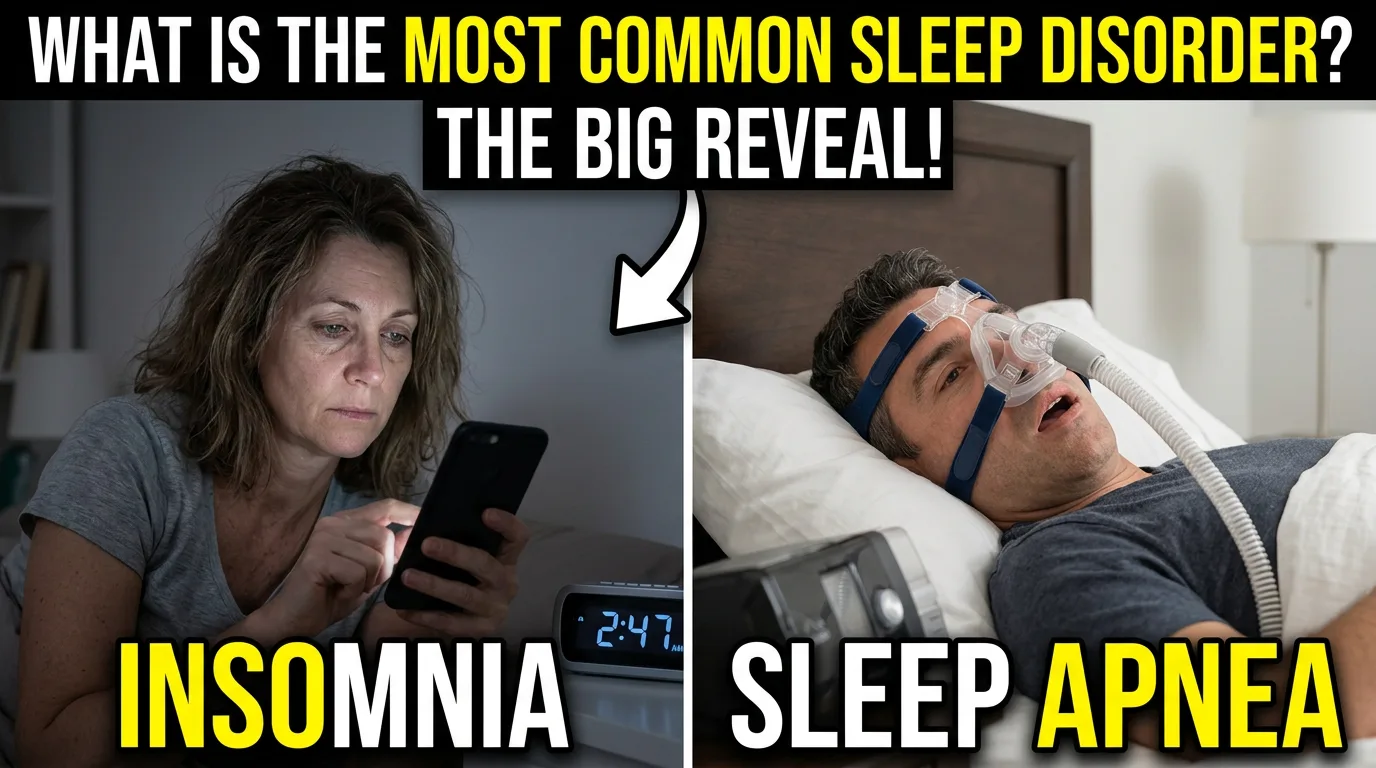
Type “why can’t I sleep” or “sleep problems” into a search bar and you’ll eventually land on some version of this question: what is the most common sleep disorder, actually? It sounds like it should have a one-word answer, but the honest answer is a little more layered than that. Depending on how you define “common” (a disorder millions of people technically have, versus one that gets formally diagnosed, versus one people search for most), you can make a reasonable case for a few different conditions. What the research does agree on is this: three conditions, insomnia, sleep apnea, and restless legs syndrome, account for the overwhelming majority of diagnosed sleep disorders in adults, and they show up in very different ways. This guide ranks them with real prevalence data, explains what “sleep problems” actually means clinically, and answers the related questions people ask most, from sleep anxiety and disturbed sleep patterns to sexsomnia and whether sleep disorders run in families.
Quick answer: what is the most common sleep disorder?
Insomnia is the most common sleep disorder by a wide margin. Research summarized by the Sleep Foundation suggests up to two-thirds of adults occasionally experience insomnia symptoms, and roughly 10–15% have chronic insomnia that persists for months or longer. Obstructive sleep apnea is the second most common, affecting an estimated 26% of adults ages 30 to 70 according to the American Academy of Sleep Medicine (AASM), most of it undiagnosed, and restless legs syndrome rounds out the top three, affecting an estimated 5–10% of adults. Narcolepsy, by comparison, is far rarer, affecting roughly 1 in 2,000 people, which is why it’s well known but not actually “common” in the statistical sense.
What are the three most common sleep disorders?
Sleep medicine recognizes dozens of distinct sleep disorders, but three account for the vast majority of cases seen by doctors and sleep clinics: insomnia, obstructive sleep apnea, and restless legs syndrome. Each one disrupts sleep in a completely different way, one keeps you from falling or staying asleep, one interrupts your breathing without you realizing it, and one creates an uncomfortable urge to move your legs right when you’re trying to wind down, but together they explain most of what people mean when they say they have “sleep problems.”
Insomnia: the most common sleep complaint

Insomnia is defined as persistent difficulty falling asleep, staying asleep, or waking up too early and not being able to get back to sleep, despite having the opportunity for a full night’s rest. It’s considered chronic when it happens at least three nights a week for three months or longer and causes daytime impairment like fatigue, irritability, or trouble concentrating. Not everyone experiences it the same way: some people mainly struggle to fall asleep in the first place, while others fall asleep fine but wake up repeatedly through the night, the specific pattern covered in Why Do I Wake Up in the Middle of the Night?, and others wake at a strikingly consistent hour, such as 3 a.m., which often points to the distinct hormonal mechanism explained in What Hormone Wakes You Up at 3 AM? Causes and How to Stop It. By raw numbers, it’s not close: far more people experience insomnia symptoms at some point than any other sleep disorder, and it’s the condition most commonly diagnosed and treated in primary care and sleep medicine settings. Insomnia can be primary, meaning it isn’t clearly caused by something else, or secondary to stress, anxiety, depression, pain, medication side effects, or another sleep disorder entirely. The first-line treatment recommended by sleep specialists isn’t medication, it’s cognitive behavioral therapy for insomnia (CBT-I), a structured, short-term program (typically four to eight sessions) that addresses the thought patterns and habits keeping sleep disrupted, with an evidence base that consistently outperforms sleeping pills for long-term results.
Sleep apnea: common, serious, and often undiagnosed
Obstructive sleep apnea (OSA) happens when the airway repeatedly narrows or collapses during sleep, cutting off airflow for seconds at a time, sometimes hundreds of times a night. The AASM estimates that at least 25 million adults in the United States have OSA, and that 26% of adults between 30 and 70 have some degree of it, figures the organization has flagged as rising over the past two decades, driven largely by increasing rates of obesity. What makes sleep apnea especially significant isn’t just how common it is, it’s how often it goes unnoticed. Because the hallmark signs (loud snoring, gasping, and breathing pauses) happen while you’re unconscious, many people only find out from a partner, and a large share of cases are believed to go undiagnosed entirely. Left untreated, sleep apnea is linked to elevated risks of high blood pressure, heart disease, stroke, and type 2 diabetes, on top of the daytime fatigue and brain fog it causes. If any of this sounds familiar, our guide on the warning signs of sleep apnea you shouldn’t ignore walks through exactly what to watch for and how it’s diagnosed.
Restless legs syndrome: the lesser-known top-three disorder
Restless legs syndrome (RLS) is a neurological condition that causes an uncomfortable, sometimes hard-to-describe urge to move the legs, often described as crawling, tingling, or aching, that worsens during rest or in the evening and is temporarily relieved by movement. That timing is exactly what makes it a sleep disorder: symptoms tend to intensify right as people are trying to fall asleep, delaying sleep onset and fragmenting the night. RLS affects an estimated 5% to 10% of adults, according to the Sleep Foundation, making it more common than many people assume given how little it’s discussed compared to insomnia or sleep apnea. It’s associated with iron deficiency, pregnancy, kidney disease, and certain medications, and dopamine signaling in the brain is believed to play a central role. For a closer look at what drives it and how it’s managed, see our guide on what causes restless leg syndrome during sleep.
What are sleep problems actually called, clinically?
“Sleep problems” is a catch-all phrase, not a medical term, and sleep medicine actually organizes disorders into two broad umbrella categories that are useful to understand. Dyssomnias are disorders that affect the amount, quality, or timing of sleep itself, this is where insomnia, sleep apnea, restless legs syndrome, narcolepsy, and circadian rhythm disorders like shift work disorder and jet lag all fall. Parasomnias, by contrast, are disorders involving unwanted physical behaviors or experiences during sleep or the transition into or out of it, think sleepwalking, sleep terrors, confusional arousals, REM sleep behavior disorder, and sexsomnia. The distinction is genuinely useful: a dyssomnia is fundamentally a problem with getting enough good-quality sleep, while a parasomnia is a problem with something happening during sleep that shouldn’t be. Some people experience both categories at once, since certain parasomnias are more likely to occur alongside an underlying dyssomnia like sleep apnea.
What is a disturbed sleep pattern?
A disturbed sleep pattern isn’t a diagnosis in itself, it’s a broader description of sleep that’s irregular, fragmented, or out of sync with your body’s natural rhythm, and it’s worth separating clearly from a diagnosed sleep disorder. A disturbed pattern can look like several different things: going to bed and waking up at wildly inconsistent times from one day to the next, waking up multiple times overnight without an obvious cause, sleeping at the “wrong” biological time due to shift work or jet lag, or simply getting a technically adequate number of hours in a way that’s chopped up rather than continuous. The underlying thread connecting these is circadian misalignment or fragmentation, your internal body clock and your actual sleep schedule pulling in different directions, or your sleep being interrupted often enough that you never reach the deeper, more restorative stages, the broader territory our guide What Are the Common Causes of Interrupted Sleep? maps out in more detail.
This matters because a disturbed sleep pattern can exist entirely on its own, caused by travel, an irregular work schedule, stress, a new baby, or simply poor sleep habits, without meeting the criteria for any specific sleep disorder. It can also be a symptom that signals an underlying disorder is present, chronic fragmentation is a hallmark of untreated sleep apnea, for instance, and a persistently misaligned schedule is the defining feature of circadian rhythm disorders. The practical difference matters for treatment: an occasional disturbed pattern from travel usually resolves once your schedule stabilizes, while a pattern that persists for months, especially alongside daytime impairment, is worth discussing with a doctor rather than assuming it will sort itself out.
What is sleep anxiety?
Sleep anxiety is stress or fear specifically about the act of sleeping, worrying you won’t be able to fall asleep, that you’ll wake up and not be able to get back to sleep, or that something bad will happen while you’re asleep, according to Cleveland Clinic. It’s important to distinguish sleep anxiety from generalized anxiety disorder (GAD): GAD is a diagnosable condition involving excessive, hard-to-control worry across many areas of life (work, health, relationships, finances) that happens to also disrupt sleep as one symptom among many. Sleep anxiety, on the other hand, is anxiety that’s specifically anchored to bedtime and sleep itself, and it can occur in people who don’t have generalized anxiety at all. In its more intense form, a specific fear of sleep is sometimes called somniphobia, though most people with sleep anxiety experience something short of a diagnosable phobia.
What makes sleep anxiety particularly stubborn is the feedback loop it creates with insomnia: worrying about not sleeping activates the body’s stress response (elevated heart rate, racing thoughts, muscle tension) right when you need to be winding down, which makes falling asleep harder, which then reinforces the anxiety the next night. Anxiety disorders affect an estimated 40 million adults in the U.S., and most people with an anxiety or mood disorder also report some form of sleep disruption, so the overlap between anxious minds and disturbed sleep is genuinely common. Sleep anxiety can also be a downstream effect of an undiagnosed sleep disorder like insomnia, sleep apnea, or narcolepsy, in which case treating the underlying disorder often reduces the anxiety around it too. As with insomnia, CBT-I is one of the most effective treatments, since it directly targets the anxious thoughts and behaviors that build up around bedtime. If racing thoughts at bedtime sound familiar, our guide on why you can’t fall asleep and what actually helps goes deeper into the causes and fixes.
What is sexsomnia?
Sexsomnia, sometimes called “sleep sex,” is a recognized parasomnia, in the same clinical family as sleepwalking, in which a person engages in sexual behaviors while in a partial arousal from non-REM (NREM) sleep, with no memory of the episode afterward. Cleveland Clinic and the Sleep Foundation both classify it as a type of confusional arousal, meaning the brain is caught in an in-between state that’s neither fully asleep nor fully awake. It’s considered genuinely rare, though sleep researchers note the true prevalence is hard to pin down since many episodes go unreported; one sleep-center study found symptoms in nearly 8% of patients evaluated there specifically, a figure from a clinical population rather than the general public. It appears roughly two to three times more common in men than in women.

Known associated factors include sleep deprivation, alcohol use, recreational drugs, certain sedative or sleep medications, stress, and physical contact during sleep, and it frequently co-occurs with other sleep disorders, including sleepwalking, obstructive sleep apnea, restless legs syndrome, and narcolepsy. Sexsomnia is clinically significant for reasons beyond the behavior itself: it can create real safety concerns, since the person has no conscious control or memory of what happens, and it can carry serious relationship and, in some documented cases, legal implications, particularly when a partner or another person is involved without the ability to consent. Because of this, sleep specialists generally recommend treating any identifiable underlying condition (a CPAP machine for co-occurring sleep apnea, for example), taking safety precautions such as sleeping separately during evaluation, and, in some cases, medication such as clonazepam, which has shown a high response rate in clinical use. If sexsomnia or another parasomnia is a concern in your household, our guide on how to help someone with parasomnias sleep safely covers practical steps. This is a condition that genuinely warrants an evaluation by a sleep specialist rather than self-diagnosis, since accurately distinguishing it from other nighttime behaviors typically requires a clinical history and, often, an overnight sleep study.
Beyond the top three: other common sleep disorders worth knowing
Insomnia, sleep apnea, and restless legs syndrome cover most cases, but a handful of other disorders come up often enough in searches and sleep clinics to be worth naming, even briefly.

Narcolepsy
Narcolepsy is a neurological disorder causing overwhelming, sudden daytime sleepiness and, in some cases, sudden muscle weakness triggered by strong emotion (cataplexy). Despite how often it comes up in conversation, it’s actually rare, affecting roughly 1 in 2,000 people according to the Sleep Foundation, which makes it far less common than insomnia, sleep apnea, or RLS even though it’s widely recognized by name. For more on how serious it is and what treatment involves, see our guide on whether narcolepsy is dangerous and what you need to know.
REM sleep behavior disorder and other parasomnias
REM sleep behavior disorder involves physically acting out dreams, sometimes with kicking, punching, or shouting, because the normal muscle paralysis of REM sleep fails to kick in. It’s less common than sexsomnia or sleepwalking overall but is taken seriously clinically because it can, in some cases, precede the later development of certain neurological conditions. Our guide on whether REM sleep behavior disorder requires treatment covers when intervention is recommended. More broadly, if you’re noticing symptoms that feel more severe than routine sleep problems, snoring paired with breathing pauses, acting out dreams, or sleep that never feels restorative despite enough time in bed, our guide to the signs of a serious sleep disorder is a useful next read.
Circadian rhythm disorders
This category includes shift work disorder, jet lag, and delayed or advanced sleep phase syndrome, conditions where the body’s internal clock is out of step with the sleep schedule a person needs to keep. These are dyssomnias, not parasomnias, and they’re a common cause of the “disturbed sleep pattern” experience described earlier, especially among shift workers and frequent travelers.
Are sleep problems genetic or hereditary?
Sometimes, but it’s more nuanced than a simple yes or no, and it varies a lot by which disorder you’re asking about. Most common sleep problems, general insomnia, mild sleep apnea driven by weight or anatomy, and occasional disturbed sleep patterns, are multifactorial, meaning they arise from a mix of lifestyle, environment, stress, health conditions, and genetics working together, rather than being passed down through a single gene. That said, a real genetic component does exist for some specific disorders. Restless legs syndrome has one of the stronger familial links among common sleep disorders; researchers estimate that a substantial share of people with RLS, some studies suggest up to half or more, have a first-degree relative with the condition, and several gene variants associated with increased risk have been identified, particularly in cases that begin before age 40. Narcolepsy also has a genetic dimension: more than 95% of people with type 1 narcolepsy carry a specific variant in the HLA-DQB1 gene involved in immune function, though the Sleep Foundation notes that most people with narcolepsy have no family history of it at all, since the gene variant alone isn’t sufficient to cause the condition without an additional autoimmune trigger. Obstructive sleep apnea can also run in families to some degree, partly because airway anatomy, jaw structure, and body weight all have heritable components, though lifestyle and anatomy typically matter more day to day than genetics alone. The honest summary: if a close relative has a diagnosed sleep disorder, it’s reasonable to be a bit more attentive to your own sleep, but genetics is rarely the whole story for the disorders most people actually deal with.
When to see a doctor about sleep problems
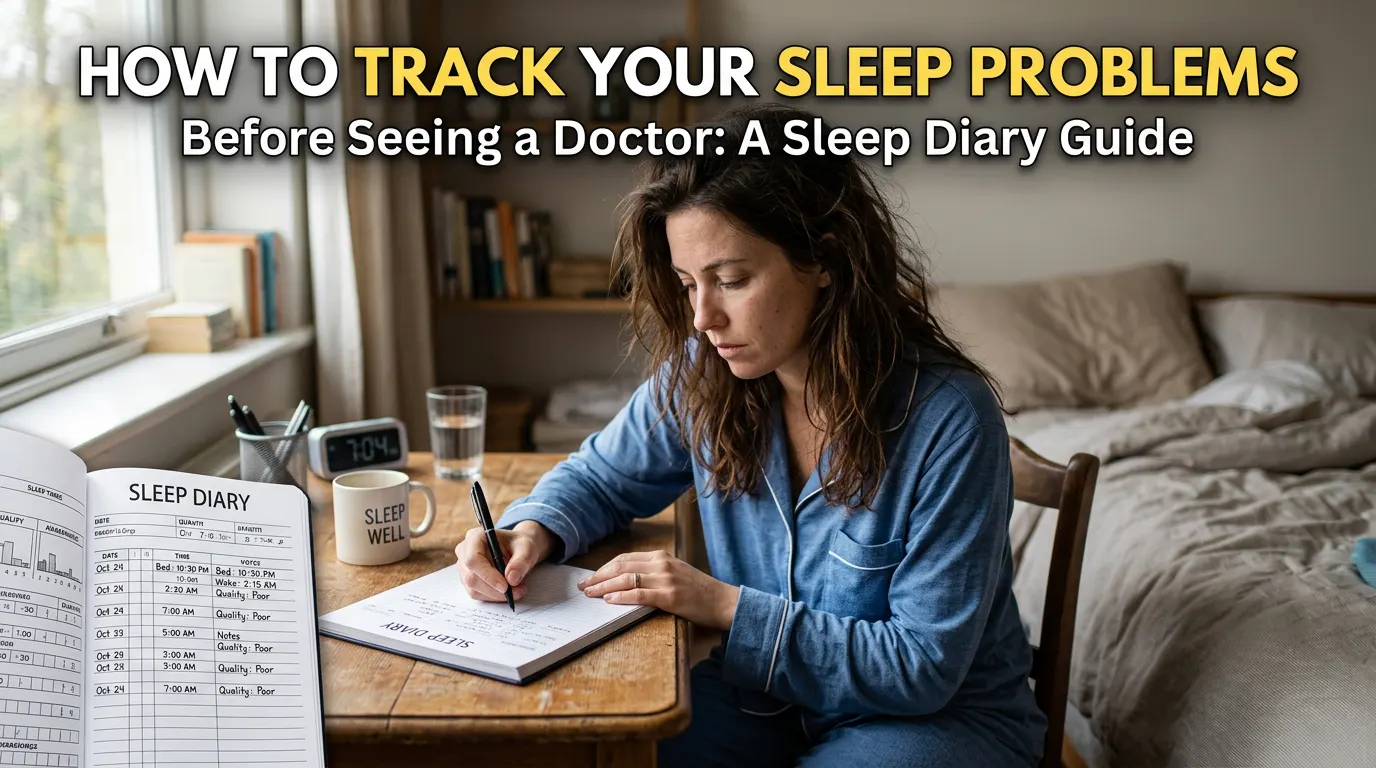
A rough night here and there isn’t a red flag, and even a stretch of disturbed sleep during a stressful period or a bout of travel is usually not something to worry about long-term. If what you need is something to do about tonight specifically rather than a longer diagnostic path, What to Do When You Can’t Sleep (Right Now) covers immediate, in-the-moment options. It’s worth talking to a doctor or a sleep specialist if sleep problems happen most nights for a month or more, if you or a partner notice loud snoring with pauses or gasping, if you’re excessively sleepy during the day despite spending enough time in bed, if anxiety about sleep itself is affecting your daily life, or if you or someone in your household is engaging in unusual or potentially unsafe behaviors during sleep, including sexsomnia or other parasomnias. None of the information here is meant to diagnose anything; it’s meant to help you recognize patterns worth describing to a professional. A doctor can determine whether a sleep study, bloodwork, or a referral to a sleep specialist is the right next step, and most of these conditions, insomnia, sleep apnea, restless legs syndrome, and the parasomnias alike, are genuinely manageable once properly diagnosed.
Frequently asked questions
What is the most common sleep disorder overall?
Insomnia is the most common sleep disorder overall. Estimates suggest up to two-thirds of adults occasionally experience insomnia symptoms, and roughly 10–15% experience chronic insomnia lasting three months or more. It’s more common than sleep apnea, restless legs syndrome, or narcolepsy, and it’s the sleep disorder most frequently discussed with doctors.
What are the three most common sleep disorders?
The three most common sleep disorders are insomnia, obstructive sleep apnea, and restless legs syndrome. Insomnia affects the largest share of people (up to two-thirds occasionally, 10–15% chronically), obstructive sleep apnea affects an estimated 26% of adults ages 30 to 70 according to the AASM, and restless legs syndrome affects roughly 5–10% of adults. Together, they account for the large majority of diagnosed sleep disorders in adults.
How much sleep do adults need?
Most adults need about 7 to 9 hours of sleep per night, according to sleep medicine guidelines, though the exact right amount varies somewhat by individual. For a full breakdown by age group, along with what happens when you consistently get less, see our complete guide to how much sleep you need by age.
What is sleep anxiety and how is it different from generalized anxiety disorder?
Sleep anxiety is fear or stress specifically about sleeping, such as worrying you won’t fall asleep or won’t be able to get back to sleep, rather than general worry across many areas of life. Generalized anxiety disorder (GAD) is a broader diagnosable condition involving excessive worry about work, health, relationships, and other areas, which can disrupt sleep as one of several symptoms. Someone can have sleep anxiety without having GAD, and the two are treated somewhat differently, though cognitive behavioral approaches help with both.
What is a disturbed sleep pattern?
A disturbed sleep pattern describes sleep that’s irregular, fragmented, or misaligned with your body’s natural circadian rhythm, such as inconsistent bed and wake times, frequent nighttime awakenings, or sleeping at odd hours due to shift work or travel. It isn’t a diagnosis on its own; it can happen on its own from lifestyle factors or serve as a symptom of an underlying sleep disorder like sleep apnea or a circadian rhythm disorder.
What is sexsomnia, and is it dangerous?
Sexsomnia is a rare parasomnia in which a person engages in sexual behaviors during non-REM sleep with no memory afterward, classified in the same family as sleepwalking. It’s clinically significant primarily because of safety, relationship, and, in some cases, legal considerations, since the person has no conscious awareness or control during an episode, rather than because of physical danger from the behavior itself. It’s associated with sleep deprivation, alcohol, certain medications, and other underlying sleep disorders, and it should be evaluated by a sleep specialist rather than managed alone.
Are sleep disorders genetic?
Some are more genetic than others. Restless legs syndrome and narcolepsy both have documented genetic components, including specific gene associations and higher rates among close relatives, but most common sleep problems, including general insomnia and lifestyle-driven sleep apnea, are multifactorial, shaped by a combination of genetics, health conditions, habits, and environment rather than inherited directly.
What’s the difference between a dyssomnia and a parasomnia?
A dyssomnia is a disorder affecting the amount, quality, or timing of sleep, like insomnia, sleep apnea, restless legs syndrome, and circadian rhythm disorders. A parasomnia involves unwanted physical behaviors or experiences during sleep or the transition to or from it, like sleepwalking, sleep terrors, REM sleep behavior disorder, and sexsomnia. Dyssomnias are about not getting enough good sleep; parasomnias are about something happening during sleep that shouldn’t be. If you’re trying to place plain old insomnia within this bigger picture, Insomnia vs. Sleep Disturbances: What’s the Difference? walks through exactly where the line falls.
When should I see a doctor about sleep problems?
It’s worth seeing a doctor if sleep problems happen most nights for a month or longer, if you experience loud snoring with breathing pauses, if you’re excessively sleepy during the day despite adequate time in bed, if anxiety about sleep is affecting your daily functioning, or if unusual or unsafe behaviors occur during sleep. A doctor or sleep specialist can determine whether a sleep study or other evaluation is needed; this article is educational and isn’t a substitute for a professional diagnosis.



Leave a Reply