Fish & Aquariums
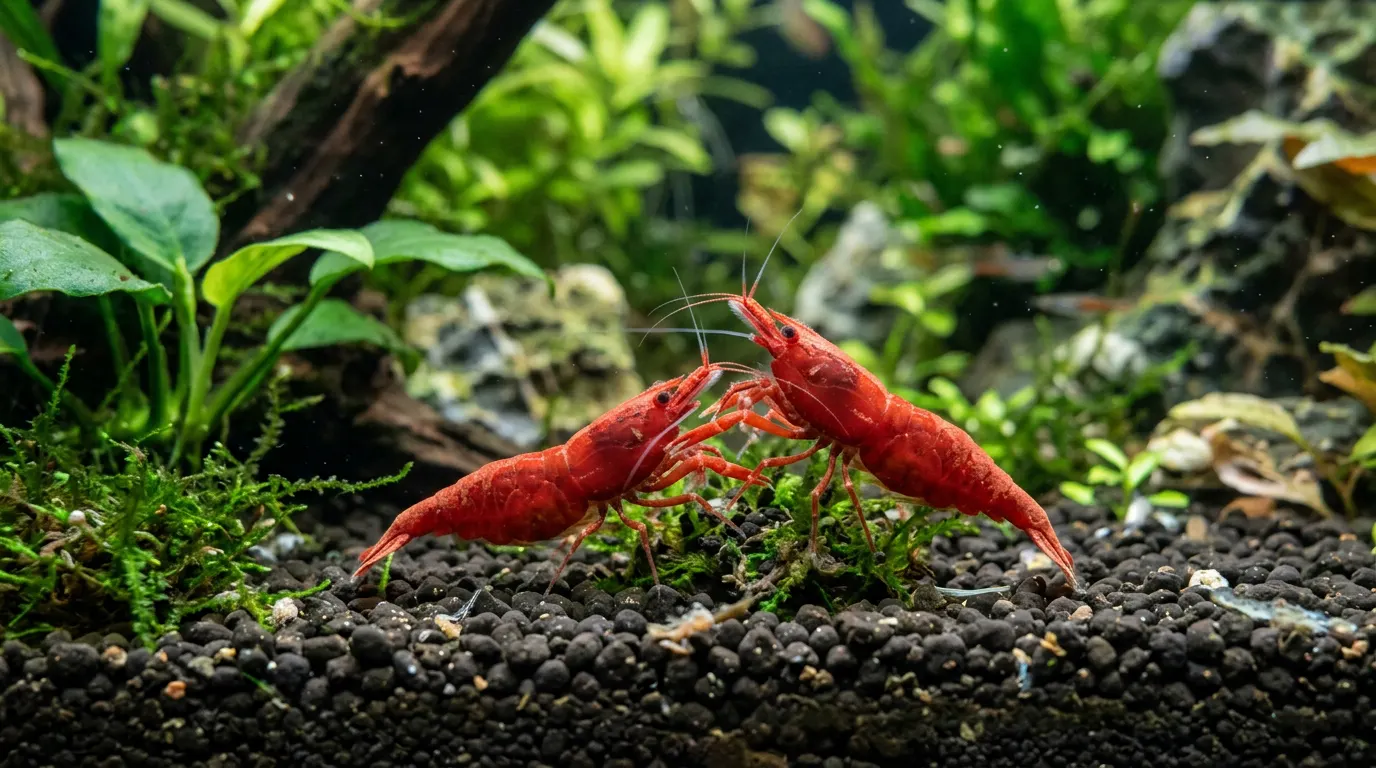
A few weeks ago I watched four or five of my cherry shrimp cluster tightly around one shrimp that had gone pale and completely still in the corner of the tank, antennae brushing over its body from every side. My first thought was that I was about to watch a killing, and I actually had a net in the water before I looked closer and realized the “victim” was a shrimp that had just molted, and its tankmates were investigating a fresh source of minerals, not attacking a rival. That near-panic turns out to be extremely common, and it’s worth untangling properly: are dwarf shrimp actually dangerous to each other, or does almost everything that looks like a fight turn out to be something else?
Quick answer
Dwarf shrimp such as Neocaridina and Caridina are, by nature, peaceful and colonial rather than aggressive; they evolved as prey and scavengers, not hunters, and thrive precisely because they tolerate crowding and forage side by side without fighting over territory. Most behavior that looks like aggression – shrimp pushing past each other at a food source, males swarming a receptive female, or brief antenna and claw contact while foraging – is feeding competition or mating pursuit, not violence. The one genuine risk is cannibalism, but it’s almost always opportunistic scavenging rather than true aggression: shrimp target freshly molted, soft-shelled individuals that are temporarily defenseless, or eat shrimp that are already dead or dying, treating them as a convenient protein source rather than hunting them down. Overcrowding and food scarcity make this kind of opportunistic behavior more common by increasing competition and stress, so a well-fed, adequately spaced colony rarely shows it at all. The genuine exception to all of this is larger, predatory shrimp in the Macrobrachium genus – including “whisker shrimp” often mislabeled and sold as ghost shrimp – which are true hunters and a completely different case from anything a dwarf shrimp keeper should expect from their own colony.
Are dwarf shrimp actually aggressive toward each other?
In the wild and in the aquarium, Neocaridina and Caridina shrimp live in dense colonies, grazing side by side on the same patch of biofilm without establishing territory or fighting for space the way many fish do. That’s not an accident of captivity; it’s the same social structure that makes them viable to keep at all, since a genuinely territorial animal couldn’t be packed into a nano tank at the densities shrimp keepers routinely manage. Practical Fishkeeping’s introductory guide to shrimp keeping, aimed at newcomers to the hobby, focuses almost entirely on water parameters, substrate, and breeding rather than any need to manage aggression between shrimp, and the only social behavior it flags is a burst of male activity when a female releases pheromones ahead of a molt – hardly the language of a combative species. Aquarium Co-Op’s guide to cherry shrimp tankmates likewise treats other dwarf shrimp, and even similarly sized species like ghost and Amano shrimp, as compatible roommates rather than rivals, reserving its actual warning for a completely different category of animal (more on that below).
None of that means shrimp are inert or motionless; a healthy colony is constantly active, foraging, chasing, and bumping into one another as dozens of individuals compete for the same grazing surface. It just means that activity isn’t aggression in the sense most keepers worry about when they use that word, and mistaking normal colonial behavior for fighting is one of the most common sources of needless panic in the hobby.
Behaviors that look like aggression but usually aren’t
Most of what reads as a fight in a shrimp tank falls into one of three ordinary categories: feeding competition, mating pursuit, or incidental contact while foraging. A cluster of shrimp piling onto a sinking pellet will shove, climb over, and flip each other out of the way, which looks frantic but is no different from a group of fish crowding a feeding ring. When a female is close to a molt and ready to breed, she releases pheromones into the water that trigger what Practical Fishkeeping’s shrimp-keeping guide describes as males starting to “behave a little crazy,” darting rapidly around the tank and pursuing her, a burst of activity that’s easy to mistake for chasing-as-aggression when it’s actually reproductive behavior. And because dozens of shrimp are often grazing the same few square inches of glass, moss, or driftwood, brief claw and antennae contact during normal foraging is simply unavoidable traffic, not a territorial challenge.
| Behavior you might see | Aggression or not? | What’s actually happening |
|---|---|---|
| Shrimp pushing and climbing over each other at a food source | Not aggression | Ordinary feeding competition; whoever gets there first eats first, with no lasting harm to anyone jostled aside |
| Several males darting rapidly and chasing a single female | Not aggression | Mating pursuit triggered by pheromones the female releases before a reproductive molt |
| Brief antenna or claw contact while grazing the same surface | Not aggression | Incidental contact from dense, overlapping foraging traffic, not a territorial dispute |
| A shrimp picking apart a translucent, empty shell in the tank | Not aggression | Scavenging its own or another shrimp’s discarded exoskeleton to recover calcium and minerals |
| Shrimp converging on a freshly molted, still-living shrimp that can’t move away | Real risk (opportunistic) | Cannibalism of a soft-shelled, temporarily defenseless individual, driven by opportunity rather than a grudge |
| Shrimp feeding on an already dead or dying tankmate | Not true aggression | Opportunistic scavenging; shrimp are natural detritivores and a corpse is simply available protein |
| A whisker shrimp or other Macrobrachium actively stalking and seizing a dwarf shrimp | True aggression / predation | Genuine predatory behavior from a different, larger species – not typical dwarf shrimp conduct |
The real risk: cannibalism of molting or dead shrimp
The one place dwarf shrimp genuinely do harm each other is around molting, and it’s worth being precise about the mechanism, because it isn’t aggression in the way a betta attacking a rival is aggression. Every shrimp periodically sheds its entire exoskeleton to grow, and for several hours afterward the new shell underneath is soft, pale, and essentially unarmored, exactly the window covered in more depth in my guide to shrimp molting. Biology Insights, summarizing the research on crustacean cannibalism, puts the mechanism plainly: newly molted individuals are “highly sought after because they are immobile, lack protection, and provide a rich source of protein,” which is a description of opportunity, not malice. The same source draws a useful line between true predatory cannibalism, “actively hunting, killing, and consumption of a living…member of the same species,” and the far more common pattern in aquarium shrimp, which is “generally conditional and opportunistic” scavenging on individuals that are already dead, dying, or defenseless rather than deliberate hunting of healthy tankmates.
That distinction matters practically. A shrimp that finds a dead colony member on the substrate and feeds on it is doing exactly what a detritivore is built to do, cleaning up organic matter the same way it would clean up leftover fish food, and it isn’t a sign anything is wrong with your shrimp specifically. The same goes for shrimp eating a discarded molt, which is expected and even beneficial, since it recycles calcium the colony would otherwise have to source from the water alone. The genuine loss happens when a still-living, freshly molted shrimp is caught before it can retreat into cover, which is exactly why dense java moss and plant growth aren’t decorative extras in a shrimp tank; they’re the main practical defense a soft-shelled shrimp has, a point also covered in my shrimp tank setup guide. Even Practical Fishkeeping’s answer to a reader whose blood shrimp killed a tankmate in a reef tank leaned on this same biology: shrimp expert Dave Wolfenden noted that “moulting crustaceans give off pheromones that can be detected by others,” a signal that can tip an otherwise placid tankmate into opportunistic predation on a shrimp that’s temporarily unable to defend itself.
What increases the risk: overcrowding and food scarcity
Opportunistic cannibalism doesn’t appear at a fixed rate; it tracks closely with how much competitive pressure a colony is under, and two factors matter more than any others.
- Overcrowding. Packing too many shrimp into too little space reduces the hiding spots available during a molt and increases how often shrimp physically encounter a vulnerable individual before it can retreat. Voyo Pets’ rundown of cannibalism triggers is direct about this, warning that “keeping too many shrimp in a small space can quickly lead to stress and aggression,” with limited room compounding both competition for food and general stress on the colony. My guide to how many shrimp you can keep in one tank covers reasonable stocking density if this is a concern in your setup.
- Food scarcity or a protein-poor diet. Shrimp that aren’t getting enough to eat, or aren’t getting enough protein specifically, are more likely to treat a vulnerable tankmate as a food source out of necessity rather than choice. The same Voyo Pets analysis notes that “shrimp lacking protein or a balanced diet may attack tank mates to meet nutritional needs,” which is really a feeding problem wearing the appearance of aggression.
- Poor water quality and general stress. Ammonia, nitrite, or unstable parameters stress an entire colony at once, and a stressed, weakened shrimp is both more likely to die outright and more likely to be scavenged quickly once it does, making die-offs look more dramatic and “aggressive” than they actually are.
- Too few hiding spots during the molt window itself. Even in a well-fed, appropriately stocked tank, a bare-bottomed setup with little moss or plant cover leaves freshly molted shrimp with nowhere to retreat to, which is often enough on its own to explain occasional losses that overcrowding or diet don’t fully account for.
The practical takeaway is that reducing opportunistic cannibalism looks almost identical to good general shrimp husbandry: keep stocking reasonable for the tank size, feed a varied diet with enough protein and calcium to support molting, keep water parameters stable, and give the colony genuine cover. None of that requires treating your shrimp as if they’re inherently violent; it just removes the specific conditions that make an already-rare behavior more likely.
When shrimp actually do fight over territory
True territorial aggression between shrimp of the same peaceful dwarf species is uncommon enough that keepers who witness it usually post about it as a surprising exception rather than an expected event. Practical Fishkeeping’s own case study of a shrimp actually killing a tankmate involved marine cleaner and blood shrimp in a reef tank, not freshwater dwarf shrimp, and even there, Wolfenden was careful to note that while there are “occasional reports of Blood shrimp attacking other crustaceans,” in his professional experience “most of the time these little shrimp will get on just fine.” Reported causes in that incident stacked together rather than pointing to one single trigger: the shrimp were underfed on only a few drops of liquid food every other day, and the victim may have been entering a vulnerable molt at the time it was attacked. That combination, inadequate feeding plus a molting shrimp caught at the wrong moment, echoes almost exactly the risk factors freshwater dwarf shrimp keepers are told to manage, even though the species and setting were completely different.
For home dwarf shrimp colonies specifically, genuinely territorial claw-to-claw combat between two healthy Neocaridina or Caridina shrimp isn’t a documented, recurring pattern the way it is in some crayfish or crab species; when a keeper reports it, the far more likely explanations are one of the opportunistic-cannibalism scenarios above, or, as the next section covers, a shrimp that isn’t a dwarf species at all.
The real exception: predatory Macrobrachium species
Everything above describes dwarf shrimp behaving like dwarf shrimp. The genuine exception to “shrimp aren’t really aggressive toward each other” is a different genus entirely: Macrobrachium, a group of true freshwater prawns that includes several species regularly, and mistakenly, sold in the same bins as peaceful dwarf shrimp. TFH Magazine’s overview of freshwater prawns states plainly that “mid- to large-size macros will also engage in predatory behaviors” and can take down tankmates considerably larger than themselves, particularly after dark. The species most likely to end up in a beginner’s cart by accident is Macrobrachium lanchesteri, the so-called whisker shrimp, which ShrimpKeepers’ species guide describes without hedging as “aggressive,” noting it will “attack fish, other shrimp, and snails” and is “NOT COMPATIBLE with dwarf shrimp colonies – will hunt and kill them.” The same guide adds the detail that actually causes most of the damage in practice: whisker shrimp are “frequently sold as ghost shrimp by mistake,” which means a keeper can introduce a genuine predator into a peaceful colony while believing they’ve added more of the same harmless animal.
Aquarium Co-Op’s cherry shrimp tankmates guide draws the same line from the opposite direction, warning keepers away from “long-arm shrimp, prawns, crayfish, and lobsters” as a category, describing them as “voracious creatures that will consume any source of protein they can find, including their smaller cousins.” That’s a fundamentally different animal from anything discussed in the sections above: a whisker shrimp or larger Macrobrachium prawn isn’t scavenging an already-dead tankmate or opportunistically catching one during a vulnerable molt, it’s actively hunting, the way a predator hunts prey. My dwarf vs. large shrimp comparison goes deeper into telling these species apart before you buy, including the claw size and antenna length differences that separate a true ghost shrimp from a whisker shrimp mislabeled in the same tank, and my shrimp tank mates guide covers which species are safe to combine with a dwarf shrimp colony versus which ones belong in a species-only setup instead.
Frequently asked questions
Are dwarf shrimp aggressive toward each other?
No, not under normal conditions. Neocaridina and Caridina shrimp are peaceful, colonial animals that forage in dense groups without fighting over territory. Most behavior that looks aggressive, like pushing at a food source or chasing during breeding, is feeding competition or mating pursuit rather than genuine fighting.
Why are several shrimp swarming around one shrimp?
This is usually investigation of a freshly molted shell or a shrimp that has just shed its exoskeleton, not an attack. Shrimp are drawn to discarded shells to recover minerals, and a cluster around a still, pale shrimp is far more often scavenging behavior than a coordinated assault.
Will shrimp eat a tankmate that just molted?
It can happen, but it’s opportunistic rather than deliberate aggression. A freshly molted shrimp is temporarily soft-shelled and defenseless, which makes it an easy target if a tankmate encounters it before it can hide; dense plant cover and adequate space significantly reduce how often this actually occurs.
Do shrimp eat other shrimp that have died?
Yes, and this is normal scavenging rather than a sign of a violent colony. Shrimp are natural detritivores, and a dead tankmate is simply available protein; finding shrimp feeding on a corpse doesn’t mean they caused the death.
Does overcrowding make shrimp more aggressive?
Overcrowding doesn’t make dwarf shrimp aggressive in a territorial sense, but it does increase stress, competition for food, and how often a vulnerable, freshly molted shrimp is encountered before it can retreat, which raises the odds of opportunistic cannibalism. Keeping stocking density and feeding in a reasonable range for your tank size reduces this risk.
Are ghost shrimp aggressive toward dwarf shrimp?
True Palaemonetes ghost shrimp are generally compatible with dwarf shrimp, but the name is often applied loosely, and Macrobrachium species like the whisker shrimp are regularly sold as ghost shrimp by mistake. Whisker shrimp are genuinely predatory and will hunt and kill dwarf shrimp, so confirming the actual species before buying matters more than trusting the label.
What shrimp species are actually dangerous to dwarf shrimp?
Larger, predatory shrimp and prawns in the Macrobrachium genus are the real exception, including whisker shrimp and other freshwater prawns capable of hunting tankmates well above their own size. Filter-feeding giants like bamboo and vampire shrimp, despite being much larger than dwarf shrimp, are non-predatory and pose no such threat.
References
- Aquarium Co-Op – Top 12 Tank Mates to Keep With Cherry Shrimp
- Biology Insights – Are Shrimp Cannibals? When and Why It Happens
- Voyo Pets – 7 Things That Can Trigger Shrimp Cannibalism
- Tropical Fish Hobbyist Magazine – Freshwater Prawns
- ShrimpKeepers – Whisker Shrimp (Macrobrachium lanchesteri)
- Practical Fishkeeping – Why Did This Shrimp Kill Its Tank Mate?
If you’re setting up a colony from scratch, my shrimp tank setup guide covers the cover and stocking basics that keep opportunistic cannibalism rare in the first place, while the molting guide explains the soft-shell window in more depth. If a “ghost shrimp” purchase has you second-guessing what’s actually in your tank, the dwarf vs. large shrimp comparison and shrimp tank mates guide will help you confirm what you’re dealing with before it becomes a problem. For more on how shrimp and other cleanup-crew animals actually interact, see our shrimp vs snails comparison, and if you’re still building out your first colony, my starting a shrimp tank with no experience guide covers how to give shrimp enough cover from day one.





Leave a Reply