Fish & Aquariums
The first time one of my cherry shrimp went several days without touching a pellet, I nearly tore the tank apart looking for what had gone wrong. She turned out to be two days from molting, and the moment her new shell hardened she was back on the wafer with the rest of the colony. Since then I’ve chased down more false alarms than real emergencies asking “why won’t my shrimp eat,” and the honest answer is that it’s almost always one of a short, identifiable list of causes rather than a mystery.
Quick answer
Shrimp graze on biofilm and algae around the clock, so ignoring a fresh pellet is usually not the same thing as “not eating” at all; genuine appetite loss is worth investigating only when it comes with other changes. The most common, harmless cause is a pre-molt hunger strike that lasts a day or two and resolves the moment the shrimp sheds its shell, as regularly reported by keepers on the Aquarium Co-Op forum and covered in detail on ShrimpKeepers.com’s guide to normal versus concerning appetite loss. Beyond that, look at stress and poor water parameters, acclimation stress in a new tank, overfeeding that’s left so much food lying around that new offerings get ignored, illness, and water that’s simply too cold for the shrimp’s metabolism to want much food at all. Work through those in order rather than assuming the worst, and most cases resolve without any drastic intervention.
Normal grazing behavior: why “not eating pellets” often isn’t “not eating”
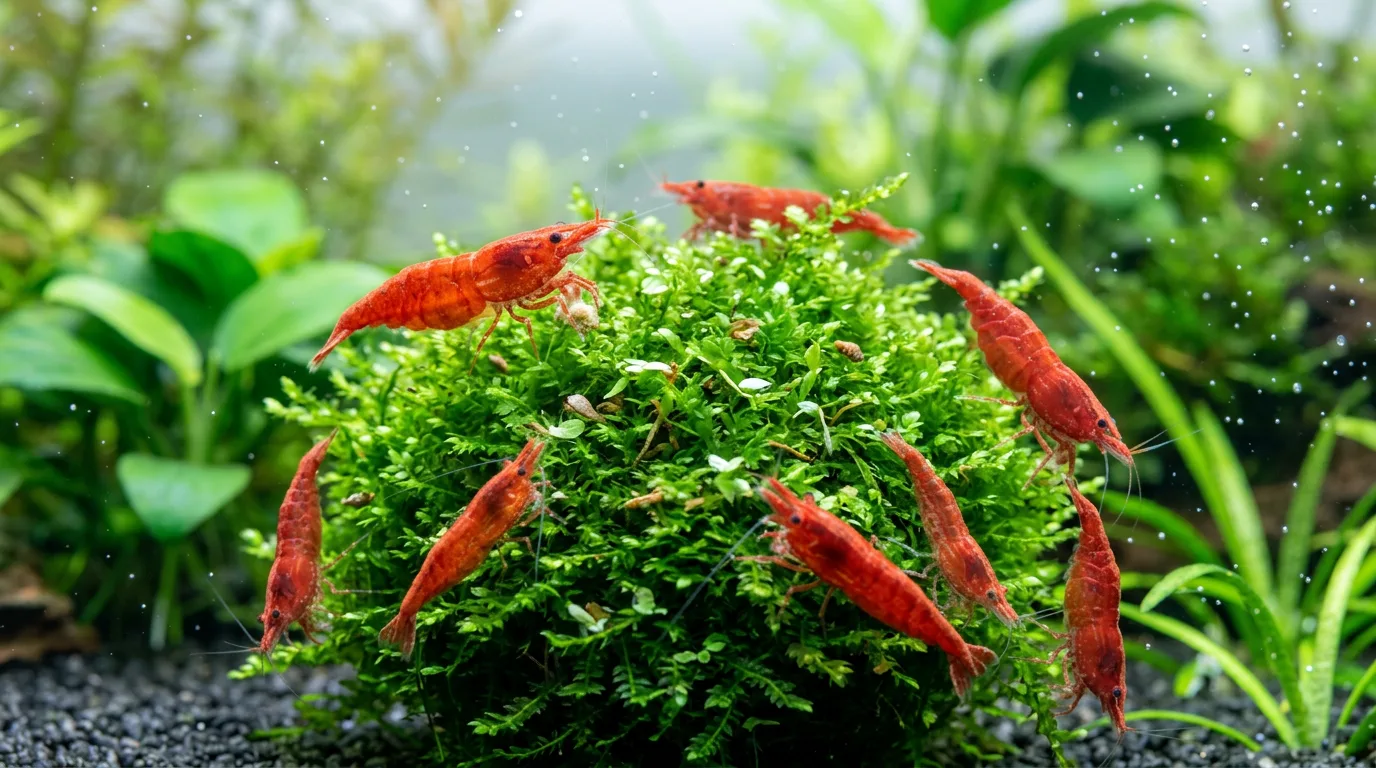
Fish eat in discrete meals; shrimp don’t really work that way. Dwarf shrimp spend most of their waking hours picking at biofilm, the thin bacterial and algal layer that coats driftwood, glass, and plant leaves in any established tank, and that grazing happens continuously rather than in response to a feeding event. Practical Fishkeeping’s coverage of shrimp diet and its own comparative shrimp food testing both make the same underlying point: a healthy, established tank already supplies a meaningful share of a shrimp’s daily nutrition before a keeper ever drops in a pellet, which is exactly why a colony can look “uninterested” in fresh food while every individual shrimp is visibly busy eating something.
This matters because it’s the single most common false alarm in the hobby. A shrimp with its mouthparts constantly moving over a leaf or a piece of wood is eating, even if it never approaches the sinking wafer you just added, and a tank with strong, mature biofilm can genuinely make deliberate feeding almost optional day to day, a theme covered in more depth in my shrimp feeding guide. Before assuming anything is wrong, watch the colony for a few minutes rather than just glancing at the pellet: if antennae and mouthparts are working over surfaces, movement is normal, and coloration and molting are on schedule, there usually isn’t a feeding problem at all, just a keeper checking the wrong signal.
Pre-molt appetite loss (completely normal, and temporary)
Every dwarf shrimp sheds its exoskeleton repeatedly throughout its life, and in the day or two leading up to a molt it’s extremely common for a shrimp to go still, retreat into cover, and stop feeding almost entirely. Threads on the Aquarium Co-Op forum on molting behavior describe this pattern over and over: a shrimp that was actively grazing suddenly goes quiet, sometimes looking slightly duller or more opaque as the new shell forms underneath the old one, then resumes normal feeding within hours of a successful molt. The full mechanics of what’s normal during this cycle, including what a stuck or failed molt actually looks like, are covered in my shrimp molting guide.
The practical takeaway is that a single shrimp skipping food for a day or two, especially if it’s hiding more than usual and otherwise looks fine, is rarely worth intervening over. What’s worth watching for is the empty shell afterward, a translucent, shrimp-shaped exoskeleton that confirms the appetite dip was pre-molt and not the start of something worse. If the shrimp reappears and starts eating again within a day of finding that shell, the appetite loss has already resolved itself.
Stress and poor water parameters
Appetite is one of the first things to go when water quality slips, often before any other visible symptom shows up. Aquariumbreeder.com’s rundown of shrimp stress signs lists reduced feeding alongside lethargy, hiding, faded color, and erratic swimming as an early cluster of warning signs, and in practice appetite loss is frequently the very first one a keeper notices, simply because it’s the easiest behavior to watch for. A shrimp under chemical stress is prioritizing basic survival over grazing, and the underlying cause is usually one of a handful of parameter problems rather than anything exotic.

- Ammonia or nitrite spike. Even a small detectable reading is enough to suppress feeding in shrimp well before it would bother most fish; test immediately if appetite drops across multiple shrimp at once rather than just one.
- A pH or hardness swing. Shrimp tolerate a wide range of parameters when they’re stable, but a fast drift, often from an overdue water change or a decaying piece of substrate, can shut down feeding activity within hours.
- Falling GH or KH. Soft, poorly mineralized water makes shrimp generally sluggish and can coincide with reduced grazing even outside of a molt, since mineral uptake and general metabolism are connected.
- Low dissolved oxygen. A tank that’s warm, overstocked, or under-filtered can run short on oxygen, and a shrimp conserving energy under those conditions will graze noticeably less.
The fix in every one of these cases is the same starting point: test the water rather than guess. My water parameters guide covers target ranges and how to correct drift safely, and a colony-wide appetite drop that lines up with a bad test result almost always resolves within a day or two of getting parameters back into range with a partial water change.
New-tank and acclimation stress
Shrimp that were recently moved, whether into a brand-new tank or transferred from a bag or bucket, commonly go off food for the first several days regardless of how carefully the move was handled. Guides on drip acclimation from The Shrimp Farm and from Buce Plant both stress that shrimp are considerably more sensitive than most fish to sudden shifts in temperature, pH, and hardness during transport, and that even a slow, correctly done drip acclimation still leaves shrimp in an adjustment period afterward. Discussion threads on the Aquarium Co-Op forum about acclimating Neocaridina specifically echo the same experience: new arrivals frequently hide and skip food for anywhere from a few days to over a week before settling in and resuming normal grazing.
A brand-new tank compounds this further, since it typically hasn’t built up the mature biofilm layer that established tanks rely on to keep shrimp fed between deliberate feedings. That combination, acclimation stress plus a thinner food base, is one of the more common reasons a newly stocked shrimp tank looks like it has a feeding problem when it’s really just early days. Light, infrequent feeding and patience during the first one to two weeks generally beats increasing food volume, which mostly just risks fouling water in a tank that hasn’t matured enough to buffer the mistake.
Overfeeding: when the tank already has plenty of food
There’s a specific, counterintuitive version of “my shrimp won’t eat” that comes from feeding too much rather than too little. Practical Fishkeeping’s own shrimp food coverage makes the point that shrimp need far less deliberate feeding than most keepers assume precisely because they graze constantly; a tank that’s already carrying leftover pellet fragments, decaying blanched vegetables, and a rich biofilm layer gives shrimp so much ambient food that a freshly added wafer has no urgency behind it. Shrimp aren’t ignoring the new food because something is wrong with them; they’re simply not hungry, because the last few feedings never actually got eaten and cleared.
This becomes a feedback loop if it’s misread. A keeper sees shrimp seemingly disinterested in a new pellet, assumes something is wrong, and adds more food to compensate, which only deepens the surplus and further reduces urgency around any single feeding. Meanwhile the excess organic matter is quietly degrading water quality, which can eventually cause the real appetite loss described in the stress section above. The fix is almost always to feed less, not more: remove uneaten food after a couple of hours, cut back to a genuinely small amount every one to two days, and judge success by whether food disappears within that window, not by whether shrimp swarm it instantly.
Illness and temperature: when appetite loss points to something else
Illness-related appetite loss is real but noticeably less common than the causes above, and it’s rarely the only symptom. ShrimpKeepers.com’s breakdown of warning signs and Aquariumbreeder.com’s stress-signal list both flag reduced feeding as meaningful mainly when it shows up alongside color loss, visible lethargy, isolation from the rest of the colony, or a shrimp that looks physically “off,” a cloudy patch on the shell, unusual white threads near the eyes, or labored movement. A single symptom on its own is weak evidence of illness; several together are worth acting on, usually by improving water quality first, since most shrimp ailments are secondary to stress rather than standalone infections. My guide to shrimp dying unexpectedly covers the broader set of health problems this can point to and how to tell them apart.
Temperature deserves its own mention because it’s easy to overlook. Shrimp, like all crustaceans, are ectotherms, and research into shrimp digestive physiology, including a study on digestive protease activity in whiteleg shrimp published in the aquaculture literature, has found that digestive enzyme activity and feeding drive measurably decline as water temperature drops. The Institute for Environmental Research and Education’s overview of temperature sensitivity in shrimp makes the same broader point about crustacean metabolism slowing directly with the surrounding water. In practice, a Neocaridina tank that’s drifted toward the bottom of its comfortable range, or a room that’s gotten noticeably colder without a heater to compensate, can produce shrimp that are alive, undamaged, and simply not hungry very often, a pattern that resolves on its own once the tank warms back into a normal range.
Troubleshooting decision flow
When appetite loss shows up, work through causes roughly in order of how common and how urgent they are, rather than jumping straight to worst-case assumptions. Start by checking whether it’s really appetite loss at all (is the colony grazing biofilm normally?), then look for an obvious pre-molt pattern, then test water, then consider recent tank history, feeding volume, and temperature. The table below maps each cause to what it typically looks like and what actually fixes it.
| Cause | Typical sign | What fixes it |
|---|---|---|
| Normal biofilm grazing | Shrimp ignore added pellets but are visibly picking at wood, glass, or plants | Nothing needed; feed lightly and let grazing continue |
| Pre-molt pause | One or two shrimp go still or hide for a day or two, then an empty shell appears | Wait it out; feeding resumes within hours of a successful molt |
| Poor water parameters | Multiple shrimp lose appetite together, often with lethargy or hiding | Test ammonia, nitrite, pH, GH/KH; correct with a partial water change |
| New-tank or acclimation stress | Recently added shrimp hide and skip food for several days to a week | Feed sparingly, avoid disturbing the tank, and give it one to two weeks to settle |
| Overfeeding surplus | Leftover food and debris are visible; new food is ignored but old food is stale, not gone | Remove uneaten food, cut feeding volume and frequency |
| Illness | Appetite loss plus color change, isolation, or visible physical symptoms | Improve water quality first; treat specific symptoms if they persist |
| Low temperature | Whole colony is sluggish and eats less at the cooler end of its range | Check the thermometer; add or adjust a heater to bring temperature back up |
If more than one of these lines up at once, which happens more often than not, address water quality and temperature first since both make every other cause worse, then reassess after a day or two rather than changing several variables simultaneously.
Frequently asked questions
Is it normal for shrimp to ignore pellets?
Yes, in most established tanks. Shrimp graze on biofilm and algae constantly, so a fresh pellet often isn’t urgent to them even when they’re perfectly healthy and actively eating something else.
How long can shrimp go without eating before it’s a problem?
A day or two of reduced feeding, especially in a single shrimp, is usually harmless and often tied to an upcoming molt. It’s worth investigating further when several shrimp lose their appetite at once or when reduced feeding continues for more than a few days alongside other unusual behavior.
Why do shrimp stop eating before molting?
In the day or two before shedding their exoskeleton, shrimp commonly go still, retreat into cover, and stop grazing almost entirely. This is a normal part of the molting cycle and typically resolves within hours of a successful molt.
Could my shrimp’s low appetite be from bad water parameters?
Yes, appetite loss is often one of the earliest visible signs of stress from ammonia, nitrite, or a fast pH or hardness swing. Testing the water is the fastest way to rule this in or out, since correcting parameters usually restores feeding within a day or two.
Should I feed more if my shrimp seem to be ignoring food?
Usually not. If shrimp are ignoring new food because leftover food and biofilm are already plentiful, adding more only increases the surplus and risks fouling the water. Removing uneaten food and cutting back on feeding volume is the more effective fix.
Do shrimp eat less in a cold tank?
Yes. Shrimp are ectotherms, so their metabolism and feeding drive slow down as water temperature drops. A tank running toward the cool end of a species’ comfortable range will typically show reduced grazing until temperatures come back up.
When should I worry that a shrimp not eating means illness?
Appetite loss on its own is weak evidence of illness. It becomes more concerning when it’s paired with color loss, isolation from the rest of the colony, or visible physical symptoms like a cloudy shell or unusual growths, in which case improving water quality first is the usual starting point.
For the broader picture of keeping a colony healthy in the first place, my shrimp tank setup guide covers the basics that prevent most of these problems before they start, and if appetite loss is part of a bigger pattern of losses rather than an isolated dip, my guide to why shrimp keep dying is worth reading alongside my water parameters guide and molting guide, with a look at what to feed and how often in my shrimp feeding guide. If appetite loss comes with other odd movements, my guide to shrimp behavior helps separate normal habits from real trouble, and my rundown of common shrimp diseases and how to treat them covers the illness angle in more depth.
References
- ShrimpKeepers: Shrimp Not Eating – Normal Behavior vs Warning Signs
- Shrimp and Snail Breeder: 8 Signs Your Shrimp Is Suffering From Stress
- Practical Fishkeeping: An Introduction to Shrimp
- The Shrimp Farm: Acclimating Shrimp – The Drip Acclimation Method
- ScienceDirect: Effects of Water Temperature on Digestive Protease Activity in Pacific Whiteleg Shrimp







Leave a Reply