Sleep & Wellness
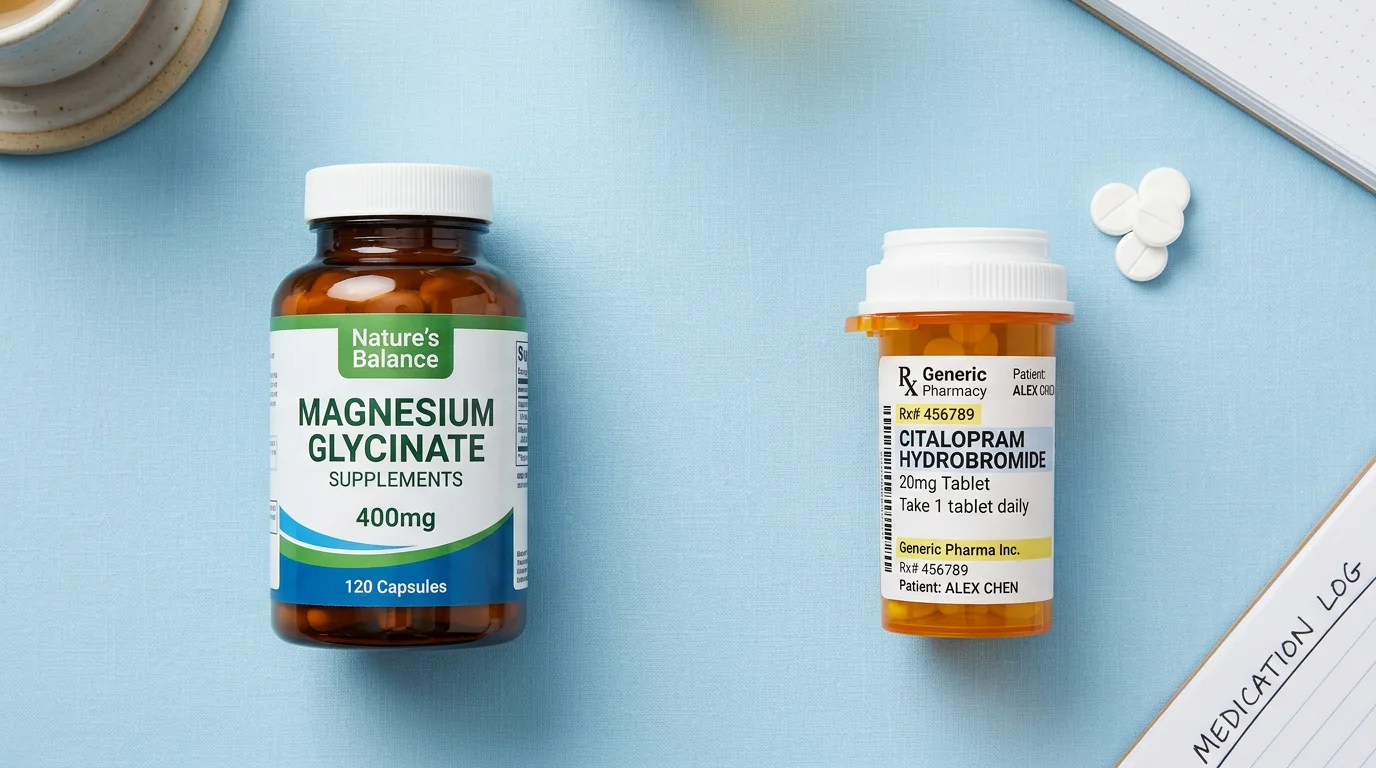
If you’ve searched “can I take magnesium glycinate with Paxil” or “what medication should not be mixed with magnesium glycinate,” you’re not alone, it’s one of the most common questions people taking an SSRI or other prescription medication have before adding a magnesium supplement to their nightly routine. The short version is reassuring for the specific question most people are asking: magnesium, including magnesium glycinate, is not known to have a dangerous direct interaction with paroxetine (Paxil) or most other SSRIs and antidepressants, based on what the major drug-interaction references currently show. But “no major known interaction with this one drug class” is not the same as “safe to combine with everything,” and magnesium does have several genuinely well-documented interactions with other common medication categories, antibiotics, osteoporosis drugs, diuretics, and in some cases blood pressure medication, that are worth understanding in detail. This guide walks through what real interaction-checking literature actually shows, drug class by drug class, and why a pharmacist or doctor should still have the final word for your specific situation.
Quick answer: can you take magnesium glycinate with antidepressants or other medications?
For SSRIs and most other antidepressants, including paroxetine (Paxil), sertraline (Zoloft), and similar drugs, standard interaction-checking databases do not list a major or well-documented direct interaction with magnesium or magnesium glycinate specifically. That is a meaningfully different statement from “guaranteed safe for everyone,” since interaction checkers compare drug classes against each other and can’t account for your specific dose, kidney function, other medications, or health history. Where magnesium does have real, well-documented interactions is with certain antibiotics (tetracyclines and fluoroquinolones), bisphosphonates used for osteoporosis, and diuretics, all through mechanisms that are well understood and have been studied directly, plus a more modest, less consistently documented consideration with some blood pressure medications. The practical takeaway: a lack of a known interaction with your antidepressant is good general news, but it doesn’t replace having your full medication list checked by a pharmacist, especially if you take more than one prescription medication.
This article is general education, not a personalized interaction check. It cannot account for your specific medications, doses, kidney or liver function, or other health conditions, a pharmacist or doctor is the only one who can give you an individualized answer, and you should talk to one before starting magnesium glycinate if you take any prescription medication regularly.
Can you take magnesium glycinate with Paxil or other antidepressants?
Paroxetine (brand name Paxil) is an SSRI, a class of antidepressants that work primarily by increasing serotonin availability in the brain. When we checked a drug-interaction reference that cross-references documented interaction classes between magnesium and paroxetine specifically, the result was “no known interaction,” the two substances don’t share an overlapping mechanism, like competing for the same absorption pathway or both significantly affecting the same organ system, that would produce the kind of interaction interaction checkers are built to flag. A separate check between magnesium glycinate and sertraline, another widely used SSRI, returned the same result: no interaction found in that database.

It’s worth being precise about what that absence of a listed interaction does and doesn’t mean. Interaction databases are built from documented pharmacological mechanisms and reported case data; “no known interaction” means no such mechanism or pattern has been identified and logged, not that a clinical trial specifically tested magnesium glycinate alongside paroxetine and confirmed safety in a controlled study. For most people on a standard SSRI dose with no kidney or other complicating condition, this is reassuring information. It is not, however, a substitute for telling your prescribing doctor or pharmacist that you’re adding a magnesium supplement, since they can also check for interactions with any other medications you’re taking that a general search wouldn’t catch, and factor in things like your kidney function, which affects how your body clears magnesium.
One practical note: because magnesium has a calming, GABA-related mechanism and some SSRIs can cause drowsiness or fatigue as a side effect in some people, it’s reasonable to pay attention to how you feel when starting magnesium alongside an antidepressant, not because of a documented drug interaction, but simply because two substances that can each independently affect energy or alertness are being introduced around the same time. If you notice unusual drowsiness, dizziness, or other new symptoms, that’s worth mentioning to your doctor regardless of whether it traces back to a specific, named interaction.
Why “no major interaction” still isn’t the same as a personal green light
It’s tempting to read “no known interaction” as a full clearance, but drug-interaction checkers work by comparing categories, not people. They can tell you whether paroxetine and magnesium belong to drug classes with a documented history of interacting; they can’t tell you whether your specific combination of medications, your kidney function, your dose, or an unrelated health condition changes the picture for you individually. This is exactly the gap a pharmacist or doctor is positioned to close, and it’s the reason every section below still ends with the same recommendation: check with a professional who can see your full medication list, not just the one interaction you searched for.
Antibiotics: the best-documented magnesium interaction
If there’s one magnesium interaction that is genuinely well-established, extensively documented, and consistent across pharmacology references, it’s the one with certain antibiotic classes. According to the National Institutes of Health Office of Dietary Supplements, magnesium can form insoluble complexes in the digestive tract with tetracycline-class antibiotics (such as doxycycline and demeclocycline) and fluoroquinolone-class antibiotics (such as ciprofloxacin and levofloxacin). This binding reduces how much of the antibiotic actually gets absorbed into the bloodstream, which can mean the antibiotic doesn’t reach an effective concentration to treat the infection it was prescribed for.
Drugs.com’s interaction checker rates the doxycycline-magnesium glycinate combination and the ciprofloxacin-magnesium glycinate combination as moderate interactions for exactly this reason, reduced antibiotic absorption and effectiveness, not a safety risk to the person taking them, but a reason the antibiotic might not work as intended. The standard guidance for ciprofloxacin specifically is to avoid taking it at the same time as magnesium, generally separating the two by several hours, commonly ciprofloxacin two to four hours before or four to six hours after a magnesium dose, though your pharmacist can confirm the exact spacing for your specific antibiotic and prescription. For doxycycline, similar spacing of roughly two hours before to four to six hours after is the typical pattern cited.
The practical rule of thumb: if you’re prescribed a tetracycline or fluoroquinolone antibiotic while you’re already taking magnesium glycinate, ask your pharmacist for the exact timing to use for that specific drug rather than guessing, since the spacing window can vary somewhat by medication, and getting it wrong risks undertreating the infection you’re taking the antibiotic for in the first place.
Bisphosphonates (osteoporosis medications)
Bisphosphonates like alendronate (Fosamax) and ibandronate are commonly prescribed for osteoporosis and low bone density, and they share the same basic absorption problem as the antibiotics above: magnesium, along with calcium, aluminum, and iron, can interfere with how well these medications are absorbed into the bloodstream. Drugs.com’s interaction checker rates the alendronate-magnesium glycinate pairing as a moderate interaction for this reason, with guidance to take magnesium glycinate at least 30 minutes after the bisphosphonate dose, reflecting the already-strict dosing instructions that come with most bisphosphonates, which typically need to be taken on an empty stomach with plain water and followed by a wait before eating or taking anything else.
If you’re on a bisphosphonate for osteoporosis, this is a case where the existing medication instructions (empty stomach, specific wait time before food or other supplements) already build in most of the separation needed; the main thing to watch is not taking your magnesium dose too close to the bisphosphonate dose, and your pharmacist can confirm exact timing based on which specific bisphosphonate and dosing schedule (daily, weekly, or monthly) you’ve been prescribed.
Diuretics: a two-way, dose-dependent relationship
Diuretics (sometimes called water pills) have a genuinely well-documented but two-directional relationship with magnesium, and which direction matters depends on which type of diuretic is involved. According to the NIH Office of Dietary Supplements, loop diuretics (such as furosemide) and thiazide diuretics (such as hydrochlorothiazide) increase urinary magnesium excretion and can contribute to magnesium depletion over time, particularly with long-term use. Potassium-sparing diuretics (such as spironolactone or amiloride) work in the opposite direction, reducing magnesium excretion and, in combination with magnesium supplementation, potentially raising magnesium levels more than expected.
Neither direction is automatically dangerous at typical doses for someone with normal kidney function, but both are reasons this particular combination deserves a conversation with your prescriber rather than independent guesswork. Someone on a long-term loop or thiazide diuretic may actually be a candidate for magnesium supplementation under medical supervision if blood testing shows depletion, while someone on a potassium-sparing diuretic should be more cautious about adding a magnesium supplement without checking in first, since the combination could push magnesium levels higher than intended, a concern that becomes more significant if kidney function is also reduced.
Blood pressure medications
This is an area where it’s important to be honest about the limits of the evidence rather than overstate a risk. When we checked a standard interaction database for a common blood pressure medication (amlodipine) paired with magnesium glycinate, no direct interaction was listed. Magnesium does have a mild, generally modest blood-pressure-lowering effect of its own in some research, particularly at higher intakes or with intravenous administration in clinical settings, which is a different context from a typical oral magnesium glycinate supplement dose. For most people taking a standard blood pressure medication at a standard magnesium glycinate dose, the available interaction-checking data doesn’t point to a significant concern, but anyone managing blood pressure with medication, especially if it runs on the lower side, is a reasonable candidate for checking in with their doctor before adding any supplement that could have even a mild additive effect, simply because the margin for low blood pressure symptoms (lightheadedness, dizziness) is more individual than a database can capture.
Muscle relaxants and other CNS-related considerations
Standard interaction checkers did not return a flagged interaction between magnesium glycinate and common muscle relaxants like cyclobenzaprine in our check, and magnesium is not classified as a sedative. That said, magnesium’s role in nervous system regulation means some people report a mild calming or relaxing effect, and muscle relaxants, as well as other central-nervous-system-depressant medications like certain anti-anxiety drugs or sleep medications, can cause drowsiness on their own. This is a case where the honest answer is that the direct-interaction evidence is thin rather than clearly documented in either direction, so the most useful guidance is general caution: if you’re combining magnesium with a muscle relaxant, a benzodiazepine, or another sedating medication, pay attention to how drowsy or dizzy you feel, especially when starting or adjusting doses, and mention the combination to your doctor or pharmacist rather than assuming it’s automatically fine or automatically risky.
Why “natural” doesn’t mean risk-free or interaction-free
As our companion guide on sleep supplements more broadly explains, dietary supplements in the U.S., magnesium included, are regulated as a category of food rather than as drugs, which means they don’t go through the same premarket safety and interaction testing that prescription medications do. Magnesium has a long track record and a generally favorable safety profile at typical supplemental doses, but “natural” and “sold without a prescription” both describe regulatory categories, not guarantees about how a substance will behave alongside every medication a given person might be taking. That gap is exactly why interaction checking matters more, not less, for supplements: no one is required to have already checked it for you the way a pharmacist checks a new prescription against your existing medication list at the counter.
A summary of what the evidence shows
| Medication/class | Documented interaction | Typical guidance |
|---|---|---|
| SSRIs/antidepressants (paroxetine, sertraline, etc.) | No major known direct interaction | Still inform your doctor/pharmacist; watch for added drowsiness |
| Tetracycline antibiotics (doxycycline) | Well-documented, moderate | Space roughly 2 hrs before to 4-6 hrs after |
| Fluoroquinolone antibiotics (ciprofloxacin, levofloxacin) | Well-documented, moderate | Do not take at the same time; space by several hours |
| Bisphosphonates (alendronate) | Well-documented, moderate | Take magnesium at least 30 min after; follow existing bisphosphonate instructions |
| Loop/thiazide diuretics | Documented; can deplete magnesium | Discuss with prescriber; may need monitoring, not avoidance |
| Potassium-sparing diuretics | Documented; can raise magnesium retention | Check with prescriber before supplementing |
| Blood pressure medications | Limited/mild; not flagged in standard checkers | Mention to doctor, especially if BP runs low |
| Muscle relaxants/other sedating medications | Not clearly documented | Watch for added drowsiness; mention the combination |
Practical guidance for checking your own medications

- Tell your doctor and pharmacist about every supplement you take, not just prescription medications, magnesium included, even though it’s sold over the counter.
- Use a pharmacist-run or professional-grade interaction checker, or better, ask your actual pharmacist, rather than relying solely on a general web search for your specific combination.
- Don’t stop or adjust a prescribed medication on your own because of a supplement concern you’ve read about; talk to the prescriber first.
- If you’re starting an antibiotic or a bisphosphonate while already taking magnesium, ask specifically about timing/spacing rather than assuming it’s fine to take them together.
- Mention any new symptoms, drowsiness, dizziness, changes in how a medication seems to be working, to your doctor, even if you’re not sure they’re related to the magnesium.
- If you have reduced kidney function, flag this specifically when asking about magnesium supplementation, since the kidneys are what clear excess magnesium and reduced function changes the risk calculation significantly.
A reminder before the FAQ: this guide is general education based on published interaction-checking literature, not a personalized interaction check. It cannot know your full medication list, your doses, your kidney or liver function, or your other health conditions, all of which can change whether a given combination is appropriate for you. A doctor or pharmacist who can see your complete picture is the only one who can make that individualized assessment, and you should not treat this article as a substitute for that conversation.
Frequently asked questions
Can I take magnesium glycinate with Paxil or other antidepressants?
Standard drug-interaction references don’t list a major known direct interaction between magnesium or magnesium glycinate and paroxetine (Paxil) or most other SSRIs. This is generally reassuring, but it reflects an absence of a documented interaction mechanism, not a personalized safety clearance, so it’s still worth telling your prescribing doctor or pharmacist that you’re taking or starting magnesium, especially if you take other medications too.
What medications should not be mixed with magnesium glycinate?
The best-documented concerns involve timing rather than outright avoidance: certain antibiotics (tetracyclines like doxycycline and fluoroquinolones like ciprofloxacin) and bisphosphonates (like alendronate) can have reduced absorption if taken too close in time to magnesium. Diuretics can also interact in a dose-dependent way, loop and thiazide diuretics can increase magnesium loss, while potassium-sparing diuretics can increase retention. None of these are reasons to avoid magnesium outright for most people, but they are reasons to check timing and dosing with a pharmacist.
Does magnesium interfere with antibiotics?
Yes, with two specific antibiotic classes: tetracyclines (such as doxycycline) and fluoroquinolones (such as ciprofloxacin and levofloxacin). Magnesium can bind to these antibiotics in the digestive tract and reduce how much gets absorbed, potentially making the antibiotic less effective against the infection it was prescribed for. The usual guidance is to separate the two doses by several hours rather than avoid magnesium altogether, but a pharmacist should confirm the exact timing for your specific antibiotic.
Can I take magnesium with blood pressure medication?
Standard interaction checkers generally do not flag a major interaction between typical blood pressure medications and magnesium glycinate at usual supplemental doses. Magnesium does have a mild blood-pressure-lowering effect of its own in some research, so an additive effect is biologically plausible, particularly for someone whose blood pressure already runs low, which is a reasonable thing to mention to your doctor before starting, rather than a well-established danger.
Does magnesium affect how well other supplements are absorbed?
It can, particularly with other minerals. Magnesium competes with calcium, zinc, and iron for absorption to some degree when taken in large amounts at the same time, which is why some people choose to space mineral supplements apart rather than taking them all together. This is more of an absorption-efficiency consideration than a safety concern for most healthy adults, but if you’re taking several mineral supplements, spacing them by a couple of hours can help each one absorb more effectively.
Should I tell my doctor if I’m taking magnesium glycinate?
Yes. Even though magnesium glycinate is available without a prescription, it’s a real supplement with real documented interactions with several medication classes, and your doctor or pharmacist can only check your full medication list for conflicts if they know everything you’re actually taking, supplements included. This is especially important if you have kidney disease, take diuretics, antibiotics, or osteoporosis medication, or take multiple prescription medications at once.
Can magnesium glycinate be taken with osteoporosis medication?
It can, but timing matters. Bisphosphonates like alendronate (Fosamax) can have reduced absorption if taken too close to magnesium, so the general guidance is to take magnesium glycinate at least 30 minutes after a bisphosphonate dose, on top of the already-strict instructions most bisphosphonates come with (empty stomach, plain water, a wait before eating). A pharmacist can confirm the right spacing for your specific osteoporosis medication and dosing schedule.
Is it safe to combine magnesium glycinate with other sleep supplements?
Many commercial sleep products already combine magnesium with ingredients like L-theanine or melatonin, and there’s no strong evidence that reasonable doses of these particular combinations are dangerous for most healthy adults, a point our sleep supplements evidence review covers in more depth. Combining supplements does increase the total number of interactions to consider and makes it harder to tell which ingredient is actually helping, which is a good reason to mention the full combination to a doctor or pharmacist, particularly if you also take prescription medication.
How long should I space magnesium apart from antibiotics?
For fluoroquinolone antibiotics like ciprofloxacin, common guidance is to take the antibiotic two to four hours before, or four to six hours after, a magnesium dose, and to avoid taking them at the same time. For tetracyclines like doxycycline, a similar window, roughly two hours before to four to six hours after, is typically cited. Exact timing can vary by specific drug and formulation, so confirm the precise spacing with your pharmacist when you’re prescribed the antibiotic.
Does kidney function affect magnesium drug interactions?
Yes, significantly. The kidneys are responsible for clearing excess magnesium from the body, so impaired kidney function changes both how magnesium interacts with other medications (including diuretics) and the risk of magnesium building up to unsafe levels in the first place. If you have any degree of kidney disease, this is one of the most important things to flag specifically when discussing magnesium supplementation with your doctor, regardless of which other medications you take.
Where can I check for interactions with my specific medications?
Your pharmacist is the most reliable resource, since they can see your full medication list and ask follow-up questions a static tool can’t. Reputable online interaction checkers (such as the one offered by Drugs.com) are useful for a general first look and are the kind of reference this article draws on, but they work by comparing drug classes, not your individual health picture, so they’re a starting point for a conversation with a professional rather than a final answer.
As with every article in this guide, this is educational content, not a personalized medical or pharmacological assessment. If you take prescription medication, especially an antidepressant, antibiotic, diuretic, osteoporosis medication, or blood pressure medication, talk to your doctor or pharmacist before starting magnesium glycinate, and before stopping or changing anything you’ve already been prescribed.
References
- National Institutes of Health, Office of Dietary Supplements – Magnesium: Fact Sheet for Health Professionals
- Drugs.com – Doxycycline and Magnesium Glycinate Drug Interactions
- Drugs.com – Ciprofloxacin and Magnesium Glycinate Drug Interactions
- Drugs.com – Alendronate and Magnesium Glycinate Drug Interactions
- Drugs.com – Magnesium Glycinate and Sertraline Drug Interactions
- HelloPharmacist – Magnesium and Paroxetine Interaction Details
- Drugs.com – Amlodipine and Magnesium Glycinate Drug Interactions
Related Guides
- Sleep Supplements: Do They Actually Work?
- What Drinks Help You Sleep Better? (And What to Avoid Before Bed)
- Magnesium Glycinate for Sleep: Does It Actually Work?
- Magnesium Glycinate Side Effects: What to Know Before Taking It for Sleep
- Magnesium Glycinate vs. Citrate, Threonate, and Other Forms: Which Is Best for Sleep?
- How Much Magnesium Glycinate Should You Take for Sleep? Dosage and Timing Guide
- Who Should Not Take Magnesium Glycinate for Sleep? Health Conditions and Contraindications
- Is Magnesium Glycinate Safe During Pregnancy, Breastfeeding, and for Children’s Sleep? A Life-Stages Guide
- Magnesium Glycinate for Sleep and Anxiety: What the Research Actually Shows
- Magnesium Glycinate vs. Melatonin for Sleep: Which Should You Take?






Leave a Reply