Pets & Animal Health
Your dog just let one rip under the dinner table, and everyone at the table knows it. Meanwhile your cat has been curled up on the couch all evening, seemingly immune to the entire concept. It’s a fair question: do cats even fart? And if dogs and cats are both mammals with a gut full of bacteria, why does one seem to announce it to the whole house while the other never seems to make a peep? The truth is that both species absolutely pass gas, it’s a normal, unavoidable part of having a digestive system, but the frequency, volume, and smell can look very different between a cat and a dog, and between two individual pets of the same species. Here’s what’s actually happening inside your pet’s gut, why dogs tend to be the noisier (and smellier) offenders, and when gas stops being funny and starts being a reason to call the vet.
Quick answer
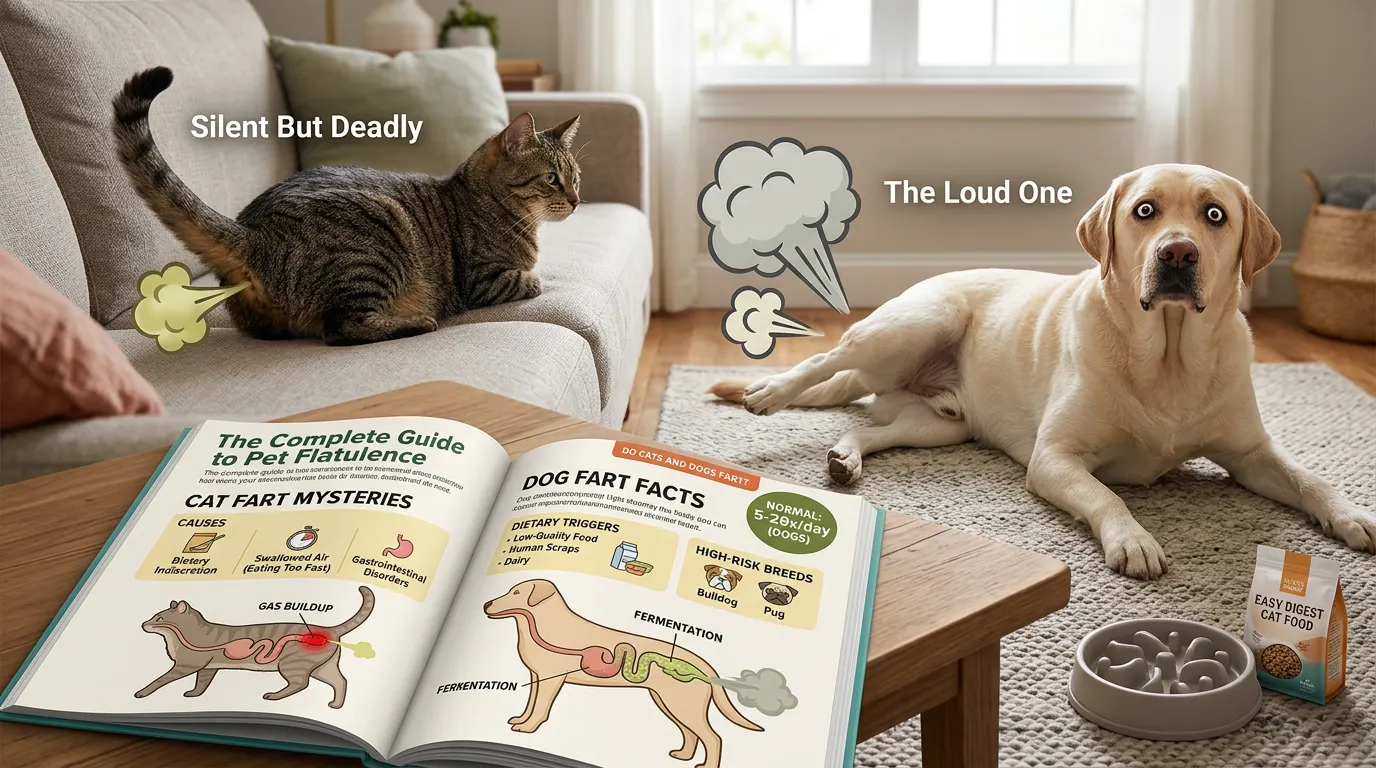
Yes, both cats and dogs fart. Flatulence is a normal byproduct of digestion in every mammal: gut bacteria ferment food in the intestines and release gas, and animals also swallow air while eating and breathing, both of which eventually need to escape. Dogs tend to fart more often and more audibly than cats, mostly because they’re more likely to gulp their food and air, eat a wider variety of table scraps and low-quality ingredients, and are, on average, less fastidious eaters. Cats fart far less frequently and their gas is almost always silent and odorless enough that owners rarely notice it at all — which is why frequent, noticeable cat flatulence is actually more likely to signal an underlying issue than the same amount of gas would in a dog. For the deeper chemistry of what actually makes gas smell the way it does, see the complete science of why farts smell, which applies to pets and people alike.
Yes, cats and dogs fart: the digestive science behind it
Flatulence works essentially the same way in cats, dogs, and humans. Gas in the digestive tract comes from two main sources: air that gets swallowed while eating, drinking, or panting, and gas produced when bacteria in the large intestine ferment food particles that weren’t fully broken down earlier in digestion. According to VCA Animal Hospitals, swallowed air is actually the single biggest contributor to gas in dogs, with bacterial fermentation of carbohydrates and fiber in the colon adding the rest. That fermentation process releases a mix of gases, mostly odorless nitrogen, oxygen, carbon dioxide, hydrogen, and methane, plus small amounts of sulfur-containing compounds that create the smell. It’s the same basic mechanism behind human gas, just running inside a different-shaped gut.
Cats and dogs aren’t identical here, though. Dogs are opportunistic, fast eaters by nature, descended from animals that competed for food, which means many of them gulp large mouthfuls of air along with their meals. Cats are more likely to nibble smaller portions slowly and chew more thoroughly, so they typically swallow less air to begin with. Their digestive tracts are also shorter relative to body size and process food a bit differently, meaning there’s generally less material left over for colon bacteria to ferment into gas. None of this means a cat’s gut bacteria are fundamentally different from a dog’s; both rely on similar bacterial fermentation to finish digesting fiber and resistant starches, it just means the conditions that produce a lot of gas come up less often in an average cat’s day.
Why you almost never hear a cat fart (but always hear a dog’s)
If cats fart, why does it feel like you’ve never actually witnessed it? According to PetMD, flatulence in cats is real but “not very common,” and when it happens it’s typically quiet and nearly odorless, easy to miss entirely unless you happen to be right next to your cat at the moment it happens. Dogs, by contrast, tend to produce gas more frequently, in higher volumes, and with a stronger smell, largely because of what and how they eat. The table below breaks down the main differences between typical gas patterns in cats versus dogs.
| Factor | Cats | Dogs |
|---|---|---|
| How often they fart | Uncommon; many owners never notice it | Regularly; considered normal in small amounts daily |
| Typical volume | Low | Low to moderate, higher after diet changes or scraps |
| Typical noise level | Almost always silent | Can be silent or audible depending on volume and speed |
| Typical smell | Usually faint to unnoticeable | Can range from mild to very strong |
| Main gas source | Mostly bacterial fermentation of food and fiber | Mostly swallowed air, plus bacterial fermentation |
| When it’s a red flag | Any sudden increase in frequency or smell | Sudden onset, or gas paired with vomiting, diarrhea, or weight loss |
What causes excessive gas in dogs?
A dog letting out the occasional fart is completely normal and nothing to worry about. Excessive, frequent, or especially foul gas, though, usually traces back to one or more identifiable causes. Veterinary sources point to the following as the most common culprits.

- Low-quality or hard-to-digest food. According to the American Kennel Club, inferior-quality dog foods often contain excess fat and poorly digestible fillers, which ferment in the colon and produce more gas than a highly digestible diet would.
- Sudden food changes. Switching foods abruptly doesn’t give the gut microbiome time to adjust, which commonly triggers a temporary spike in gas; vets generally recommend transitioning to a new food gradually over about a week.
- Table scraps and fatty foods. High-fat table scraps and rich human food are harder for a dog’s system to break down efficiently and are a frequent trigger for gas and stomach upset, per PetMD.
- Dairy and lactose intolerance. Most adult dogs have limited ability to digest lactose, so dairy products like milk, cheese, or ice cream commonly lead to gas and loose stools, according to PetMD.
- Gulping food or air. Fast eaters, dogs that compete with other pets at mealtime, and dogs that pant heavily swallow more air, which has to come back out one way or another, per VCA Animal Hospitals.
- High-fiber or gas-producing ingredients. Beans, soy, peas, and certain vegetables like broccoli, cabbage, and Brussels sprouts are more fermentable and can increase gas volume, even in dogs without any underlying condition.
- Food intolerances and allergies. A dog reacting to a specific protein or ingredient may show gas as one of several digestive symptoms, alongside itching, loose stool, or vomiting.
- Underlying GI conditions. Less commonly, persistent excessive gas can be linked to conditions such as inflammatory bowel disease, intestinal parasites, pancreatitis, or bacterial overgrowth, according to PetMD, which is why gas that doesn’t improve with simple diet changes is worth a vet visit.
Do certain dog breeds fart more?
Anecdotally, and among many veterinarians and dog owners, flat-faced (brachycephalic) breeds such as Bulldogs, Pugs, Boston Terriers, and Boxers have a reputation as some of the gassiest dogs around. The most likely explanation is mechanical rather than digestive: their shortened muzzles and airway shape make it easier to gulp air while eating, drinking, and breathing, and that extra swallowed air has to be released somehow, often as gas. VCA Animal Hospitals notes that brachycephalic airway anatomy is linked to a range of gastrointestinal effects, including reflux and digestive distress in more severely affected dogs. Large, deep-chested breeds that tend to eat quickly, and any dog that’s a fast or competitive eater regardless of breed, are also more likely to swallow excess air. None of this means a gassy Bulldog has a medical problem by default; it simply means some dogs are mechanically more prone to swallowing air in the first place, and the diet and feeding adjustments described later in this guide tend to help them the most.
What causes gas in cats?
Because cats fart far less often than dogs to begin with, noticeable or frequent gas in a cat is more often a sign that something specific is going on, rather than just normal digestive background noise. Common causes include:

- Diet changes. PetMD points to sudden food transitions as one of the most common triggers of cat flatulence; a gradual, 7- to 10-day transition between foods gives the gut bacteria time to adjust and typically prevents the gas spike.
- Hairballs and fiber buildup. Cats swallow a surprising amount of hair while grooming. The Cornell Feline Health Center notes that most swallowed hair passes through the digestive tract normally, but the fermentation of hair and fiber residue in the gut can contribute to gas and digestive upset in some cats, in addition to the more familiar risk of hairballs and, rarely, blockages.
- Food intolerances or allergies. Cats can develop sensitivities to specific proteins or ingredients, which may show up as gas alongside vomiting, loose stool, or itchy skin.
- Low-quality or high-carbohydrate food. Cats are obligate carnivores with digestive systems built around high protein content; diets heavy in fillers or carbohydrates can be harder for some cats to process efficiently, contributing to gas.
- Bacterial or parasitic infections. Intestinal parasites and bacterial or viral infections are recognized causes of new or increased flatulence in cats, according to PetMD, and are part of why sudden changes in gas are worth mentioning to a vet.
- Inflammatory bowel disease (IBD). Less commonly, chronic gas in cats can be associated with IBD or other malabsorption issues, particularly when it’s paired with weight loss, vomiting, or changes in appetite.
When pet flatulence is normal vs. when to see a vet
A little gas now and then is a completely normal part of being a dog or a cat, and in most cases it isn’t worth a special trip to the vet on its own. What matters is the pattern: sudden onset, a sharp increase in frequency, or gas that shows up alongside other symptoms.
VCA Animal Hospitals advises contacting a veterinarian if a dog’s excessive gas is accompanied by weight loss or diarrhea, since this combination can point to a more serious underlying gastrointestinal condition rather than a simple dietary issue. PetMD gives similar guidance for both species: gas paired with vomiting, diarrhea, weight loss, lethargy, decreased appetite, or blood in the stool warrants a veterinary evaluation rather than a wait-and-see approach. In cats specifically, PetMD notes that any new or noticeably increased flatulence deserves a vet visit given how uncommon frequent gas is in a healthy cat to begin with, especially when it comes with drooling or appetite changes. None of this is meant to diagnose your individual pet; a vet exam, and sometimes bloodwork, fecal testing, or imaging, is the only reliable way to identify what’s actually going on when gas is more than an occasional, harmless annoyance.
How to reduce gas in dogs and cats: practical tips
For pets whose gas is diet- or habit-related rather than a sign of underlying illness, a handful of well-supported adjustments tend to make a real difference.
- Transition foods gradually. Mix a small amount of new food into the old food and increase the ratio over about a week (7 to 10 days for cats) instead of switching all at once, giving the gut microbiome time to adapt.
- Choose a high-quality, digestible diet. A diet lower in fat and free of poorly digestible fillers reduces the amount of material left for colon bacteria to ferment, which directly reduces gas volume.
- Use a slow-feeder bowl. Both VCA and PetMD recommend slow-feed bowls or puzzle feeders for dogs that gulp their food, since slowing down the meal reduces how much air gets swallowed along with it.
- Feed smaller, more frequent meals. Splitting daily food into two or three smaller meals instead of one large one reduces the load on the digestive system at any one time and can ease gas in both cats and dogs.
- Cut out table scraps and fatty extras. Rich human food and dairy are two of the most common preventable triggers; keeping pets off table scraps removes a big chunk of unnecessary gas-causing material.
- Feed pets separately if they compete for food. In multi-pet households, mealtime competition often causes rushed, air-swallowing eating; separating pets at feeding time can slow everyone down.
- Encourage regular brushing for cats. Since swallowed hair is a contributor to gas and hairballs in cats, regular brushing reduces how much hair they ingest while grooming themselves.
- Ask your vet about probiotics. Veterinary-formulated probiotic supplements are sometimes recommended to help rebalance gut bacteria in gassy pets, though the right strain and dose should be discussed with a vet rather than guessed at.
- Keep exercise consistent. Regular activity supports normal gut motility in dogs, which can help gas move through and be expelled normally rather than building up.
This article is for general information only and is not a substitute for veterinary advice. If your cat or dog has sudden, severe, or persistent gas, especially alongside vomiting, diarrhea, lethargy, weight loss, or blood in the stool, contact your veterinarian to identify the underlying cause.
Frequently asked questions
Do cats fart?
Yes, cats do fart, but it’s uncommon and usually silent and odorless enough that most owners never notice. Frequent or noticeably smelly gas in a cat is unusual and is generally worth mentioning to a vet.
Can dogs fart?
Yes, dogs fart regularly as a normal part of digestion. A small amount of daily gas is expected and generally nothing to worry about in an otherwise healthy dog.
Why does my dog fart so much?
Excessive dog gas is usually caused by diet, such as low-quality food, sudden food changes, table scraps, fatty foods, or dairy, or by swallowing too much air while eating quickly. Less commonly, it can be linked to a food intolerance or an underlying digestive condition.
Why do my dog’s farts smell so bad?
Strong-smelling dog farts usually come down to diet: high-fat foods, dairy in a lactose-intolerant dog, or sulfur-rich ingredients give gut bacteria more material to ferment into odorous gases. Persistent, very foul gas can also signal a food intolerance or GI issue worth discussing with a vet.
Is it normal for cats to fart?
Occasional gas is normal in cats, but it’s much less common and less noticeable than in dogs. Because it’s so rare to begin with, a sudden increase in a cat’s flatulence is more likely to be meaningful and worth a vet visit.
What foods cause gas in dogs?
Common triggers include dairy products, fatty table scraps, beans, soy, peas, and cruciferous vegetables like broccoli or cabbage, along with any sudden switch to a new food. Low-quality diets with poorly digestible fillers also tend to produce more gas.
When should I worry about my pet’s gas?
Worry less about occasional gas and more about sudden changes: a sharp increase in frequency or smell, or gas accompanied by vomiting, diarrhea, lethargy, weight loss, decreased appetite, or blood in the stool. Any of these combinations warrants a veterinary evaluation.
Can cats get gas from food allergies?
Yes, a food intolerance or allergy is one recognized cause of flatulence in cats, and it often shows up alongside other signs like vomiting, loose stool, or skin irritation. A vet can help identify the specific trigger through diet trials or testing.
Do certain dog breeds fart more?
Brachycephalic (flat-faced) breeds like Bulldogs, Pugs, and Boston Terriers have a reputation for excess gas, likely because their airway shape makes it easier to swallow air while eating and breathing. Fast or competitive eaters of any breed are also more prone to it.
Can probiotics help my pet’s gas?
Veterinary-formulated probiotics are sometimes used to help support gut bacteria balance in gassy pets, and many vets recommend them as part of a broader plan. It’s best to ask your vet which strain and dosage makes sense for your specific pet rather than choosing one on your own.
Why does my dog keep farting even after a diet change?
If gas continues after switching to a more digestible food, the transition may need more time (gradual changes over a week tend to work best), or another factor like fast eating, table scraps, or an underlying GI issue may still be contributing. Persistent gas despite diet changes is worth discussing with a vet.
Is dog and cat flatulence the same as human flatulence?
The underlying mechanism is very similar: swallowed air plus gas from bacterial fermentation in the gut, including small amounts of sulfur compounds that create odor. You can read the full chemistry behind why that smell happens in Why Do Farts Smell? The Complete Science of Flatulence Odor.
This article is for general information only, not veterinary advice. If your pet has persistent or severe symptoms, consult a veterinarian.
References
- VCA Animal Hospitals – Dogs and Gas
- VCA Animal Hospitals – Brachycephalic Airway Syndrome in Dogs
- American Kennel Club – Why Does My Dog Fart So Much? Causes, Treatments, and Ways to Reduce Gas
- PetMD – Dog Farts: Causes, Treatment, and How To Prevent Gas
- PetMD – Do Cats Fart?
- Cornell Feline Health Center – A Hairy Dilemma (Hairballs in Cats)
Related Guides






Leave a Reply