Health & Wellness
You already know the feeling: a fart slips out, and within a second or two you’re wondering whether you should evacuate the room. What’s strange is how unpredictable it is, some farts vanish without anyone noticing, while others seem to have the destructive power of a chemical weapon. The volume of gas has almost nothing to do with it. The real story is happening at a molecular level, inside your gut, long before that gas ever reaches daylight. Here’s the actual science of why farts smell, why some smell dramatically worse than others, and what (if anything) the smell is trying to tell you.
Quick answer
Farts smell because of trace amounts of sulfur-containing gases, mainly hydrogen sulfide, produced when bacteria in your large intestine ferment undigested food, especially proteins and carbohydrates rich in sulfur. Over 99% of the gas in a typical fart (nitrogen, oxygen, carbon dioxide, hydrogen, and methane) is completely odorless; it’s only the small remainder of sulfur compounds that your nose actually detects, and it’s extraordinarily sensitive to them. Diet, gut bacteria, and how fast food moves through your system all determine how much of that sulfur gas gets made, which is why smell varies so much from person to person and fart to fart.
What’s actually in a fart? (Hint: almost none of it smells)
Flatulence is mostly swallowed air and the byproducts of digestion, and the overwhelming majority of it has no odor at all. According to gastroenterologist Dr. Eamonn Quigley of Houston Methodist, flatulence is largely made up of nitrogen, oxygen, hydrogen, carbon dioxide, and methane — all odorless gases on their own. Nitrogen and oxygen mostly come from air you swallow while eating, talking, or drinking; the hydrogen, carbon dioxide, and methane are generated when bacteria in your colon break down food that wasn’t fully digested in your small intestine.
If that’s true, why does a fart ever smell like anything? Because tucked inside that mostly odorless mixture is a tiny fraction, often well under 1% of total volume, made up of sulfur-containing compounds. The human nose is remarkably good at detecting these compounds even in vanishingly small concentrations, which is why a fart that’s 99% harmless gas can still clear a room. Odor and volume are essentially two separate systems: one is about how much gas you produce, the other is about a specific and much smaller chemical signature buried inside it.
The real culprit: hydrogen sulfide and other sulfur gases
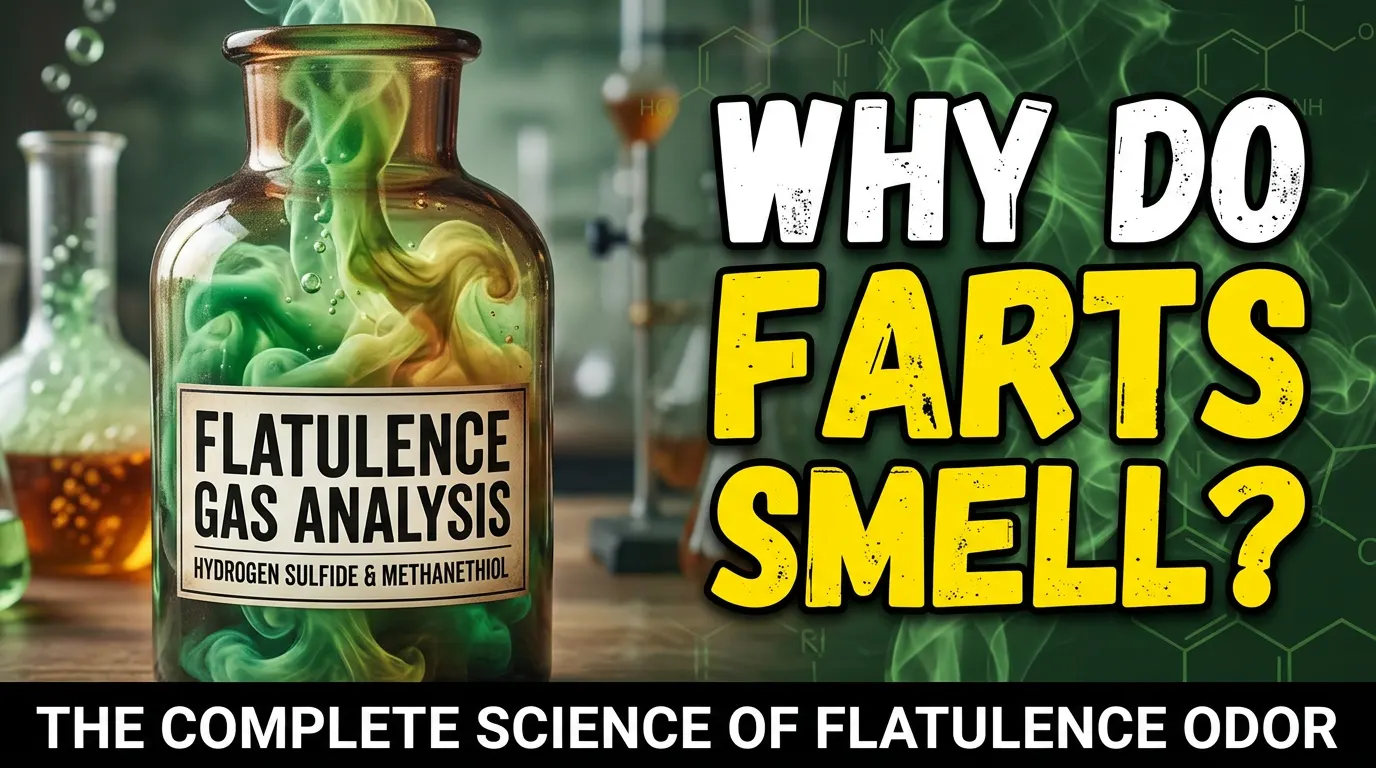
The single biggest contributor to fart odor is hydrogen sulfide, the same compound responsible for the smell of rotten eggs. Cleveland Clinic gastroenterologist Dr. Christine Lee explains that during digestion, gut bacteria generate hydrogen, carbon dioxide, methane, and other gases, and it’s the sulfur-based ones that account for the smell. Hydrogen sulfide is detectable by the human nose at concentrations as low as a few parts per billion, which is part of why it dominates the smell of gas even though it makes up such a small share of the total volume.
Hydrogen sulfide isn’t the only sulfur compound involved. Related gases like methanethiol (which smells like rotting cabbage) and dimethyl sulfide can also show up, depending on what you’ve eaten and which bacterial species are active in your gut at the time. All of these are produced as bacteria in your large intestine ferment sulfur-containing amino acids, cysteine and methionine, found in proteins, and sulfur compounds found in certain vegetables. In effect, smelly gas is a waste product: it’s what’s left over after your gut microbes finish extracting energy from food your own digestive enzymes couldn’t fully break down.
Why do farts smell like rotten eggs specifically?
The “rotten egg” smell is essentially a direct match: eggs are naturally high in sulfur-containing proteins, and when gut bacteria ferment them, hydrogen sulfide is one of the direct byproducts, the exact same molecule that gives spoiled eggs their smell. This is why “why do my farts smell like rotten eggs” and “why do my farts smell like eggs” are some of the most common versions of this question. It isn’t a coincidence or a metaphor; it’s the same chemical compound at work in both cases.
Eggs aren’t the only source. Anything relatively high in sulfur-containing amino acids or sulfur compounds can push hydrogen sulfide production up, which is why the rotten-egg smell tends to follow certain predictable meals rather than showing up at random.
What makes some farts smell so much worse than others?
If sulfur gas is the culprit, the next question is why production varies so much. A few factors do most of the work:
- Diet. Sulfur-rich and hard-to-digest foods (cruciferous vegetables, eggs, red meat, garlic, onions, beans and other legumes) give gut bacteria more raw material to convert into hydrogen sulfide and other smelly gases.
- Gut bacteria composition. Everyone’s colon hosts a different mix of bacterial species, and some produce far more hydrogen sulfide from the same food than others. This is a major reason two people can eat an identical meal and produce very differently smelling gas.
- How much is swallowed air vs. bacterial fermentation. Gas made mostly of swallowed air (nitrogen and oxygen) tends to be closer to odorless; gas that’s mostly the end product of bacterial fermentation carries a much higher concentration of sulfur compounds.
- Digestion speed. Food that lingers longer in the gut, whether from a slow digestive system, high-fat meals, or constipation, gives bacteria more time to ferment it and produce odorous byproducts.
- Lactose intolerance and other intolerances. When the body can’t properly break down a specific sugar or protein (lactose being the classic example), more undigested material reaches the colon, where bacteria ferment it, often producing extra gas and a stronger smell.
None of these factors act alone. A person who eats a lot of dairy despite being lactose intolerant, has a bacterial population skewed toward sulfur-producers, and digests food slowly will notice a very different (and more consistent) smell pattern than someone without any of those traits.
Foods and compounds behind fart odor
The table below summarizes the main dietary contributors to smelly gas and roughly how strongly each tends to affect odor, based on the sulfur content and fermentability of the food.
| Food or compound | Why it affects odor | Typical odor contribution |
|---|---|---|
| Eggs | High in sulfur-containing amino acids (cysteine, methionine) | High, classic “rotten egg” smell |
| Cruciferous vegetables (broccoli, cabbage, cauliflower, Brussels sprouts) | Contain sulfur compounds and fermentable fiber | High |
| Red meat | High protein and sulfur amino acid content, slower to digest | High |
| Garlic and onions | Rich in sulfur compounds | Moderate–high |
| Beans and legumes | High in fermentable carbohydrates (raffinose); less sulfur-heavy | Moderate (more volume than smell) |
| Dairy (for lactose-intolerant people) | Undigested lactose reaches the colon and ferments | Moderate–high, intolerance-dependent |
| Carbonated drinks, gum, straws | Mostly add swallowed air (nitrogen/oxygen) | Low, adds volume, not smell |
Does a louder fart mean a smellier one? The “silent but deadly” question
Loudness and odor are governed by different physics, which is exactly why the “silent but deadly” phenomenon exists. A loud fart is largely a matter of volume, pressure, and velocity: a larger amount of gas, often heavier in swallowed air, forced out quickly enough to vibrate the anal sphincter and produce sound. Speaking to TODAY.com, gastroenterologist Dr. Wendi LeBrett explained that louder farts tend to involve higher gas volume and velocity with a larger share of odorless gas, while quieter farts often involve a smaller volume released more slowly, one that can carry a higher concentration of sulfur-based compounds relative to the total.
Dr. Felice Schnoll-Sussman of Weill Cornell Medicine adds another piece: a slower release gives the gas more time to disperse into the air around you, and “the nose is super sensitive to sulfur compounds,” which is part of why a quiet release can feel disproportionately pungent for how little gas was actually involved. That said, this isn’t an ironclad rule. Cleveland Clinic gastroenterologist Dr. Jessica Philpott has pointed out there’s no direct, guaranteed correlation between sound and smell — loud farts can be just as smelly, and silent ones can be completely odorless. “Silent but deadly” describes a real physiological tendency, not a law of nature.
Is smelly gas a sign something’s wrong?
In the overwhelming majority of cases, smelly gas is simply diet doing what diet does, and it isn’t a red flag on its own. Everyone’s gas smells at least sometimes, and occasional strong odor after a meal heavy in eggs, cruciferous vegetables, or meat is completely normal digestive activity, not a symptom of disease.
Persistent, unusually foul-smelling gas becomes worth paying attention to when it shows up alongside other symptoms. According to Cleveland Clinic and the NHS, gas that’s consistently and severely malodorous, especially when paired with abdominal pain, bloating, unexplained weight loss, blood in the stool, or ongoing diarrhea or constipation, can be associated with conditions such as lactose intolerance, celiac disease, irritable bowel syndrome (IBS), small intestinal bacterial overgrowth (SIBO), inflammatory bowel disease, or a bacterial infection. Certain medications, including some antibiotics, NSAIDs, and laxatives, can also change gas odor as a side effect. None of this means smelly gas by itself points to any of these conditions; it’s the combination of persistent odor with other digestive symptoms that’s the actual signal worth mentioning to a doctor.
Evidence-based ways to reduce fart odor
Because odor is driven by how much sulfur gas your gut produces, most effective strategies focus on giving bacteria less sulfur-rich material to ferment, or neutralizing the gas that does form.
- Track and moderate trigger foods. Cutting back on the biggest sulfur contributors, eggs, red meat, cruciferous vegetables, garlic, and onions, without eliminating them entirely, is the most direct lever most people have.
- Address lactose or other intolerances. If dairy is a consistent trigger, reducing lactose intake or using a lactase enzyme supplement can meaningfully cut down on fermentation-driven odor.
- Digestive enzymes for fermentable carbs. Alpha-galactosidase supplements (sold as Beano) can help the body break down the fermentable sugars in beans, lentils, and some vegetables before gut bacteria get to them, reducing both gas volume and odor from these foods.
- Bismuth subsalicylate (Pepto-Bismol). A controlled study published in the journal Gastroenterology found that bismuth subsalicylate can bind more than 95% of hydrogen sulfide gas in the colon, making it one of the few over-the-counter options with real clinical evidence behind it for odor specifically. Because of salicylate exposure, it’s best used occasionally (for example, before a known high-risk meal or event) rather than continuously; check with a pharmacist or doctor before regular use.
- External charcoal products. Activated charcoal taken orally hasn’t shown reliable benefit for gas, but charcoal-lined briefs, pads, or cushions have been shown to absorb a large share of odor-causing sulfur gas after it’s released.
- Probiotics. Some probiotic strains have shown modest effects on gas symptoms in clinical research, though evidence for odor specifically (as opposed to bloating or frequency) is limited; results vary by strain and by person.
- Eat and drink more slowly. Swallowing less air, by eating smaller meals, avoiding straws and carbonated drinks, and not chewing gum, reduces the odorless component of gas, which won’t cut odor directly but can reduce overall volume.
This article is for general information only and is not a substitute for medical advice. If you experience persistent, severe, or unusually foul-smelling gas, especially alongside pain, weight loss, or blood in your stool, see a doctor to identify the underlying cause.
Frequently asked questions
Why do my farts smell so bad?
The odor comes from small amounts of sulfur-containing gases, mainly hydrogen sulfide, produced when gut bacteria ferment sulfur-rich or hard-to-digest food. The more sulfur-heavy the food and the more fermentation-friendly your gut bacteria, the stronger the smell.
Why do farts smell like rotten eggs?
Because they often contain the same compound responsible for that smell in actual rotten eggs: hydrogen sulfide. Eggs and other sulfur-rich proteins give gut bacteria extra material to convert into hydrogen sulfide during digestion.
Why do farts smell like sulfur?
Because the gas that causes the odor, hydrogen sulfide and related compounds, is chemically a sulfur compound. It’s produced when bacteria in the large intestine break down sulfur-containing amino acids and vegetables during fermentation.
Does everyone’s farts smell the same?
No. Each person’s gut hosts a different mix of bacterial species, and some produce far more hydrogen sulfide than others from identical food. Combined with individual diet and digestion speed, this is why fart smell varies significantly from person to person.
Can diet really change how your farts smell?
Yes, diet is the single biggest lever most people have. Reducing sulfur-rich foods like eggs, red meat, cruciferous vegetables, garlic, and onions typically reduces odor within a day or two, since it limits the raw material bacteria need to produce hydrogen sulfide.
Is smelly gas a sign of a health problem?
Occasional smelly gas is normal and usually just reflects what you ate. It’s worth mentioning to a doctor only when it’s persistent and severe, or occurs together with symptoms like abdominal pain, weight loss, or blood in the stool, which can point to conditions like IBS, celiac disease, or a digestive infection.
Why do silent farts smell worse?
Loud farts tend to involve a larger volume of gas released quickly, often with more odorless swallowed air. Silent farts are often a smaller volume released more slowly, which can carry a higher concentration of sulfur compounds and more time to disperse into the surrounding air, though this isn’t a guaranteed rule.
Does eating meat make farts smell worse?
Often, yes. Red meat is high in sulfur-containing amino acids and protein, both of which gut bacteria can convert into hydrogen sulfide and other odorous compounds during digestion.
Can probiotics reduce fart smell?
Some probiotic strains have shown modest benefits for gas-related symptoms in research, but evidence specifically for odor reduction (rather than gas volume or bloating) is limited, and effects vary by strain and individual.
How long does a fart smell linger in a room?
It depends on ventilation, gas concentration, and how the gas disperses, but sulfur compounds are detectable by the human nose at extremely low concentrations, so even a small amount can linger noticeably for a minute or more in a poorly ventilated space.
Why do my farts smell like eggs specifically after certain meals?
If a meal was high in eggs, sulfur-rich vegetables, or other sulfur-heavy proteins, your gut bacteria have more raw material to convert into hydrogen sulfide, the same compound that gives eggs their characteristic smell when they spoil.
This article is for general information only, not medical advice. If you have persistent or severe symptoms, consult a doctor.
References
- Cleveland Clinic – Why Farts Smell and What It Means
- Medical News Today – Why do my farts smell so bad and what to do to stop it
- American Family Physician (AAFP) – Effective Management of Flatulence
- Harvard Health Publishing – Feeling gassy: Is it ever a cause for concern?
- Houston Methodist – Flatulence: Everything You Wanted to Know About Farting
- TODAY.com – Are ‘Silent But Deadly’ Farts Real? A GI Doc Explains the Science
- Gastroenterology (journal) – Bismuth subsalicylate markedly decreases hydrogen sulfide release in the human colon
- NHS – Farting (flatulence)
Related Guides







Leave a Reply