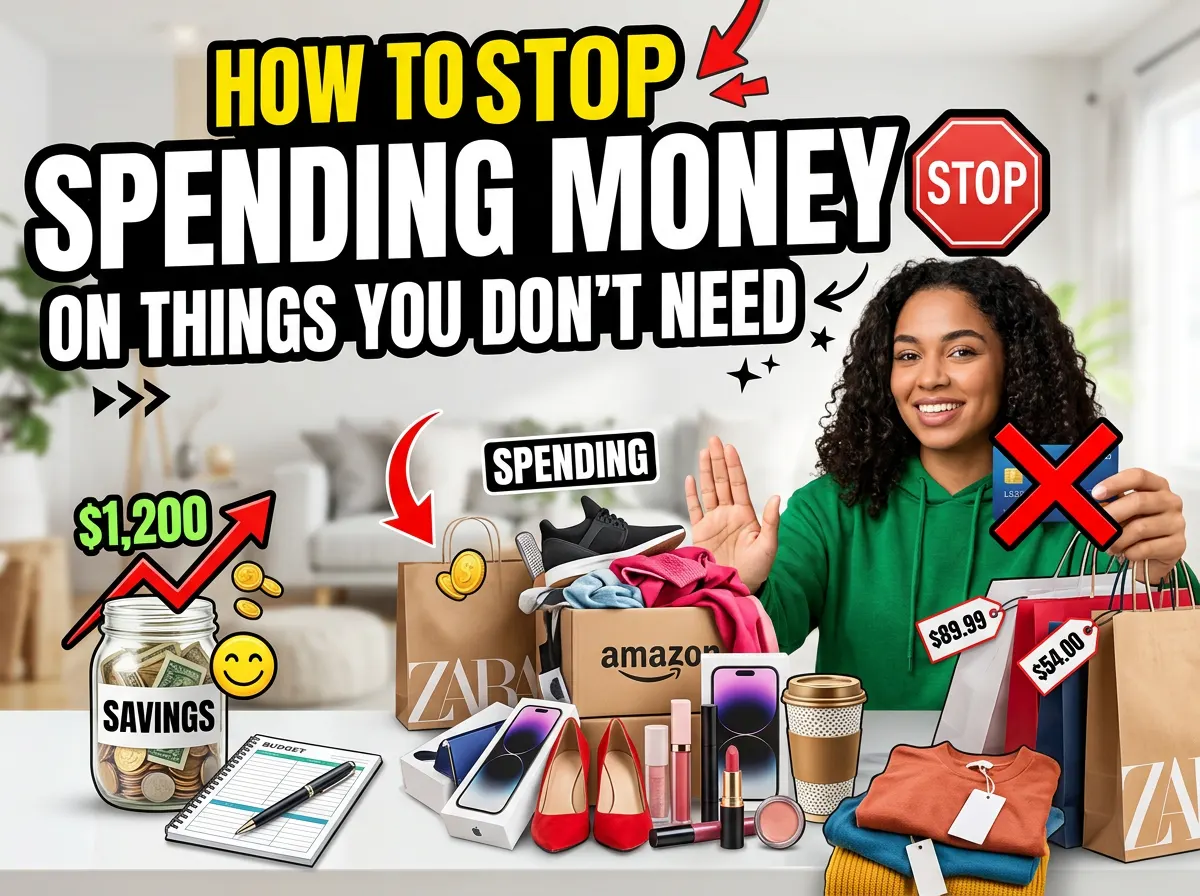
Unnecessary spending is almost always triggered by something specific — boredom, stress, social pressure, marketing exposure, or an emotional low — rather than a genuine need for the item itself. Stopping it starts with identifying which trigger applies to you, then removing or interrupting that trigger, rather than relying on willpower to resist the purchase in the moment.
This is a mindset and psychology piece — the “why” behind impulse spending — rather than a tactical list of savings tips. For concrete tactics once the underlying trigger is under control, see 5 simple money-saving tips that actually work and the best ways to cut your monthly expenses.
The four common triggers behind unnecessary spending
Most spending you’d later describe as unnecessary traces back to one of these:
- Boredom. Browsing a shopping app or scrolling a marketplace becomes a default activity when there’s nothing else to do, and browsing frequently ends in buying.
- Emotional spending. Stress, sadness, or a bad day gets soothed temporarily by a purchase — sometimes called “retail therapy” — which provides real short-term relief but no lasting benefit.
- Social pressure. Keeping up with what friends, coworkers, or people online are buying, wearing, or doing, even without any specific ask to match it.
- Marketing and advertising exposure. Targeted ads, “limited time” sale emails, and algorithmically surfaced products create desire for things you weren’t looking for and wouldn’t have thought of otherwise.
The fix looks different depending on which trigger is actually driving a given purchase, which is why generic “spend less” advice tends to fail — it treats all unnecessary spending as the same problem.

Fix 1: Interrupt boredom-driven browsing
Delete shopping apps from your phone’s home screen, or delete them entirely and shop only from a browser when you have an actual, specific purchase in mind. The friction of typing a URL and logging in is often enough to break the idle-scrolling habit that leads to browsing turning into buying. Replacing the specific moment you’d normally reach for a shopping app with a different low-effort activity (a different app, a short walk) tends to work better than trying to simply resist the urge with willpower.
Fix 2: Separate emotional spending from the actual need
Before an emotionally driven purchase, name the actual feeling out loud or in writing — “I’m buying this because I’m stressed about work,” not “I need this.” This works because it separates the emotional trigger from the purchase decision, making it visible instead of automatic. It doesn’t require suppressing the feeling, just recognizing it before acting on it with a purchase. If the pattern is frequent, it’s worth having a non-spending response ready in advance for the specific emotion that triggers it most often.
Fix 3: Reduce exposure to social comparison
Unfollow or mute accounts that consistently prompt a “I need that too” reaction, whether that’s influencers, brands, or even friends whose posts reliably trigger a purchase impulse. Social comparison is a well-documented driver of spending precisely because it’s constant and low-key — a single ad rarely does much, but a steady stream of “everyone has this” content compounds. This isn’t about resenting other people’s purchases, just limiting your own exposure to a trigger that reliably works on you.
Fix 4: Remove marketing triggers at the source
Unsubscribe from retailer marketing emails and text alerts, and turn off push notifications from shopping apps. Marketing is specifically designed to create urgency and desire where none existed a moment before — “flash sale,” “only 3 left,” “your cart is waiting” — and each message is another chance for that to work. Removing the input is a one-time action that prevents dozens of future decisions, rather than something you have to resist every single time it appears.
The universal fallback: the 24-hour rule
Whatever the trigger, waiting 24 hours before a non-essential purchase above a threshold you set works as a catch-all, because the emotional intensity behind any of the four triggers above naturally fades with a short delay. It won’t stop every unnecessary purchase, but it filters out the ones driven by a passing feeling rather than a genuine want — which tends to be the majority.
The table below maps each trigger to its most effective fix.
| Trigger | What it looks like | Most effective fix |
|---|---|---|
| Boredom | Idle scrolling turns into browsing turns into buying | Remove shopping apps from easy reach |
| Emotional spending | A bad day gets “fixed” with a purchase | Name the feeling before acting on it |
| Social pressure | “Everyone has this” reaction to posts | Unfollow/mute the accounts that trigger it |
| Marketing exposure | Sale emails, push notifications, targeted ads | Unsubscribe and turn off notifications |
| Any of the above | An urge to buy something non-essential | 24-hour rule before purchasing |
Frequently asked questions
How do I know if a purchase is actually necessary?
Ask whether you’d still want it after a 24-hour wait, and whether you were actively looking for it or it found you (through an ad, a sale email, or a social post). A genuine need doesn’t usually fade with a short delay; an impulse triggered by exposure often does.
Is emotional spending a sign of a bigger problem?
Occasional emotional spending is common and not automatically a red flag. It’s worth taking more seriously if it’s frequent, if it’s used to cope with the same stressor repeatedly, or if it’s creating real financial strain — those patterns are worth addressing directly rather than just managing around.
Does unfollowing accounts actually reduce spending?
It reduces exposure to a known trigger, which for most people reduces the frequency of the impulse in the first place. It won’t eliminate spending entirely, since other triggers still exist, but removing a consistent source of comparison or “flash sale” urgency tends to have a real, noticeable effect.
What if I have more than one trigger?
Most people do — boredom and marketing exposure, for example, often overlap. Address the trigger that shows up most often first rather than trying to fix everything at once; the 24-hour rule works as a catch-all in the meantime for whatever trigger slips through.
Will this completely eliminate unnecessary spending?
Unlikely, and that’s not really the goal — some discretionary spending is normal and fine. The goal is reducing spending that’s driven by a passing trigger rather than an actual want, which for most people is a meaningful share of what they’d later call unnecessary.
Unnecessary spending almost always has an identifiable trigger behind it — find yours and remove it at the source rather than relying on willpower in the moment. Once the psychology is under control, pair it with 5 simple money-saving tips that actually work, put the savings toward a realistic monthly savings goal, and check common budgeting mistakes to keep the progress from slipping.





Leave a Reply