Fish & Aquariums
Most of what determines whether a goldfish food is “good” isn’t the brand; it’s whether it sinks or floats. This sounds like a small detail, but it’s the single most common thing I see people get wrong, and it directly causes one of the most common goldfish health problems I hear about from other keepers.
Goldfish are also kept far more casually than most other aquarium fish; a lot of people still think of them as a starter fish that lives in a small bowl on flakes, which means feeding mistakes here are extremely common and rarely questioned. This guide covers what actually matters: sinking versus floating, protein and vegetable balance, portioning, vegetable supplements, and the swim bladder problems that trace directly back to how goldfish are fed.
Quick answer
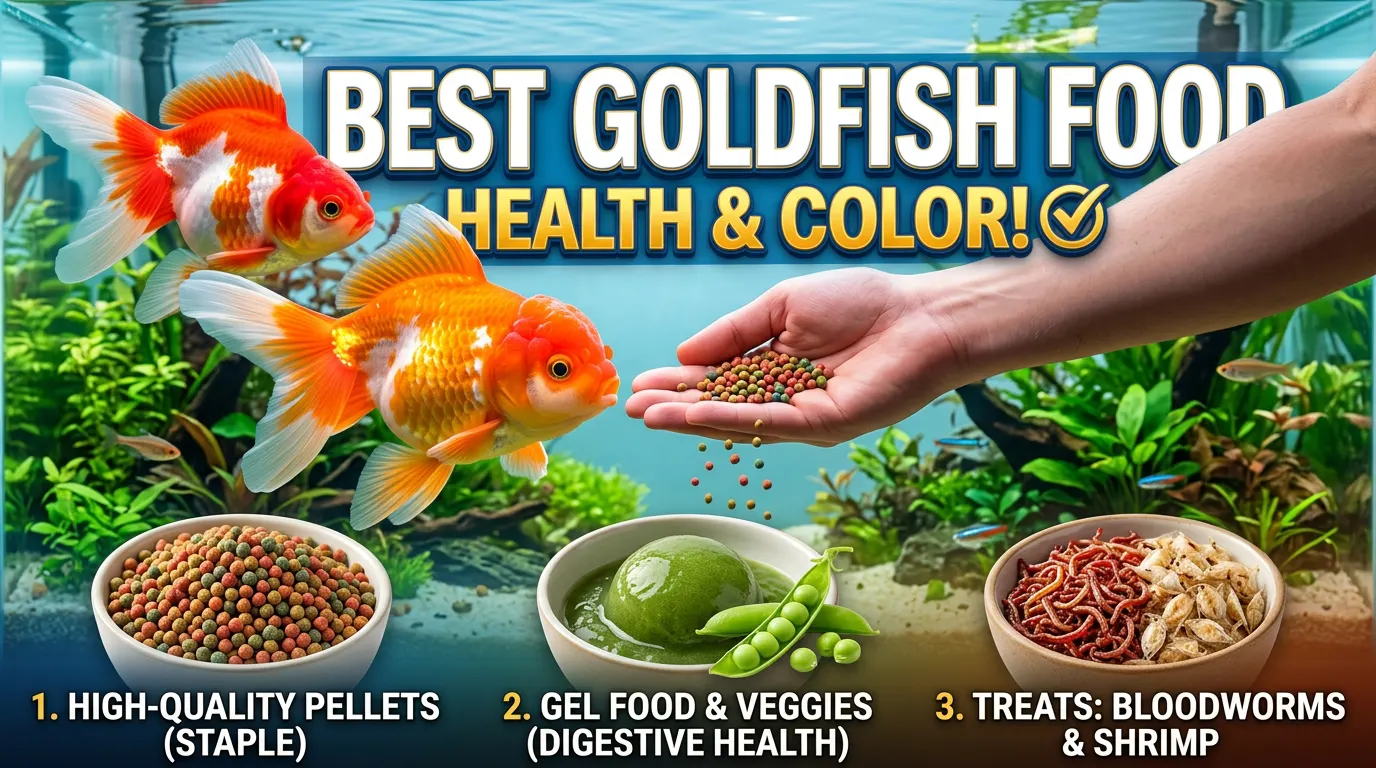
Choose a sinking or slow-sinking goldfish-specific pellet over floating flakes. Goldfish have a body shape prone to swim bladder issues, and gulping air at the surface to eat floating flakes is a well-documented contributor to that problem. Look for a moderate protein level (goldfish are omnivores, not strict carnivores like bettas) and some vegetable content in the ingredient list. Feed once or twice a day, only as much as they finish in about 2 minutes.

Why sinking beats floating
Goldfish, especially rounder-bodied fancy varieties like orandas, ranchu, and fantails, feed aggressively at the surface when given floating food, gulping air along with it. That air can get trapped in their digestive system and interfere with the swim bladder, the internal, gas-filled organ that controls buoyancy, leading to a fish that floats sideways, struggles to stay upright, or sinks and can’t rise. Sinking pellets let goldfish feed more naturally, closer to how they’d forage along the substrate in the wild, without the air-gulping problem. This matters more for fancy varieties with compressed, rounded body shapes than for slimmer common or comet goldfish, whose body plan is closer to the wild ancestor and somewhat less prone to swim bladder trouble, though sinking food is still the safer default for any goldfish.
What to look for on the label
| What to check | Why |
|---|---|
| Sinking or slow-sinking pellet | Avoids the air-gulping and swim bladder issue tied to floating flakes |
| Moderate protein (around 30%) | Goldfish are omnivores; they don’t need the high protein level a carnivore like a betta does |
| Some vegetable/plant content | Matches their natural omnivorous diet and supports digestion |
| Species-specific formula | Generic tropical food often isn’t optimized for goldfish’s cooler-water, omnivorous needs |
| Wheat germ as a listed ingredient | A traditional goldfish-food staple, easier for cooler-water fish to digest and often used in “cold water” or early-spring formulas |
Why goldfish nutrition differs from tropical fish
Goldfish are cold-water fish, which changes more than just their tank temperature preference; it affects their metabolism and digestion too. In cooler water, a goldfish’s digestive system works more slowly, which is part of why moderate protein and a meaningful plant component suits them better than a rich, high-protein tropical formula. Feeding a goldfish a diet built for a warm-water carnivore effectively asks a slower digestive system to process richer food than it’s built for, which is a real contributor to bloating and constipation over time, separate from the sinking-versus-floating issue.
Should you supplement with vegetables?
Yes, blanched peas (with the skin removed), zucchini, or spinach a couple times a week genuinely helps with digestion and is a good addition to a pellet-based diet, not a replacement for it. This is especially useful if a goldfish is already showing signs of bloating or mild swim bladder trouble, since peas in particular have a mild laxative effect that can help pass whatever’s causing the blockage. To prepare peas: blanch or briefly microwave them until soft, let them cool to tank temperature, then remove the tough outer skin before offering; the skin itself is the part goldfish sometimes struggle to pass, so removing it matters more than the cooking method.

Recognizing and responding to swim bladder trouble
Swim bladder disorder isn’t a single disease so much as a symptom with several possible causes, and diet-related cases are genuinely the most common and the most preventable. The telltale signs are a goldfish floating nose-down or tail-up, resting on its side at the surface or bottom, or struggling visibly to swim in a straight line. If you see this, the standard first response is a short fast (24-48 hours with no food at all) followed by a feeding of skinned, blanched peas, which often resolves diet-related cases within a day or two as the digestive blockage clears. If symptoms persist beyond a few days despite fasting and peas, it’s worth considering that the cause may not be diet-related at all, genetic predisposition in some fancy varieties, infection, or an enlarged organ pressing on the swim bladder are all possible, and none of those respond to the pea-and-fast approach.

This lines up with published fishkeeping veterinary commentary on the subject. Writing for Practical Fishkeeping, fish health specialist Dr Peter Burgess notes that surface feeding leading to air-gulping has long been considered a possible cause of gas accumulation and floating in goldfish, while also cautioning that swim bladder problems have several possible underlying causes beyond diet, including bacterial infection, genetic abnormality in some fancy strains, and internal tumors, which is exactly why a case that doesn’t respond to fasting and peas within a few days is worth taking more seriously rather than continuing to treat it as a simple feeding mistake.
How long can a goldfish go without food?
A healthy goldfish can go about a week without food without lasting harm, and some tolerate longer; they’re cold-water fish with a naturally slower metabolism than most tropical species, which makes them fairly forgiving of a missed feeding or two. For a short trip (up to a week), skipping feeding entirely is usually safer than relying on a feeder block that can foul the water if it dissolves unevenly, or a well-meaning sitter who doesn’t realize how little goldfish actually need per feeding. For longer absences, a properly calibrated automatic feeder dispensing small, pre-measured amounts is more reliable than a person feeding by eye, and it’s worth loading it with sinking pellets specifically rather than assuming any goldfish food works the same in an auto-feeder.
Can goldfish eat betta food (or vice versa)?
Not as a regular diet, though it’s one of the most common cross-food questions I see. Betta food is higher in protein and formulated for a carnivore; feeding it to a goldfish regularly pushes more rich, protein-heavy food into a digestive system built for a more omnivorous, plant-inclusive diet, which can contribute to bloating and poor water quality over time- the same swim bladder and digestion issues covered above, just from the protein angle rather than the floating-versus-sinking one. Goldfish food fed to a betta has the opposite problem: too little protein and too much plant filler for a fish that needs to eat more like a carnivore, covered in more depth in my betta food guide. A one-off feeding when you’re out of the right food won’t cause lasting harm to either fish, but it’s not worth relying on as a habit.
Feeding goldfish in a pond versus a tank
Outdoor pond goldfish add a seasonal wrinkle indoor keepers don’t deal with: as water temperature drops in fall, goldfish metabolism slows dramatically, and feeding needs to taper off and eventually stop as the water approaches temperatures where they become largely dormant. Continuing to feed a normal amount into cold water is a real risk, since food can sit undigested in a sluggish digestive system and cause serious harm. Switching to a lower-protein “cold water” or wheat-germ-based formula in the cooler shoulder seasons (spring and fall) before stopping entirely for winter, then resuming gradually as the water warms in spring, is the standard seasonal approach for outdoor goldfish.

Frequently asked questions
Can I feed goldfish regular fish flakes?
Occasionally, but it’s not ideal as a primary diet. Most generic flakes float, which brings back the air-gulping problem, and aren’t formulated with a goldfish’s cooler-water, omnivorous needs in mind.
How much should I feed my goldfish?
Only what they finish in about 2 minutes, once or twice a day. Goldfish beg constantly regardless of how full they actually are, so feed on a schedule rather than whenever they act hungry.
My goldfish is floating oddly after eating; is it the food?
Very possibly, this is the classic swim bladder symptom tied to floating food and overfeeding. Switch to sinking pellets, skip a day of feeding, and add blanched, skinned peas to the next few meals.
Do fancy goldfish need different food than common or comet goldfish?
Not fundamentally; the same sinking, moderate-protein, vegetable-inclusive formula suits both. Fancy varieties are simply more prone to swim bladder trouble due to their rounder body shape, which makes getting the sinking-pellet choice right even more important for them specifically.
Should I stop feeding my goldfish in winter?
For outdoor pond goldfish, yes, as water temperature drops, their metabolism slows dramatically and feeding should taper off and stop as the water gets cold, resuming gradually in spring. Indoor tank goldfish kept at a stable warmer temperature year-round don’t need this seasonal adjustment.
Can overfeeding cause water quality problems even if the fish looks fine?
Yes, uneaten food breaks down and adds to the ammonia load regardless of whether the fish shows any visible symptoms, and goldfish in particular produce a lot of waste for their size. Feeding only what’s finished in about 2 minutes and removing any excess afterward protects water quality even when the fish itself seems perfectly healthy.
My full goldfish care guide covers tank size, water needs, and tankmates alongside feeding, if you’re setting up for the first time.


Leave a Reply