Fish & Aquariums
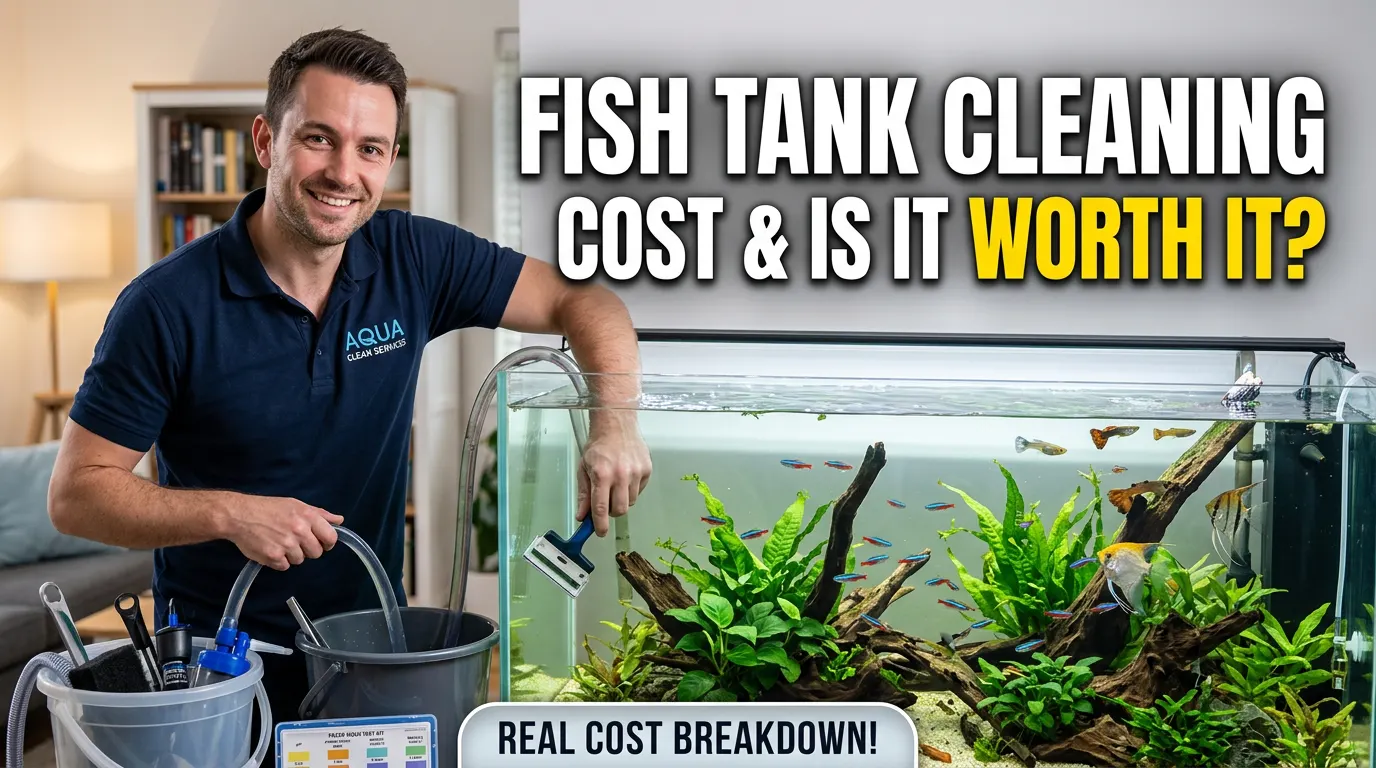
I’ve never personally hired a maintenance service; my tanks have always been small enough to manage myself, but I get asked about this often enough by people with large or multiple tanks that it’s worth a straight answer: what these services actually do, what they cost, and when they’re genuinely worth it versus just convenient. This isn’t a sales pitch either way; I don’t sell this service and don’t have a stake in whether you hire one. I just want to walk through the actual decision clearly.
Quick answer
Professional aquarium maintenance typically runs anywhere from roughly $50-150+ per visit for a standard home tank, depending on tank size, service frequency, and your location, with recurring visits (weekly, biweekly, or monthly) usually priced lower per visit than one-off cleanings. It’s genuinely worth considering for large tanks (75+ gallons), reef/saltwater setups with more demanding upkeep, multiple tanks, or simply if you don’t have the time or physical ability to do the maintenance yourself. For a single, moderately stocked freshwater tank, most people can handle upkeep themselves with the routine covered in my setup guide, hiring a service there is a convenience choice, not a necessity.

What’s typically included
| Service | Usually included? |
|---|---|
| Partial water change | Yes, standard in almost every plan |
| Gravel/substrate cleaning | Yes, standard |
| Glass cleaning (algae removal) | Yes, standard |
| Filter media cleaning/replacement | Usually, though frequency varies by plan |
| Water testing | Often included, sometimes an add-on |
| Fish health checks | Varies; ask specifically if this matters to you |
| Equipment troubleshooting (heater, filter issues) | Often available as part of the visit, sometimes billed separately for repairs |
Service tiers: what changes as price goes up
Not every visit at every price point covers the same ground, and it’s worth understanding roughly what separates a basic plan from a more comprehensive one before you compare quotes.
- Basic / entry-tier visits generally cover the core routine, a partial water change, glass cleaning, and light gravel cleaning. This is the closest equivalent to what you’d do yourself weekly, just outsourced.
- Mid-tier plans typically add water testing as a standard part of the visit, more thorough substrate vacuuming across the whole footprint rather than a quick pass, and some level of filter media attention.
- Comprehensive / premium plans tend to include fish health observation, equipment checks (verifying the heater is holding temperature, the filter isn’t struggling), and sometimes livestock or plant trimming as part of the same visit, rather than treating those as separate call-outs.
- Add-on or one-off services – deep substrate cleaning, algae outbreak treatment, equipment repair or replacement, and emergency visits for a sick fish or equipment failure; usually sit outside the recurring plan and get billed per visit or per issue.
The practical takeaway: two quotes with similar per-visit pricing can cover meaningfully different amounts of actual work. Comparing tiers, not just the headline number, is what actually tells you whether a quote is a good deal.

What actually drives the cost
- Tank size: larger tanks take longer to service and generally cost more per visit.
- Freshwater vs saltwater/reef: reef tanks typically cost more due to more involved water chemistry and coral/invertebrate care.
- Visit frequency: a recurring contract (weekly/biweekly) usually has a lower per-visit rate than a one-time cleaning.
- Number of tanks: multi-tank households or small offices often get a bundled rate.
- Local market rates: pricing varies significantly by region and by how established the local aquarium-service industry is.
- Access and setup complexity: a tank that’s easy to reach with a hose and equipment costs less to service than one built into cabinetry, elevated, or in a hard-to-access room; technicians factor travel time and physical difficulty into a quote.
- Livestock value and sensitivity: a reef tank with valuable coral or a tank with sensitive/expensive fish may come with a premium reflecting the higher risk if something goes wrong during service.
Questions to ask before hiring
A vague quote is a red flag in this industry just as much as in any home service. Before signing on for a recurring plan, get clear answers to these:
- Exactly what’s included per visit, in writing. Ask for a task-by-task breakdown rather than accepting “full maintenance” as a description; that phrase means different things to different providers.
- Whether water testing and fish health checks are part of the base price or an add-on. These are the two most commonly upsold items, and knowing upfront avoids surprise charges.
- How they handle equipment problems they find. Do they flag a failing heater and let you decide, or fix/replace it automatically and bill you? Get this process clear before it happens mid-visit.
- Whether they carry insurance or bonding. Things can go wrong: a dropped piece of equipment, a leak from moving decor, a fish escaping a net during transfer, and it’s worth knowing you’re covered if something does.
- What happens if a fish dies during or shortly after a visit. Ask directly how they handle this, both in terms of communication and any liability, before it’s ever relevant.
- Whether the same technician visits each time. Consistency matters for a service that’s essentially caring for a living system, a technician who’s serviced your tank for months notices subtle changes a rotating cast of staff might miss.
- Cancellation and rescheduling policy. Life happens; know what flexibility you have if you need to skip or move a visit.
DIY vs hiring: a realistic comparison
Doing it yourself costs essentially nothing beyond the basic tools (a gravel cleaner, water conditioner, test kit) and maybe 20-30 minutes a week for a standard tank. What you’re actually paying a service for is time, physical convenience (no bending over a tank or hauling buckets), and expertise for complex or large setups where mistakes are more costly. If you enjoy the hands-on part of the hobby, DIY maintenance is also arguably part of the appeal; it’s worth being honest with yourself about whether you’d actually rather not do it before paying someone else to.
A simple decision framework
If you’re genuinely undecided, run through these questions honestly:
- Do you have 20-30 minutes a week you’re actually willing to spend on this? Not “in theory”, realistically, given your schedule. If the honest answer is no, a service solves a real problem rather than being a luxury.
- Is your tank large, heavily planted, or a reef setup? These take meaningfully longer than a standard freshwater tank and are where the time savings of hiring out become more significant.
- Do you have the physical ability to do it? Bending over a large tank repeatedly, hauling water buckets, and reaching into cabinet-style stands isn’t accessible for everyone, and that’s a legitimate reason on its own.
- Do you travel often or have an unpredictable schedule? A recurring service provides consistency that a busy or irregular schedule makes hard to guarantee yourself.
- Do you actually enjoy the maintenance itself? For a lot of hobbyists, the hands-on routine is part of why they got into the hobby in the first place, worth weighing against the convenience.
Most people land somewhere in between rather than at a clean extreme, which is where hybrid arrangements come in.

Hybrid approaches: mixing DIY and hired help
You don’t have to choose one path exclusively. A few common ways people split the work:
- Weekly DIY, periodic professional deep clean. Handle routine water changes yourself, and bring in a service every month or two for a more thorough cleaning, equipment check, or the tasks you’re less comfortable doing (like deep substrate work in a heavily planted tank).
- DIY normally, hired coverage while traveling. Some services offer occasional or as-needed visits specifically for vacation coverage, rather than requiring a recurring contract, useful if your only real gap is being away from home.
- Hired for the complex setup, DIY for the simple one. If you have multiple tanks of different complexity; say, a demanding reef tank and a low-stakes freshwater community tank, it’s common to hire out only the one that actually benefits from professional expertise.
- Hired setup, DIY maintenance after. Some people bring in a service to establish a new tank correctly (especially a reef setup) and then take over routine maintenance themselves once it’s stable and cycled.
Reef and saltwater tanks: why they’re a different calculation
Reef tanks are where hiring a service tends to make the most sense, and it’s worth understanding why the math is different from a freshwater community tank. Reef systems typically involve testing and dosing for multiple parameters beyond the basics (calcium, alkalinity, magnesium, in addition to the standard ammonia/nitrite/nitrate/pH), coral health monitoring that takes real experience to do well, and equipment like protein skimmers, dosing pumps, and specialized lighting that adds more that can go wrong. A mistake in a reef tank, the wrong salinity in new water, an incompatible medication, an equipment failure that goes unnoticed for a day, can be more costly and harder to reverse than the equivalent freshwater mistake. That combination of complexity and higher stakes is why professional maintenance shows up disproportionately often in the reef-keeping side of the hobby, even among people who are otherwise experienced, hands-on hobbyists.
How often should you schedule visits?
Weekly or biweekly visits suit most stocked tanks, while monthly works for lightly stocked or heavily planted setups that need less frequent intervention. The right frequency mirrors the DIY schedule you’d otherwise be following yourself, a tank that would need a weekly water change if you did it yourself doesn’t suddenly need it less often just because a professional is doing it instead.
- Weekly: best fit for heavily stocked tanks, reef systems, or any setup where waste builds up quickly enough that a longer gap would let water quality drift noticeably between visits.
- Biweekly: a common middle ground for moderately stocked freshwater tanks — frequent enough to stay ahead of algae and waste buildup without paying for a visit every week.
- Monthly: workable for lightly stocked, well-planted, or large-volume tanks with a lot of buffering capacity, sometimes paired with the owner handling small top-offs or spot-checks between visits.
- One-off / as-needed: suited to occasional deep cleans, pre-trip coverage, or troubleshooting a specific problem rather than ongoing upkeep.
It’s worth revisiting the frequency periodically rather than locking in one schedule permanently — a tank’s needs change as it matures, as stocking changes, or as plants fill in and start taking up more of the nitrogen load themselves.
Signs a maintenance service is cutting corners
A few warning signs are worth watching for once a service is underway, since a smooth-sounding sales conversation doesn’t always match the actual visits:
- Visits get consistently shorter over time without any explanation, especially if the tank’s condition doesn’t seem to be improving between them.
- You’re never shown or told water test results, even though testing was supposed to be included — ask to see the actual numbers, not just “everything looks fine.”
- The same algae or cloudiness keeps reappearing right after a visit, which can point to a rushed job rather than a genuine root-cause fix.
- Equipment issues get mentioned but never actually addressed across multiple visits.
- Communication is vague or you can’t get a straight answer about what was actually done during a given visit.
None of this means most services are bad, the majority genuinely do the job well; but it’s worth paying attention for the first few months of a new arrangement rather than assuming it’s fine simply because the tank isn’t visibly falling apart.
Frequently asked questions
Is it worth hiring someone just to set up a new tank?
Some services offer one-time setup help, which can be worth it for a large or complex tank (especially reef setups), but a standard freshwater tank setup is straightforward enough that most people can follow a guide and do it themselves without extra cost.
What questions should I ask before hiring a service?
Ask exactly what’s included per visit, whether water testing and fish health checks are part of the base price, how they handle equipment problems they find, and whether they carry insurance in case something goes wrong during service. Get specifics in writing rather than a vague “full maintenance” description.
Can I do some maintenance myself and hire out the rest?
Yes, some people handle routine water changes themselves and hire a service periodically for deeper cleaning, equipment checks, or when traveling. Many services offer occasional or as-needed visits rather than requiring a recurring contract.
How do I know if a quoted price is reasonable?
Compare it against the $50-150+ per-visit range typical for standard home tanks, but weigh it against exactly what’s included at that price rather than the number alone, a lower quote that excludes water testing and equipment checks isn’t necessarily cheaper than a higher one that includes them. Getting two or three quotes with the same task breakdown requested from each is the most reliable way to judge whether a price is fair for your area and tank.
Will a maintenance service replace sick or dying fish?
This varies by provider and isn’t something to assume, ask directly what their policy is on fish health and mortality before signing a contract. Some services include basic health monitoring as part of the visit; very few will replace fish outright, since so much of fish health depends on factors outside any single visit.
Do I need to be home during a scheduled maintenance visit?
Many established services offer key or access arrangements for regular clients so you don’t need to be present every visit, similar to a pool or lawn service. Whether that’s offered, and what the trust and security arrangement looks like, is worth asking about directly if a hands-off recurring schedule is what you want.
Either path works. For most single-tank freshwater setups, the routine in my setup and maintenance guide is genuinely manageable solo, a service becomes more clearly worth it as your setup gets larger or more complex than that. If you want the exact breakdown of what “manageable solo” involves, I’ve laid it out task by task in a full maintenance schedule.



Leave a Reply