Sleep & Wellness
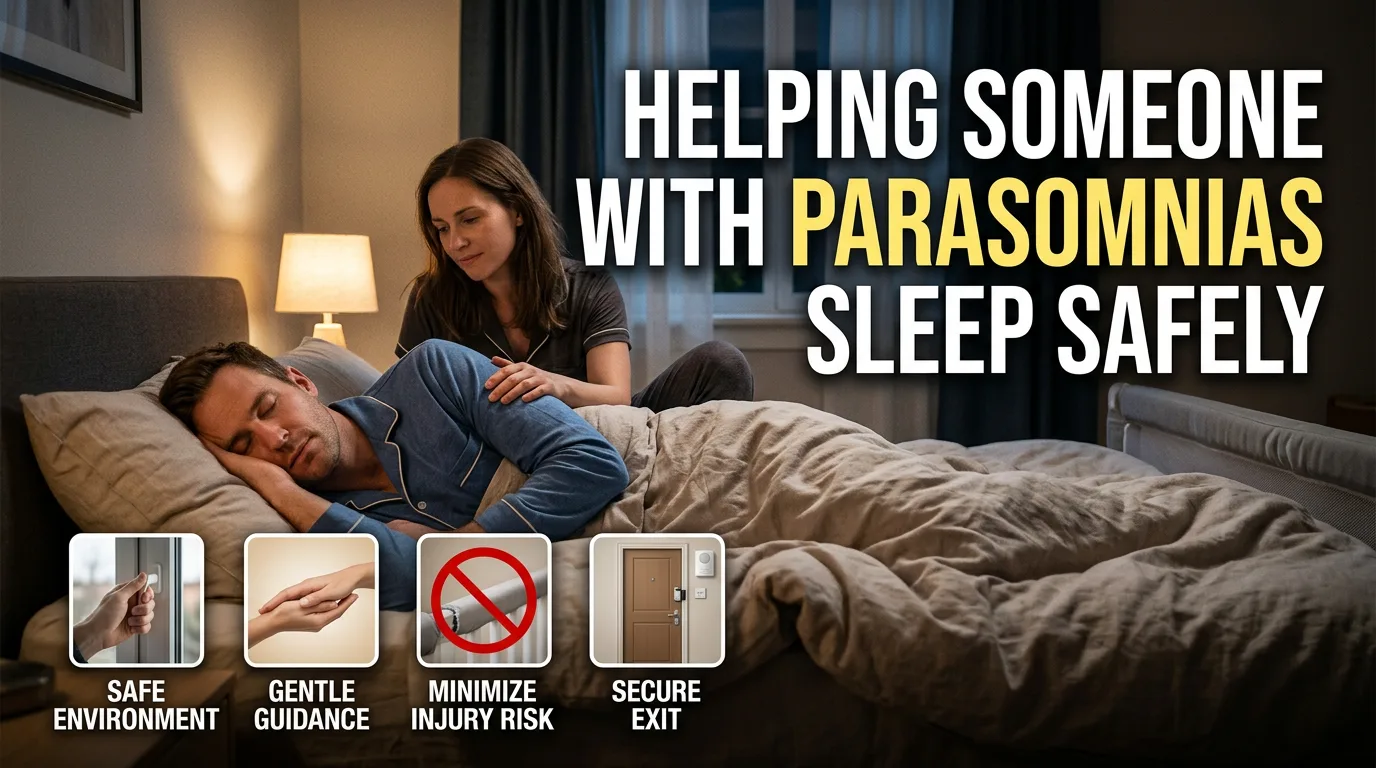
Living with someone who sleepwalks, talks in their sleep, or wakes up screaming from a night terror can be unsettling, especially the first time it happens. Parasomnias, the umbrella term for unusual behaviors that occur during sleep or the transition in and out of it, are more common than most people realize, and in the vast majority of cases they’re more strange than dangerous. But “usually harmless” isn’t the same as “risk-free.” People who sleepwalk can trip down stairs, walk into furniture, or even leave the house; someone in the middle of a night terror can thrash hard enough to fall out of bed. If you share a home with a partner, child, or family member who experiences parasomnias, the goal isn’t to stop the behavior overnight; for many people, especially children, it’s something they’ll simply outgrow, it’s to make the environment safer and know when a doctor needs to get involved. This guide covers the most common parasomnias, practical ways to safety-proof a bedroom, how to respond in the moment, and the warning signs that mean it’s time to seek medical care.
Quick answer: how do you help someone with parasomnias sleep safely?
The core strategy is environmental safety plus a consistent sleep routine, not physically restraining or aggressively waking the person mid-episode. Practically, that means removing hazards near the bed, securing doors and windows, considering a bed alarm for frequent sleepwalkers, keeping a regular sleep schedule (since sleep deprivation and irregular schedules are known triggers), and gently guiding, rather than jolting, someone back to bed if they’re up and moving. Most parasomnias, particularly in children, are outgrown and don’t require medication. See a doctor if episodes involve injury, happen most nights, include leaving the house, or occur in an adult who never had these episodes as a child, since new-onset parasomnias in adulthood sometimes point to an underlying condition that needs its own evaluation.
What counts as a parasomnia?
Parasomnias are grouped by which part of the sleep cycle they come from, and that distinction actually matters for how you should respond to them.
Non-REM parasomnias (deep sleep arousal disorders)
These happen during deep, slow-wave sleep, usually in the first third of the night, when the brain is partially, but not fully, waking up. The person is typically difficult to rouse, has glassy or open eyes, may not respond to their name, and usually has no memory of the episode the next morning. This category includes:

- Sleepwalking (somnambulism). Ranges from sitting up and fumbling with bedsheets to walking around the house, opening doors, or even attempting to “drive” or cook while still asleep. Most common in children, though it can persist into or begin in adulthood.
- Night terrors (sleep terrors). Sudden, intense episodes of screaming, crying, a racing heart, and visible fear, often with the person sitting bolt upright. They look alarming, but the person is not having a nightmare in the way we usually mean it, they typically aren’t dreaming a story, and they won’t remember it afterward.
- Confusional arousals. The person wakes up (or half-wakes) confused, disoriented, and slow to respond, sometimes moaning or mumbling, without the more dramatic movement of sleepwalking or the intense fear of a night terror.
- Sleep talking (somniloquy). Can happen during both non-REM and REM sleep and ranges from mumbled nonsense to full, clear sentences. On its own, it’s considered harmless and doesn’t typically need treatment.
REM-related parasomnias
These occur during REM sleep, usually later in the night, and behave differently. The most notable is REM sleep behavior disorder, in which the muscle paralysis that normally accompanies REM sleep fails, letting a person physically act out a vivid dream, often with more coordinated, forceful movement than non-REM parasomnias, and with a clear dream memory afterward if woken. REM sleep behavior disorder is significant enough, including its link to future neurological conditions, that it deserves its own deeper look, see our dedicated guide on whether REM sleep behavior disorder requires treatment for more detail on that specific condition.
What triggers parasomnias
Non-REM parasomnias like sleepwalking and night terrors tend to run in families, suggesting a genetic component, and they’re also strongly influenced by factors that fragment or destabilize deep sleep. The most consistently reported triggers include:
- Sleep deprivation or an irregular sleep schedule
- Fever, especially in children
- Stress and anxiety
- Alcohol, particularly close to bedtime
- Certain medications, including some sedatives and sleep aids
- Other sleep disorders that fragment deep sleep, such as untreated obstructive sleep apnea or restless legs syndrome
- A full bladder or loud noises that trigger a partial arousal
This is actually useful information, because it means the single most effective thing you can do to reduce episode frequency for many people isn’t a medication; it’s protecting consistent, adequate sleep and treating any coexisting sleep disorder that might be disrupting deep sleep in the background.
How to safety-proof a bedroom and home
Because the person experiencing a non-REM parasomnia is not meaningfully conscious or making rational decisions, the safest strategy is to design the environment so a bad decision can’t cause serious harm. Specialists commonly recommend:
- Lock or alarm exterior doors and windows. This is the single most important step for anyone who sleepwalks, since leaving the house is the scenario with the highest risk of serious injury.
- Install a bed or door sensor alarm that alerts a caregiver or partner the moment the person gets up, especially useful for children or adults with frequent episodes.
- Move the bed away from windows and clear a path free of cords, toys, or clutter that could cause a fall.
- Use a baby gate or safety gate at the top of stairs for children who sleepwalk, and consider one for adults in multi-level homes with frequent nighttime episodes.
- Pad sharp furniture corners and remove breakable objects from the bedroom.
- Keep car keys secured and out of easy reach, since sleepwalking adults have, in rare cases, attempted to drive.
- Consider sleeping on the ground floor or a room without direct stair access for someone with frequent, higher-risk episodes.
- Keep the sleep environment cool, dark, and calm, and stick to a consistent bedtime, since irregular sleep is one of the most common triggers.
How to respond in the moment
Knowing what to actually do when an episode is happening matters just as much as preparing the room. A few guiding principles that sleep clinicians consistently recommend:
- Don’t try to wake a sleepwalker abruptly. Waking someone forcefully during a non-REM parasomnia tends to cause confusion, disorientation, and sometimes fear or agitation, rather than a clean “wake up.” It’s generally gentler and safer to guide them calmly back toward bed, using a soft, reassuring voice, without shaking or yelling.
- Prioritize physical safety over stopping the behavior. Your first job is making sure they don’t fall, walk into something, or leave the house, not necessarily ending the episode itself, which will usually resolve on its own within a few minutes.
- Stay calm during a night terror. These look frightening, especially in children, but the person isn’t in the kind of danger the screaming might suggest, and they won’t remember it. Comforting words and a calm presence are usually more helpful than trying to fully wake them.
- Avoid discussing the episode with a child the next morning in a way that shames or worries them; they genuinely don’t remember it, and making it a big, anxious topic can add stress that may worsen frequency.
- Don’t restrain someone with RBD or a violent parasomnia by grabbing them. A still-dreaming brain can react defensively; call their name calmly from a safe distance instead.
When parasomnias are outgrown, and when they’re not
In children, sleepwalking and night terrors are extremely common, and the overwhelming majority of kids simply grow out of them as their nervous system matures, typically by the teenage years. For most families, that means the right approach is patience, consistent sleep schedules, and safety-proofing, not medication, and not excessive worry. Occasional episodes in a child with no injuries and no daytime effects usually don’t need a doctor’s visit beyond mentioning it at a routine checkup.
Adults are a different story in one important way: parasomnias that begin for the first time in adulthood are taken more seriously by sleep specialists, because new-onset episodes later in life are more likely to be connected to another underlying issue, untreated sleep apnea, a medication side effect, alcohol use, or, in the specific case of REM-related dream enactment, an early neurological process. That doesn’t mean every adult with a new parasomnia has something serious going on, but it’s a good reason not to simply dismiss it as odd and move on.
When to see a doctor
Most parasomnias don’t require medical treatment, but certain signs mean it’s worth scheduling an evaluation with a doctor or sleep specialist rather than waiting it out:
- Episodes cause injury to the person or someone else, or come close to it (leaving the house, attempting to use stairs or the stove)
- Episodes happen frequently, most nights or several times a week
- A parasomnia starts for the first time in adulthood
- The behavior involves violent movement, forceful acting-out of dreams, or a clear, recalled dream matching the movement (which points more toward REM sleep behavior disorder than a typical non-REM parasomnia)
- There are signs of another untreated sleep disorder, like loud snoring, gasping, or excessive daytime sleepiness alongside the parasomnia
- The person or family is losing significant sleep or feeling anxious and exhausted because of the episodes
A doctor will typically start with a detailed history from you and, ideally, anyone who has witnessed the episodes, and may refer to a sleep specialist for an overnight, video-monitored polysomnography study if the diagnosis isn’t clear from history alone, or if a REM-related cause or another sleep disorder is suspected. Treatment, when it’s needed at all, is usually tailored to the underlying trigger: improving sleep habits, treating an untreated sleep disorder like sleep apnea, adjusting a medication, or, in more severe or frequent cases, a short course of medication aimed at the parasomnia itself.
Frequently asked questions
Is it safe to wake up a sleepwalker?
It isn’t dangerous in the sense of harming them physically, but it’s usually unnecessary and can cause confusion, disorientation, or agitation, since they’re being pulled abruptly out of a deep sleep state. Most sleep specialists recommend gently guiding a sleepwalker back to bed instead, using a calm voice and light physical guidance rather than shaking them or shouting.
Do children outgrow sleepwalking and night terrors?
Yes, in the large majority of cases. Both sleepwalking and night terrors are common in childhood and typically become less frequent or disappear entirely as a child’s nervous system matures, often by the teenage years. Consistent sleep schedules and a safety-proofed bedroom are usually all that’s needed in the meantime.
What’s the difference between a nightmare and a night terror?
A nightmare is a frightening dream that happens during REM sleep; the person usually wakes up fully, remembers the dream in detail, and can often be comforted relatively easily. A night terror happens during deep non-REM sleep, usually earlier in the night, and involves intense fear, screaming, and a racing heart without a story-like dream attached, the person is difficult to wake, appears confused rather than clearly frightened of something specific, and typically has no memory of it the next day.
Can stress or anxiety cause parasomnias?
Stress and anxiety are among the most commonly reported triggers for non-REM parasomnias like sleepwalking, night terrors, and confusional arousals, likely because they contribute to fragmented, unstable deep sleep. Managing stress, along with keeping a consistent sleep schedule, is a reasonable first step for someone with occasional episodes, though persistent or worsening symptoms still warrant a conversation with a doctor.
Is sleep talking dangerous?
No, sleep talking on its own is generally considered harmless and doesn’t require treatment. It can happen during both non-REM and REM sleep, ranges from mumbling to full sentences, and most people who sleep talk have no memory of it afterward. It’s only worth mentioning to a doctor if it’s happening alongside other concerning symptoms, like violent movement, gasping for air, or extreme daytime sleepiness.
Should a sleepwalking adult sleep alone?
Not necessarily, but a bed partner should be aware of the risk of being unintentionally struck or startled, especially if episodes are frequent or involve a lot of movement. Rather than sleeping separately as a default, most people focus first on safety-proofing the bedroom and home, using door or bed alarms, and getting a proper evaluation, since new-onset sleepwalking in an adult is worth investigating rather than simply managing around.
Parasomnias can look dramatic in the moment, but most are manageable once you understand what’s actually happening and put a few sensible safeguards in place. Still, this guide is general information, not a diagnosis or a treatment plan, if episodes are frequent, involve injury, or started suddenly in adulthood, please talk to a doctor or sleep specialist, who can pinpoint the cause and recommend care that’s actually right for your situation.




Leave a Reply