Sleep & Wellness
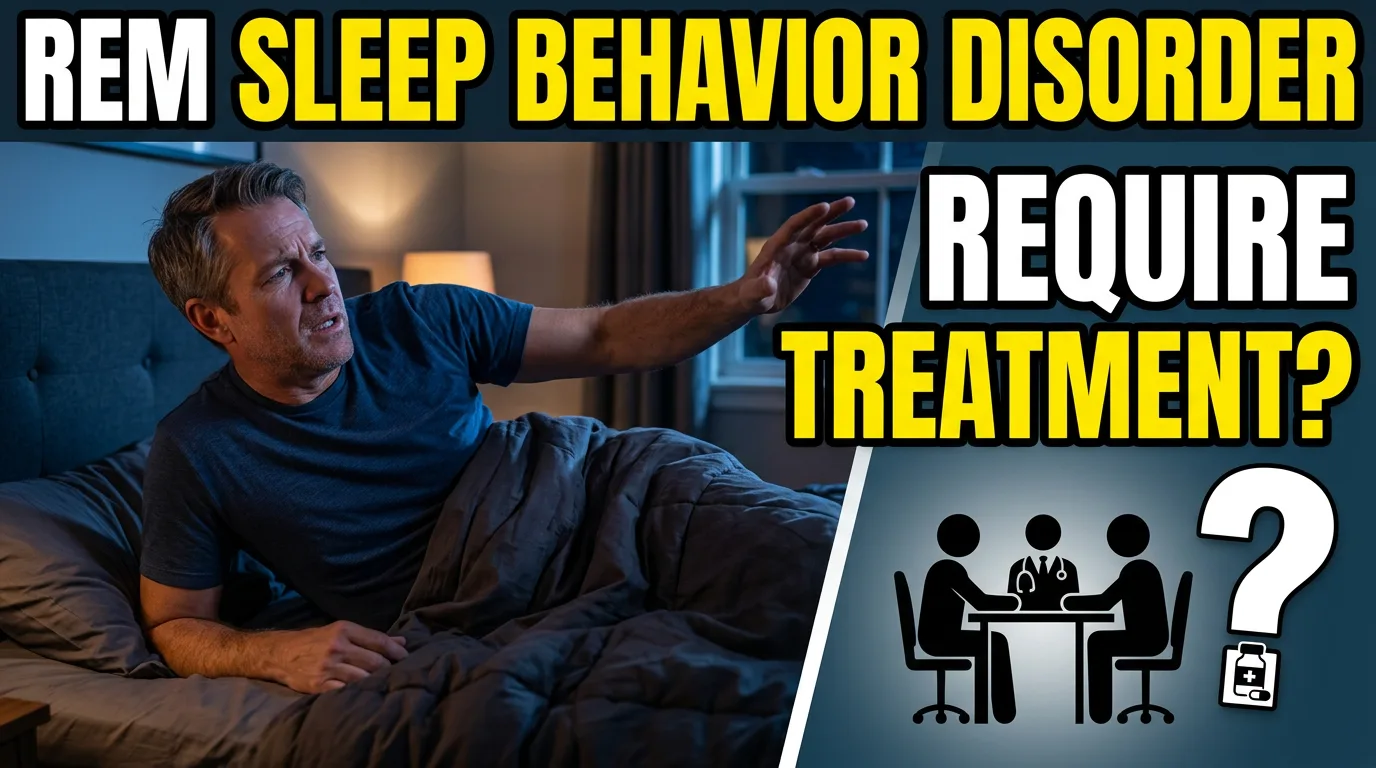
If you’ve ever punched a wall, kicked your partner, or woken up on the floor in the middle of a dream, you already know how disorienting REM sleep behavior disorder (RBD) can be. Unlike an ordinary bad dream that stays trapped inside your head, RBD lets the body physically act out what’s happening in the dream, shouting, swinging, leaping out of bed, because the muscle paralysis that normally locks the body down during REM sleep simply isn’t doing its job. It’s a real, diagnosable sleep disorder, not a quirky habit or a “vivid dreamer” personality trait, and it raises a question that understandably worries a lot of people once they learn what it actually is: does this need to be treated, or is it something you can just live with? The honest answer is more nuanced than a simple yes or no, and it depends on safety, severity, and what’s actually causing it. This guide walks through what RBD is, when doctors typically recommend treatment, what the treatment options look like, and why this particular sleep disorder gets taken more seriously by neurologists than its symptoms alone might suggest.
Quick answer: Does REM sleep behavior disorder need treatment?
Not always with medication, but almost always with some form of medical attention. If episodes are infrequent and nobody is getting hurt, a doctor may recommend only safety measures, like padding the bedroom and removing sharp objects near the bed. But if you’re injuring yourself or a bed partner, or episodes are frequent, treatment with medication, typically melatonin first, sometimes clonazepam, is usually recommended. Just as important, RBD (especially when it isn’t caused by a medication) is strongly linked to future neurodegenerative disease, so ongoing evaluation by a sleep specialist or neurologist is generally advised even when symptoms are mild. In short: safety planning is close to universal, medication is situational, and medical monitoring is rarely optional.
What is REM sleep behavior disorder?
During normal REM (rapid eye movement) sleep, the stage most associated with vivid dreaming, the brain sends signals that temporarily paralyze most of the body’s skeletal muscles. Sleep researchers call this REM atonia, and it exists for a good evolutionary reason: it keeps you from physically acting out whatever your dreaming brain is doing. In REM sleep behavior disorder, that paralysis mechanism fails, partially or completely. The result is what’s often called dream enactment behavior: talking, shouting, laughing, punching, kicking, grabbing, or even leaping out of bed while still asleep and dreaming.
The dreams themselves tend to have a distinct flavor. People with RBD frequently report action-packed, confrontational, or threat-based dreams, being chased, attacked, or defending themselves or a loved one, and their physical movements often match that content almost scene-for-scene. This is different from simply moving around in bed or shifting position; a bed partner will often describe it as looking like the person is fighting off an attacker or fleeing from something, sometimes with genuine force behind the movements.
RBD most commonly affects men over 50, a demographic pattern discussed more broadly in our guide to sleep problems in older adults, though it can occur in women and younger adults as well, particularly when it’s triggered by certain antidepressant medications (SSRIs and SNRIs are the most frequently implicated), narcolepsy, or withdrawal from alcohol or sedatives. Clinicians generally sort cases into two broad categories: isolated (or idiopathic) RBD, which appears without an obvious underlying cause, and secondary RBD, which is linked to a specific trigger like a medication, another sleep disorder, or a neurological condition. That distinction matters a great deal for how much long-term risk a diagnosis carries, which we’ll come back to.
Is treatment always necessary?
No single answer fits every case, because RBD exists on a spectrum. Some people have occasional, mild episodes, a bit of talking or a single limb twitch a few times a month, while others have violent, frequent episodes multiple nights a week that have already caused bruises, cuts, or fractures. Sleep specialists generally weigh a few factors when deciding how aggressively to treat it:

- Injury risk. Has the person hurt themselves, fallen out of bed, hit a nightstand, punched a wall, or injured a bed partner? Any history of injury tends to push a doctor toward recommending medication, not just environmental changes.
- Frequency and intensity. Episodes that happen most nights, or that involve forceful, prolonged movement, are treated differently than an occasional mild episode.
- Bed partner impact. Even without a formal injury, a bed partner who is regularly startled awake, struck, or too frightened to sleep in the same bed is a legitimate reason to escalate treatment.
- Underlying cause. If RBD appears to be triggered by a specific antidepressant, adjusting or switching that medication (under a doctor’s supervision, never stopped abruptly on your own) may resolve it without needing a separate RBD-specific treatment at all.
For genuinely mild, infrequent, low-risk cases, a doctor may reasonably decide that bedroom safety modifications alone are enough for now, with regular check-ins to see if things change. But it’s worth being clear that “no medication needed” is not the same as “no follow-up needed.” Because idiopathic RBD is one of the most well-established early warning signs for certain neurodegenerative conditions, most sleep medicine guidance still calls for ongoing monitoring even in mild cases, rather than a one-time diagnosis and no further contact with a specialist.
When doctors recommend medication
When medication is warranted, two options come up far more often than anything else: melatonin and clonazepam. Neither one cures RBD; there’s currently no cure, but both can meaningfully reduce how often and how intensely episodes occur.
Melatonin is usually tried first
Melatonin, typically prescribed at doses well above what you’d find in an over-the-counter sleep aid bottle (often somewhere in the 3–12 mg range, though the exact dose is something only a doctor should determine for you), has become a common first-line option for RBD. It appears to help restore some of the muscle atonia that’s missing during REM sleep and can reduce the intensity and frequency of dream enactment behavior for many people. Its major appeal relative to clonazepam is its safety profile: melatonin generally causes fewer side effects, doesn’t carry the same sedation or fall risk, and is considered reasonably safe for older adults, an important consideration given how often RBD shows up later in life, sometimes alongside other health conditions.
Clonazepam is effective but comes with real trade-offs
Clonazepam, a benzodiazepine, has been used to manage RBD for decades and can be quite effective at cutting down on dream enactment episodes. But it’s not without downsides, and doctors weigh these carefully before prescribing it, especially in older patients. Clonazepam can cause next-day sedation, memory or cognitive changes, and an increased risk of falls, a particularly serious concern for the same older-adult population most likely to have RBD in the first place. It can also worsen coexisting obstructive sleep apnea by relaxing airway muscles, so doctors typically want to know whether sleep apnea is also present before prescribing it. Long-term use raises additional questions around tolerance and dependence, which is why some clinicians reserve it for cases where melatonin alone hasn’t worked well enough.
What the evidence actually says
It’s worth being transparent about the strength of the evidence here: sleep medicine researchers and the American Academy of Sleep Medicine have published clinical practice guidance reviewing the data on RBD treatments, and one consistent theme is that both melatonin and clonazepam appear helpful in clinical experience and smaller studies, but the field is still short on large, high-quality randomized controlled trials that would let doctors be fully confident about dosing, comparative effectiveness, and long-term safety. That doesn’t mean the treatments don’t work; many patients get real, meaningful relief, but it does mean treatment decisions are often individualized, made collaboratively between patient and doctor, and adjusted over time rather than following one fixed protocol. Other medications, including certain dopamine-related drugs, are sometimes used in specific situations, but melatonin and clonazepam remain the most established starting points.
Why bedroom safety matters as much as medication
Whether or not medication is part of the plan, safety-proofing the sleep environment is close to a universal recommendation for RBD, because the most immediate risk isn’t a health complication down the road; it’s a physical injury tonight. Reported injuries range from bruises and lacerations to more serious outcomes like fractures, dislocated shoulders, or head trauma from falling out of bed or striking furniture. Bed partners are frequently struck as well, sometimes hard enough to need medical attention, which is one of the most common reasons people finally seek a diagnosis in the first place.
Practical safety steps that sleep specialists commonly recommend include:
- Move the bed away from furniture, walls with hard corners, and windows.
- Remove or pad sharp-edged nightstands, lamps, and decor within arm’s reach of the bed.
- Consider a lower bed, or place the mattress directly on the floor, to reduce fall distance and injury.
- Use a padded floor mat or extra cushioning alongside the bed.
- Install soft bed rails if falls out of bed are frequent.
- Lock or secure windows and doors, particularly if there’s any history of leaving the bed and wandering.
- Temporarily sleep in separate beds or rooms if a bed partner is being struck regularly, at least until treatment starts working; this is a safety decision, not a failure of the relationship.
- Remove firearms or other weapons from the bedroom entirely, which sleep clinics increasingly flag as a serious and sometimes overlooked risk given how physically real dream-enacted “self-defense” can feel to the person experiencing it.
If you share a bed with someone who has RBD, it also helps to know how to respond in the moment: avoid touching or grabbing them mid-episode if you can help it, since a startled, still-dreaming brain can react defensively; instead, call their name calmly from a safe distance to help bring them out of the episode.
The link between RBD and neurodegenerative disease
This is the piece of RBD that sets it apart from most other parasomnias, and it’s the main reason doctors treat a diagnosis of isolated RBD so seriously even when episodes seem manageable. Over the past two decades, researchers following people diagnosed with isolated (idiopathic) RBD for years, in some studies, well over a decade, have found that a majority eventually go on to develop a neurodegenerative condition belonging to a family of diseases called synucleinopathies. This group includes Parkinson’s disease, dementia with Lewy bodies, and, less commonly, multiple system atrophy, an overlap explored in more depth in our guide to sleep problems and dementia. All of these conditions involve the abnormal buildup of a protein called alpha-synuclein in the brain, and RBD appears to be one of the earliest detectable signs that this process may already be underway, sometimes emerging years or even decades before any tremor, memory change, or other classic symptom appears.
This doesn’t mean an RBD diagnosis is a guarantee of a future neurodegenerative disease, and it’s important not to catastrophize it. It also matters enormously whether the RBD is isolated (no clear cause) or secondary to something like an antidepressant medication, since medication-induced RBD does not appear to carry the same elevated long-term risk once you account for the underlying cause. But because the association between isolated RBD and future Parkinson’s-spectrum disease is one of the most consistently replicated findings in modern sleep neurology, most specialists recommend regular neurological follow-up for people with an isolated RBD diagnosis, sometimes including simple screening tools like smell testing or color vision assessment, which can pick up subtle early changes, even when the person feels completely healthy otherwise.
Researchers frame this in a genuinely useful, non-alarmist way: RBD offers a rare window to identify neurodegenerative disease risk years before symptoms would otherwise appear, which is exactly the kind of lead time that ongoing research into disease-slowing treatments is trying to make use of. If you or someone you love has been diagnosed with isolated RBD, the most productive response isn’t panic; it’s building a relationship with a neurologist or sleep specialist who can monitor things over time and catch any changes early.
Living with RBD: practical next steps
If you suspect you or a partner has RBD, a few concrete steps make the process much less overwhelming:
- Get a proper diagnosis. RBD is typically confirmed with an overnight video polysomnography sleep study, the same core technology explained in our guide to how polysomnography is used to diagnose sleep problems, which records brain waves, muscle activity, and behavior simultaneously. This also rules out look-alike conditions, including sleepwalking, night terrors, nocturnal seizures, and obstructive sleep apnea with confusional arousals, all of which can superficially resemble RBD but require different management.
- Keep a simple episode log. Noting how often episodes happen, what the dream content and movements looked like, and whether anyone got hurt gives your doctor much more useful information than a vague “it happens sometimes.”
- Review your medication list with a doctor. Certain antidepressants are well-known RBD triggers; don’t stop anything abruptly, but do bring it up so your prescriber can weigh the options.
- Loop in your bed partner. They’re often the ones who witness episodes and can give a doctor critical detail you’d never remember yourself.
- Commit to bedroom safety changes early, even before medication starts working, since injury prevention doesn’t need to wait for a prescription to kick in.
- Follow up regularly, particularly if your RBD is isolated, so any early neurological changes can be caught as soon as possible.
Frequently asked questions
Can REM sleep behavior disorder go away on its own?
It depends on the cause. If RBD is triggered by a specific medication, particularly certain antidepressants, symptoms can improve or resolve once that medication is adjusted under a doctor’s supervision. Isolated RBD, on the other hand, tends to be a chronic, long-term condition rather than something that resolves spontaneously, which is exactly why ongoing management and monitoring are usually recommended rather than a wait-and-see approach.
Is RBD the same as sleepwalking?
No, and the distinction matters clinically. Sleepwalking and other classic parasomnias like night terrors happen during deep non-REM sleep, usually in the first part of the night, and people are typically hard to wake and have no memory of the episode afterward. RBD happens during REM sleep, more often in the second half of the night, and people can often recall a vivid, matching dream if woken during or right after an episode. A sleep specialist distinguishes between them using history and, when needed, a video-monitored sleep study.
Does everyone with RBD develop Parkinson’s disease?
No. The elevated risk applies most clearly to isolated (idiopathic) RBD, where no other cause is identified, and even then it describes a group-level pattern seen in long-term research, not a certainty for any one individual. RBD caused by a medication or another identifiable trigger doesn’t appear to carry the same risk once that cause is accounted for. Regardless of category, regular follow-up with a neurologist or sleep specialist is the best way to track any changes over time.
What triggers REM sleep behavior disorder?
The most commonly identified triggers include certain antidepressant medications (especially SSRIs and SNRIs), other sleep disorders like narcolepsy, and withdrawal from alcohol or sedative medications. When none of these apply, it’s classified as isolated or idiopathic RBD, which is the form most strongly associated with underlying, early-stage neurodegenerative changes in the brain.
Can antidepressants cause RBD?
Yes. SSRIs and SNRIs are among the medications most frequently linked to triggering or unmasking RBD symptoms. If you started a new antidepressant around the time dream-enactment behavior began, it’s worth mentioning to your prescriber, but don’t stop or change the medication on your own, since abruptly discontinuing an antidepressant can cause its own problems. Your doctor can help determine whether an adjustment makes sense.
How is RBD diagnosed?
The gold-standard test is an overnight video polysomnography study, performed at a sleep center, which records muscle activity, brain waves, breathing, and video footage all at once. This allows a sleep specialist to confirm the loss of normal REM muscle atonia and to directly observe or review dream-enactment behavior, while also ruling out other conditions, such as sleep apnea, nocturnal seizures, or non-REM parasomnias like sleepwalking, that can look similar from the outside but need different treatment.
If any of this sounds familiar; vivid, physically acted-out dreams, injuries to you or a bed partner, or a family member who’s mentioned you seem to be “fighting” in your sleep, it’s worth bringing up with a doctor rather than dismissing it as an odd habit. RBD is a genuine, treatable sleep disorder, and getting an accurate diagnosis is the only way to get the right combination of safety measures, medication if needed, and long-term monitoring. Nothing in this guide is a substitute for a proper medical evaluation; only a doctor or sleep specialist can diagnose RBD and recommend the treatment plan that’s right for you.







Leave a Reply