Sleep & Wellness
You’ve blacked out the bedroom, cut the evening coffee, and maybe even added a magnesium glycinate capsule to your nightstand and you’re still staring at the ceiling at 1 a.m. Before you try another sleep hack, it’s worth asking a more basic question: are you actually low in magnesium in the first place?
Magnesium deficiency (clinically called hypomagnesemia) is more common than most people realize, and several of its recognized warning signs overlap almost exactly with “bad sleep”, restless legs, a racing mind at bedtime, waking up tired no matter how long you slept. This post is about diagnosis, not supplementation: the seven real, medically-documented signs of magnesium deficiency, who is actually at risk, and why a normal blood test doesn’t always rule it out. If you’ve already confirmed you’re low and want to know what to take and how much, see our companion guide on magnesium glycinate dosage and timing for sleep; if you’re wondering whether magnesium works for sleep at all, start with Magnesium Glycinate for Sleep: Does It Actually Work?
Quick answer: the 7 signs of magnesium deficiency
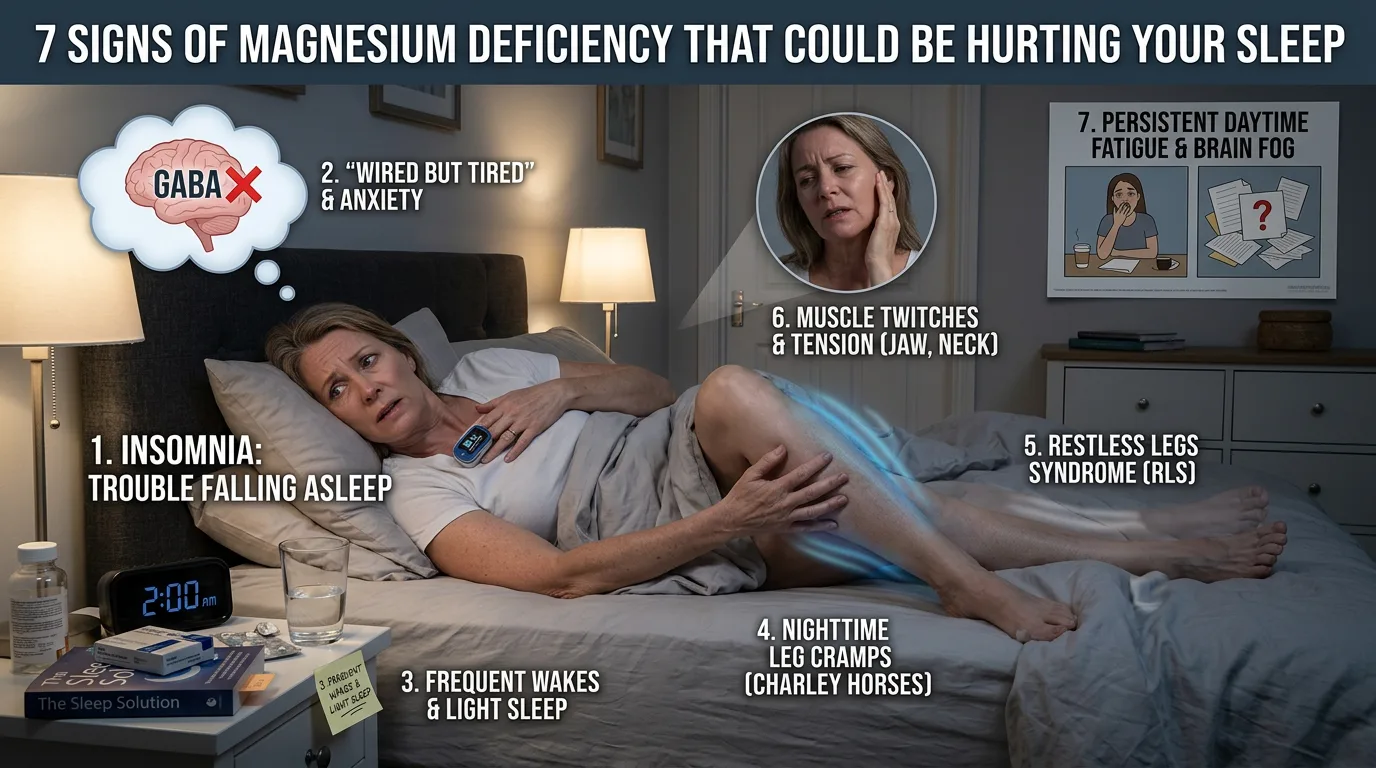
According to the National Institutes of Health (NIH) and Cleveland Clinic, the recognized signs of low magnesium, roughly in order of how early they tend to appear, are:

- Muscle cramps, twitches, or restless legs, especially at night
- Fatigue and weakness that doesn’t match your sleep duration
- Trouble falling asleep or staying asleep
- Anxiety, irritability, or a “wired but tired” feeling
- Headaches or migraines
- Irregular heartbeat or heart palpitations
- Numbness or tingling in the hands, feet, or face
None of these are exclusive to magnesium deficiency, that’s exactly why self-diagnosis is unreliable, but if you recognize several of them together, especially alongside a risk factor covered further down, it’s worth a conversation with your doctor rather than guessing with supplements.
Why “am I even deficient?” is the question to ask first
Most sleep-and-magnesium content jumps straight to dosages and supplement forms. That puts the cart before the horse. Magnesium is a cofactor in more than 300 enzymatic reactions in the body, including ones that regulate the nervous system, muscle relaxation, and the GABA signaling pathway that helps your brain downshift into sleep. When magnesium status is genuinely low, those systems don’t run cleanly, which can show up as physical symptoms, mood symptoms, and yes, sleep symptoms, often before anyone thinks to connect the dots back to a mineral deficiency.
The catch is that true dietary magnesium deficiency is considered uncommon in otherwise healthy people who eat a varied diet, according to Mayo Clinic Health Information. It becomes much more likely in specific groups (covered below) or when something is actively depleting your stores, a GI condition, certain medications, or heavy alcohol use. So the signs below are most meaningful in context, not read in isolation.
The 7 signs of magnesium deficiency that could be hurting your sleep
Here’s each sign in more depth, including why it can specifically interfere with sleep.
1. Muscle cramps, twitches, and restless legs at night
Involuntary muscle contractions, cramps, and twitches are among the clearest physical signs of low magnesium, listed by both the NIH Office of Dietary Supplements and Cleveland Clinic as deficiency progresses beyond the earliest stage. Magnesium works opposite calcium at the neuromuscular junction: calcium triggers muscle fibers to contract, and magnesium helps them relax afterward. When magnesium is low, muscles can fire and twitch without enough of the “stand-down” signal, which is exactly why nighttime calf cramps and restless, twitchy legs are such a common complaint right as people are trying to fall asleep. A cramp that jolts you awake, or legs that won’t settle once you lie down, is a genuinely disruptive (and often overlooked) sleep interruption.
2. Fatigue and low energy that doesn’t match your sleep
Fatigue and weakness are listed as early, nonspecific signs of magnesium deficiency by the NIH, Cleveland Clinic, and MedlinePlus alike. The tricky part is that fatigue is one of the least specific symptoms in medicine, it can mean almost anything, which is also why Cleveland Clinic’s own write-up on the topic notes that clinicians find deficiency genuinely hard to diagnose from symptoms alone. What makes this sign worth flagging in a sleep context is the mismatch: if you’re getting a reasonable number of hours in bed but still wake up drained, or you feel worn out by mid-afternoon despite “enough” sleep, that disconnect between sleep quantity and how rested you feel is worth mentioning to a doctor alongside any of the other signs here, rather than assuming it’s simply poor sleep hygiene.
3. Trouble falling asleep or staying asleep
This is the sign most directly relevant to this site, and it has real physiological backing. Magnesium acts as a natural modulator of the GABA receptor system, GABA is the brain’s primary calming neurotransmitter, responsible for quieting neural activity enough to let you drift off and stay asleep. Research summarized in the NCBI Bookshelf volume Magnesium in the Central Nervous System describes magnesium’s role in enhancing GABA activity and dampening excitatory NMDA/glutamate signaling, and notes that correcting magnesium status has been associated with improvements in sleep disturbance in some populations. Mayo Clinic Press likewise lists “trouble sleeping” directly among the symptoms people with low magnesium report. In other words: insomnia isn’t just a possible side effect of a stressful life, for some people, it’s a downstream symptom of an underlying mineral deficiency that no amount of sleep hygiene alone will fully fix.
4. Anxiety, irritability, and a “wired but tired” feeling
Magnesium deficiency has long been studied in connection with heightened nervous-system excitability, the same NCBI Bookshelf chapter describes low magnesium status in people with anxiety, panic reactions, and phobic symptoms, explaining it through magnesium’s dual role in calming glutamate signaling and boosting inhibitory GABA tone. Practically, this can feel like being tired but unable to switch your brain off at bedtime: a racing, ruminating mind, a short fuse during the day, or free-floating anxiety that doesn’t have an obvious trigger. Because anxiety itself is one of the biggest drivers of insomnia, a magnesium-linked anxiety symptom and a magnesium-linked sleep symptom can easily reinforce each other, making the sleep problem look purely psychological when a nutritional piece may also be in play.
5. Headaches or migraines
A 2020 systematic review in the journal Nutrients concluded that magnesium deficiency correlates with headache frequency and may be an independent risk factor for migraine, acting through mechanisms involving cortical spreading depression and calcitonin gene-related peptide (CGRP), a molecule implicated in migraine attacks. Mayo Clinic Press similarly lists “more headaches” among the symptoms it associates with low magnesium status. The sleep connection here runs in both directions: poor sleep is a well-known migraine and tension-headache trigger, and a headache or migraine, in turn, makes falling or staying asleep harder, so an unexplained uptick in headaches is worth noting alongside your sleep complaints rather than treating as a separate issue.
6. Irregular heartbeat or heart palpitations
This is one of the more serious signs on this list. Both the NIH and Cleveland Clinic list abnormal heart rhythms (arrhythmia) as a recognized effect of more significant magnesium deficiency, magnesium helps regulate the electrical signaling that keeps your heartbeat steady, and low levels can also drag calcium and potassium out of balance, compounding the effect. Palpitations or a fluttering, skipping, or pounding heartbeat that shows up as you’re trying to relax at night can itself be startling enough to keep you awake. Unlike the other signs on this list, this one is not something to self-manage: see the “when to see a doctor” section below.
7. Numbness or tingling in hands, feet, or face
Numbness and tingling (medically, paresthesia) are listed by the NIH, Cleveland Clinic, and MedlinePlus as signs that typically appear as magnesium deficiency becomes more pronounced, reflecting magnesium’s role in normal nerve conduction. This isn’t a direct “sleep” symptom in the way insomnia or cramps are, but it’s a useful signal precisely because it’s unusual and specific, most people don’t have an obvious everyday explanation for tingling fingers or toes, which makes it a reasonable prompt to mention everything else you’ve been noticing (sleep included) the next time you see your doctor.
Who is actually most at risk of magnesium deficiency?
True dietary magnesium deficiency in an otherwise healthy adult eating a varied diet is relatively uncommon, per the NIH’s Health Professional Fact Sheet. Deficiency becomes meaningfully more likely in specific groups, where the mechanism is usually increased loss (through urine or the gut) or reduced absorption rather than diet alone.
| Risk group | Why magnesium drops |
|---|---|
| Older adults | Intestinal magnesium absorption naturally declines with age, while urinary excretion tends to increase; chronic conditions and medications common in this group compound the effect. |
| GI disorders (Crohn’s disease, celiac disease, chronic diarrhea, bowel resection) | These conditions directly impair how much magnesium the gut can absorb, and can increase how much is lost through the digestive tract. |
| Type 2 diabetes | Elevated blood glucose increases magnesium loss through the kidneys, so deficits can develop even with a reasonable diet. |
| Alcohol use disorder | Poor overall nutrition, GI dysfunction, and kidney-related losses combine to deplete magnesium stores; prevalence of deficiency in this group has been reported as high as 30–80% in some clinical settings. |
| Certain medications | Proton pump inhibitors (PPIs) used for heartburn/GERD, and loop or thiazide diuretics used for blood pressure, are both recognized causes of magnesium depletion with long-term use. |
If you fall into one or more of these groups and also recognize several of the signs above, that combination is a much stronger reason to get tested than the symptoms alone.
How magnesium deficiency is actually diagnosed (the blood test problem)
Here’s the part most “magnesium deficiency symptom” articles skip, and it genuinely matters: the standard magnesium blood test can miss a real deficiency.
Only a small fraction of the body’s total magnesium circulates in the blood at any given time, most of it is stored inside cells and in bone. To protect that blood level, the body will pull magnesium out of bone and tissue reserves to keep serum readings looking normal, even while those internal stores are running low. MedlinePlus states this plainly: “the amount of magnesium in your blood may be normal even though the amount of magnesium stored in your body is low.” The NIH’s Health Professional Fact Sheet makes the same point from the clinical side, noting that serum magnesium concentrations “have little correlation with total body magnesium levels or concentrations in specific tissues.”
What this means in practice: a normal result on a standard serum magnesium test does not fully rule out deficiency, particularly in people with risk factors from the table above. If deficiency is still suspected, a doctor may order additional tests, a magnesium red blood cell (RBC) test or a urine magnesium test, which can offer a better picture of magnesium stored inside cells, though Mayo Clinic Press notes these more sensitive tests are less routinely available and not always covered by insurance. This is exactly why self-diagnosing from symptoms (or from a single normal blood test) and then self-prescribing a supplement dose is not a reliable approach, diagnosis here is genuinely more nuanced than “test normal, therefore not deficient.”
When to see a doctor rather than self-diagnosing
This article is designed to help you recognize patterns worth raising with a healthcare provider, it is not a substitute for testing or diagnosis. A few specific situations call for prompt medical attention rather than a trip to the supplement aisle:
- Irregular heartbeat or palpitations – get this evaluated by a doctor; Cleveland Clinic advises seeking emergency care immediately for severe symptoms such as seizures or a markedly abnormal heart rhythm.
- Severe or worsening muscle cramps, or any seizure activity – these are signs listed for more advanced magnesium depletion and warrant urgent evaluation.
- Kidney disease or impaired kidney function – Mayo Clinic Press specifically cautions that people with kidney disease should not take magnesium supplements unless recommended and monitored by a clinician, since the kidneys are what clear excess magnesium from the body.
- You’re on long-term PPIs, diuretics, or have diabetes, alcohol use disorder, or a GI absorption condition – mention your sleep symptoms in that context so your doctor can decide whether testing makes sense.
- Persistent insomnia with no clear cause – even without the more serious signs above, ongoing sleep trouble is worth discussing with a doctor to rule out magnesium status and other medical causes before assuming it’s purely behavioral.
If testing and your doctor confirm you’re low, that’s the point where dosage and form become relevant, our dosage and timing guide covers the NIH’s recommended daily intakes (roughly 400–420 mg/day for adult men and 310–320 mg/day for adult women) and how timing relates to sleep.
Frequently asked questions
What are the 7 signs your body needs magnesium?
The most commonly cited signs are muscle cramps or twitches, fatigue, trouble falling or staying asleep, anxiety or irritability, headaches or migraines, irregular heartbeat or palpitations, and numbness or tingling in the hands and feet. These are drawn from NIH and Cleveland Clinic descriptions of hypomagnesemia, though none of them are unique to magnesium deficiency on their own.
Can low magnesium cause insomnia?
It can contribute to it. Magnesium helps regulate GABA, the nervous system’s main calming neurotransmitter, and Mayo Clinic Press lists trouble sleeping among the symptoms associated with low magnesium status. That said, insomnia has many possible causes, so low magnesium should be considered one possible contributor rather than the default explanation.
How do I know if I’m magnesium deficient?
You can’t reliably self-diagnose from symptoms alone, since signs like fatigue and poor sleep overlap with many other conditions. The accurate way is to discuss your symptoms and any risk factors (age, GI conditions, diabetes, alcohol use, PPIs or diuretics) with a doctor, who can decide whether testing is warranted and which test is most appropriate.
Does a blood test accurately show magnesium deficiency?
Not always. Because most of the body’s magnesium is stored in bone and tissue rather than blood, a standard serum magnesium test can come back normal even when total body magnesium is low. Both the NIH and MedlinePlus note this limitation. A magnesium RBC (red blood cell) test or urine magnesium test can sometimes give a more complete picture.
Who is most at risk of magnesium deficiency?
Older adults, people with gastrointestinal disorders that affect absorption (such as Crohn’s disease or celiac disease), people with type 2 diabetes, people with alcohol use disorder, and people taking proton pump inhibitors or certain diuretics long-term are all at elevated risk, according to the NIH Office of Dietary Supplements.
Can magnesium deficiency cause anxiety?
Research on magnesium’s role in the nervous system, including a review published via the NCBI Bookshelf, links low magnesium status to heightened neural excitability and symptoms including anxiety and irritability, through magnesium’s effects on GABA and glutamate signaling. This is an area of active research rather than a settled, universal cause-and-effect relationship.
What foods are highest in magnesium?
Magnesium-rich foods recognized by the NIH include leafy green vegetables (like spinach), legumes, nuts and seeds (especially almonds and pumpkin seeds), whole grains, and some fortified foods. A varied diet including these foods is generally sufficient for people without absorption issues or increased losses.
Should I start taking a magnesium supplement if I think I’m deficient?
Talk to a doctor first, especially if you have kidney disease, take other medications, or have any of the risk factors above. Self-supplementing without confirming deficiency means you may be treating the wrong problem, and in people with impaired kidney function, magnesium supplements can build up to unsafe levels. If your doctor confirms low magnesium and supplementation is appropriate, our dosage and timing guide covers how much and when to take it for sleep.
How much magnesium do adults need per day?
The NIH’s recommended dietary allowance is approximately 400–420 mg/day for adult men and 310–320 mg/day for adult women, varying slightly by age. For a full breakdown of timing and supplemental forms for sleep specifically, see our dedicated dosage and timing guide linked below.
Disclaimer: This article is for general educational purposes only and is not a substitute for professional medical advice, diagnosis, or treatment. It is not a diagnostic tool. If you are experiencing concerning symptoms, particularly an irregular heartbeat, severe muscle cramps, or any seizure activity, seek medical attention rather than attempting to self-diagnose or self-treat with supplements. Always consult a qualified healthcare provider before starting any new supplement, especially if you have an existing health condition or take other medications.
References
- National Institutes of Health, Office of Dietary Supplements. Magnesium – Health Professional Fact Sheet. NIH ODS.
- National Institutes of Health, Office of Dietary Supplements. Magnesium – Consumer Fact Sheet. NIH ODS.
- Cleveland Clinic. Hypomagnesemia (Low Magnesium): Symptoms, Causes, Diagnosis & Treatment. Cleveland Clinic.
- Cleveland Clinic. Signs You May Have a Magnesium Deficiency. Cleveland Clinic Health Essentials.
- Mayo Clinic Press. Low Magnesium Symptoms: Are You Low, But Don’t Know? Mayo Clinic Press.
- MedlinePlus, National Library of Medicine. What Is a Magnesium Blood Test? MedlinePlus.
- MedlinePlus Medical Encyclopedia. Magnesium in Diet. MedlinePlus.
- Maier, J.A., Pickering, G., Giacomoni, A., Cazzaniga, A., & Pellegrino, M. (2020). Headaches and Magnesium: Mechanisms, Bioavailability, Therapeutic Efficacy and Potential Advantage of Magnesium Pidolate. Nutrients.
- Papadopol, V., & Nechifor, M. (2011). Magnesium in Neuroses and Neuroticism. In Vink, R. & Nechifor, M. (Eds.), Magnesium in the Central Nervous System. University of Adelaide Press.






Leave a Reply