Sleep & Wellness
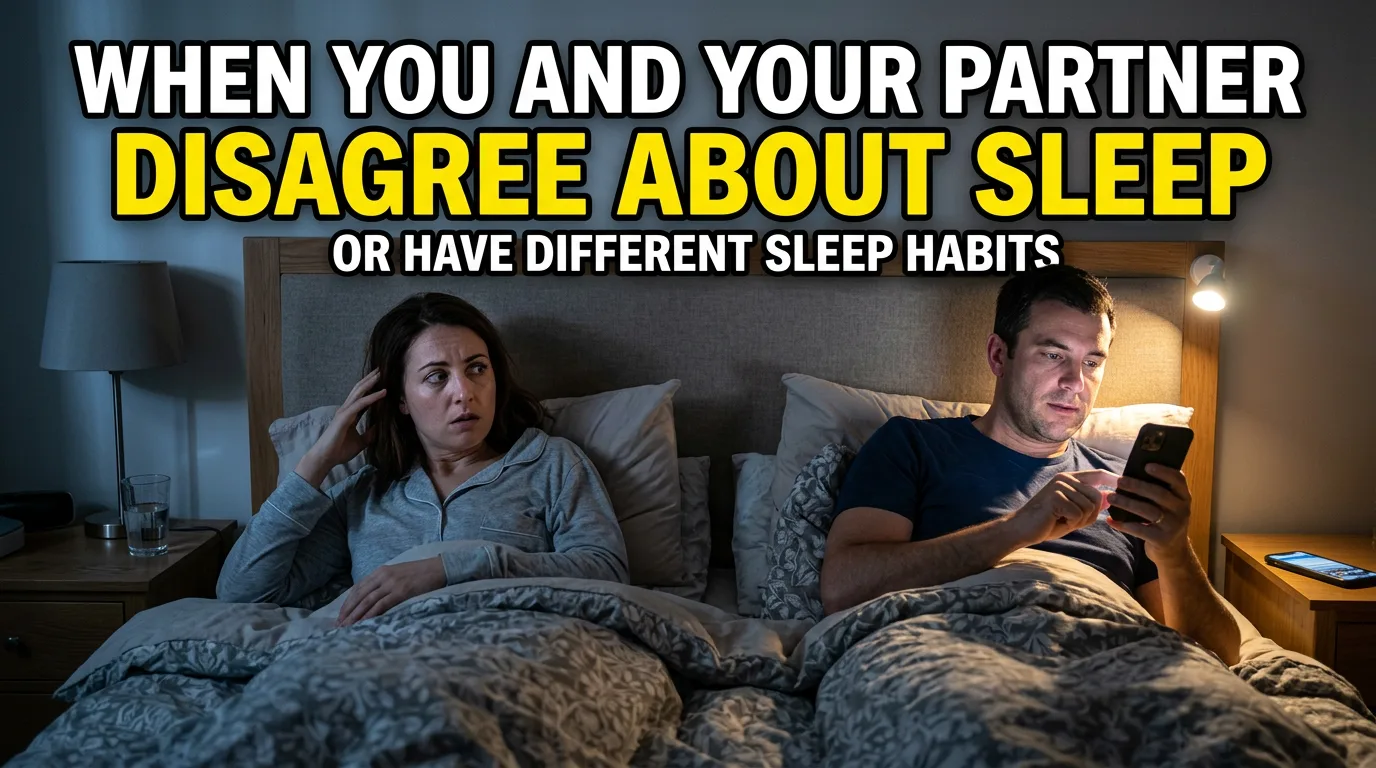
Two people sharing a bed rarely have identical sleep needs, and once children enter the picture, sleep stops being a private matter altogether. One partner wants to let the baby cry it out for a few nights; the other can’t bear it and keeps sneaking in to soothe. One of you is a genuine night owl who does your best thinking at 11 p.m.; the other is asleep by 9:30 and up with the sun. One of you sleeps like a rock; the other lies awake cataloguing every snore, kick, and blanket tug. None of this means your relationship is in trouble, and it doesn’t mean either of you is doing sleep “wrong.” It means two nervous systems, two chronotypes, and sometimes two very different parenting instincts are trying to share one bedroom, and that takes some deliberate negotiation. This guide covers two related but distinct problems: what to do when you and your partner actively disagree about a sleep decision, especially around a child, and what to do when your partner’s ordinary sleep habits, snoring, a mismatched schedule, restlessness, are quietly wrecking your sleep quality even without any disagreement at all.
Quick Answer
When you and your partner disagree about a sleep decision, whether that’s a child’s sleep training method, co-sleeping, or your own bedtimes, the goal isn’t to win the argument, it’s to agree on one approach, try it consistently for a set period, and revisit it together rather than second-guessing it nightly in front of a child or each other. When the problem is that your partner’s habits (snoring, a different schedule, restlessness, phone use) are hurting your own sleep, the fix is almost always practical rather than relational: separate blankets or duvets, white noise, treating snoring as a medical issue rather than a personality flaw, and, increasingly, separate sleeping spaces on some or all nights. That last option, often called a “sleep divorce,” has real, growing acceptance among sleep researchers and couples alike; a 2023 survey from the American Academy of Sleep Medicine found that roughly a third of Americans sleep apart from their partner at least some of the time specifically to sleep better, and most who do it don’t report it hurting their relationship. Sleeping apart, or simply sleeping differently, is a logistics decision, not a verdict on the marriage.
Why sleep disagreements between couples are so common
It helps to start by normalizing this, because a lot of couples quietly assume their sleep friction is unusual or a symptom of a bigger problem. It generally isn’t. Sleep needs and preferences are shaped by genetics (chronotype has a real heritable component), age, hormones, stress load, and, once kids arrive, deeply held beliefs about parenting that often trace back to how each partner was raised. Two adults who agree on almost everything else can still have flatly incompatible instincts about whether a crying baby should be picked up immediately or given a few minutes to self-settle. Family therapists who draw on the Gottman Institute’s research point out that a large share of ongoing couple conflicts, including many sleep and parenting disagreements, are what they call “perpetual problems,” differences rooted in personality or values that don’t fully resolve so much as get managed. That reframe matters: the goal usually isn’t to permanently settle the debate, it’s to find a workable, revisitable compromise and stop treating every bedtime as a fresh negotiation.
Part one: when you disagree about a sleep decision
This is the harder of the two problems, because it usually isn’t just about sleep, it’s about values, worry, and sometimes guilt. Here’s how to work through the most common versions of it.

Disagreeing about how to handle a child’s sleep
Few parenting decisions generate as much friction as how to respond to a child who won’t sleep through the night. One partner wants to try a structured approach like graduated extinction; the other finds it distressing and wants to keep responding to every cry. Neither position is inherently wrong, they usually reflect different tolerances for short-term distress in service of a longer-term goal. The most useful first step isn’t picking a method, it’s agreeing on what you’re actually dealing with; our guide to Why Is My Child Not Sleeping Through the Night? walks through the age-based causes of night waking, regressions, teething, sleep associations, and separation anxiety, so you can settle that question before arguing about how to fix it. Once anything medical is ruled out, a few rules defuse most of the conflict: discuss the plan privately, never in front of the child or in the heat of a 2 a.m. meltdown; agree on one method and a fixed trial period, one to two weeks is standard, before either of you declares it isn’t working; and present a united front once you’ve chosen, even if one of you is still privately unsure, since a child who senses daylight between parents will reliably push toward whichever response is easier to get. If you truly can’t agree, a pediatrician or infant sleep consultant can act as a neutral, evidence-based third party.
Disagreeing about co-sleeping or a child’s sleeping arrangement
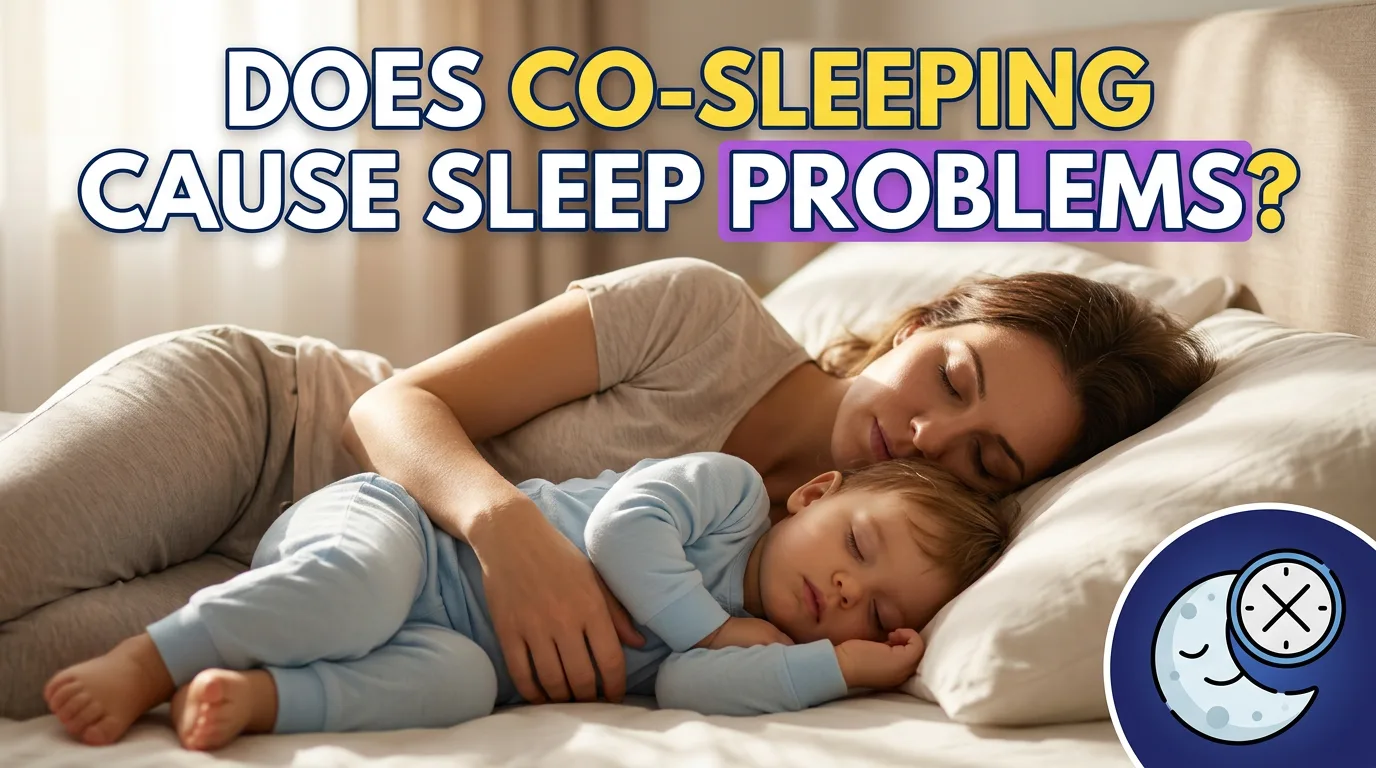
A related but distinct disagreement is whether a child should be in the family bed, in a crib in another room, or somewhere in between, and this one often carries more emotional weight because it touches each partner’s own upbringing and sense of closeness with the child. One partner may see co-sleeping as warm and natural; the other may see it as eroding both the child’s independent-sleep skills and the couple’s own time together, and both instincts can be legitimate at once. Our guide Does Co-Sleeping Cause Sleep Problems? covers what the research actually shows: co-sleeping is the global norm rather than a mistake, but it does measurably fragment sleep for both parents and children, and those trade-offs are worth reading together rather than each partner arguing from an unstated assumption. If one of you wants to change an existing arrangement, be explicit about why: is the concern the child’s development, your own sleep debt, or the relationship itself? Naming which one is actually driving the disagreement usually makes it far easier to solve.
Disagreeing about your own bedtime, bedroom, or bed
Not every sleep disagreement involves a child. Plenty of couples clash over simpler things: one wants to go to bed at 9:30, the other doesn’t wind down until midnight; one wants a firmer mattress, the other wants softer; one wants total silence and darkness, the other falls asleep to a podcast with a lamp on. These are usually easier to resolve than parenting disagreements precisely because they carry lower emotional stakes, which makes them good practice for the harder ones. The starting move is the same either way: state what you actually need, not just what you want the other person to stop doing, and treat your partner’s stated need as equally valid to your own. A mattress topper on one side of a shared bed, a small reading light instead of an overhead one, or an agreement that the late sleeper uses headphones after a set hour, these small, asymmetric compromises solve a surprising share of bedroom friction without either partner having to fully get their way.
A simple framework for resolving sleep disagreements
Across all three situations above, the same basic process tends to work: talk about it away from the bedroom and away from the moment of conflict, ideally during the day when neither of you is sleep-deprived and defensive; name what each of you is actually afraid of, since “I don’t want to sleep train” is often really “I’m afraid our baby will feel abandoned,” and that fear deserves a direct answer rather than a debate about method; agree on one approach and a short trial period rather than an open-ended commitment, which lowers the stakes enough for a reluctant partner to say yes; and build in a scheduled check-in to revisit it, rather than letting resentment build silently. Couples therapists consistently note that the specific decision matters less than whether both partners feel heard in reaching it; a compromise one partner feels was steamrolled through tends to resurface as resentment later, even if the sleep problem itself gets solved.
Part two: when your partner’s sleep habits affect your sleep quality
This is a different problem from an active disagreement: nobody is arguing about the right approach, your partner just sleeps in a way that disrupts you, and you may feel guilty even bringing it up because it can sound like a complaint about who they are rather than what they do at night.

Snoring
Snoring is one of the most common and most under-addressed sources of a partner’s sleep being quietly wrecked. The Sleep Foundation has reported that bed partners of habitual snorers experience measurably more nighttime awakenings and next-day fatigue than partners of quiet sleepers, and the effect compounds over months and years even when the snoring partner sleeps through their own noise undisturbed. The important reframe is that snoring, especially loud, frequent snoring, is a medical symptom, not a personality trait to simply tolerate. Snoring accompanied by gasping, choking sounds, or witnessed pauses in breathing can indicate obstructive sleep apnea, a condition with real cardiovascular and cognitive stakes that a doctor can screen for, sometimes with a simple home sleep test. Treating it as “just something he does” often means both partners quietly suffer for years when a sleep study, a change in sleep position, or treatment like a CPAP machine could meaningfully fix it. Framing the conversation around your partner’s health, not your own annoyance, tends to land better and is usually more medically accurate anyway.
Mismatched chronotypes and schedules
Chronotype, your body’s natural tendency toward earlier or later sleep and wake times, is significantly influenced by genetics, and it doesn’t always match between partners. Sleep Foundation research on chronotypes describes a spectrum from strong morning types to strong evening types, with most people falling somewhere in between, and academic reviews of couple sleep have found that a meaningful chronotype mismatch is associated with more nighttime disruption and, in some studies, lower relationship satisfaction, though this evidence base is still developing and shouldn’t be treated as settled. What’s well established is the mechanical problem: an evening-type partner getting into bed at midnight will wake a morning-type partner who fell asleep at 10, and a morning-type partner’s early alarm will do the same in reverse. This is functionally the same mismatch shift workers face with the rest of the world, contained within one household; our guide to Does Shift Work Ruin Your Sleep Permanently? covers the underlying circadian science if one of you also works irregular hours. Practical fixes that don’t require changing anyone’s biology include a blackout-friendly setup, a reading light used away from the bed, and, importantly, protecting some overlapping window of time, even 20 minutes before the early sleeper turns in, as dedicated together-time so the mismatch doesn’t quietly erode connection along with sleep.
Restlessness, temperature, and phone use
Beyond snoring and schedule, a long list of smaller habits can chip away at a partner’s sleep: tossing and turning, kicking, running hot or cold relative to the other person, or scrolling a bright phone screen in bed after lights-out. Most of these have low-effort fixes that don’t require anyone to change their fundamental sleep style. The Scandinavian sleep method, using two separate duvets on one shared bed rather than a single shared blanket, is widely recommended by sleep organizations specifically because it eliminates blanket-stealing and lets each partner regulate their own temperature, and many couples report fewer wake-ups after switching. A mattress topper on one side only can address firmness disagreements the same way. White noise or a fan can mask a restless sleeper’s movements and a snoring partner’s noise at once, and it’s one of the simplest, best-supported interventions for improving sleep in a disrupted environment. Phone use in bed is worth addressing directly: a shared cutoff time, or having the night-owl partner read in another room until actually ready for sleep, protects the earlier sleeper. If late-night habits are part of the problem, the wind-down principles in The 3:2:1 Sleep Rule Explained: A Complete Sleep Hygiene Guide apply just as much to protecting a partner’s sleep as your own.
Sleep divorce: a legitimate solution, not a relationship failure
When the smaller fixes above aren’t enough, separate sleeping spaces, sometimes called a “sleep divorce,” are an increasingly normalized option rather than a last resort or a sign of a failing marriage. The American Academy of Sleep Medicine’s 2023 Sleep Prioritization Survey found that a substantial share of U.S. adults, cited at roughly a third in AASM’s own reporting, sleep in a separate bed or room from their partner at least some nights specifically to get better sleep, a pattern that skews notably higher among younger adults. Sleep medicine physicians who study this trend generally frame it the same way: consistently poor sleep affects mood, health, and the quality of time couples spend together while awake, so an arrangement that gets both partners genuinely well-rested, even a nontraditional one, tends to serve the relationship better than nightly disrupted sleep does. It doesn’t have to mean permanent separate bedrooms; many couples land on a hybrid, sleeping apart on work nights and sharing a bed on weekends or during illness or travel. What matters far more than the specific arrangement is whether it’s a decision both partners actually chose and can revisit, rather than one partner quietly retreating to the guest room out of resignation while the other is left wondering what’s wrong.
How to decide what’s right for your relationship
There’s no universal right answer here, only a right answer for your specific household, but a few questions tend to clarify it quickly:
- Is this a values disagreement or a habit problem? A disagreement about how to sleep-train a child needs a conversation and a plan; a partner’s snoring needs a doctor. Treating a medical issue as a values debate tends to make both kinds of problems worse.
- Has either of you actually said what you need out loud? Many couples share a bed for years without stating “I need it colder” or “please stop checking your phone after 11,” simply because it feels petty to bring up. Chronic unspoken sleep disruption causes real resentment over time.
- Would a low-effort fix solve most of the problem? Separate blankets, white noise, and a phone curfew solve a surprising share of “we’re just incompatible sleepers” situations before separate rooms are ever necessary.
- If you do sleep apart sometimes, is it a shared decision? An arrangement both partners actively chose and can adjust feels like teamwork; one partner quietly exiling themselves to the couch does not, even if the sleep outcome looks identical.
Common mistakes couples make with sleep disagreements
- Relitigating the decision every night. Revisiting an agreed-upon plan every single night, especially in front of a child, undermines it before it has a chance to work. Agree on a trial period and stick to it.
- Treating a medical symptom as a character flaw. Snoring and restless-leg symptoms have real physiological causes and real treatments. Resenting a partner for something a doctor could help with usually just delays the fix.
- Letting resentment substitute for a direct conversation. Silently enduring a disruptive sleep habit for months, then exploding over something minor, is far more damaging than an early, calm “this isn’t working for me” would have been.
- Assuming separate rooms means something is wrong. Plenty of well-functioning couples sleep apart some or all of the time. The arrangement itself isn’t the signal to worry about; secrecy or one partner being pushed into it without a say are.
- Skipping the neutral third party when you’re truly stuck. A pediatrician, sleep consultant, or couples therapist isn’t a sign of failure, it’s often the fastest way through a values impasse two exhausted adults can’t resolve alone at 1 a.m.
Frequently Asked Questions
Is it normal for couples to sleep in separate beds?
Yes. Survey data from the American Academy of Sleep Medicine indicates roughly a third of U.S. adults sleep separately from their partner at least some nights specifically to improve their sleep, a pattern often called a “sleep divorce.” It’s increasingly common and, among couples who choose it deliberately and communicate about it, is not generally associated with relationship harm.
What should we do if we disagree about sleep training our baby?
Discuss the disagreement privately and away from the moment of a meltdown, name the underlying fear driving each position rather than just debating methods, agree on one approach with a short trial period (typically one to two weeks), and present a united front to your child once you’ve decided, even if one partner is still privately unsure. If you remain stuck, a pediatrician or infant sleep consultant can offer a neutral, evidence-based perspective.
My partner’s snoring keeps me awake. What should I do first?
Treat it as a health conversation rather than a complaint about their habits. Loud or frequent snoring, especially with gasping or breathing pauses, is worth raising with a doctor, since it can indicate obstructive sleep apnea, a treatable condition. Alongside that, white noise, a change in sleep position, or a separate room on the worst nights can protect your own sleep while the underlying cause gets addressed.
Can being a night owl and an early bird really hurt a relationship?
Chronotype mismatch is a real, partly genetic difference, and research on couple sleep has linked significant mismatches to more nighttime disruption and, in some studies, lower relationship satisfaction, though this research area is still developing and shouldn’t be treated as a definitive verdict. In practice, most chronotype-mismatched couples manage it well with light and noise management and by deliberately protecting some shared time despite different bedtimes, rather than needing to change either person’s natural rhythm.
Does sleeping in separate rooms mean our marriage is in trouble?
Not inherently. Sleep physicians and relationship researchers generally distinguish between separate sleep as a jointly chosen, communicated arrangement aimed at better rest, which is not associated with relationship harm, and separate sleep as a symptom of unresolved conflict or avoidance, which is more about the underlying issue than the sleeping arrangement itself. The sleeping location isn’t the meaningful signal; how the decision was made and discussed is.
What’s an easy first step if our sleep needs are just different?
Try the lowest-effort fixes before assuming you need separate rooms: two separate duvets instead of one shared blanket (the Scandinavian sleep method), white noise to mask movement and snoring, a phone curfew or reading light for the later sleeper, and a deliberately protected window of together-time before the earlier sleeper turns in. Many couples find these small changes resolve most of the friction without anyone having to change their natural sleep style.
One last thing worth saying plainly: persistent, serious sleep disruption, whether from a disagreement you can’t resolve or a partner’s habit you can’t work around, is worth taking seriously rather than quietly enduring for years. If snoring, restlessness, or a schedule mismatch is affecting your health, mood, or safety, or if a parenting disagreement about sleep has you feeling stuck, a doctor, sleep specialist, or couples or family therapist can offer guidance a blog post can’t fully replace.
References
- American Academy of Sleep Medicine – Over a Third of Americans Opt for a “Sleep Divorce”
- Sleep Foundation – What Is the Scandinavian Sleep Method?
- Sleep Foundation – Chronotypes: Definition, Types, & Effect on Sleep
- Sleep Foundation – When Your Partner Snores, No One Sleeps
- The Gottman Institute – Managing Conflict: Solvable vs. Perpetual Problems
- Mayo Clinic – Sleep Apnea: Symptoms and Causes




Leave a Reply