Fish & Aquariums
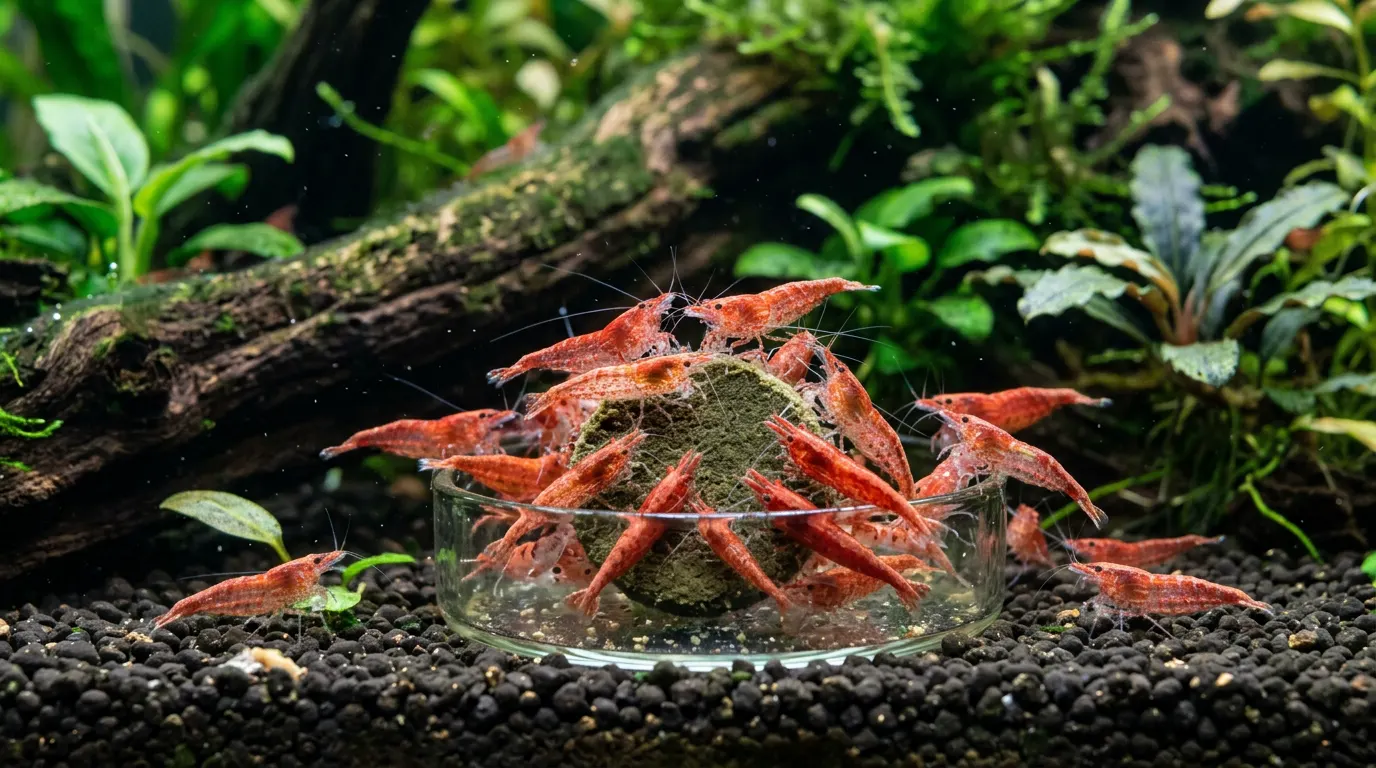
The first time I dropped a sinking pellet into my cherry shrimp tank, I sat there for ten minutes waiting for a feeding frenzy that never came. Half the colony was already busy picking at a piece of driftwood, completely uninterested in the food I’d just bought. It took me an embarrassingly long time to realize my shrimp had been eating fine the whole time, just not from a dish. Once I stopped treating feeding like a fish routine and started thinking about it the way shrimp actually experience it, my colony got healthier, my water got cleaner, and I stopped losing shrimp to mystery deaths after every molt.
Quick answer
Aquarium shrimp are constant grazers that spend most of their day picking biofilm, algae, and detritus off surfaces, so a healthy, established tank can supply a large share of their diet without you adding anything at all. On top of that natural grazing, feed a shrimp-specific sinking pellet, algae wafer, or mineral-enriched food just 2-4 times a week in a lightly stocked or planted tank, offering only what the colony can clear in two to three hours, and remove any leftovers you find after that window. Supplement with calcium or a mineral-rich shrimp food to support strong molts, rotate in blanched vegetables like zucchini or spinach once or twice a week, and always err toward underfeeding, overfeeding, not starvation, is what actually kills most shrimp colonies.
Shrimp are grazers first, diners second
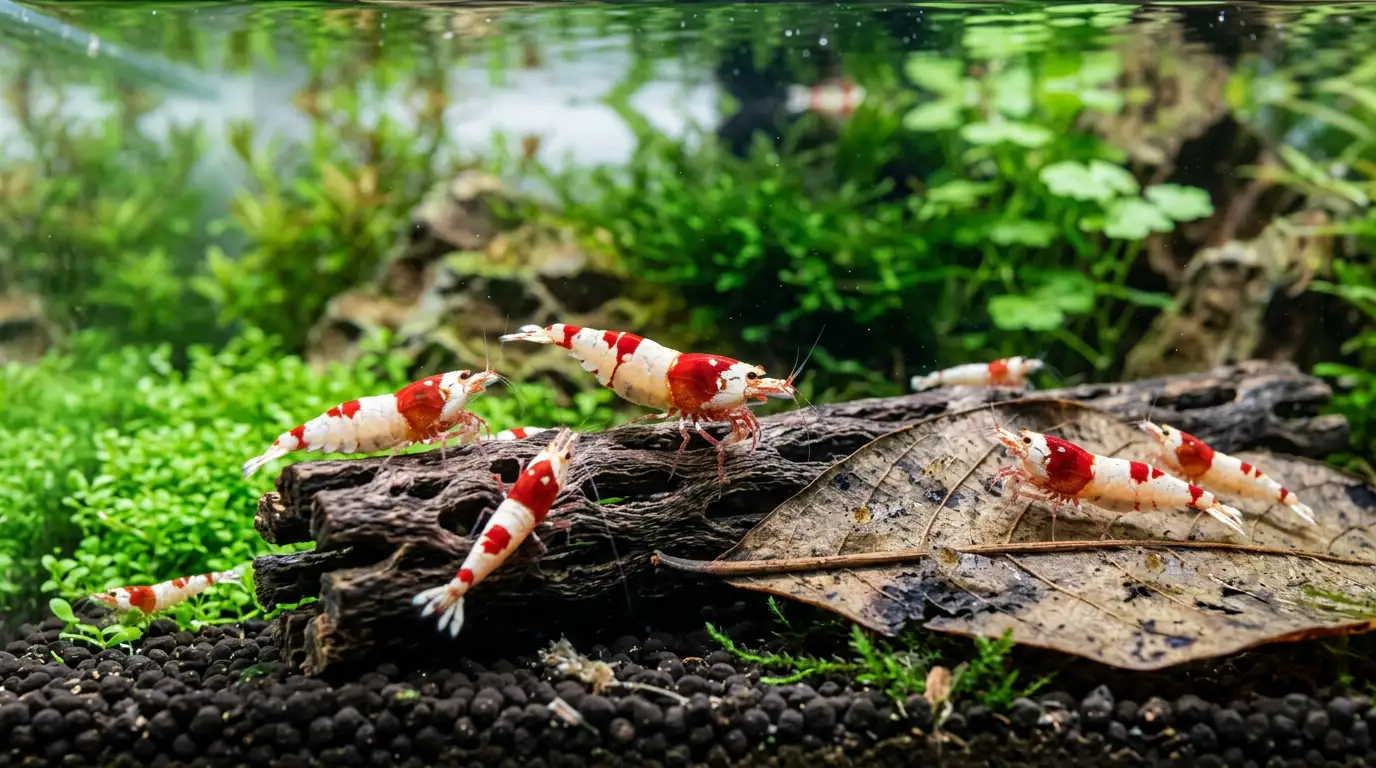
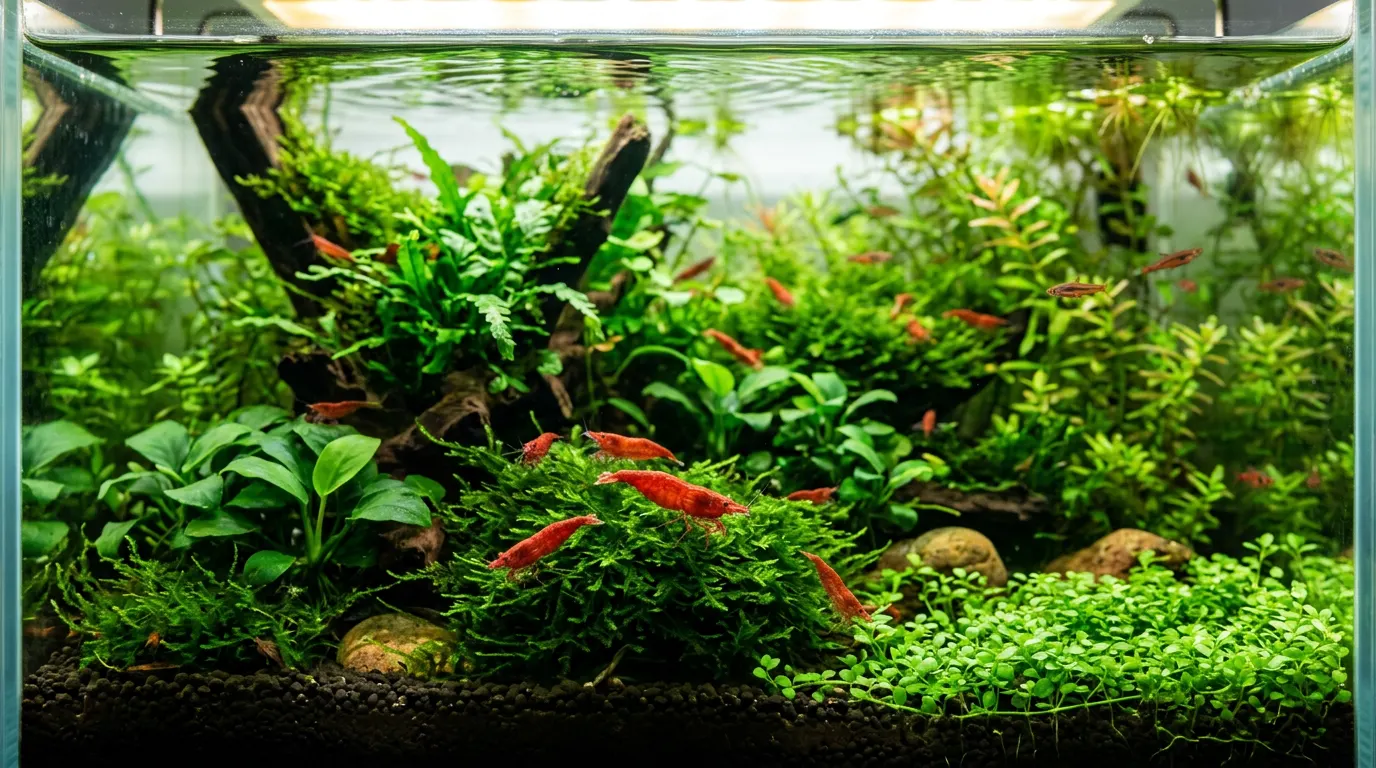
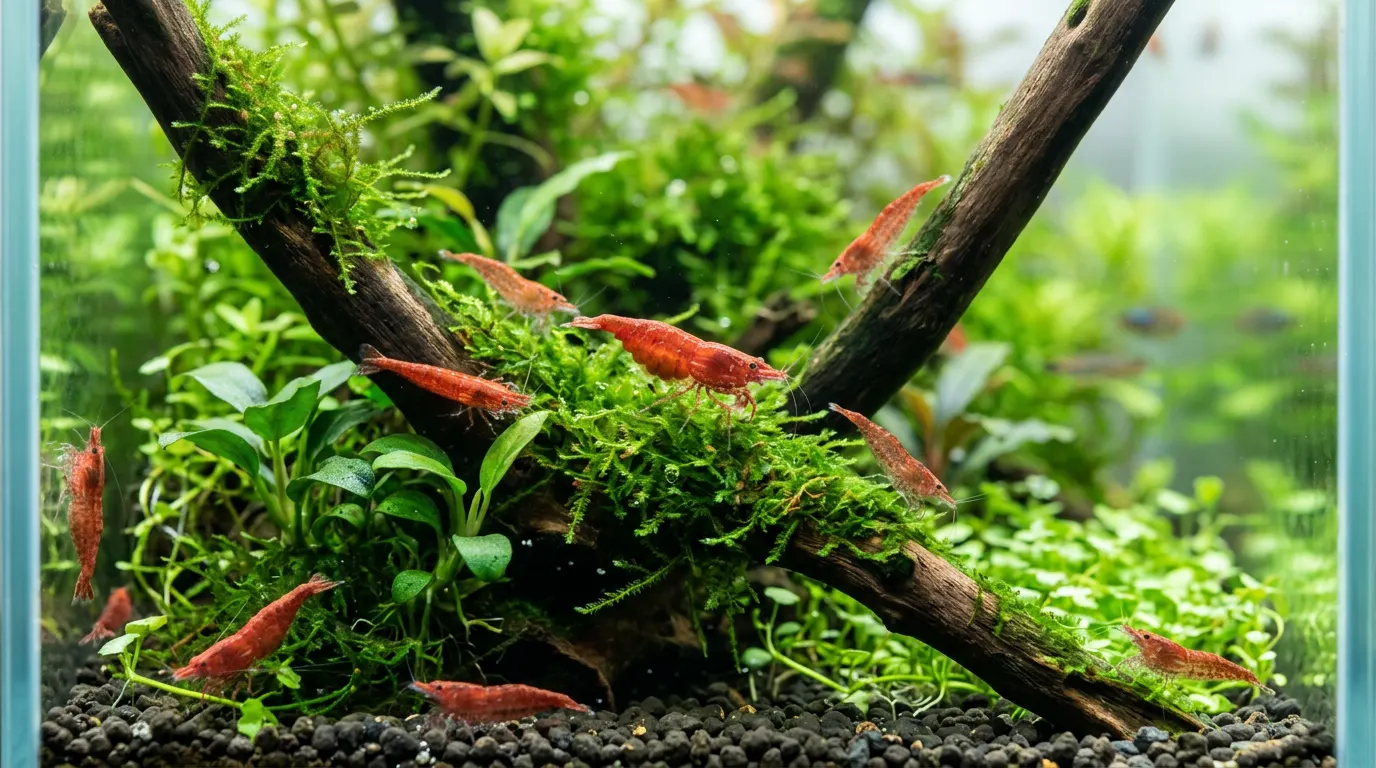
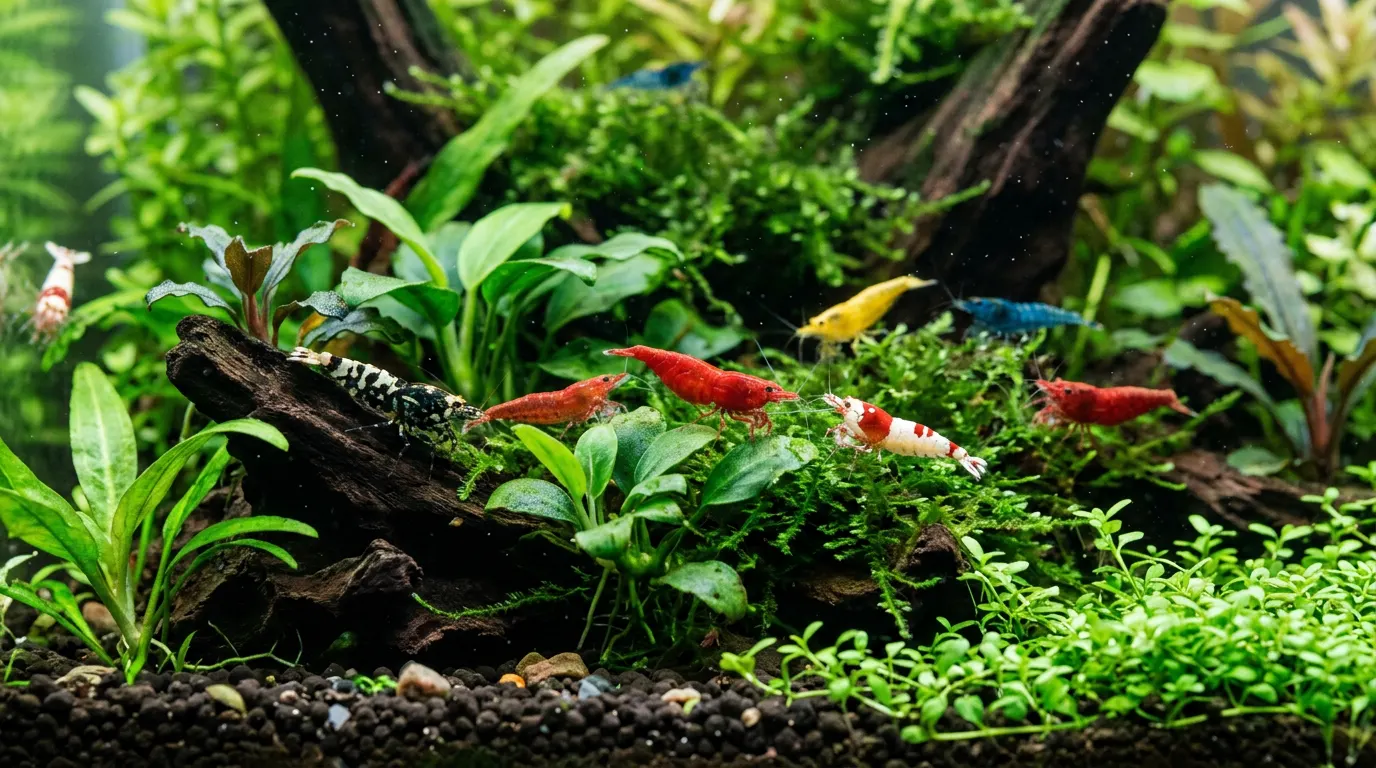
It helps to stop thinking of shrimp as animals you feed and start thinking of them as animals that forage. In the wild, and in any mature aquarium, dwarf shrimp such as Neocaridina and Caridina species spend nearly all of their waking hours combing surfaces, glass, driftwood, plant leaves, decor, even substrate, for biofilm: the slimy layer of bacteria, microorganisms, and organic material that colonizes anything submerged in water. The care guide for cherry shrimp makes this point directly, noting that a tank with established biofilm and algae growth can largely sustain a shrimp colony on its own, with supplemental feeding used to round out nutrition rather than serve as the primary food source.
This is also why shrimp tend to do so much better in tanks that have been running for a while than in freshly set-up ones. A brand-new aquarium simply hasn’t had time to grow the biofilm and microfauna that shrimp rely on, which is one more reason it pays to let a tank cycle and mature, something I cover in more detail in my guide to cycling a new aquarium, before adding a shrimp colony rather than stocking it on day one. Driftwood, sponge filters, and rougher decor all accelerate biofilm growth, and a well-chosen substrate gives it even more surface area to colonize, which is part of why substrate choice matters so much for shrimp keepers specifically; I go through the tradeoffs in my substrate comparison guide.
Commercial shrimp foods worth keeping on hand
Grazing covers a lot of ground, but it doesn’t cover everything, especially in tanks with lower bioload or less established biofilm. This is where purpose-made shrimp foods earn their keep. Practical Fishkeeping’s shrimp food comparison, “The BIG shrimp food test,” is a useful reference here; it evaluated a range of commercial shrimp foods side by side and found meaningful differences in how well shrimp took to different formulations, which is a good reminder that “shrimp food” isn’t a single interchangeable category.
Look for three broad types, and it’s worth having more than one in rotation:
| Food type | Suggested frequency | Purpose |
|---|---|---|
| Sinking shrimp pellets | 2-3x per week | Balanced protein and plant matter for general nutrition and growth |
| Algae wafers | 1-2x per week | Plant-based fiber and grazing enrichment, good for tanks with less natural algae |
| Mineral-enriched / calcium foods | 1-2x per week, or as your water’s GH/mineral levels require | Supports shell strength and successful molting |
| Blanched vegetables | 1-2x per week | Variety, fiber, and grazing surface area; removed within a few hours |
| Biofilm / algae (natural) | Continuous grazing | Primary day-to-day food source in an established tank |
Sinking pellets formulated specifically for shrimp tend to hold together longer than flake or generic fish pellets, which matters because shrimp pick at food slowly over an extended period rather than gulping it down the way fish do. Algae wafers work well as an occasional addition, particularly in tanks that don’t grow much natural algae. Mineral-enriched foods, often labeled for molting support, are worth having on hand any time you notice shrimp struggling to complete a molt cleanly.
Safe blanched vegetables for shrimp
Vegetables are a cheap, easy way to add variety and fiber to a shrimp diet, but they need to be prepared properly first. Blanching, a quick dip in boiling water followed by a rinse in cool water, softens the vegetable’s cell walls so shrimp can actually graze on it, and it removes surface residues you don’t want going into your tank.
Vegetables that reliably work well for shrimp include:

- Zucchini. A shrimp-keeper favorite, slice thin, blanch for 1-2 minutes, and weight it down so it sinks. It tends to soften evenly and shrimp graze on it for hours.
- Spinach. Blanch briefly until it wilts; it breaks down fast, so remove any uneaten portion well before the 24-hour mark to avoid fouling the water.
- Carrot. Slice into thin coins and blanch for a few minutes until slightly softened; it lasts longer than leafy greens, which makes it more forgiving for beginners.
- Cucumber. A classic sinking snack; slice, blanch briefly (or use it raw if very thin), and expect it to be picked clean within a few hours in an active colony.
Whatever vegetable you use, treat it the same way you’d treat any other feeding: drop in a small piece, watch how quickly it gets attention, and pull out whatever’s left after a few hours rather than letting it sit and decompose.
Calcium and minerals: fueling the molt
Shrimp don’t have an internal skeleton; their exoskeleton is their structural support, and they have to shed and regrow it repeatedly throughout their lives to grow at all. That molting process is mineral-intensive, and it’s one of the few places where diet alone often isn’t enough; water chemistry matters just as much as what you feed. Shrimp draw calcium and other minerals both from their food and directly from the water column, which is why keepers in soft or low-mineral water (often from RO or heavily filtered tap water) tend to see far more molting problems than keepers with harder water.
When a shrimp can’t pull enough calcium together to complete a molt, the result is a condition shrimp keepers commonly call “White Ring of Death, a pale, opaque band that forms around the body where the old shell has separated but the shrimp can’t finish shedding it, which is usually fatal. It’s a well-documented failure mode across shrimp-keeping forums and specialist sites, and it’s almost always traced back to insufficient calcium or general mineral content in the water rather than a single bad feeding.
Two practical fixes: use a GH/mineral booster to bring your water’s general hardness into a shrimp-appropriate range before you rely on food to fill the gap, and keep a mineral-enriched shrimp food or calcium supplement in regular rotation, especially if you keep Caridina species, which tend to be pickier about water parameters than the hardier Neocaridina varieties. Checking parameters is part of routine tank care generally, and if you’re not already on a consistent testing and maintenance rhythm, my aquarium maintenance schedule is a good place to build that habit in alongside feeding.
How often and how much to feed
Frequency depends heavily on how established your tank is and how many shrimp you’re keeping. In a mature, planted tank with a modest shrimp population, feeding 2-3 times a week is usually plenty; the grazing surface is doing most of the work between feedings. In a newer tank, a bare-bottom breeding setup, or a tank with a larger colony relative to its surface area, you may need to feed more often, but in smaller amounts each time.
The portion sizing rule that matters more than any schedule is this: offer only as much as the colony can clear within two to three hours, and check back to remove anything left over. If food is still sitting untouched after that window, you offered too much, not too little. This single habit does more to keep a shrimp tank stable than any specific brand of food or feeding calendar.
Overfeeding: the single biggest beginner mistake
If there’s one thing that separates a thriving shrimp colony from one that mysteriously crashes a few weeks after setup, it’s this: new keepers almost always feed too much, too often. Shrimp are small, their metabolisms are slow, and their natural grazing already covers a large part of their nutritional needs; so the “feed a little extra just in case” instinct that works fine with many fish is actively harmful here.
Uneaten food doesn’t just sit there harmlessly. It decomposes, and that process consumes oxygen while releasing ammonia directly into a tank that, in a shrimp setup, is often lightly filtered and has very little margin for error. Shrimp are considerably more sensitive to ammonia and nitrite spikes than most community fish, so a bioload problem that a goldfish tank might shrug off can wipe out an entire shrimp colony within days.
Watch for these signs that you’re overfeeding:

- Food still visible after a few hours. If pellets or vegetable pieces are still sitting untouched well past the two-to-three-hour mark, cut the portion size immediately.
- Cloudy or hazy water within a day of feeding. This is often a bacterial bloom feeding on decomposing leftovers rather than anything wrong with your filter.
- A buildup of debris in the substrate. Excess food settles into gravel and substrate crevices where it’s easy to miss; regular light substrate cleaning, without disturbing the biofilm shrimp rely on, helps keep this in check, and I cover shrimp-safe technique in my piece on aquarium gravel cleaners.
- Shrimp that seem indifferent to fresh food. A colony that’s already full from grazing and previous feedings won’t rush a new pellet; if that’s happening consistently, you’re likely feeding on too tight a schedule for how much natural food is available.
- A sudden unexplained die-off after a heavy feeding. This is the worst-case version of the pattern above, and it’s almost always traceable to an ammonia or nitrite spike from decomposing food rather than disease.
The fix is almost always the same: feed less, feed less often, and trust that the biofilm and algae already in your tank are doing more nutritional work than you think.
Foods to avoid
Not every “safe for fish” food is safe for shrimp, and a few things that seem harmless can cause real problems:
- Bread and starchy human food. It fouls water quickly, offers little nutritional value, and tends to disintegrate before shrimp can graze on it properly.
- Meat, dairy, and fatty foods. These decompose fast, spike ammonia, and aren’t part of a shrimp’s natural diet.
- Unrinsed or unblanched produce. Pesticide or wax residue on store-bought vegetables can be toxic to invertebrates, which are far more sensitive to contaminants than fish.
- Copper-containing foods or medications. Shrimp, like all crustaceans, are highly sensitive to copper; even trace amounts found in some fish medications or fertilizers can be lethal.
- Large quantities of any single food. Even a “good” food like a sinking pellet becomes a problem in excess; it’s the quantity and leftover buildup that causes harm, not usually the ingredient itself.
Feeding a breeding colony vs. a light-bioload tank
How you feed should shift depending on what you’re trying to get out of the tank. A dedicated breeding colony, especially one where you’re trying to maximize berried females and steady population growth, benefits from slightly more frequent, protein- and mineral-rich feeding, since gravid females and molting juveniles have higher nutritional demands than an established adult grazing on biofilm alone. Even then, the same rule applies: small amounts, monitored closely, rather than large amounts on a loose schedule.
A display tank with a light shrimp bioload, say, a handful of shrimp as cleanup crew alongside fish, usually needs almost no dedicated feeding at all. In these tanks, shrimp are often getting enough from biofilm, leftover fish food, and algae that adding a shrimp-specific food is more about occasional supplementation than a core part of their diet. If your tank is planted and you’re dosing fertilizer to support plant growth, that same fertilizer routine tends to encourage more algae and biofilm too, which indirectly feeds your shrimp; my aquarium fertilizer guide goes into how to balance that without triggering an algae outbreak. In either setup, resist the urge to feed on a rigid calendar and instead feed in response to what the tank is telling you, how much biofilm is visible, how the last feeding was received, and how the water looks a day later.
Frequently asked questions
Do I need to feed my shrimp every day?
No. Most established, planted shrimp tanks do fine with feeding just 2-3 times a week, since shrimp graze on biofilm and algae between feedings. Daily feeding is more appropriate for bare-bottom breeding setups with less natural food available, and even then portions should be small.
What do baby shrimp eat?
Baby shrimp graze on biofilm just like adults, often relying on it almost exclusively in their first weeks because they’re too small to compete effectively for larger food pieces. Crushed shrimp pellets or powdered shrimp foods designed for fry can supplement this once they’re more mobile.
How do I know if I’m overfeeding my shrimp?
The clearest sign is food still sitting uneaten two to three hours after feeding. Other signs include cloudy water within a day, debris accumulating in the substrate, and shrimp that seem uninterested in fresh food because they’re already full from grazing.
Why do my shrimp keep dying after molting?
This is usually a calcium or general hardness (GH) deficiency rather than a feeding problem specifically. If shrimp are developing a pale, opaque band and can’t fully shed their old shell, commonly called White Ring of Death, check your water’s GH and add a mineral booster or calcium-enriched food, since soft or RO-derived water often lacks the minerals shrimp need to molt successfully.
Can shrimp survive on algae and biofilm alone with no added food?
In a well-established, heavily planted tank with a light shrimp population, many colonies get by on very little supplemental feeding. That said, occasional feeding with a shrimp-specific or mineral-enriched food helps round out nutrition, particularly for calcium intake that biofilm alone may not fully cover.
Is it safe to feed shrimp the same food as my fish?
Occasional leftover fish food is fine and shrimp will happily scavenge it, but it shouldn’t be their main diet. Shrimp-specific foods are formulated with the mineral content and slower-dissolving texture that suit grazing behavior, and relying only on fish food can leave calcium and other mineral needs unmet.
How long can vegetables like zucchini sit in the tank before I need to remove them?
As a general rule, remove any uneaten vegetable within 24 hours, and check firmer vegetables like zucchini or carrot after a few hours to gauge how quickly your colony is working through it. Softer vegetables like spinach break down faster and should be checked and removed sooner to avoid fouling the water.
If you’re setting up a tank with shrimp in mind from the start, it’s worth working backward from feeding needs into the rest of the setup – substrate, filtration, and cycling all affect how much natural food your colony will have available. My shrimp tank setup guide walks through that process end to end, and it pairs well with my notes on cycling a new aquarium properly before stocking and keeping up with a simple maintenance schedule once your colony is established. Calcium and mineral intake matter just as much once a colony starts breeding, since molting females and berried shrimp have higher nutritional needs than a colony just grazing biofilm, my guide to breeding shrimp at home covers that side in more detail, and if you’re still deciding which species to start with, my best shrimp for beginners guide is the place to start.



Leave a Reply