Gardening & Plants
A reptile terrarium and a decorative houseplant terrarium share a name and not much else. In a decorative setup, the plants are the whole point and nothing disturbs them. In a reptile enclosure, they’re sharing space with an animal that will dig through the substrate, walk over the foliage, bask under a heat lamp, and sometimes take a bite, so the plant list narrows considerably, and safety has to lead every other consideration. I’ll say this upfront and repeat it throughout: I’m a plant person writing this from the plant side of the hobby, not a vet or a reptile specialist, and toxicity varies by species in ways a general blog post genuinely cannot cover completely. Treat everything below as a starting point for research, not a final answer, always confirm against a plant list built specifically for your reptile species, and when in doubt, ask an exotics-experienced vet before adding a new plant to an occupied enclosure.
Quick answer
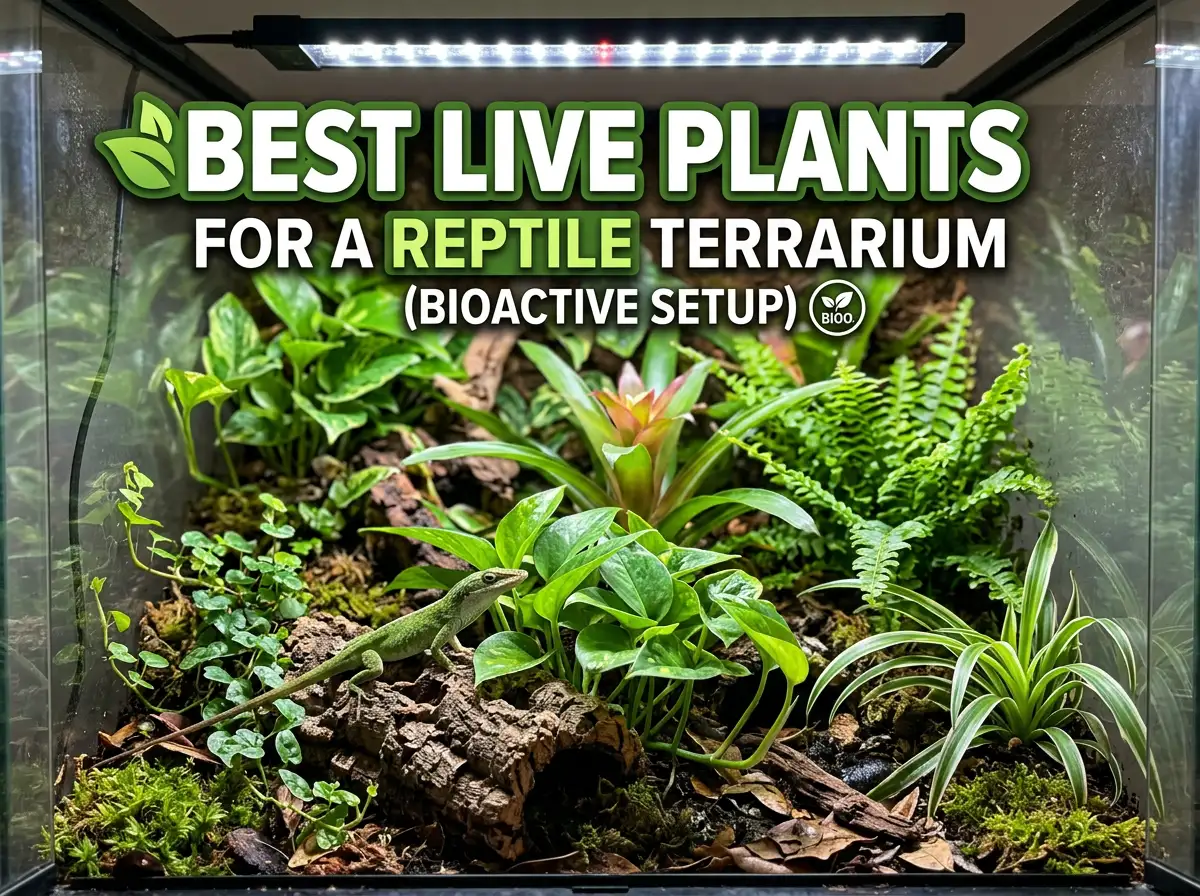
Plants commonly used in bioactive reptile enclosures include pothos, snake plant, pilea, small peperomia, moss, and bromeliads, chosen for durability, tolerance of heat and bioactive humidity, and a track record of not causing problems in the species they’re most often paired with. None of that makes any plant automatically safe for every reptile, toxicity, and how likely a given species is to actually chew on foliage, varies by animal. Always cross-check any plant against a safe-plant list specific to your reptile species (not a generic “pet-safe” list) before adding it to an occupied enclosure, and when a plant’s status is unclear, treat it as unsafe until you’ve confirmed otherwise.

What matters here that doesn’t apply to a decorative terrarium
A decorative terrarium is optimized for the plants alone; a reptile enclosure has to satisfy the plant, the animal, and the ecosystem underneath it all at once. That changes the selection criteria substantially.
Non-toxic to the specific species
This is the non-negotiable one, and it deserves more nuance than a simple yes/no list can give it. Toxicity data for plants is generally built around common pets like cats and dogs, and coverage for reptile species specifically is much thinner and less standardized; what’s published as “safe” for one species is sometimes based on limited observation rather than rigorous testing. A plant that’s widely used without incident in bearded dragon enclosures can still be a genuine problem for a different species with different digestive physiology, and vice versa. Always check against a plant list built specifically for your animal, cross-reference more than one source when you can, and treat any plant you can’t confirm as unsafe by default rather than assuming it’s fine because it’s popular.
Tolerates heat and UV lighting
Reptile enclosures run hotter and brighter under basking lamps and UVB fixtures than a typical houseplant setup, and the heat is often concentrated rather than even; a basking spot can run considerably hotter than the rest of the enclosure. That rules out plants that scorch, wilt, or dry out quickly under direct, sustained heat, and it also means plant placement matters as much as plant choice: even a heat-tolerant plant can suffer if it’s positioned directly under a basking bulb rather than to the side of the enclosure’s hottest zone.
Survives being walked on and dug through
Sturdy, low-growing, or well-anchored plants hold up; anything delicate or shallow-rooted gets uprooted or crushed within days. This matters more for species that are naturally diggers or that patrol their enclosure actively; a leopard gecko or a bearded dragon interacting with substrate daily puts far more physical stress on a planting than, say, a more sedentary snake species mostly resting on a hide or branch. Match plant sturdiness to how physically active your particular animal actually is in its enclosure, not just to its size.
Tolerates the humidity and substrate of a bioactive setup
Many reptile enclosures run a bioactive substrate with a cleanup crew (springtails, isopods) and specific humidity; the plants need to want the same conditions as the substrate ecosystem, not just the reptile. A desert-adapted species like a bearded dragon or leopard gecko typically wants a drier bioactive setup than a tropical species like a crested gecko or a dart frog, which means the plant list for each looks quite different even before you get to toxicity, the same logic that separates open and closed decorative terrariums in my terrarium plants guide applies here too, just with an animal’s welfare added on top.
Won’t outgrow the enclosure or block heating and lighting equipment
A fast-growing vine that’s easy to manage in a decorative terrarium can become a real problem in a reptile enclosure if it climbs into a basking lamp’s fixture, blocks UVB exposure to a favorite basking spot, or grows dense enough to trap excess humidity right where the animal spends most of its time. Plan for mature size and growth habit with the equipment layout in mind, not just the empty enclosure.

Matching plant conditions to common enclosure types
Different reptile species are typically kept in fairly different environmental conditions, and the plants that thrive in one setup often struggle in another. This table is a general orientation to the kind of conditions each enclosure style tends to run, not a species-by-species plant safety guide, always verify individual plants separately.
| Enclosure style | Typical conditions | General plant traits that tend to fit |
|---|---|---|
| Arid / desert (e.g. bearded dragon, leopard gecko style setups) | Hot, bright, low humidity, minimal standing moisture | Drought-tolerant, sturdy, tolerant of intense basking heat |
| Tropical / humid (e.g. crested gecko, dart frog style setups) | Warm, consistently humid, less intense direct heat | Humidity-loving, shade-tolerant, similar to closed-terrarium plants |
| Temperate / moderate (e.g. some snake and tortoise setups) | Moderate humidity and heat, variable by species | Adaptable, tolerant of a wider humidity range |
Because requirements vary so much by species, and because individual care sheets sometimes disagree even within the same species, this table is meant to help you understand why the plant list differs across setups, not to substitute for species-specific research before you buy or place a plant.
Plants commonly used in reptile enclosures
These show up across a range of common bioactive setups and have a reasonably established track record in the reptile-keeping community, though always cross-check against your specific species before buying:
- Pothos – tough, tolerates low light and rough handling, roots easily from cuttings if it gets damaged. A common choice for larger enclosures with more digging activity, and one of the most widely used enclosure plants across several species, but confirm it’s appropriate for your specific animal rather than assuming its popularity means universal safety.
- Snake plant (Dracaena trifasciata, formerly Sansevieria) – upright, hardy, and tolerates drier, brighter setups well. Its stiff, somewhat pointed leaves are also worth considering from a physical-safety angle for smaller or more delicate species, separate from any toxicity question.
- Pilea and small peperomia – compact ground-level options for smaller enclosures, generally softer and more easily damaged than pothos or snake plant, so better suited to less physically active species or enclosures with lighter foot traffic.
- Moss – useful as a humidity-holding ground cover in more tropical, moisture-loving setups; has no true roots to rot and generally tolerates handling well, making it a low-risk addition from a physical-durability standpoint.
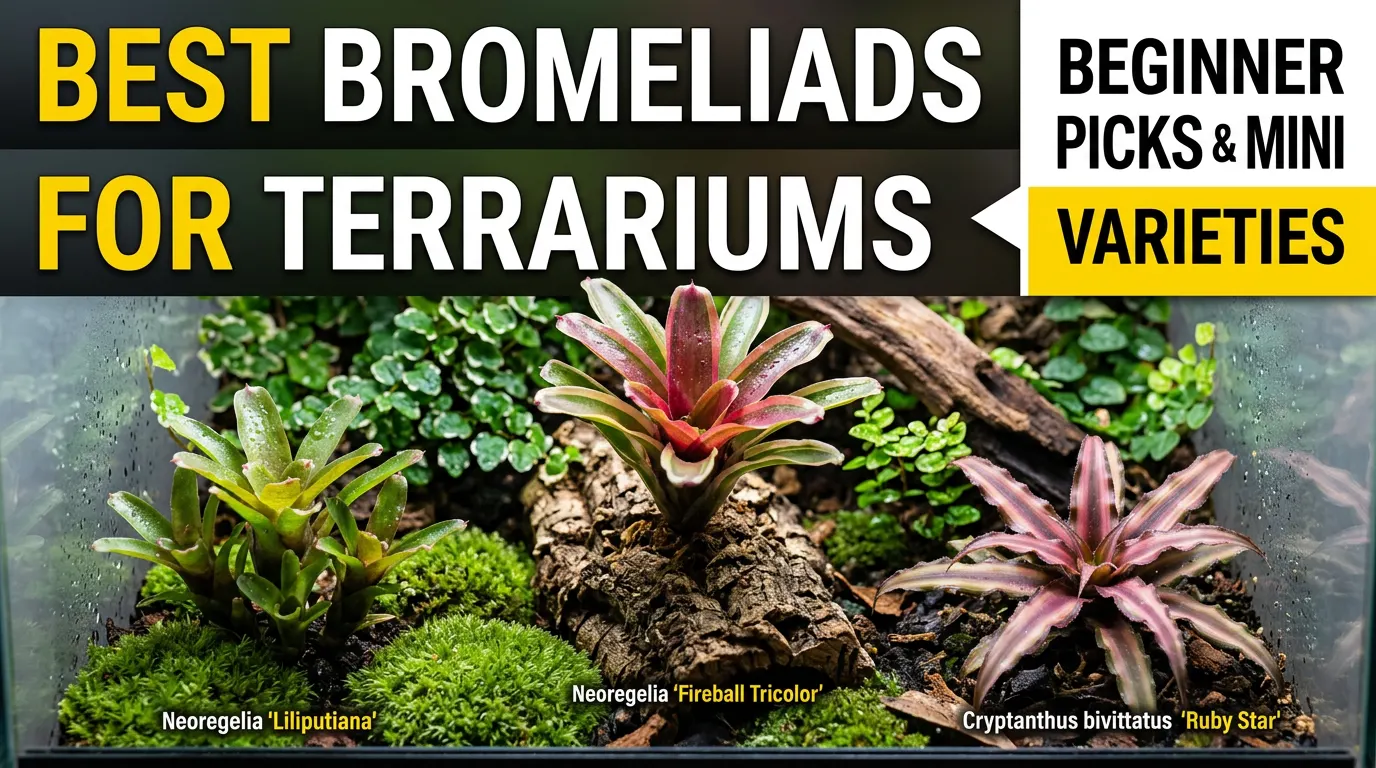
- Bromeliads – sturdy, tolerate handling reasonably well, and their central cup can double as a natural drinking or humidity source in a tropical enclosure. I’ve covered their general care in my bromeliad guide and their terrarium-specific behavior in bromeliads in a terrarium, though a reptile enclosure’s watering and lighting needs will differ somewhat from a standalone houseplant, and cup water in an occupied enclosure needs more frequent flushing for hygiene than in a plant-only display.
- Creeping fig and small ferns – used in more heavily planted tropical or naturalistic builds, generally suited to humid setups with gentler traffic; like pilea, these tend to be less durable under heavy digging or a large, active animal.
Note that this is a starting list of commonly used genera, not a species-by-species safety guarantee, always verify against a list specific to your reptile species and, ideally, your reptile vet before introducing a new plant.

Categories of plants to be especially cautious with
Rather than naming specific plants as universally unsafe, which risks being wrong for a species this article hasn’t accounted for, it’s more useful to know which broad categories tend to carry more risk, so you can research anything in these categories more carefully before including it.
- Plants with a known history of toxicity flags in general pet-safety references (certain lilies, some Euphorbia species, and others), even if a specific reference doesn’t mention reptiles directly, a plant flagged as toxic to common pets is a reasonable candidate to research more thoroughly, or avoid, before using it with an animal whose sensitivity hasn’t been well studied.
- Plants with irritant sap or latex – some plant families produce sap that irritates skin or mucous membranes on contact, which is a concern for an animal that may brush against or bite foliage even if the plant isn’t classified as broadly toxic.
- Plants treated with pesticides, fungicides, or leaf-shine products – this applies to almost any plant bought from a general nursery rather than a reptile-specific supplier, and it’s a real, common risk that has nothing to do with the plant species itself. See the section below on introducing new plants safely.
- Anything you can’t identify with confidence – a cutting from a friend, an unlabeled nursery plant, or something collected outdoors carries risk simply because you can’t look up what it actually is. When in doubt, don’t add it until you can confirm the species.
- Plants with thorns, sharp spines, or serrated edges – separate from toxicity, physical injury risk from spiny plants (some cacti, some bromeliads like certain Aechmea varieties) is worth weighing against the species and size of animal sharing the space.
Introducing a new plant safely
Even a plant confirmed safe for your species on paper deserves a bit of process before it goes into an occupied enclosure, since most of the real-world risk comes from what’s been done to the plant before you bought it, not the plant itself.
- Buy from a source that doesn’t use systemic pesticides, or ask directly if you’re unsure; many mass-market nursery plants are treated with products that remain in the plant’s tissue for months and are a real risk even if the plant species itself is considered safe.
- Rinse the plant thoroughly under running water, including the underside of leaves, to remove any residue, dust, or surface contaminants before it goes anywhere near the enclosure.
- Repot into a substrate you know is safe rather than introducing the original nursery soil, which can carry pesticide residue, fertilizer salts, or pests you don’t want in a bioactive setup.
- Quarantine outside the enclosure for a few weeks if possible, watching for pests (mites, mealybugs, fungus gnats) that could establish in the enclosure’s warm, humid conditions and spread to other plants or, less directly, affect the animal’s environment.
- Introduce it and watch the animal’s response for the first few days once it’s in the enclosure, rather than assuming everything is fine just because the plant checked out on paper.

Bioactive basics: what the plants are supporting
A “bioactive” enclosure isn’t just a planted one; it’s built around a working cleanup crew, typically springtails and isopods, that break down waste and leaf litter, along with the plants that both benefit from and help sustain that same substrate ecosystem. The plants aren’t purely decorative in this system: their root systems help keep the substrate structure open enough for the cleanup crew to move through, and their foliage contributes to the humidity and shade gradient the crew and the reptile both rely on.
Because of that, plant choice in a bioactive setup is partly about supporting the whole system, not just decorating the enclosure or feeding the animal’s environment preferences. A substrate mix, drainage layer, and moisture level that works for the plants and the cleanup crew simultaneously is its own topic worth researching separately from plant selection, the general drainage-then-substrate logic in my terrarium build guide is a reasonable starting orientation, but a live bioactive reptile setup typically needs a deeper, more specific substrate blend than a plant-only decorative terrarium.
Real vs artificial: is it worth the trouble?
Live plants genuinely help maintain humidity and, in a bioactive setup, support the cleanup-crew ecosystem that helps break down waste, benefits an artificial plant can’t offer. Some keepers also feel live planting reduces stress in more naturalistic-leaning species by providing cover and a more dynamic environment, though this is more anecdotal than something a general blog post can state as settled fact.
The trade-off is upkeep: live plants need the right light, occasional replacement as they get damaged, and ongoing monitoring for safety as they grow, get trimmed, or get replaced with something new. Artificial plants are lower-maintenance and remove any toxicity risk entirely, which is a reasonable, defensible choice for a keeper who wants the visual and enrichment benefit without managing a living plant alongside the animal, this isn’t a lesser option, just a different set of trade-offs. A mixed approach, where a few sturdy, well-vetted live plants are combined with artificial ones for bulk and structure, is also common and can be a sensible middle ground while you’re still building confidence with live planting.

Frequently asked questions
Are live plants safe for a bearded dragon enclosure?
Many are, but bearded dragons are known to sample plants in their enclosure, so toxicity matters more here than for species that mostly ignore foliage. Stick to a plant list specifically vetted for bearded dragons rather than a general reptile-safe list, avoid anything with a known toxicity flag for that species, and when a source is ambiguous or you can’t confirm the plant’s identity, leave it out rather than assuming it’s fine.
Are live plants safe for a crested gecko enclosure?
Crested geckos generally interact with foliage less destructively than a bearded dragon does, and their humid, tropical enclosure style suits many closed-terrarium-style plants well. That said, “generally less likely to chew” isn’t the same as “toxicity doesn’t matter”, verify plants against a crested-gecko-specific list before adding anything new, the same as with any other species.
Are live plants safe for a ball python or other snake enclosure?
Snakes are far less likely than lizards to sample plants directly, which lowers ingestion risk somewhat, but physical durability and heat tolerance still matter, since a snake’s body weight moving through an enclosure can damage delicate plants just as easily as active digging would. Confirm species-appropriate plants with a snake-specific care resource rather than assuming lower ingestion risk means anything goes.
Do reptile terrarium plants need the same soil layering as a decorative terrarium?
The general drainage-then-substrate principle still applies, but a bioactive reptile enclosure typically uses a deeper, specific substrate mix designed to support both the plants and a cleanup crew, rather than the simpler layered build used in a plant-only decorative terrarium.
What should I do if I think my reptile has eaten part of an unverified plant?
Contact an exotics-experienced veterinarian promptly and be ready to identify the plant if you can, rather than waiting to see if symptoms develop. This is genuinely outside the scope of what a general plant-care blog post can advise on safely, and it’s exactly the situation the repeated caution throughout this guide is meant to help you avoid in the first place.
Can I use the same plants across different reptile species in different enclosures?
Sometimes, but don’t assume it by default, a plant vetted safe and appropriate for one species’ enclosure conditions and behavior isn’t automatically right for another, even if both are common terrarium pets. Re-verify against a list specific to each species you keep, since humidity needs, foliage-sampling behavior, and known sensitivities can all differ meaningfully between them.
Is it better to start a reptile enclosure with artificial plants and switch to live ones later?
It’s a reasonable approach, especially for a first bioactive build. Starting with artificial plants while you research species-specific safe plants, establish the substrate ecosystem, and get comfortable with the enclosure’s humidity and heat patterns removes one variable while you’re learning the others, and you can introduce live plants, following the quarantine and vetting steps above, once you’re confident in your setup.
If you’re setting up a purely decorative terrarium rather than a live reptile enclosure, the plant list and build process are different and considerably more flexible, see my terrarium plants guide and step-by-step build guide for that side of things. And whatever you’re building, none of the general guidance above replaces a plant list built specifically for your reptile species, or a conversation with your exotics vet before introducing anything new to an occupied enclosure.





Leave a Reply