
BROMELIAD OUTDOOR GUIDE · UPDATED OCTOBER 2026
By Everydaything Team · Last updated October 2026
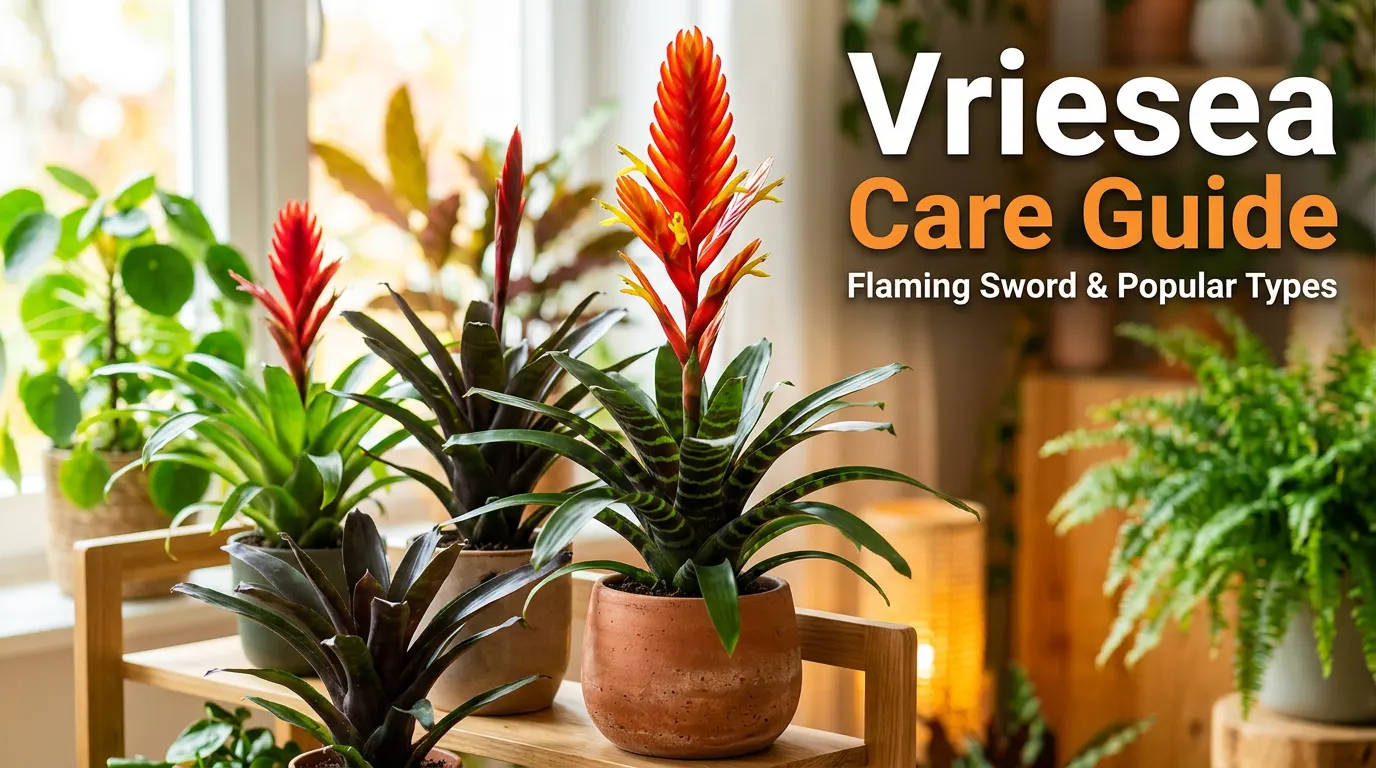
Can bromeliads grow outside? Yes, as long as night temperatures stay warm and the spot is shaded from harsh midday sun. Most bromeliads are tropical or subtropical, so they thrive in frost-free gardens, balconies and tree trunks, but they suffer in cold snaps and in soggy ground. This guide covers temperature limits, sun versus shade, planting in the ground, mounting on trees and mosquito control, with a section for Indian monsoons and summers.
Quick answer
- Temperature: the RHS suggests tender bromeliads need at least 10°C in winter, and UF/IFAS says to empty the cup when readings below 40°F (about 4°C) are likely.
- Light: most prefer shade or part shade outdoors, while some, such as Neoregelia and Dyckia, tolerate far more sun.
- Ground or pots: pots are safer, because the most common problem is root rot from excess moisture.
- Mosquitoes: flush the cups weekly during the rainy season, as UF/IFAS advises.
- India: the main outdoor risks are monsoon wetness and summer sunburn, not frost, except in colder north and hill regions.
Can bromeliads grow outside, and how cold is too cold?
Bromeliads can grow outside year-round only where winters are frost-free. UF/IFAS notes that most are tropical or subtropical, so gardeners in North Florida keep them in containers and bring them indoors during freezes (Bromeliads at a Glance). Cold damage shows as a brown line across each leaf at the water level.
The answer to “can bromeliads grow outside in your area?” therefore comes down to your coldest nights. Limits differ by genus. The sources below give a rough picture, but treat each figure as a guide rather than a guarantee, because cultivars vary.
| Plant | Cold or zone information | Source |
|---|---|---|
| Aechmea (genus) | USDA zones 9B-11B | UF/IFAS FP014 |
| Neoregelia (genus) | Zones 10-11; tolerates about 50-90°F (10-32°C) | NC State Extension |
| Guzmania lingulata | Zones 10a-12b | NC State Extension |
| Aechmea fasciata, Neoregelia ‘Fireball’, Neoregelia carolinae f. tricolor | RHS H1B: outdoors in summer only, minimum about 10-15°C | RHS |
| Vriesea splendens, Guzmania lingulata ‘Francesca’ | RHS H1A: under glass all year, above 15°C | RHS |
| Billbergia nutans | RHS H2: about 1-5°C minimum, no frost | RHS |
| Puya | Most cold-hardy genus, down to about 20°F | UF/IFAS Gardening Solutions |
Notice the spread: a Guzmania wants far more warmth than a Billbergia or a Puya. For a genus overview before you decide, see our types of bromeliads guide. Remember too that cold is not the only limit. NC State puts the upper comfort range of Neoregelia near 90°F, which matters in an Indian May.
Should I put my bromeliad outside in the summer?
Yes, a summer break outdoors often helps, provided you move the plant gradually. The RHS advises moving plants out only when night temperatures stay above 10°C and acclimatising them step by step (RHS bromeliad guide). It also recommends a warm, sheltered spot in sun or partial shade, protected from midday sun.

Here is a simple hardening-off routine, which is our own suggestion based on the RHS and Texas advice.
- Days 1-3: place the plant in bright shade, away from direct sun, and keep the cup full.
- Week 1-2: give an hour or two of gentle morning sun, then return it to shade.
- Weeks 3-4: extend the sun slowly. A Texas A&M Master Gardener page suggests starting with only a few hours of full sun a day for a few weeks (Central Texas Gardener).
- Always: watch for bleached or browned patches. The RHS says sun scorch shows up as bleached or browned leaves.
Bring the plant back inside before nights drop toward 10°C. Our bromeliad light requirements guide explains how bright is bright enough indoors, and the complete bromeliad care guide covers year-round routines.
Can bromeliads grow outside in full sun, or do they prefer shade?
Most prefer shade or part shade outdoors, though some tolerate full sun. That is the summary in UF/IFAS’s Bromeliads at a Glance. So the answer to “can bromeliads grow outside in strong sun?” depends on genus, and on how much acclimation time the plant has had.
| Group | Sun or shade outdoors | Notes |
|---|---|---|
| Neoregelia | Partial shade with about 2-6 hours of direct sun (NC State); ‘Fireball’ listed for full sun or part shade (RHS) | More light gives better colour, but direct sun can still burn. |
| Aechmea | Part shade to part sun, best in partial shade (UF/IFAS) | ‘Blue Tango’ is listed for full sun or part shade (Chicago Botanic Garden). |
| Guzmania | Part to full shade (NC State) | Treat as the shade specialist of the common genera. |
| Billbergia nutans | Partial shade, sheltered (RHS) | Direct sun can scorch it (Museums of History NSW). |
| Dyckia and Puya | Dyckia has thicker leaves and more cold tolerance (UF/IFAS); a hobby site describes it as rarely scorched by direct sun | Spiny, terrestrial types; Puya is the most cold-hardy genus (UF/IFAS). |
| Tillandsia (air plants) | Bright, diffused light with good airflow (RHS, T. cyanea) | They dry out easily, so the RHS says to soak them regularly. |
Leaf colour tells you when you have it wrong. UF/IFAS says too little light gives long, thin, greener leaves, whereas too much gives shorter, thicker, paler ones (UF/IFAS Gardening Solutions). If you want colour from a Neoregelia, our Neoregelia care guide goes deeper on light and blushing.
Can bromeliads grow outside in the ground, or are pots better?
Bromeliads can be planted outside in the ground in frost-free climates, but pots are the safer starting point. Their roots are limited and mainly anchor the plant, and UF/IFAS says root rot from excess moisture is the most common problem. A pot lets you move the plant out of the rain, the sun or the cold.
If you do plant in the ground, UF/IFAS gives practical details.
- Sandy, well-drained soil suits them. In heavy clay, mix in 2 to 3 inches of organic matter.
- Space Aechmea plants 18 to 24 inches apart for a mass planting, per the UF/IFAS Aechmea fact sheet.
- A loose mix such as one part peat, one part bark and one part coarse sand works in containers.
- Billbergia can spread through garden beds in suitable conditions, so leave room for pups.
A raised bed or a mound improves drainage during the monsoon. Aechmea also has poor salt tolerance, so coastal spray is a concern. Once pups crowd the clump, our bromeliad pups guide shows how to divide it, and this roots, repotting and soil guide covers the potting mix.
Can bromeliads grow outside on trees and walls?
Yes, many bromeliads are epiphytes that grow on trees without harming them. UF/IFAS describes them as not parasitic, and notes that Aechmea suits rough-barked trees (FP014). Their roots mainly anchor them, while the leaves absorb water and nutrients.
To mount one, UF/IFAS lists staples, glue, plastic-coated wire or nylon stockings. On a trunk, use glue and stockings until the roots grip. Water the plant when rain or humidity is low. In India, a Kerala grower profile says growers tie bromeliads to tree trunks with coconut fibre (Onmanorama). Gardens by the Bay in Singapore likewise uses bromeliads extensively on its vertical Supertrees (Gardens by the Bay).
For step-by-step mounting, read our guide to mounting a bromeliad on wood, and for the difference between tree-dwelling and ground-rooting types, see our epiphytic versus terrestrial bromeliads guide. Choose a tree with a sheltered, bright-shade branch, not one in blazing afternoon sun.
How do you stop mosquitoes in outdoor bromeliads?
Flush the cups regularly, because some mosquitoes breed in the water held by the leaf bases. UF/IFAS recommends flushing outdoor plants weekly with a hose in the rainy season, and applying Bti (Bacillus thuringiensis subsp. israelensis) granules to the cups every 2 to 3 weeks in summer and fall. NC State calls granular Bti safe for plants, pets and wildlife.
In India, this matters for health, not only comfort. A Government of India dengue guideline lists flower vases, earthen pots and potted-plant trays among Aedes breeding containers, and advises changing water in plant pots every week (NCVBDC school guideline). A Kerala news report repeats the weekly advice for flower pots (Onmanorama). Neither source names bromeliads, so apply the same logic to the cup.
Our bromeliad benefits, mosquitoes and pets guide covers this in more depth. If you are unsure about Bti products in your area, ask a local garden store or your municipal health office.
What pests attack bromeliads growing outside?
Bromeliads are fairly pest-free overall, according to UF/IFAS, but a few pests appear outdoors.
- Scale and mealybugs: the RHS and UF/IFAS both list them as the usual troublemakers. Inspect the leaf bases and the undersides.
- Mexican bromeliad weevil: UF/IFAS describes this Florida pest as attacking Tillandsia and other native bromeliads, with larvae tunnelling into the base. No source reviewed here documents it in India, so treat it as a Florida issue.
- Snails and slugs: UF/IFAS describes oblong holes and mucus trails, night feeding and wet-weather activity, and suggests damp cardboard traps and hand picking before baits. That page is general, not bromeliad-specific.
- Grasshoppers: the Kerala profile says they attack Guzmania leaves and should be removed by hand.
Check the label and local rules before using any pesticide or snail bait, and keep products away from pets. For rot, sunburn and other symptoms, our bromeliad problems guide is the next stop.
Can bromeliads grow outside in India?
Yes, bromeliads can grow outside in many parts of India, especially in shade. Two risks dominate: summer heat and monsoon wetness. The Kerala profile says growers keep pots on semi-shaded verandahs and balconies, that heat can fade leaf colour and scorch plants, and that gentle morning light is ideal. It is one news report, so treat it as a local example.
The regional notes below are reasoning from the temperature limits above, not field-tested results. Check your own night minimums before leaving plants out.
| Region | Likely outdoor situation | Main precautions |
|---|---|---|
| Coastal south and west (Kerala, Goa, Mumbai, Chennai) | Winter nights are generally mild, so year-round outdoor placement is plausible | Shade in summer, keep pots off wet ground in the monsoon, watch for salt spray |
| Inland Deccan and central India | Hot summers, cooler winter nights in some cities | Shade cloth in April-June, check winter lows |
| North Indian plains | Very hot summers and cold winter nights | Bring plants indoors when nights approach 10°C; use shade in peak summer |
| Hill stations and cool uplands | Cool nights much of the year | Hardier types such as Billbergia, or an indoor winter home |
The monsoon timing is useful for planning. The India Meteorological Department gives about 1 June as the normal Kerala onset and roughly 11 June for Mumbai and 27 June for Delhi under its revised normals (IMD press release). Because rain can fill cups and soak the mix for weeks, move pots under cover and use a fast-draining mix.

Our bromeliad climate guide for India goes region by region, and the Tillandsia in India guide covers air plants outdoors. If you need plants, see our where to buy bromeliads online in India guide and the bromeliad price in India breakdown. As a Hinglish rule of thumb: “dhoop kam, paani cup mein, jad mein nahi” means less sun, water in the cup, not at the roots.
What is a simple seasonal checklist for bromeliads outside?
- Summer: shade from midday sun, keep the cup full of clean water, flush it weekly.
- Monsoon: raise pots off the ground, keep the mix airy, check for soft bases and tilt out standing water.
- Winter: check night temperatures, empty the cup before cold nights, and move tender types inside.
- Feeding: the RHS says never place solid feed in the well, and UF/IFAS advises keeping fertiliser out of the cup.
Frequently asked questions
Can bromeliads grow outside?
Yes, bromeliads can grow outside in warm, frost-free conditions. UF/IFAS says most bromeliads are tropical or subtropical, so gardeners elsewhere use containers and bring them indoors when frost threatens. The RHS suggests keeping tender types above about 10°C.
Should I put my bromeliad outside in the summer?
Yes, once nights stay above about 10°C and after gradual acclimation. The RHS advises a warm, sheltered spot in sun or part shade that avoids midday sun, and bringing the plant back before nights cool.
Do bromeliads prefer sun or shade outdoors?
Most prefer shade or part shade, though some tolerate full sun. Guzmania suits part to full shade, Neoregelia can take a few hours of direct sun, and Dyckia is more sun-tolerant.
Can bromeliads be planted outside in the ground?
Yes, in frost-free climates with well-drained soil. UF/IFAS warns that root rot from excess moisture is the commonest problem, so pots or raised beds are safer in rainy regions.
Can bromeliads grow on trees?
Many are epiphytes that grow on trees without harming them. UF/IFAS lists staples, glue, plastic-coated wire or nylon stockings for mounting. Our mounting guide has the full method.
How do I stop mosquitoes breeding in outdoor bromeliads?
Flush the cups weekly with fresh water in the rainy season, and consider Bti granules every 2 to 3 weeks, as UF/IFAS describes. In India, health guidance also advises changing water in plant pots every week.
Can bromeliads survive a monsoon in India?
Many can if the mix drains fast and the base stays dry. The risks are rot and standing cup water, so raise pots, give cover and check for soft bases. Evidence for specific Indian cities is limited.
Which bromeliads are best for full sun?
Sources point to Neoregelia, Dyckia and Puya as more sun-tolerant, with ‘Fireball’ listed for full sun or part shade by the RHS. Acclimate any plant slowly, because sunburn leaves bleached or brown patches.
Can bromeliads tolerate frost?
Most cannot. UF/IFAS says Puya is the most cold-hardy genus, to about 20°F, and the RHS notes only a few types such as Billbergia nutans may survive in very mild areas. Protect or move the rest.
References and further reading
- UF/IFAS: Bromeliads at a Glance (ENH1071)
- UF/IFAS: Aechmea spp. fact sheet (FP014)
- UF/IFAS Gardening Solutions: Bromeliads
- UF/IFAS Gardening Solutions: Snails and slugs
- RHS: How to grow bromeliads
- RHS: Billbergia nutans
- RHS: Neoregelia ‘Fireball’
- NC State Extension Plant Toolbox: Neoregelia
- NC State Extension Plant Toolbox: Guzmania lingulata
- Central Texas Gardener (Texas A&M AgriLife Extension Master Gardeners): bromeliads
- Chicago Botanic Garden: Aechmea ‘Blue Tango’
- Museums of History NSW: Billbergia nutans
- Gardens by the Bay: Bromeliads in the Gardens
- NCVBDC (Government of India): Prevention and control of dengue in schools
- Onmanorama: Houseplants and dengue breeding (news report)
- India Meteorological Department: Revised monsoon onset and withdrawal dates (2020)
- Onmanorama: Ornamental bromeliads in Kerala (news feature, single source)
- bromeliads.info: The best bromeliads for outdoor landscapes (hobby site, secondary)
Related Guides
- Growing Bromeliads in India: Climate, Regions & Seasons
- Bromeliad Light Requirements: Indirect Light Explained
- Neoregelia Care Guide: Fireball, Size and Propagation
- Aechmea Fasciata (Silver Vase) Care: Light, Water and Blooms
- Bromeliad Care: The Complete Guide to Growing Them Indoors
- How to Mount a Bromeliad on Wood (Epiphytic Display)
- How to Identify a Bromeliad: Leaves, Cups, Flowers and Look-Alikes
- Bromeliad Pups: How to Separate, Plant and Propagate Them
- Bromeliad Problems: Yellow Leaves, Root Rot & Common Issues
- Bromeliad Plant Benefits: Air Purifying Myths, Mosquitoes & Pets


Leave a Reply