AQUARIUM PLANT GUIDE · UPDATED OCTOBER 2026
By Everydaything Team · Last updated October 2026
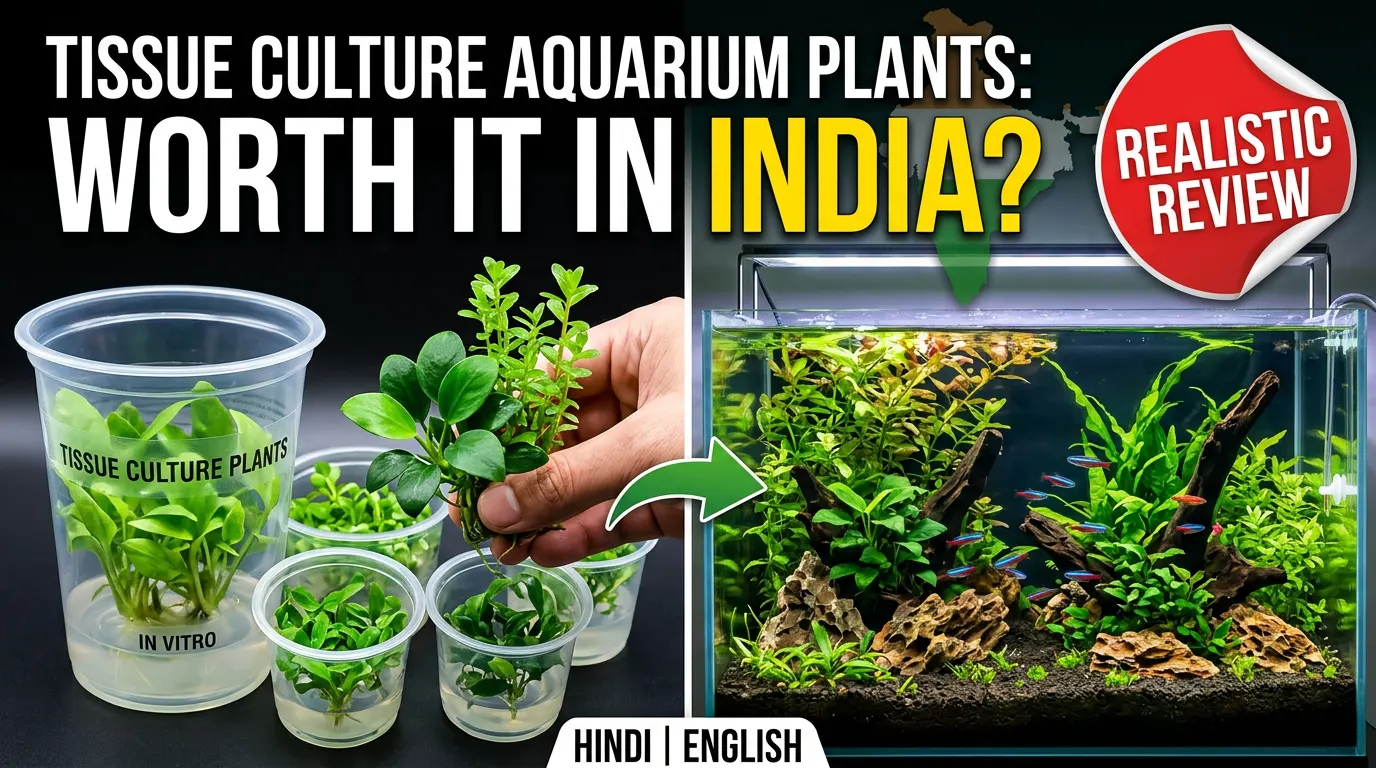
Tissue culture aquarium plants are plants multiplied from tiny tissue samples inside sealed, sterile gel cups. In India they are worth the money for carpets, shrimp tanks and fussy species such as Bucephalandra. They are less useful for cheap, fast stem plants. A cup of a common species cost about ₹149 to ₹333 in October 2026 listings, and one cup is usually split into several portions, so the price per planted piece is lower than it first looks.
Quick answer: are tissue culture aquarium plants worth it?
- Best for: foreground carpets, shrimp tanks, and a clean start with no snails or algae hitchhikers.
- Not ideal for: filling a big tank cheaply, or low-light tanks that cannot support demanding carpet species.
- Expect the leaves to melt back for a few weeks. This is normal for many species.
- Rinse off every trace of gel in dechlorinated water before planting.
- Check cup size and the number of plantlets, because brands differ.
This guide focuses on one question: should you spend more on a cup instead of a pot or a bunch? We cover how tissue culture works, what the “snail-free” claim really means, cost per piece, species that commonly come in cups, and a simple Indian handling routine. For price context across all formats, see our guide to aquarium plant price in India.
What are tissue culture aquarium plants?
Tissue culture aquarium plants (also called in-vitro or TC plants) are grown from small pieces of a parent plant in a laboratory. The piece sits in a sterile nutrient medium inside a sealed container. Because this is plant propagation without soil or pond water, the plantlets never touch a nursery tank.
Researchers have published protocols for aquarium species. For example, a lab study on Anubias heterophylla multiplied shoot tips on a lab medium and reported that all regenerated plantlets survived the move to underwater conditions. That result is for one species and one lab, but it shows why growers like the method: it makes many identical plants quickly.
Cups usually hold young plantlets that come straight from the laboratory and are sold as free of snails, algae and pesticides. Indian sellers sell cups in the same style, such as jumbo cups described as shipped in a sealed sterile container.

Are tissue culture plants really pest, algae and snail free?
Mostly yes at the moment the cup is sealed, but not forever. Sellers and manufacturers state that tissue culture aquarium plants arrive free of snails, snail eggs, planaria and algae because they never touched aquarium water. In-vitro plants also carry none of the pesticide residue that can affect shrimp.
However, these are producer claims. They apply to a clean, sealed cup. Once you open it, your hands, tools and tank water can bring algae spores or snails back in. Therefore, treat “snail-free” as a strong head start rather than a lifetime guarantee. If a cup arrives cloudy, smelly or visibly mouldy, ask the seller for a replacement and do not plant it.
Potted plants are different. Nursery pots can carry tiny pests, fertiliser residue or stray plants such as duckweed. Dips and a quarantine period reduce that risk, as explained in our guide on how to quarantine aquarium plants. For shrimp keepers, the pesticide point matters most, so see the published guide to the best plants for shrimp tanks for shrimp-safe planting ideas.
Tissue culture aquarium plants vs potted vs bunch: which is better?
No format wins every time. The table compares what hobbyists and sellers report. Prices are indicative figures from Indian listings.
| Feature | Tissue culture cup | Potted plant | Loose stem bunch |
|---|---|---|---|
| Typical Indian price | About ₹149 to ₹333 (rare species ₹700+) | About ₹60 to ₹200 | About ₹40 to ₹120 |
| Size on arrival | Small, young plantlets | Larger, rooted plant | Cut stems, often emersed |
| Hitchhikers | Low if cup is sealed and clean | Snails, eggs, algae possible | Snails, eggs, algae possible |
| Pesticide residue | Reported as none | Possible | Possible |
| Prep needed | Rinse off gel, divide | Remove pot and rockwool | Trim, quarantine |
| Fill-in speed | Slower at first | Faster | Fast for stems |
The trade-off is plain: you get younger, smaller specimens, so a scape takes a little longer to fill in. Potted plants also adapt more easily at first, because in-vitro plants are raised in a germ-free environment.
What does a tissue culture cup cost per plant in India?
A cup of a common species cost ₹149 at one Indian nursery that listed 42 different cups at that single price, as seen on its tissue culture page. Other stores listed Monte Carlo cups from ₹275 to ₹333, and Bucephalandra from about ₹739 to ₹850. Prices vary by cup size and brand.
Now the maths for tissue culture aquarium plants. A commonly cited guide is to divide a cup into 6 to 8 portions. Some suppliers split carpet cups into 5 to 10 pieces, and one seller’s listing mentions about 5 to 8 plantlets per cup. Assuming 6 to 8 usable portions, the working looks like this:
- ₹149 cup: about ₹19 to ₹25 per portion.
- ₹333 cup: about ₹42 to ₹56 per portion.
Compare that with a ₹40 stem portion or a ₹59 to ₹200 pot. In other words, a ₹149 cup can match loose stems on price per piece. A ₹333 cup is a premium. These are estimates, because cup sizes differ and sellers rarely print the plantlet count. Ask before you buy.
Tissue culture plants cost more per cup but yield more plantlets. Meanwhile, one Indian store lists the cost per cup but also asks buyers to message on WhatsApp to confirm stock before ordering, so always check availability first.
Which tissue culture aquarium plants are common in India?
Sellers list carpets, stems, crypts and rhizome plants in cups. The table groups species seen on Indian listings and in common hobby guidance. Light and CO2 needs are general hobby guidance, so cross-check with the species guide before buying.
| Species | Role | Seen as TC in India? | Notes |
|---|---|---|---|
| Micranthemum tweediei ‘Monte Carlo’ | Carpet | Yes | Popular, one seller rates it as needing high light and CO2 |
| Hemianthus callitrichoides ‘Cuba’ | Carpet | Yes | Melts heavily during transition, per hobbyist guides |
| Eleocharis parvula (dwarf hairgrass) | Foreground grass | Yes | Sold in jumbo cups by some stores |
| Staurogyne repens | Low carpet / midground | Yes | Listed as a ₹149 cup by one Indian nursery |
| Utricularia graminifolia | Carpet | Yes | Foreground species like this are described as needing high light and CO2 |
| Cryptocoryne wendtii, lucens, parva | Midground | Yes | Often melts but recovers from the rhizome |
| Rotala, Bacopa, Alternanthera | Stems | Yes | Same species are also cheap as loose stems |
| Anubias barteri var. nana | Rhizome | Not confirmed on the Indian pages checked | Tie to hardscape, do not bury the rhizome |
| Bucephalandra (several types) | Rhizome | Yes (pricey) | Slow, sensitive to new tanks |
For roles such as foreground and midground, see our guide to types of aquarium plants. For carpets in particular, see our guide to carpet plants for aquariums, because several of these species need strong light and CO2 to form a lawn. The published guide on whether you need CO2 explains that trade-off. Beginners often get better results with hardy picks, listed in our best aquarium plants for beginners guide.
How do you rinse and plant tissue culture aquarium plants?
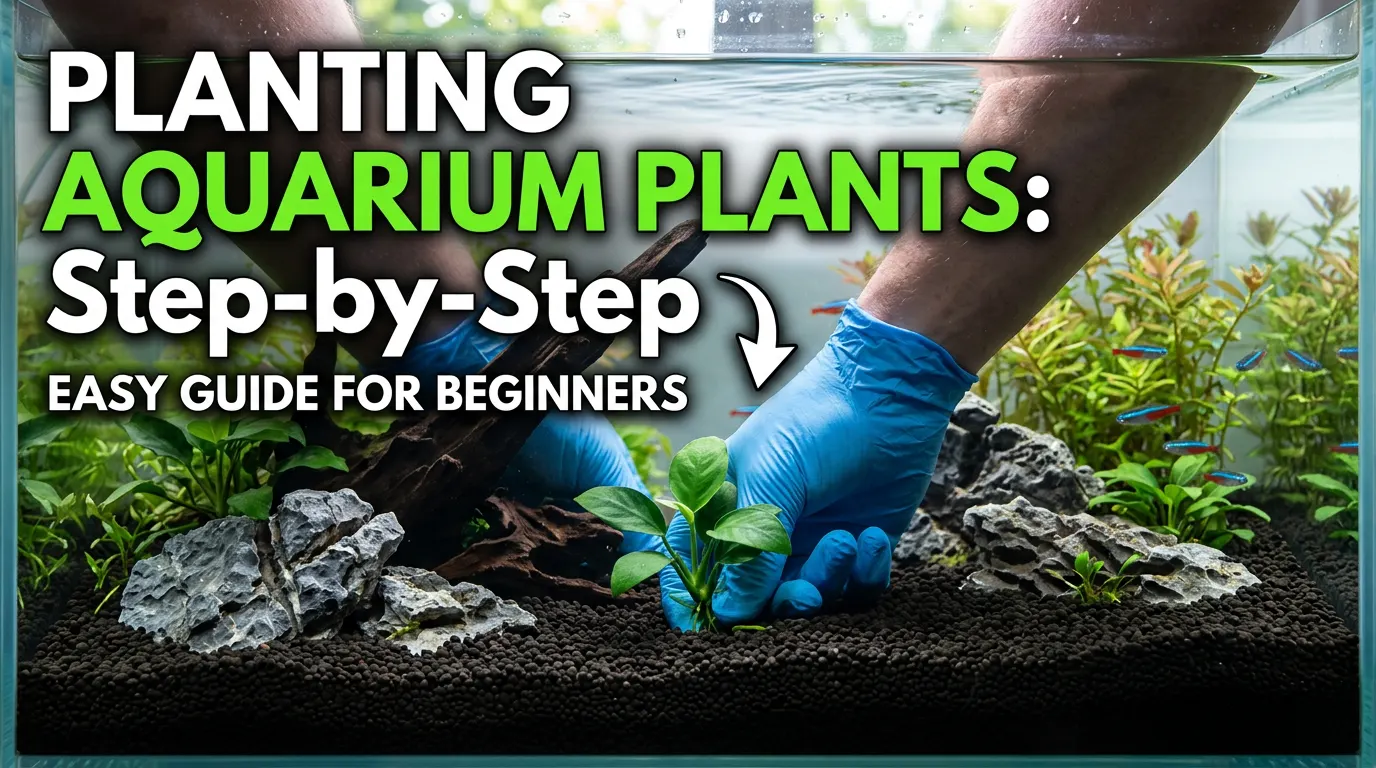
Open the cup, lift out the plant, rinse off the gel and divide it into portions. Searching “aquarium me plant kaise lagaye” for a TC cup comes down to these five steps, based on guidance from several sellers:
- Prepare a bowl. Use room-temperature, dechlorinated water. Our published guide to water conditioners covers dechlorinating tap water.
- Remove the plant gently. Wash clean hands first. Lift the whole mass out of the cup.
- Rinse away all gel. Swirl in the bowl and change the water until it runs clear. Leftover gel can feed algae and bacteria.
- Divide the clump. Split carpets into small portions, roughly 1 to 2 cm plugs, to improve light and water flow.
- Plant with tweezers. Push roots in, keep the growing tip and crown above the substrate, and tie rhizome plants to wood or rock instead of burying them.
Planting tools help here. Our guide to how to plant aquarium plants explains tweezers and anchoring in more detail. Also read the step-by-step in the published planted tank setup for beginners if you are starting from scratch.
Why do tissue culture aquarium plants melt, and how long does it last?
Melting is the plant swapping leaf types. Many TC plants are grown in humid, air-like conditions, so their original leaves break down underwater while new submersed leaves form. Recovery often takes two to three weeks, and longer in low-tech tanks. Hemianthus callitrichoides tends to melt dramatically, while Anubias usually changes with little damage.
Healthy melt starts with the oldest leaves while new firm growth appears at the crown. Mushy, foul-smelling bases with no new growth suggest real failure. Trim fully decayed leaves to prevent ammonia and algae, and keep light and fertiliser steady. Our guide to aquarium plant care and maintenance has a weekly routine that suits this stage.
Bucephalandra deserves extra care. Plant tissue culture Bucephalandra only after the aquarium is biologically matured, because it is sensitive to new tank conditions. Our published guide to cycling a new aquarium shows how to reach that stage.
How do you buy and handle tissue culture plants in Indian weather?
Heat is the main Indian risk, because cups of tissue culture aquarium plants are living, sealed plants. Advice on storage differs between sellers. One supplier says to keep cups below 20 °C with moderate light for only three to four days. An Indian store suggests 20 to 25 °C under low-intensity LED light. Another prefers cool, air-conditioned storage. In practice, plant cups as soon as possible after arrival, and keep them out of direct sun while you wait.
If a parcel arrives hot after a long courier trip, bring it indoors at once. Avoid shocking heat-stressed plants with cold water. Instead, let them sit in a cooler room first, then float and rinse in room-temperature water. Expect extra melt after a stressful trip, and avoid ordering in peak summer when you can wait. The monsoon also brings delays, so choose sellers who describe their packing and arrival policy.
On availability, Indian stores sell a fair range of tissue culture aquarium plants online. One nursery lists dozens of species, while another asks buyers to message on WhatsApp for stock. To compare seller types, read our guide on where to buy live aquarium plants in India. Because a sealed cup is sterile, the guides above focus on rinsing off the gel rather than dipping, and you should never pour chemicals into a sealed cup.
Who should buy tissue culture aquarium plants?
Buy tissue culture aquarium plants if you keep shrimp, want a carpet, or hate snails. Skip it if you only need quick green cover for a low-light fish tank. In that case, loose stems, Java fern and moss are cheaper and tougher. Also consider your light. Demanding species such as Monte Carlo, Utricularia and Hemianthus ‘Cuba’ can fail under weak LEDs, so match the plant to the light before paying for a cup. If you are tempted by cheap seed packets instead, read our guide to aquarium plant seeds and whether they grow in India first.
Product claims here come from sellers and hobby guides. Check the cup label, ask the seller about plantlet count and replacement terms, and follow the instructions on your product. This article is general information, not professional advice.
Frequently asked questions about tissue culture aquarium plants
What are tissue culture aquarium plants?
They are aquarium plants multiplied from small tissue pieces in sterile nutrient gel inside a sealed cup. They are young, small plantlets that must be rinsed and divided before planting.
Are tissue culture plants really snail and algae free?
Producers and sellers say they are free of snails, algae and pesticides when the cup is sealed. That claim does not cover contamination after you open the cup, so keep tools and water clean.
Do I need to remove the gel from tissue culture plants?
Yes. Swirl the plant in room-temperature, dechlorinated water and rinse until the gel is gone. Leftover gel can feed algae and bacteria.
Why do tissue culture plants melt after planting?
Their original leaves were grown in humid, air-like conditions and break down underwater while new submersed leaves form. Recovery often takes two to three weeks or more.
Are tissue culture plants worth the extra cost in India?
They are worth it for carpets, shrimp tanks and rare species. A ₹149 cup works out near ₹19 to ₹25 per portion if split into 6 to 8, but a ₹333 cup is a premium. Check the plantlet count first.
Which plants are commonly sold as tissue culture?
Common examples include Monte Carlo, Hemianthus ‘Cuba’, dwarf hairgrass, Staurogyne repens, Cryptocoryne, Rotala, Bacopa, Anubias and Bucephalandra.
Can tissue culture plants grow without CO2?
Some can. Anubias is described as not needing CO2, but many carpet species do much better with strong light and CO2. Match the species to your setup.
How should I store a tissue culture cup before planting?
Keep it cool, out of sun and under gentle light, and plant within a few days. Seller advice varies from below 20 °C to about 25 °C, so avoid heat and long delays.
Do tissue culture plants need quarantine or dips?
A sealed cup is usually treated as clean, so most guides simply recommend rinsing off the gel. Potted plants, however, benefit from quarantine and careful dipping.
References
- Aquasabi: In-vitro or potted plants
- Aquarium Gardens: Tropica 1-2-Grow tissue culture plants
- Buce Plant: A beginner’s guide to tissue culture plants
- Aqua Essentials: Tissue culture aquarium plants
- AMAZONAS Magazine: Culturing a more diverse planted aquarium
- Walailak Journal: In vitro rapid multiplication of Anubias heterophylla
- Aqua Rocks Colorado: Tissue culture melting after planting
- Gensou: How to fix melting tissue culture plants
- Aquarium Plants Factory: How to prepare tissue culture plants
- 2Hr Aquarist: How to grow Bucephalandra
- PlantedPro: Care for mailed plants in extreme weather
- Bunnycart: Tissue culture aquatic plants (India)
- AQUAStore: Exotic tissue culture plants (India)
- Himadri Aquatics: Jumbo TC cup (India)
Seller prices were read from public product pages in early October 2026 and are indicative only.
Related Guides
- Where to Buy Live Aquarium Plants in India Online (2026)
- Aquarium Plant Price in India (2026): What to Pay
- How to Quarantine and Dip New Aquarium Plants Safely
- Carpet Plants for Aquariums: Monte Carlo and Easier Picks
- How to Plant Aquarium Plants: Step-by-Step (India)
- Best Aquarium Plants for Beginners in India (2026)
- Aquarium Plant Care and Maintenance: Weekly Routine
- Types of Aquarium Plants: Foreground to Background
- Best Plants for Shrimp Tanks
- CO2 for Planted Tanks: Do You Need It?


Leave a Reply