Fish & Aquariums
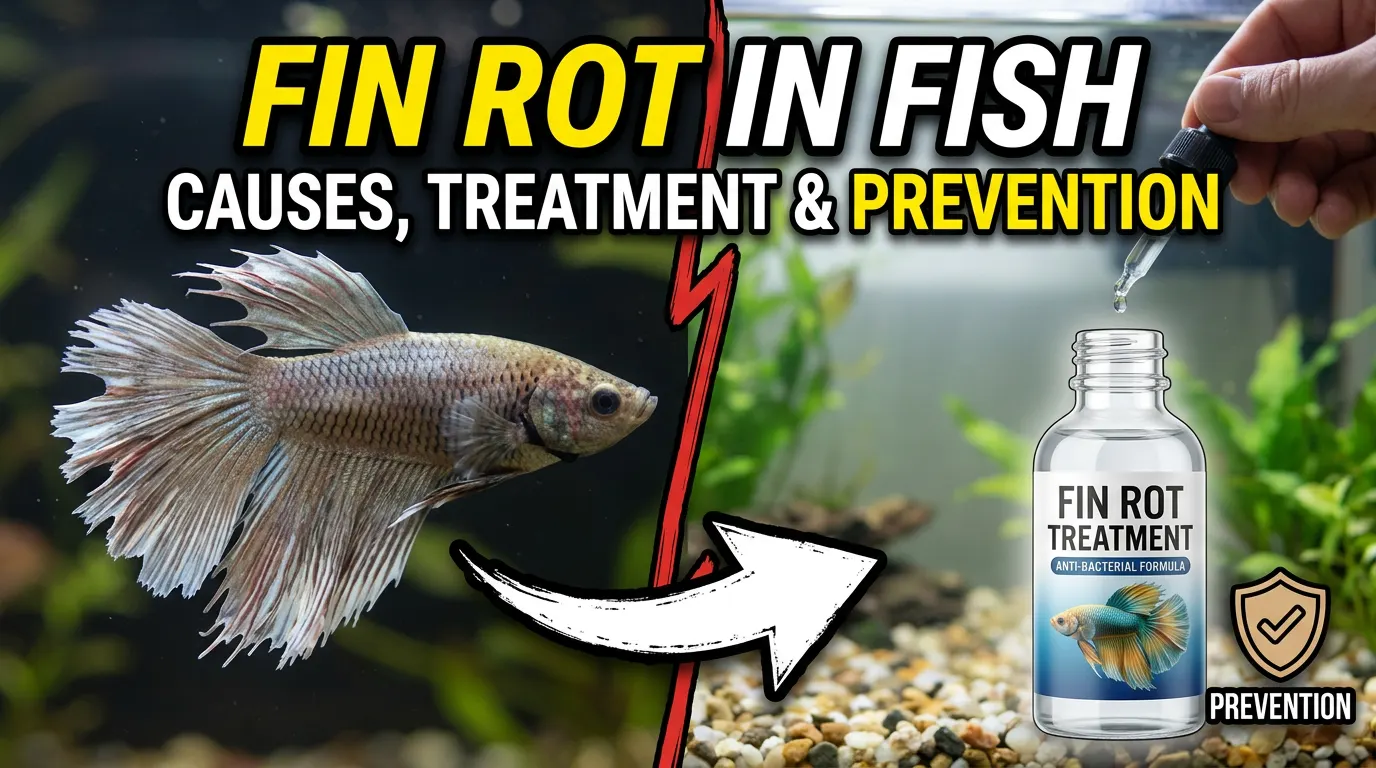
Fin rot is one of those problems where treating the visible symptom without fixing the underlying cause just means it comes back. I’ve seen people medicate fin rot repeatedly for months without checking their water quality once, and poor water quality is, by a wide margin, the most common reason it shows up in the first place. It’s also one of the easier problems to diagnose correctly once you know what to look for, which makes the repeated-medication cycle even more avoidable than it usually plays out.
Quick answer
Fin rot shows up as ragged, frayed, or disintegrating fin edges, sometimes with a white or reddish margin along the damaged area. It’s caused by opportunistic bacteria (and sometimes fungus) that take hold when a fish is stressed or injured, and poor water quality is the single most common underlying cause, especially elevated ammonia or nitrite, or a long stretch without water changes. Test your water first, correct any problems, and do a round of water changes before or alongside medication, treating fin rot with medication in dirty water is treating the symptom while ignoring the cause, and it tends to recur within weeks even after the fins appear to recover.

What to look for
| Sign | Notes |
|---|---|
| Ragged or frayed fin edges | Often starts at the tips and progresses toward the body if untreated, sometimes unevenly across different fins |
| White or red margin along damaged fin tissue | A whitish edge often indicates bacterial involvement; redness/inflammation is also common, especially near the base of an affected fin |
| Fins appearing shorter over time | Progressive tissue loss as the condition advances; comparing photos taken a week apart is a reliable way to confirm active progression |
| Clamped fins, lethargy | General stress signs that often accompany fin rot, though they can also appear with unrelated issues |
| Discoloration or a slightly slimy texture near the fin base | Can indicate the infection is advancing closer to the body, which is more serious than damage confined to the fin tips |
What actually causes it
- Poor water quality – elevated ammonia, nitrite, or high nitrate from infrequent water changes is the most common root cause; it stresses fish and weakens their natural resistance to opportunistic bacteria that are present in essentially every tank at low levels.
- Physical injury – fin nipping from aggressive tankmates, or damage from sharp decor, creates an entry point for infection, since intact fin tissue is a reasonably effective barrier on its own.
- Chronic stress – overcrowding, incompatible tankmates, or unstable water parameters generally suppress immune function over time in the same way any prolonged stress does.
- Poor diet – a weakened immune system from inadequate nutrition makes fish more susceptible, though this is less common as a sole cause and usually compounds one of the other factors rather than causing fin rot by itself.
- Low temperature or unstable temperature – cold-stressed fish have reduced immune function, which is one reason fin rot can appear alongside a heater problem or during a season when temperature is less stable, such as winter.
The bacteria most often responsible for fin rot are opportunistic genera like Aeromonas and Pseudomonas. Fishkeeping health resources note that background populations of these bacteria live in the detritus and organic waste of essentially every established aquarium, and normally stay harmless; they only take hold and cause visible fin damage once a fish’s natural resistance is worn down by degraded water conditions or ongoing stress. That’s the mechanism behind the water-quality-first advice above: it’s rarely a case of bacteria “getting in,” and much more often a case of the fish’s own defenses being compromised long enough for bacteria that were already there to take advantage.
It’s worth being clear-eyed about the relative weight of these: water quality is the cause in a large majority of cases people describe to me, and the other factors are either secondary contributors or explain the small minority of cases where water tests come back clean. If you’re not sure which applies, start with water quality anyway; testing it costs nothing and rules out the most likely culprit immediately.

Treatment, in order
- Test ammonia, nitrite, nitrate, and pH. This is the step people skip and shouldn’t; if water quality is the cause, medication alone won’t resolve it, and you’ll end up treating the same recurring problem over and over.
- Do a partial water change immediately, and correct whatever the test revealed; do more frequent water changes going forward if nitrate was high, or addressing an uncycled tank if ammonia/nitrite are present (see my guide on cycling a new aquarium if you suspect the tank was never fully cycled).
- If there’s an identifiable aggressive tankmate causing fin damage, separate them; continued nipping will outpace any treatment and can also reintroduce infection to already-healing tissue.
- For a genuine bacterial infection (not just cosmetic fin damage from nipping), a fin-rot-specific or general antibacterial medication can help, dosed per the product’s instructions and continued for the full recommended course.
- Keep water quality excellent throughout treatment; this is the part that actually determines whether it recurs, arguably more than the medication itself.
- Recheck fin edges every few days rather than daily; fin regrowth is gradual, and checking too frequently makes it hard to judge real progress against normal day-to-day variation in how the fin looks.
How to tell if it’s actually improving
The most reliable early sign that treatment is working isn’t the fin looking better yet, it’s the damage stopping, meaning the ragged edge stops receding further toward the body. A fin that’s still short but no longer visibly deteriorating day to day is already responding, even before you see new growth. New tissue typically shows up first as a thin, often clearer or slightly different-colored fringe at the very edge of the existing fin, distinct enough from the surrounding tissue that it can look almost translucent compared to the rest of the fin.
A useful habit is taking a quick photo of the affected fin every few days from a similar angle. Fin damage and regrowth are gradual enough that day-to-day memory is unreliable; a photo comparison makes it much easier to confirm real progress (or catch a lack of it) than eyeballing the fish each morning.
Will the fins grow back?
Usually, yes, fin tissue regenerates once the underlying cause is resolved, though it can take weeks to months and the regrown fin doesn’t always look perfectly identical to the original. It’s fairly common for regrown fin rays to be slightly shorter, less symmetrical, or a touch different in color than the original tissue, especially after a severe case. Consistently good water quality afterward matters more for a clean regrowth than any specific medication, a fish recovering in excellent water conditions regrows fin tissue more reliably than one recovering in water that’s merely adequate.
In advanced cases where the infection has progressed close to the body (sometimes called “body rot” when it reaches that point), full recovery is less certain and treatment needs to be more aggressive and prompt, this is the scenario where waiting to see if it resolves on its own is the riskiest choice, since tissue loss near the body is much more serious than tissue loss at the fin tips.

Preventing fin rot from coming back
- Keep a consistent water change schedule rather than an irregular one, consistency matters more than doing an occasional very large change, since stable conditions give bacteria on fin tissue less opportunity to establish.
- Follow a proper maintenance routine rather than reacting only when something visibly goes wrong, fin rot recurrence is usually a maintenance gap showing up as a symptom, not a new problem appearing from nowhere.
- Address aggressive or incompatible tankmates directly rather than hoping fin nipping resolves on its own; it rarely does, and repeated minor injuries are a steady source of new infection entry points.
- Avoid decor with sharp edges, especially in tanks with long-finned species that are more prone to snagging and tearing.
- Don’t overstock relative to your filtration and water change routine; bioload that outpaces your maintenance schedule is a recurring theme behind most water-quality-driven fin rot cases.

Fin rot versus similar-looking problems
| Condition | Key difference |
|---|---|
| Fin nipping (no infection) | Clean or torn edges without a white/red margin, stops progressing once the aggressive tankmate is removed, no ongoing deterioration |
| Fungal infection on fins | Cottony or fuzzy white growths rather than a receding ragged edge; texture is the giveaway, not just color |
| Ammonia/nitrite burn | Can cause fin and gill damage alongside other stress signs, but is a direct chemical effect rather than an active bacterial infection, resolves with water changes alone, without needing medication |
| Normal fin wear in old age | Gradual, symmetrical thinning over a long period without a red or white margin, more common in older fish generally |
Frequently asked questions
How is fin rot different from fin nipping damage?
Nipping damage usually looks like clean or torn edges without the white/red bacterial margin, and it stops once the aggressive tankmate is removed. True fin rot involves active bacterial or fungal infection and can continue progressing without treatment even after any physical cause is addressed, since the infection itself is now the active problem rather than ongoing physical damage.
Is fin rot contagious to other fish?
It’s generally opportunistic rather than highly contagious; fish in the same poor-quality water are all at similar risk, but it’s the shared water conditions driving that, not fish-to-fish transmission in the way ich spreads. Fixing the water helps the whole tank, not just the visibly affected fish, and a healthy fish sharing water with an affected one usually isn’t at meaningfully higher risk than it already was from the same underlying water quality issue.
My betta has fin rot, is that different from other fish?
Bettas are prone to fin rot partly because their long, elaborate fins are more vulnerable to damage and slower water flow around them, but the cause and treatment are the same as for any fish, check water quality first. My betta care guide covers water and tank conditions that help prevent it, including tank size and filter flow considerations specific to long-finned varieties.
How long does fin rot take to heal?
Mild cases caught early and treated with corrected water quality can start showing visible improvement within a week or two, with fuller regrowth taking several weeks to a few months depending on severity. Advanced cases that have reached the fin base take considerably longer and don’t always fully return to their original shape.
Do I need medication, or will fixing the water alone cure it?
Mild, early-stage fin rot sometimes resolves with water quality correction alone, since removing the stressor lets the fish’s own immune system catch up. More established or actively progressing cases usually need a dedicated antibacterial medication alongside the water fix, since the infection itself needs to be brought under control, not just the conditions that allowed it to start.
Can fin rot come back after the fish fully recovers?
Yes, if the same underlying cause returns, this is exactly why treating the water alongside any medication matters so much. A fish that recovers fully but goes back into the same neglected maintenance routine that caused the first outbreak is highly likely to develop it again.
If you’re dealing with recurring fin rot despite treatment, the water is almost always the piece that’s still unresolved, go back and re-test before reaching for another round of medication, and take a hard look at whether your regular maintenance schedule has actually been consistent rather than assuming it has.







Leave a Reply