BROMELIAD GUIDE · UPDATED OCTOBER 2026
By Everydaything Team · Last updated October 2026
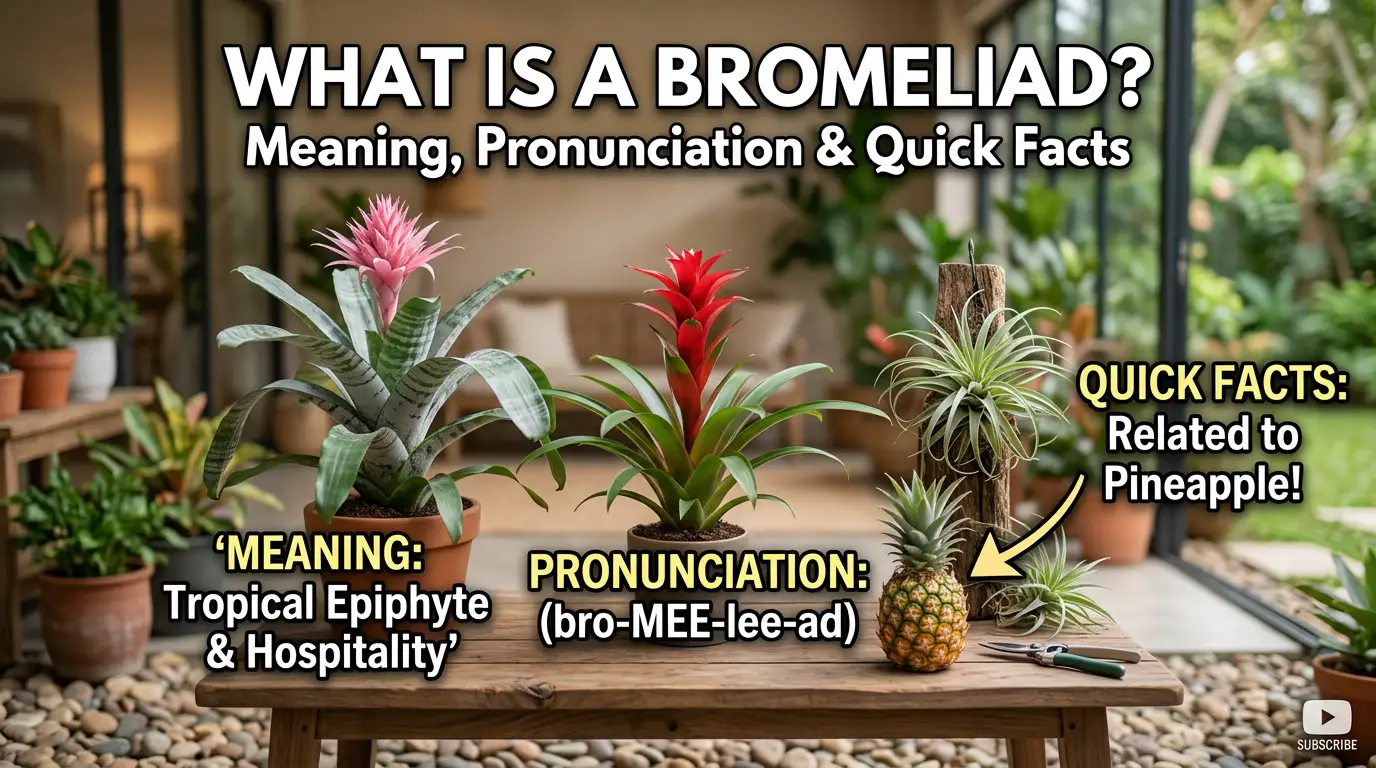
Bromeliad pronunciation is broh-MEE-lee-ad, with the stress on the second syllable. A bromeliad is any plant in the pineapple family, Bromeliaceae: mostly tropical American plants that grow as tight rosettes of stiff leaves, many of which hold water in a central cup.
Bromeliad quick facts at a glance
| Question | Short answer |
|---|---|
| How is it said? | broh-MEE-lee-ad (Merriam-Webster respelling: brō-ˈmē-lē-ˌad) |
| What family? | Bromeliaceae, the pineapple family, in the order Poales |
| Named after | Olof Bromelius (1639-1705), a Swedish physician and botanist |
| First recorded in English | 1866, according to Merriam-Webster |
| Number of species | Roughly 3,000 to 3,700, depending on whose taxonomy you follow |
| Home range | Tropical and subtropical Americas, plus one species in Guinea, West Africa |
| Typical shape | A rosette of stiff leaves, often forming a water-holding tank |
| Lifestyle | About half are epiphytes that grow on trees or rocks; the rest grow in soil |
| Best-known member | The pineapple, Ananas comosus |
How do you pronounce bromeliad?
Say it broh-MEE-lee-ad. Merriam-Webster respells the word as brō-ˈmē-lē-ˌad, which puts the main stress on the second syllable and a lighter secondary stress on the last one. Four syllables, one loud beat in the middle.

- broh rhymes with the start of “broke”.
- MEE sounds like the word “me” and carries the stress.
- lee is the same sound as the first syllable of “leaf”.
- ad sounds like “add”.
The plural is simply bromeliads. If you want to see how the different kinds look and behave, our types of bromeliads guide is the natural next stop.
What are the most common bromeliad mispronunciations?
Most slips come from stress or from rushing the word. Plant writers who coach on this word, such as Cafe Planta, point to speaking too fast and blurring syllables together. The table below lists the usual traps; these are habits to avoid, not recorded dictionary variants.
| What people say | Why it sounds off |
|---|---|
| BROH-mee-lee-ad | Stress lands on the first syllable, but the dictionary stress is on the second. |
| bro-mee-LEE-ad | Stress slides to the third syllable. |
| brom-lee-ad | A syllable disappears, so a four-beat word becomes three. |
How do you say Bromeliaceae and Bromelia?
Bromelia is the genus that gave the family its name, and Bromeliaceae is the family itself. Botanical Latin is often said more than one way, so no single version is the only right one. A common English rendering of the family name is broh-mee-lee-AY-see-ee. For the story of how that name was built, see our companion piece on the family Bromeliaceae and its history.
What is a bromeliad, exactly?
A bromeliad is a member of Bromeliaceae. Merriam-Webster defines the word as any of the chiefly tropical American, usually epiphytic plants that make up the pineapple family, a group that includes Spanish moss and many ornamental houseplants.
According to Britannica, these are herbaceous evergreen perennials with spirally arranged leaves and lily-like flowers framed by colourful bracts. The fruit is either fleshy or a dry capsule. The family sits in the order Poales, which also contains grasses, sedges and rushes, so bromeliads are distant cousins of the lawn.
That description covers a surprising range. A bromeliad can be a rosette on a living-room shelf, a tuft of an air plant, a strand of Spanish moss draped from a tree, or a giant Puya that Britannica says can top 33 feet. What ties them together is the shared body plan and the family tree, not one particular look.
Where does the word “bromeliad” come from?

The word honours Olof Bromelius, a Swedish physician and botanist who lived from 1639 to 1705. In Swedish records he appears as Olof Bromell, and the Latinised form Olaus Olai Bromelius is the one that stuck, according to the annotated catalogue of bromeliad generic names. The same source credits the French botanist Charles Plumier with establishing the genus name Bromelia in his 1703 book Nova plantarum americanarum genera.
Carl Linnaeus then adopted Bromelia in Species Plantarum in 1753, and the Kew-hosted record for the genus confirms that 1753 publication in its Plants of the World Online entry. The family name Bromeliaceae followed in 1789, attributed to Antoine Laurent de Jussieu in the International Plant Names Index. The English word “bromeliad” is a later formation: Dictionary.com dates it to the 1860s and Merriam-Webster gives 1866 as its first known use.
Spellings of the honoree vary between dictionaries (Olaf, Olaus, Olof), which is normal for a seventeenth-century name that passed through Swedish and Latin.
How many species are in the bromeliad family?
There is no single agreed number. Sources land between roughly 3,000 and 3,700 species, because botanists keep splitting genera, merging others and describing new plants. The Bromeliad Society International itself says species counts have changed since 2012 and will keep changing as research continues.
| Source | Species | Genera |
|---|---|---|
| Kew, Plants of the World Online | About 3,086 taxa | 56 |
| Britannica | More than 3,000 | 56 |
| iNaturalist | About 3,475 | 51 |
| Wikipedia | About 3,700 | About 80 |
The safest way to quote the figure is “more than 3,000 species in the Americas, give or take a few hundred depending on the classification”. The largest genera, per the Kew record, include Tillandsia, Pitcairnia, Vriesea and Aechmea. The Bromeliad Society and Wikipedia describe eight subfamilies, a topic we unpack in our Bromeliaceae history guide.
What does a bromeliad look like up close?
The rosette and the tank
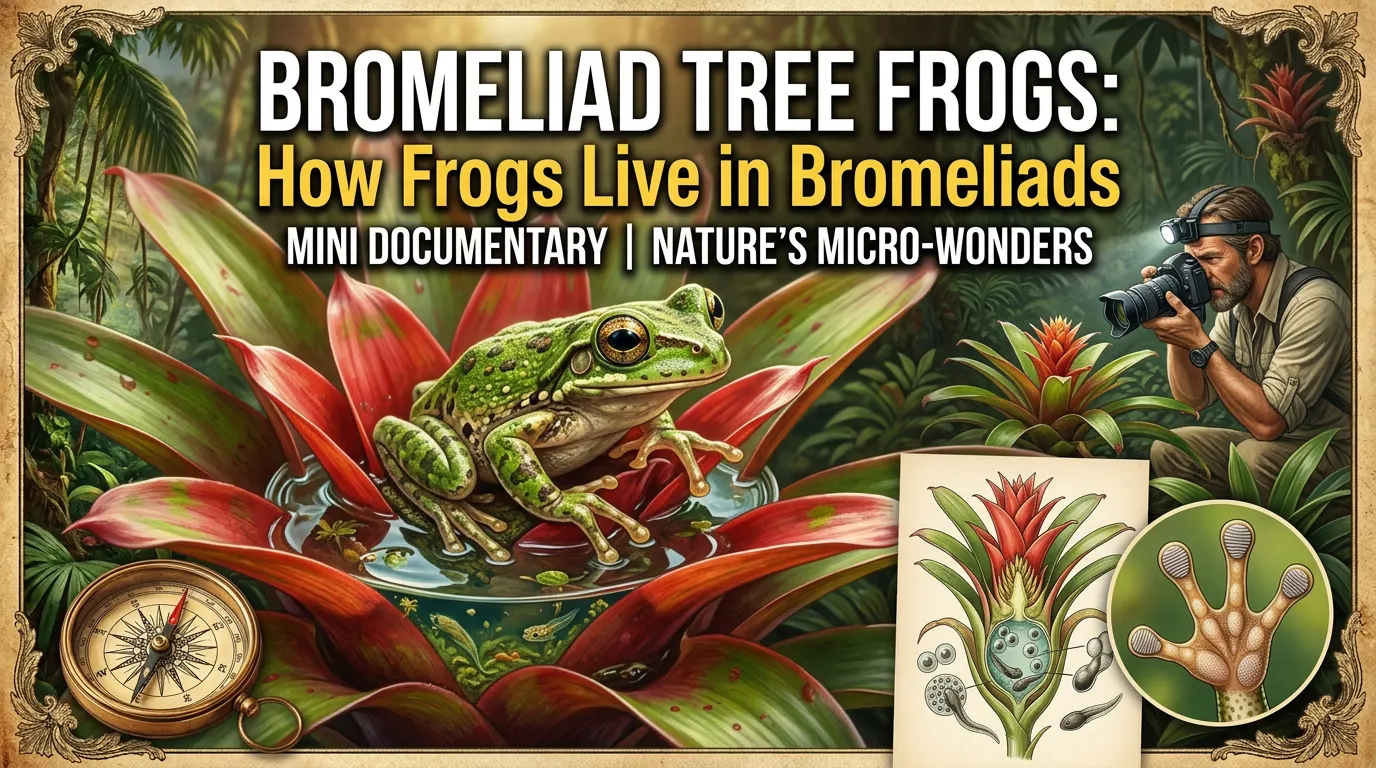
Most familiar bromeliads grow leaves in a spiral so tightly overlapped at the base that they form a cup. Britannica describes this tank as collecting water and falling debris, which feeds the plant and doubles as a habitat for frogs, salamanders and insect larvae. Size varies enormously, from a few spoonfuls in a small plant to many litres in giant species; Wikipedia mentions about 10 litres for the largest.
Trichomes: the scales that drink
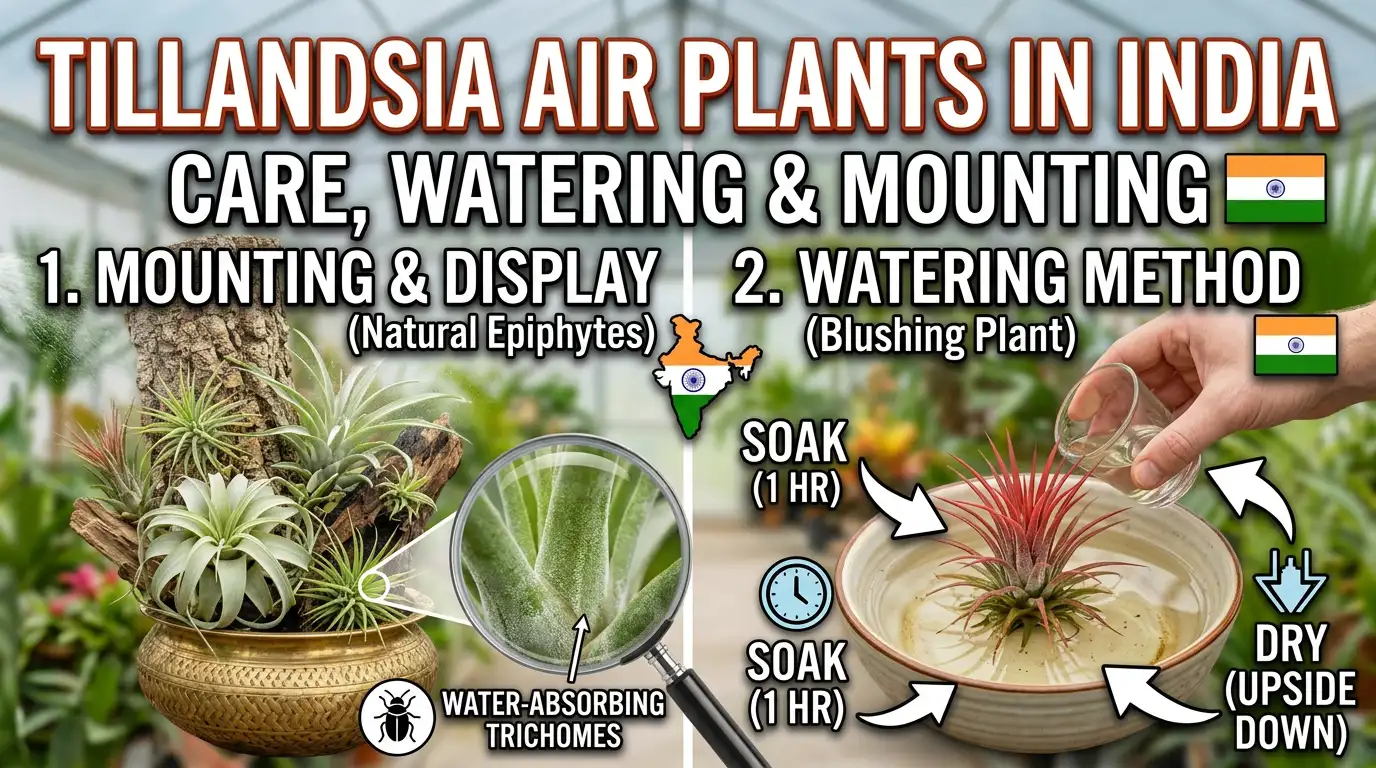
Trichomes are tiny scales or hairs on the leaf surface. In air plants they give the grey, frosted look and let the plant absorb moisture from rain, dew and dust. The Tillandsia entry on Wikipedia describes them as cells that rapidly take up water collecting on the leaf. If you are thinking of growing air plants in an Indian home, read Tillandsia Air Plants in India.
Roots that mostly hold on
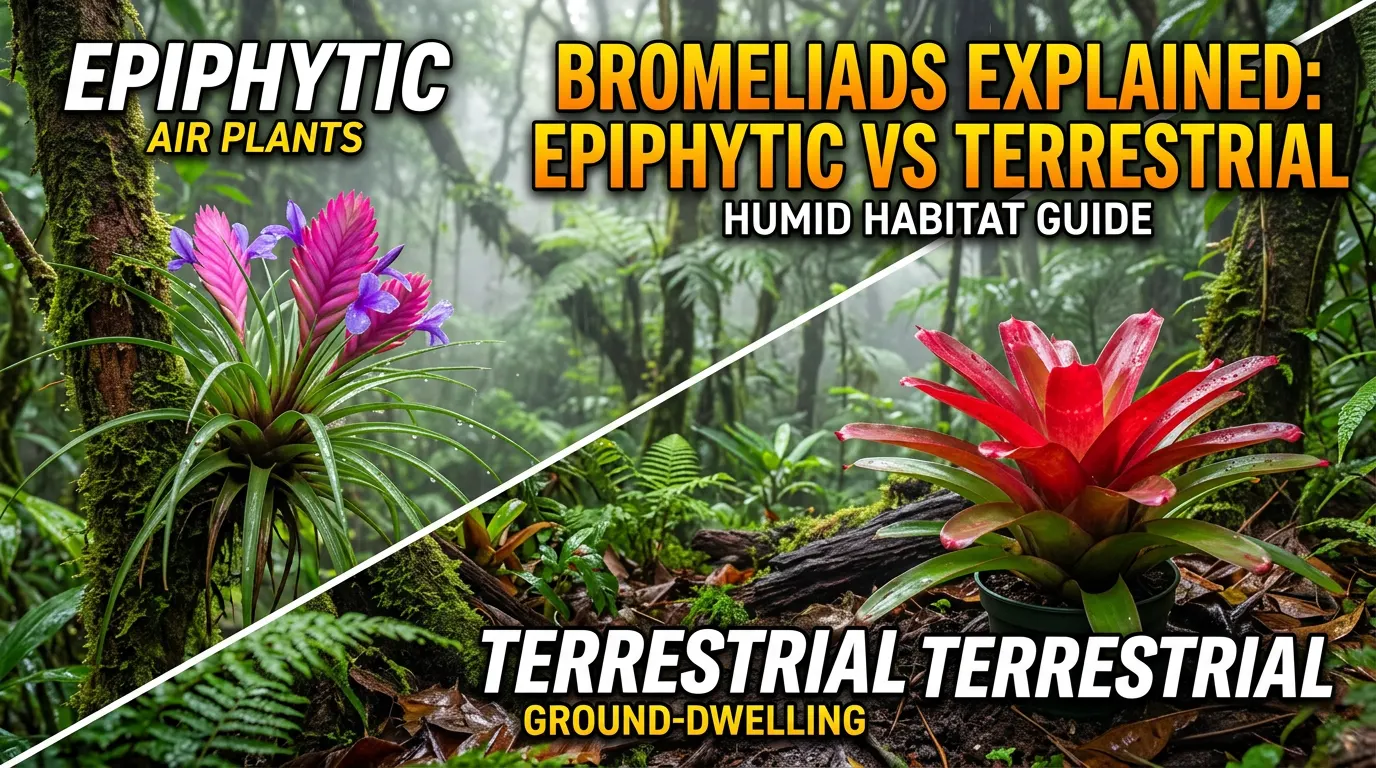
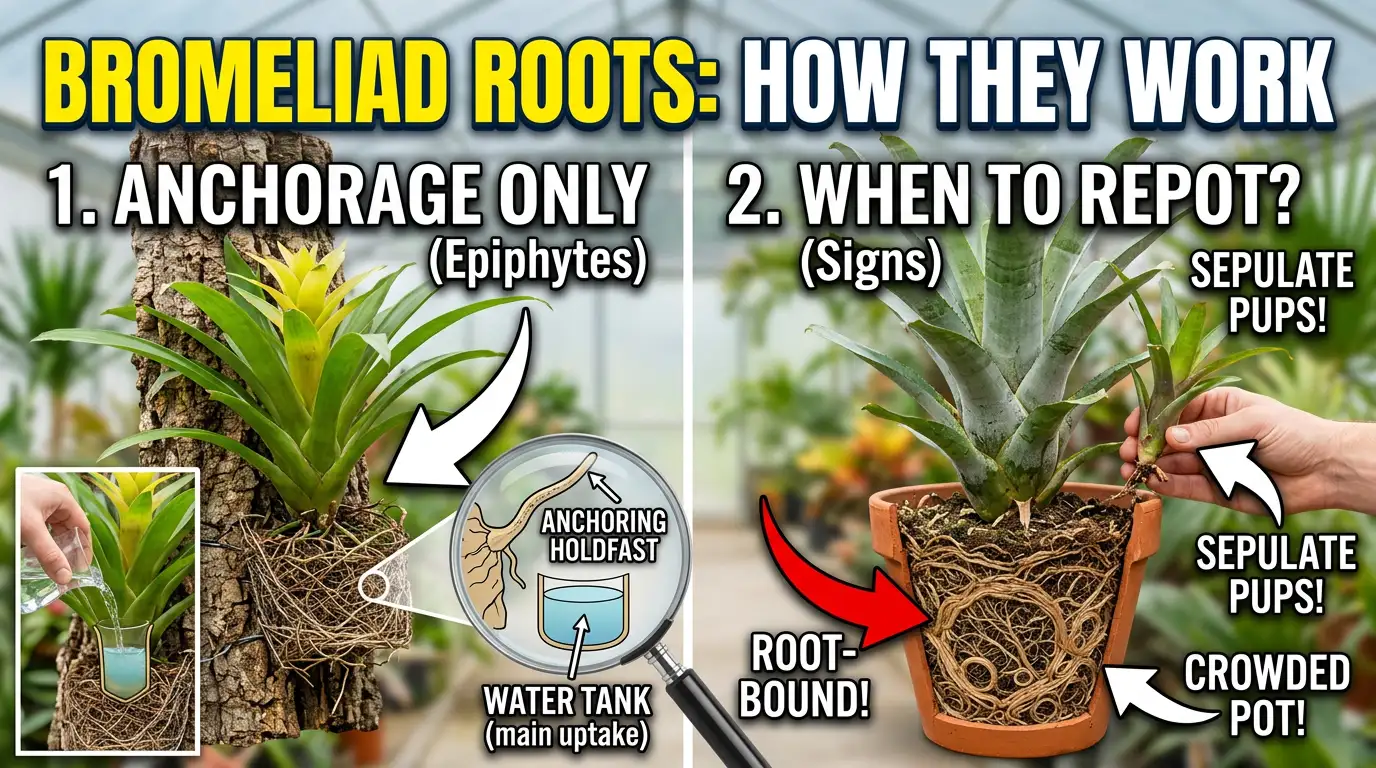
The University of Wisconsin-Madison Extension notes that about half of bromeliad species are epiphytes, and that their roots mainly provide anchorage while the leaves handle much of the nutrient intake. That is why bromeliads can be tied to driftwood, which we walk through in how to mount a bromeliad on wood. For the full contrast between tree-dwelling and ground-dwelling types, see Epiphytic vs Terrestrial Bromeliads.
Flowers, pups and a one-time show
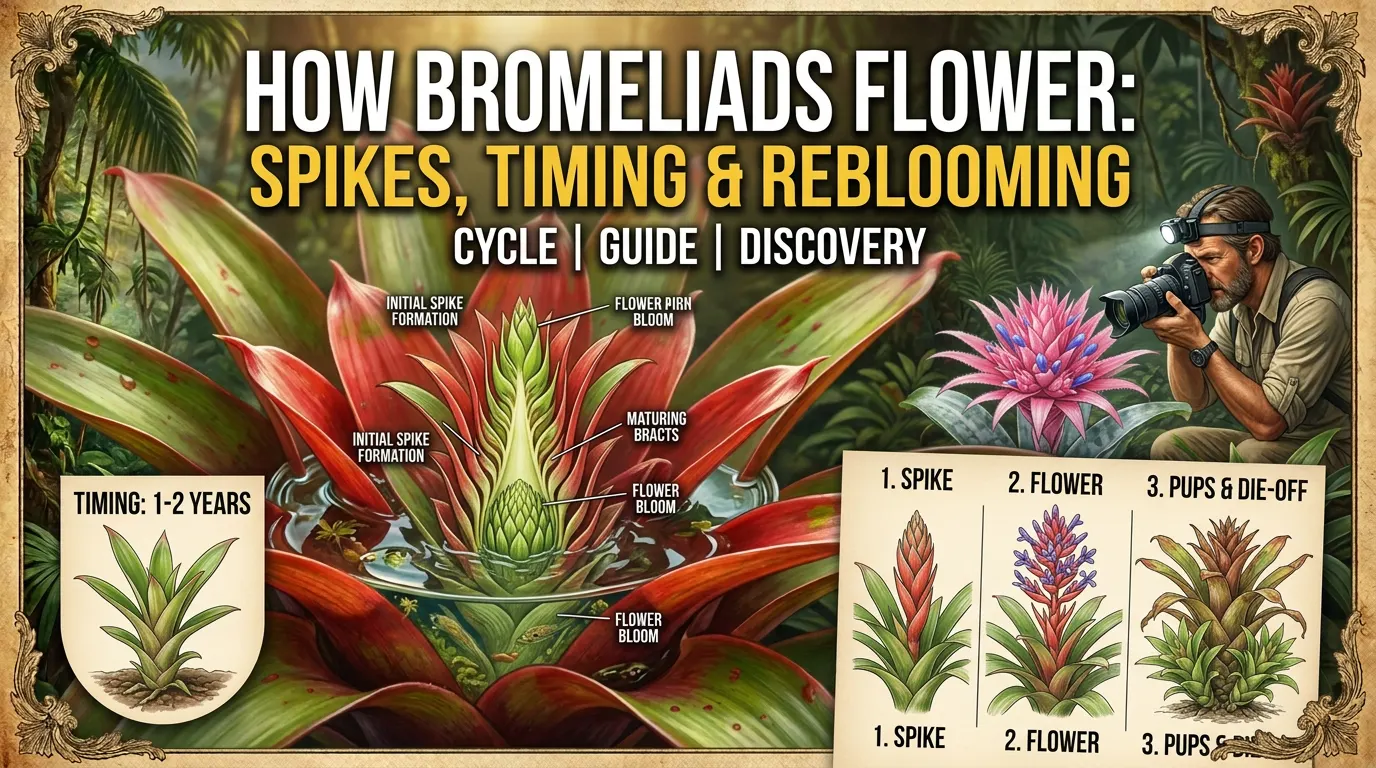
Most bromeliads flower once. The same Wisconsin source explains that the parent then declines slowly while producing offsets, called pups, that can be separated once they reach roughly a third of the parent’s size. The “flower” most people admire is often a bract, a coloured modified leaf that lasts far longer than a petal. For practical flowering tips, see our complete bromeliad care guide.
One more trick worth knowing: Wikipedia notes that many bromeliads use CAM photosynthesis, opening their leaf pores at night to lose less water by day.
Which bromeliads are the best known?
| Plant | What it is | Worth knowing |
|---|---|---|
| Ananas comosus | Pineapple | The only bromeliad that is a major commercial food crop |
| Tillandsia usneoides | Spanish moss, an air plant | Grows on tree limbs, per Wikipedia |
| Guzmania lingulata | Cultivated ornamental species | Reached Europe in 1776, per the Bromeliad Society |
| Aechmea fasciata | Cultivated ornamental species | Entered European gardens in 1828 |
| Vriesea splendens | Cultivated ornamental species | In cultivation in Europe by 1840 |
| Neoregelia species | A genus of tank bromeliads | ASPCA lists the “blushing bromeliad” as non-toxic to cats and dogs |
| Puya raimondii | A giant species | Endangered, per Britannica |
| Brocchinia reducta | A tank bromeliad | Carnivorous, according to Britannica |
The dates come from the Bromeliad Society International, and the pet-safety line from the ASPCA plant listing. If you are choosing between orchid-like looks and bromeliad toughness, our bromeliad vs orchid comparison helps.
Are bromeliads native to India?
No. The family is native to the Americas, with a single exception: Pitcairnia feliciana, found in Guinea in West Africa. Every bromeliad grown in India, whether a pineapple field or a balcony Neoregelia, arrived by cultivation. The warm, humid months of the monsoon suit many species, while hot dry summers and stagnant water in the leaf cup are the usual trouble spots; our types guide and problem-solving guide cover what to expect.
Disclosure: Fish Bazaar is run by the same team as this site. If you want to see these plants in person, Fish Bazaar stocks Neoregelia, Aechmea, Billbergia, Tillandsia and Cryptanthus in its terrarium and paludarium plants collection, with the Neoregelia range being the largest. Plants are sold as sets of 10, which suits big terrariums and shared orders but not single-plant buyers. Prices and policies change, so check the listing before ordering. Fish Bazaar also has its own explainer, What Is a Bromeliad, for further reading.
Bromeliad pronunciation and meaning: frequently asked questions
How do you pronounce bromeliad?
Say broh-MEE-lee-ad, stressing the second syllable. Merriam-Webster respells it brō-ˈmē-lē-ˌad.
What does bromeliad mean?
It names a plant in the family Bromeliaceae, the pineapple family. The word comes from the genus Bromelia, which honours the Swedish botanist Olof Bromelius.
Is a pineapple a bromeliad?
Yes. The pineapple, Ananas comosus, is a bromeliad and the most economically important one, according to Kew and Wikipedia.
Is Spanish moss a bromeliad?
Yes. Spanish moss, Tillandsia usneoides, is an air plant in the bromeliad family and is named in Merriam-Webster’s definition of the word.
Is a bromeliad a flower or a whole plant?
It is a whole plant. What looks like a giant flower is usually a cluster of coloured bracts with small true flowers, and most bromeliads bloom once in their life.
Are bromeliads native to India?
No. They are native to the Americas, except for Pitcairnia feliciana in Guinea. Bromeliads in India are all cultivated imports.
Do bromeliads grow in soil?
Some do and some do not. About half are epiphytes that grow on trees or rocks, and their roots mostly anchor the plant rather than feed it.
How many species of bromeliad are there?
Estimates run from about 3,000 to 3,700 species, depending on the taxonomy used. Kew counts around 3,086 taxa in 56 genera.
References
- Merriam-Webster: bromeliad
- Dictionary.com: bromeliad
- Wikipedia: Bromeliaceae
- Wikipedia: Tillandsia
- Encyclopaedia Britannica: Bromeliaceae
- Encyclopaedia Britannica: Tank bromeliad
- Kew Plants of the World Online: Bromeliaceae
- Kew Plants of the World Online: Bromelia
- International Plant Names Index: Bromeliaceae
- Grant, J.R.: An annotated catalogue of the generic names of the Bromeliaceae
- iNaturalist: Bromeliaceae
- Bromeliad Society International: Taxonomy introduction
- Bromeliad Society International: What are bromeliads?
- University of Wisconsin-Madison Extension: Bromeliads
- ASPCA: Blushing bromeliad
- Cafe Planta: Mastering the art of bromeliad pronunciation
Related Guides
- Bromeliaceae Family History: Pineapples, Explorers & the 19th Century
- Bromeliad Plant Benefits: Air Purifying Myths, Mosquitoes & Pets
- Bromeliad Care: The Complete Guide to Growing Indoors
- Types of Bromeliads Guide
- Fish Bazaar: What Is a Bromeliad
- Where to Buy Bromeliads Online in India
- Growing Bromeliads in India: Climate, Regions & Seasons
- Epiphytic vs Terrestrial Bromeliads
- Tillandsia Air Plants in India
- Bromeliad Roots
- How Do Bromeliads Flower?


Leave a Reply