BROMELIAD GUIDE · UPDATED OCTOBER 2026
By Everydaything Team · Last updated October 2026
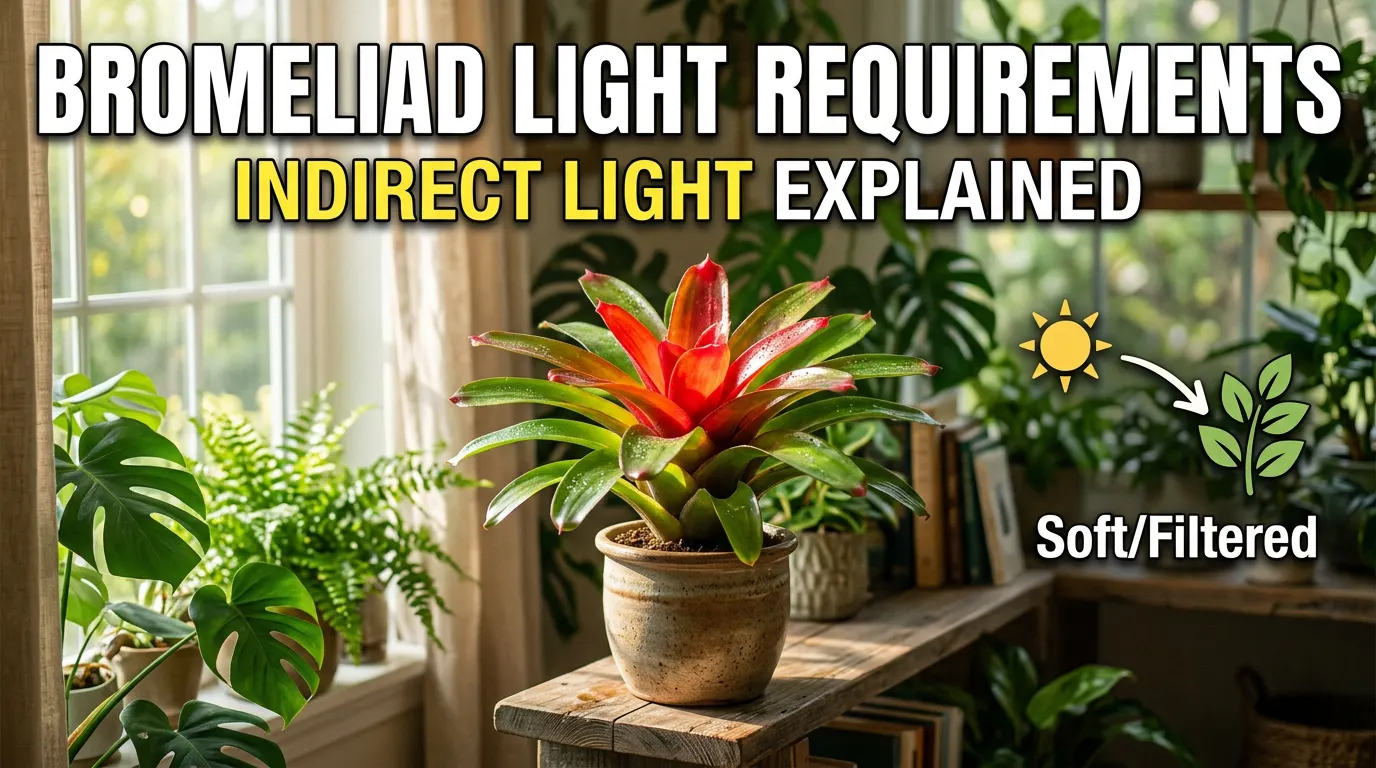
Bromeliad indirect light means bright light that is diffused or shaded, so the leaves never take hours of unfiltered sun. In numbers, published guidance runs from about 1,500 to 4,000 foot-candles (roughly 16,000 to 43,000 lux), with soft-leaved types near the low end and hard-leaved types near the top.
Our complete bromeliad care guide already covers the basic idea of bright but not blasting light. This article does the part that guide skips: it puts numbers on the idea, sorts genera by how much light they tolerate, and translates the advice to Indian windows, monsoon skies and summer heat.
Quick facts: bromeliad light at a glance
| Group | Typical genera | Light tolerance |
|---|---|---|
| Soft-leaf (thin, green, flexible) | Guzmania, Vriesea, Nidularium | Lower end; bright but well diffused |
| Hard-leaf (thick, stiff, grey or scaly) | Aechmea, Billbergia, Ananas, Dyckia | Highest; tolerate strong, filtered light |
| Middle ground | Neoregelia, Cryptanthus, Tillandsia | Sources disagree; bright filtered light is the safe target |

The Bromeliad Society International sums it up as “soft leaf, soft light; hard leaf, hard light” in its care FAQ. A guide on bromeliads.info places Dyckia, Puya, Hechtia, Ananas and hard-leaved Aechmea and Billbergia in the high-light group, and lists Guzmania, Neoregelia, Nidularium, Cryptanthus and Vriesea as more tolerant of lower light. The BSI FAQ, by contrast, puts Neoregelia with the brighter-light group, which is why we treat it as middle ground.
What does “bright indirect light” mean for a bromeliad?
It means strong daylight that reaches the plant after passing through a curtain, shade net, tree canopy or a few metres of room, not a beam of sun landing on the rosette. The Royal Horticultural Society describes the target as bright light, shaded from strong summer sun, which can scorch the leaves.
In other words, “indirect” describes how the light arrives, not how much of it there is. A bright room well lit by a large window can deliver far more usable light than a dim corridor, even if neither ever sees a direct sunbeam.
How many foot-candles or lux do bromeliads need?
Most guidance lands between roughly 1,500 and 4,000 foot-candles for good growth and colour, but the published figures vary a lot. One foot-candle equals about 10.76 lux, so the lux column below is a straight conversion.

| Source | Figure | Approx. lux |
|---|---|---|
| University of Arizona extension, indoor plant categories | Low 25-75, medium 75-150, high 150-1,000 fc | 270-810 / 810-1,600 / 1,600-10,800 |
| bromeliads.info guideline | About 1,500 fc, or where orchids grow well | About 16,000 |
| UW-Madison horticulture extension | 2,000 fc for most species; more compact growth and better colour at 3,000-4,000 fc | About 21,500; 32,000-43,000 |
| New England Herpetoculture vivarium guide | 1,500-3,400 lx at substrate in well-lit vivariums; PAR 45-70 to survive, 150+ for best colour | As stated (PAR is not directly convertible) |
Sources: University of Arizona, bromeliads.info, UW-Madison, NEHerp.
Why the spread? Our reading is that the higher figures describe growing plants for compact shape and strong colour, while the lower ones describe what a plant survives indoors. The Arizona categories top out at 1,000 foot-candles for “high” indoor light, so reaching 1,500 or more at home usually means direct sun or bright outdoor shade. A bromeliad will live well below that, but expect paler colour and slower growth.
Can you measure this at home?
Yes, with a lux meter or a phone app, though phone sensors are approximate. The Arizona extension suggests treating light-meter readings of low, medium and high as ballpark figures that take much of the guesswork out of placement, and notes that wall colour, curtains and overhangs change what a window delivers.
Measure at leaf height at 10 am, 1 pm and 4 pm on a clear day, and again on an overcast one. If you have no meter, the Arizona guide’s rule of thumb helps: within about four feet of a large south, east or west window is high light, four to eight feet is medium, and beyond eight feet is low.
Which window direction is best for bromeliads in India?
An east window is the safest choice across most of India, because it gives bright morning light before the day heats up. West windows are the riskiest, since afternoon sun arrives during the hottest hours. South and north windows depend heavily on where in the country you live.
Most window advice online is written for temperate countries, where the sun sits low in the southern sky. India is different. The Tropic of Cancer, the northernmost line where the sun can stand directly overhead at noon (around 21 June), runs through Gujarat, Rajasthan, Madhya Pradesh, Chhattisgarh, Jharkhand, West Bengal, Tripura and Mizoram. Places between the tropics see the sun pass overhead twice a year, according to this Zero Shadow Day explainer.
That is why the table below is an inference from sun geometry plus the extension guidance above, not a measured result. Treat it as a starting point and confirm with a lux reading.
| Window | What to expect in India | Best for |
|---|---|---|
| East | Gentle direct morning sun, bright all morning, softer afternoon | Almost every bromeliad; the default choice |
| South | Strong light, especially in winter when the sun is low. In north India (Delhi, Punjab, Uttar Pradesh) the sun stays south all year, so midday can be harsh. In peninsular India the high summer sun means deep overhangs may block most direct light | Hard-leaf Aechmea and Billbergia; add a sheer curtain for others |
| West | Direct sun in the afternoon, which in many cities coincides with 35-45 degrees C air temperatures | Hard-leaf types only, behind shade net or a sheer curtain |
| North | Mostly indirect and the dimmest option; Arizona notes northern exposures often fall in the low-light class even close to the glass | Guzmania, Vriesea, Cryptanthus; may need a grow light for colour |
Cities such as Mumbai, Nashik, Pune, Bengaluru, Chennai and Kochi lie south of the Tropic of Cancer, so overhead sun in summer is part of their year. Delhi, Chandigarh and Lucknow lie north of it. If you grow on a balcony, a shade net or a plant stand set back from the railing does the same job as a curtain. For the wider regional and seasonal picture, see our guide to growing bromeliads in India.
What does a sunburned or light-starved bromeliad look like?
A yellowish or pale green plant has too much light, while a darker green plant with a stretched, open shape has too little. Both signs are described on the bromeliads.info light page, and the University of Missouri’s extension article adds that dark green, soft, drooping leaves point to light that is too low.
| Sign | Likely cause | Fix |
|---|---|---|
| Yellow or pale green, bleached patches | Too much light | Move back or add diffusion; scorched tissue will not recover |
| Darker green, elongated, open rosette | Too little light | Move closer to the window or add a grow light |
| Soft, drooping dark green leaves | Light too low | Brighten gradually over several weeks |
| Loss of colour (BSI) | Too little light; the BSI contrasts this with bleaching from too much | Increase indirect light |
UW-Madison stresses a gradual transition to brighter conditions over several weeks. If the same yellowing appears together with mushy leaf bases, check our bromeliad problems guide before blaming light.
Can bromeliads grow under LED lights?
Yes. Bromeliads grow under fluorescent and other horticultural lights, and the sources give a consistent daily window of roughly 10 to 16 hours. UW-Madison says bromeliads grow best with 12 to 16 hours of relatively bright light and suggests hanging fixtures about eight inches above the plants. The NEHerp vivarium guide recommends 12 hours on and 12 off, trimmed to 10 on and 14 off in summer.
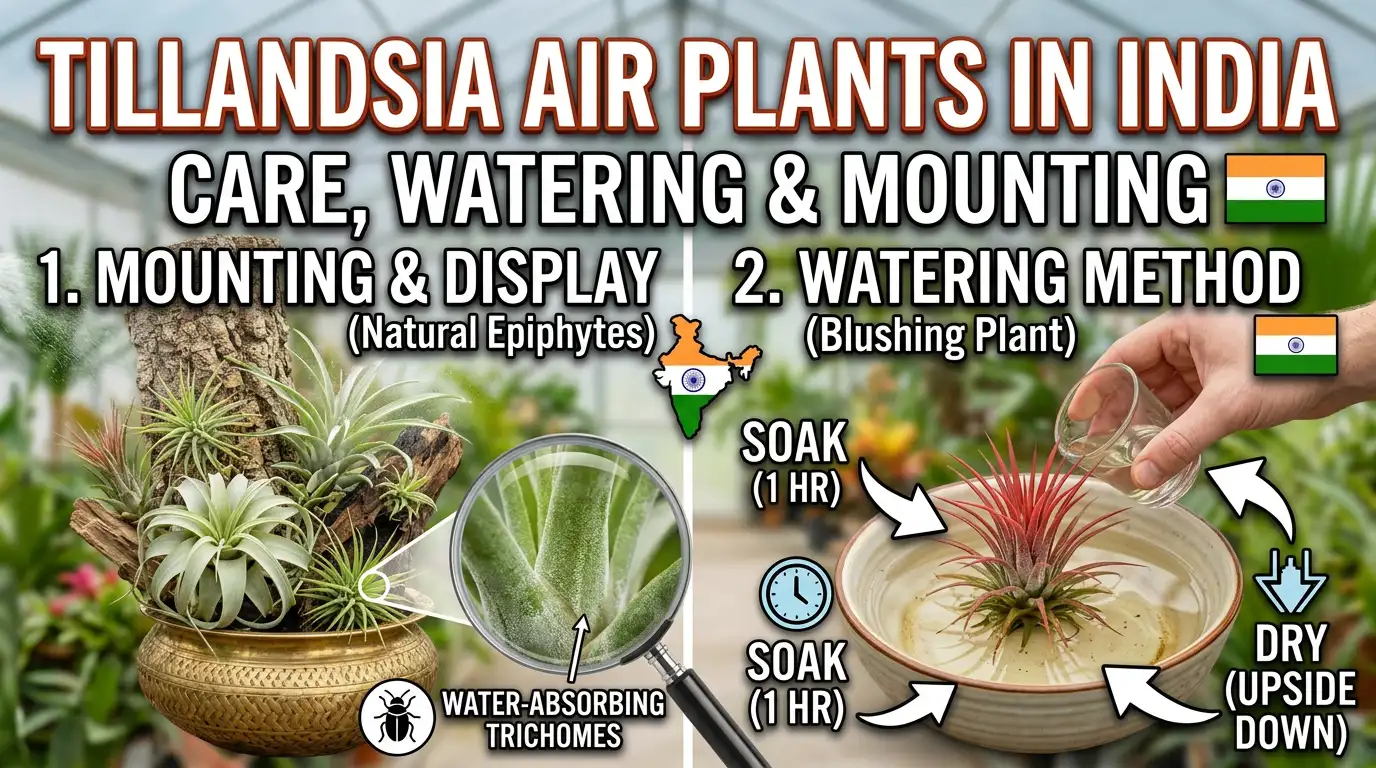
Neither source gives an LED-specific distance, so follow your fixture’s own PAR or spacing chart rather than copying eight inches. In a glass terrarium, also watch for heat build-up and for the mould that comes with trapped humidity; see our bromeliad terrarium problems guide and the full bromeliads in a terrarium guide. For air plants specifically, the New York Botanical Garden’s guidance is 12 hours daily with the light no more than two feet away.
If you are choosing species for a lit enclosure, our list of the best bromeliads for terrariums helps, and Fish Bazaar’s terrarium supplies checklist covers lighting hardware.
How should light change with the seasons in India?
Light needs shift in three ways through the Indian year: stronger, hotter sun in the pre-monsoon months, thick cloud during the monsoon, and weaker low-angle light in winter. The India Meteorological Department defines the southwest monsoon season as June to September. The seasonal advice below is our inference, not measured Indian data.

- March to May: the harshest direct sun. Pull plants back from west and south glass and use shade net outdoors, as the RHS advises shading from strong summer sun.
- June to September: cloud cuts light, so plants that were fine in May may need to move closer to the window. Humid air also dries leaves more slowly, so watch for rot rather than burn.
- October to February: the sun is lower and light is weaker, especially in the north. A south window becomes the best spot, and a grow light can fill gaps in foggy weeks. The bromeliads.info care guide likewise calls a south-facing window ideal in winter.
The RHS also advises bringing tender bromeliads indoors before temperatures fall toward 10 degrees C, which matters for balconies in north Indian winters.
Choosing plants that match your light
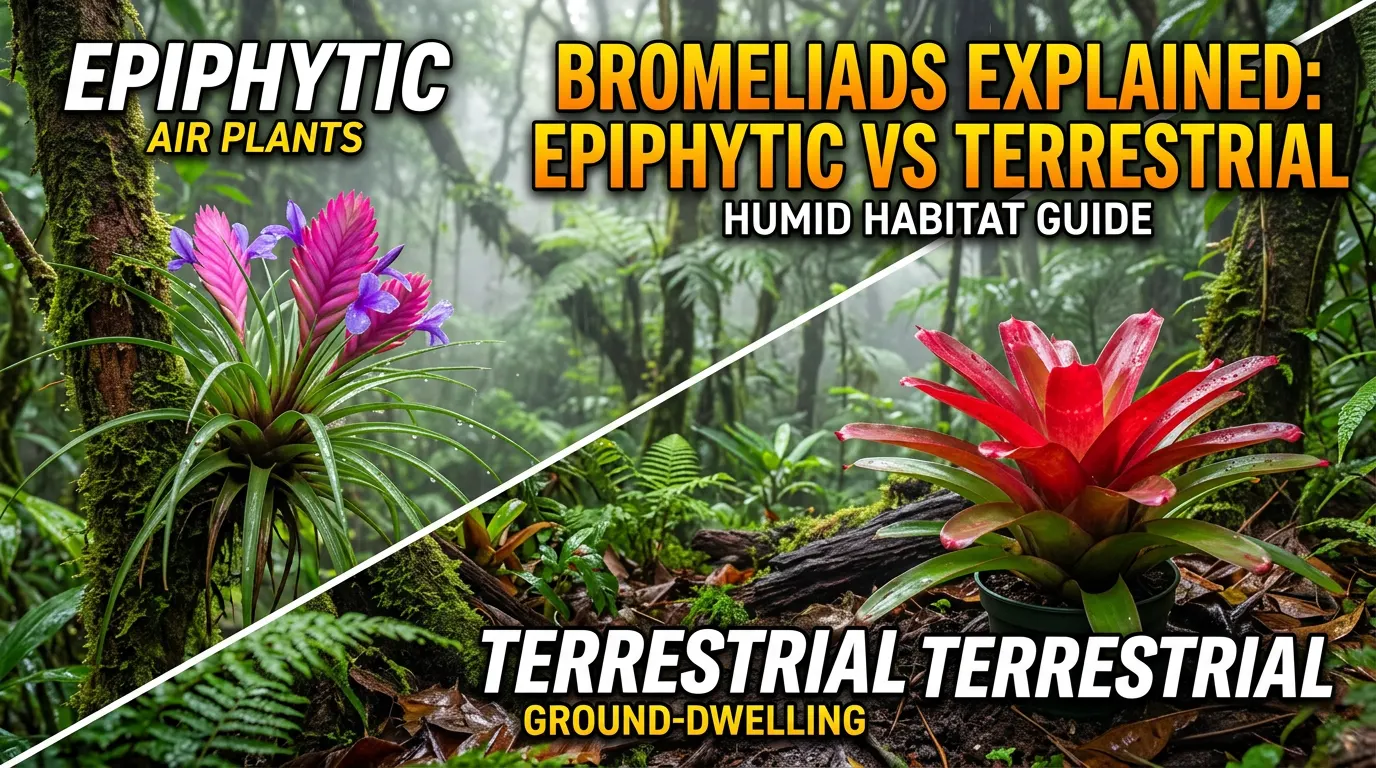
Match the plant to the window you have, not the other way round. A bright west balcony behind shade net suits hard-leaf Aechmea and Billbergia, a diffused east window suits most middle-ground types, and a dim north room suits Guzmania or Vriesea. Our types of bromeliads guide helps you tell them apart, our guide to epiphytic vs terrestrial bromeliads explains how their growth habits differ, and our guides to how bromeliads flower and Tillandsia air plants continue the series.
Disclosure: Fish Bazaar is operated by the same team that publishes this site. Its Neoregelia collection and Aechmea collection are useful for matching light, but bromeliads there are sold as sets of 10, which suits larger builds or shared orders better than a single windowsill plant. Prices and policies change, so check before ordering. Fish Bazaar’s own Guzmania care guide is further reading for lower-light plants.
Frequently asked questions
What is bright indirect light for bromeliads?
It is bright daylight that is filtered by a curtain, shade net or distance from the window, so the rosette does not sit in direct midday sun. Published figures range from roughly 1,500 to 4,000 foot-candles.
Can bromeliads survive in low light?
They can survive, especially soft-leaf types, but colour fades and growth stretches. The University of Missouri’s 2016 extension article notes that none thrive in poor light.
Is direct sun okay for a bromeliad?
Bromeliads.info says most species must not be exposed to the direct rays of the sun, and the RHS warns that strong summer sun scorches. Raise light levels gradually over several weeks.
Which window is best for a bromeliad in India?
East is the safest default. West is the riskiest because the sun arrives during peak heat, and north is usually the dimmest. Confirm with a lux reading at leaf height.
How can I tell if my bromeliad is getting too much light?
Look for a yellowish or pale green rosette, bleached patches, or scorched leaves. Move it back or add diffusion, and expect scorched tissue to stay damaged.
Do soft-leaf and hard-leaf bromeliads need different light?
Yes. Soft-leaf types such as Guzmania and Vriesea prefer gentler light, while thick, grey or scaly hard-leaf types such as many Aechmea and Billbergia tolerate the brightest conditions.
How many hours of grow light do bromeliads need?
Sources suggest about 12 hours a day, with UW-Madison giving a range of 12 to 16 hours of bright light. The NEHerp guide trims this to 10 hours in summer.
Does monsoon weather affect bromeliad light?
Cloud cover lowers light between June and September, so consider moving plants closer to bright windows, and keep airflow high because humid air raises rot risk.
Can a bromeliad bloom in indirect light?
Yes, Clemson says bromeliads need indirect sunlight to grow well and produce flowers. See our guide on how bromeliads flower for what else matters.
This article is general horticultural information, not veterinary or professional advice. Light levels in a real home vary with glazing, season and surroundings, so always check your own plant.
References
- Royal Horticultural Society, How to grow bromeliads
- Bromeliad Society International, Frequently asked questions
- UW-Madison Division of Extension Horticulture, Bromeliads
- University of Arizona Cooperative Extension, Indoor plant selection and care
- Clemson Home and Garden Information Center, Bromeliads
- Bromeliads.info, Bromeliad care and culture overview and General indoor and outdoor bromeliad care
- University of Missouri IPM, The colorful world of bromeliads and Bromeliads: houseplants that endure
- New England Herpetoculture, Vivarium lighting 101
- New York Botanical Garden, Air plant (Tillandsia) research guide
- Vajiram and Ravi, Tropic of Cancer
- Esri StoryMaps, Zero Shadow Day
- India Meteorological Department, Monsoon press release (2023)
Related Guides
- Bromeliad Care: The Complete Guide to Growing Them Indoors
- Types of Bromeliads: Guzmania, Neoregelia, Aechmea & More
- Fish Bazaar: Bromeliad care guide for India
- Where to Buy Bromeliads Online in India
- Growing Bromeliads in India: Climate, Regions & Seasons
- How Do Bromeliads Flower? Spikes, Timing & Reblooming
- Tillandsia Air Plants in India: Care, Watering & Mounting
- Epiphytic vs Terrestrial Bromeliads
- What Is a Bromeliad?




Leave a Reply