Fish & Aquariums
I switched from gravel to a proper aquasoil the first time I got serious about growing plants, and the difference surprised me, not because gravel is bad, but because I’d been using the wrong substrate for what I actually wanted the tank to do. Substrate isn’t just the stuff on the bottom that looks nice; it changes how easy the tank is to keep clean, whether plants root well, how bottom-dwelling fish behave, and even your water chemistry.
Quick answer
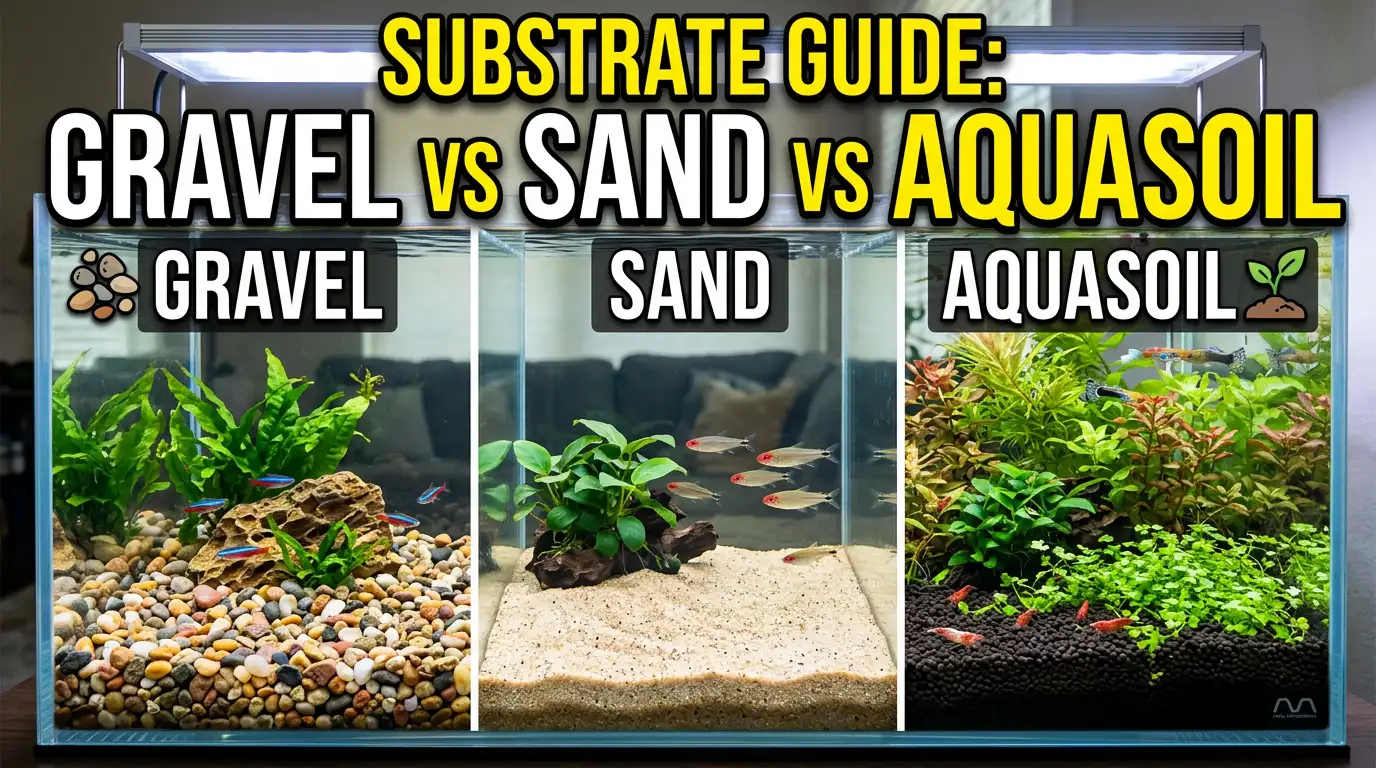
Gravel is the easiest, most forgiving substrate for a fish-focused community tank with no live plants or only easy, low-demand ones. Sand suits bottom-dwelling species (corydoras, some loaches) that sift through it, and gives a cleaner look, but shows debris more readily and can compact if not stirred occasionally. Aquasoil is the best choice for a seriously planted tank; it provides nutrients plant roots need directly and typically softens and lowers the pH of the water above it, but it’s more expensive, needs a bit more care during the first weeks, and isn’t necessary if you’re not growing demanding plants.

What substrate actually does in a tank
It’s easy to think of substrate as purely decorative, but it does real functional work. It anchors plant roots and, in the case of aquasoil, actively feeds them. It’s a secondary home for beneficial bacteria, a smaller population than what lives in your filter, but a real one, especially in deeper substrate layers with less oxygen flow where a different set of bacteria handle denitrification. It shapes fish behavior: corydoras and loaches sift sand through their gills and barbels as natural foraging behavior, something they simply can’t do on gravel. And it affects maintenance directly, since debris either settles visibly on top (gravel, sand) or gets worked into the cracks between larger pieces, changing how and how often you need to clean it.
The three main options
| Substrate | Best for | Watch out for |
|---|---|---|
| Gravel | General community tanks, beginners, tanks without demanding plants | Debris settles on top rather than being absorbed, needs regular gravel-cleaning |
| Sand | Corydoras, kuhli loaches, and other species that sift or burrow; a clean, minimal look | Can develop anaerobic pockets if never disturbed; shows waste more visibly than gravel |
| Aquasoil | Planted tanks, aquascaping, root-feeding plants (swords, crypts) | Often lowers pH and softens water initially; breaks down and needs replacing over 1-3 years; more expensive |
Gravel
Gravel is the default for a reason: it’s cheap, widely available, inert (won’t shift your water chemistry), and forgiving of imperfect maintenance. Its larger grain size means water and waste move between the pieces rather than being trapped, which is exactly why debris tends to sit visibly on the surface layer rather than disappearing into it, a gravel vacuum during water changes picks this up easily. The tradeoff is that plants with fine root systems don’t anchor into it as securely as they do in sand or aquasoil, and it offers no nutritional benefit to roots at all, so a heavily planted gravel tank leans entirely on root tabs or liquid fertilizers to feed plants instead.
Sand
Sand’s fine grain gives a noticeably cleaner, more natural look, and it’s essential rather than optional for species that sift substrate through their gills or barbels; corydoras catfish are the classic example, and using gravel with them long-term can cause barbel damage from the sharper edges. The same fine grain that looks good can compact over time and develop small anaerobic (oxygen-free) pockets if it’s never disturbed, which can trap hydrogen sulfide gas; a light stir with a finger or a tool every so often, or keeping a few sand-sifting fish or snails in residence, prevents this from becoming an issue. Sand also shows fish waste and uneaten food more visibly than gravel does, simply because it doesn’t have gaps for debris to settle into, this isn’t a real functional downside, just something to be ready for if you’re used to gravel.
Aquasoil
Aquasoil is a fired or baked clay-based product manufactured specifically for planted tanks, and it’s genuinely a different category from gravel and sand rather than just a finer or darker version of them. It’s porous, which gives it a large surface area for both root growth and bacterial colonization, and it’s pre-loaded with nutrients that leach slowly into the water and substrate layer, feeding root-based plants (swords, crypts, many stem plants) without needing supplemental root tabs, at least for the first several months. The tradeoff comes in two forms: a new aquasoil tank often shows an ammonia spike in the first days as the soil breaks in, which is one reason aquasoil tanks are usually cycled the same as any other rather than assumed instantly safe, and the soil physically breaks down over time, typically 1 to 3 years depending on the product and how much it’s disturbed, losing its structure and needing a top-up or full replacement eventually.

How much substrate do you actually need?
As a rough guide, aim for a depth of about 2-3 inches (5-8cm) for a gravel or sand tank with no rooted plants, and closer to 3-4 inches (8-10cm) if you’re planting anything with a real root system, deeper at the back of the tank and shallower at the front is a common aquascaping technique that also makes the whole layout look more natural and gives you room to slope hardscape. A common rule of thumb is roughly 1-1.5 lbs of substrate per gallon of tank volume, though this varies with substrate density — sand is heavier per given depth than the same volume of gravel, and aquasoil is noticeably lighter than either, so a bag-weight estimate based on gravel will under-order if you’re actually buying aquasoil.
Can you mix substrates?
Yes, and it’s a common aquascaping technique: a base layer of aquasoil or root-tab-enriched substrate, capped with a thin layer of sand or fine gravel on top for appearance and to keep the aquasoil from clouding the water when disturbed. This gets you the plant-growing benefit without an all-sand or all-aquasoil look throughout, and it also means less aquasoil is exposed directly to fish that dig or sift, which slows how fast the nutrient-rich layer breaks down and clouds the water. The main thing to get right when layering is keeping the cap thin enough (roughly half an inch to an inch) that plant roots can still reach through into the nutrient layer beneath.
Substrate and the nitrogen cycle
Substrate plays a smaller but real supporting role in a tank’s biological filtration. While the bulk of your nitrifying bacteria colony lives in the filter media, a meaningful secondary population colonizes substrate too, particularly gravel and sand where oxygenated water can flow through the gaps between grains. Deep, undisturbed substrate layers can also host anaerobic bacteria that perform denitrification, converting nitrate into nitrogen gas, though this is a minor effect in a typical home aquarium compared to what regular water changes accomplish. If you haven’t cycled a tank before, my full nitrogen cycle guide covers what’s actually happening in that process and why a new substrate doesn’t shortcut it.
Frequently asked questions
Do I need to rinse substrate before adding it?
Gravel and sand, yes, rinse until the runoff water is close to clear, or expect a very cloudy tank for the first day or two (harmless, just unsightly). Most bagged aquasoils are specifically formulated not to be rinsed, since rinsing washes away the nutrient content that’s the whole point of using it, check your specific product’s instructions, since a handful of aquasoil brands do recommend a very brief rinse.
Will substrate affect my water’s pH?
Inert substrates like standard gravel and most sand have no effect on pH. Aquasoil is usually formulated to gently lower pH and soften water, which suits plants and soft-water fish species well but is worth knowing about if you’re keeping fish that prefer harder, more alkaline water, African cichlids being the classic mismatch, since they generally do poorly in the soft, acidic conditions aquasoil tends to create.
How often does substrate need replacing?
Gravel and sand essentially never, as long as they’re kept clean. Aquasoil gradually breaks down and loses its nutrient-buffering capacity, typically over 1-3 years depending on the product, after which many planted-tank keepers top up or replace it, often alongside a full rescape rather than as a standalone task, since disturbing established plant roots to replace substrate underneath them is disruptive either way.
Can I use pool filter sand or play sand instead of aquarium-specific sand?
Pool filter sand is widely used in the hobby and is generally fine, it’s inert and a similar grain size to purpose-sold aquarium sand, usually at a much lower price. Play sand is a mixed bag: some is fine, but it can contain dust, silica fines, or inconsistent grading that clouds the tank persistently or compacts more than purpose-made sand. Either way, thorough rinsing before use matters more with non-aquarium sand than with the aquarium-branded kind.
Does substrate color or size affect fish health?
Not directly for most fish, but it’s not purely cosmetic either. Very sharp or large gravel can injure the barbels of bottom-feeding species like corydoras over time, and dark substrate genuinely does reduce visible stress coloration in many fish compared to bright white or very pale substrate, since it more closely resembles the darker natural bottoms most species evolved against. Grain size matters most for species that dig, burrow, or sift; matching substrate to species-specific needs is worth a quick check for any bottom-dwelling fish you’re planning to keep.
If you’re planning a substrate specifically to support live plants, it’s worth reading my tank setup guide and planted tank setup guide alongside this one so cycling and planting happen in the right order, and my fertilizer guide if you’re deciding between aquasoil, root tabs, and liquid fertilizer for feeding your plants.







Leave a Reply